

Addressable LED Strip Lights
Individually addressable pixel strip in SMD and dot-free COB — SPI and DMX512 control, RGB to RGBCW pixels, with breakpoint-resume options for signage-grade reliability.
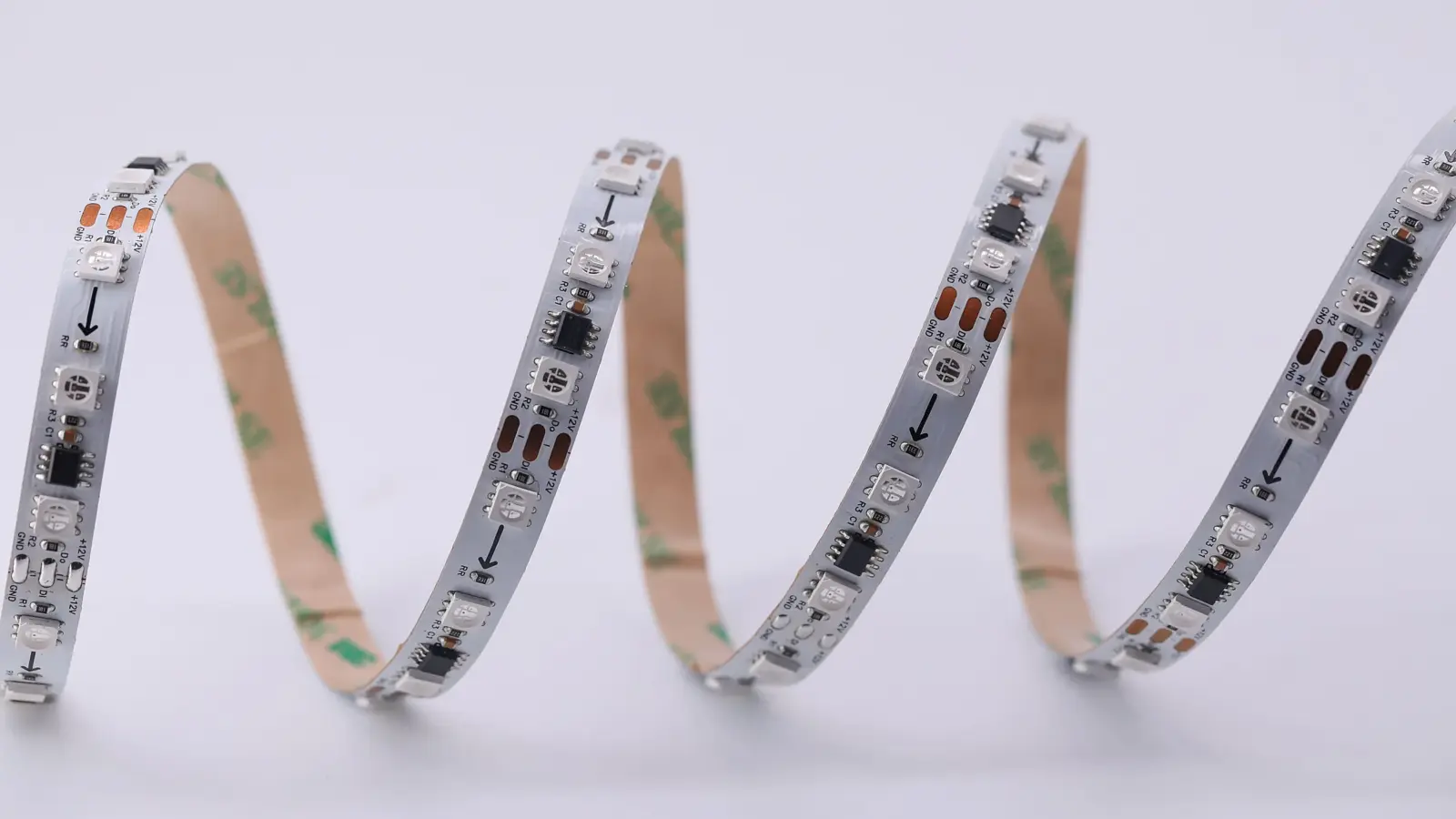
Our addressable program delivers pixel-level control over SPI — WS2811, WS2814, WS2805, WS2818, and SK6812 ICs — and DMX512 with UCS512 for console-driven installations. Pixel configurations run RGB, RGBW, and RGBCW on 5V, 12V, or 24V, including dot-free addressable COB up to 840 LEDs per meter, plus black-PCB and side-view options. The SPI lines run on standard pixel controllers, including WLED-based systems and Madrix, and the DMX512 lines patch into consoles and architectural control. UL Listed options are available, with documentation for your submittal package.
Why contractors spec our addressable strip
Individually addressable pixels
Every pixel carries its own IC — gradients and chases from one data line.
Dot-free addressable COB
Up to 840 LEDs/m — effects flow as a continuous band, not dots.
SPI & DMX512 control
WS-series SPI for controllers; UCS512 for console-driven DMX rigs.
RGBW & RGBCW pixel options
A white channel inside every pixel for clean white between effects.
Breakpoint-resume reliability
A failed pixel passes data through — the run keeps playing.
UL Listed options available
Certification held by the original manufacturing partner. Documentation available upon request.
Four addressable families, one spec conversation
SPI Addressable (SMD)
Discrete-pixel 5050 strip on SK6812 and FW1935 ICs — the standard spec for effects where individual points of light are visible.
| Model | LEDs/m | IC | Pixel config | Voltage |
|---|---|---|---|---|
| UT-A30-10 | 30 | SK6812 | RGB | 5V / 12V |
| UT-A60-10 | 60 | SK6812 | RGB | 5V / 12V / 24V |
| UT-AW60-12 | 60 | SK6812 | RGBW | 12V / 24V |
| UT-A84-12 | 84 | FW1935 | RGB | 24V |
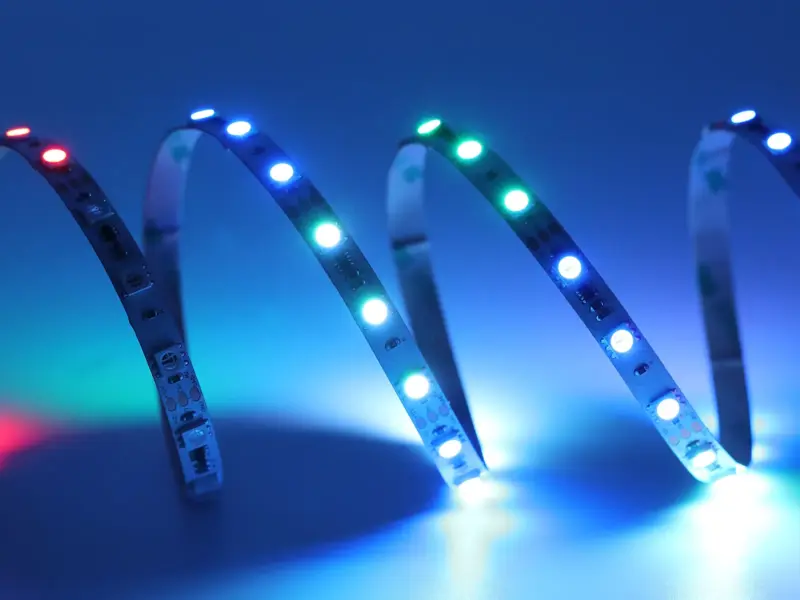
Addressable COB (Dot-Free)
Pixel effects on a continuous, dot-free line — gradients flow instead of stepping. On BP models, if one pixel fails the run keeps playing.
| Model | LEDs/m | IC | Pixel config | Voltage |
|---|---|---|---|---|
| UT-A432-10 | 432 | WS2811 | RGB | 12V |
| UT-A576-10 | 576 | WS2811 | RGB | 12V / 24V |
| UT-A576-10-BK | 576 | WS2811 | RGB · black PCB | 12V / 24V |
| UT-A720-12 | 720 | WS2811 | RGB | 12V / 24V |
| UT-A720-12-BP | 720 | WS2818 | RGB · breakpoint resume | 12V / 24V |
| UT-AW784-10 | 784 | WS2814 | RGBW | 24V |
| UT-ACW840-15 | 840 | WS2805 | RGBCW | 24V |
| UT-A630-8-SV | 630 | WS2811 | RGB side-view | 24V |
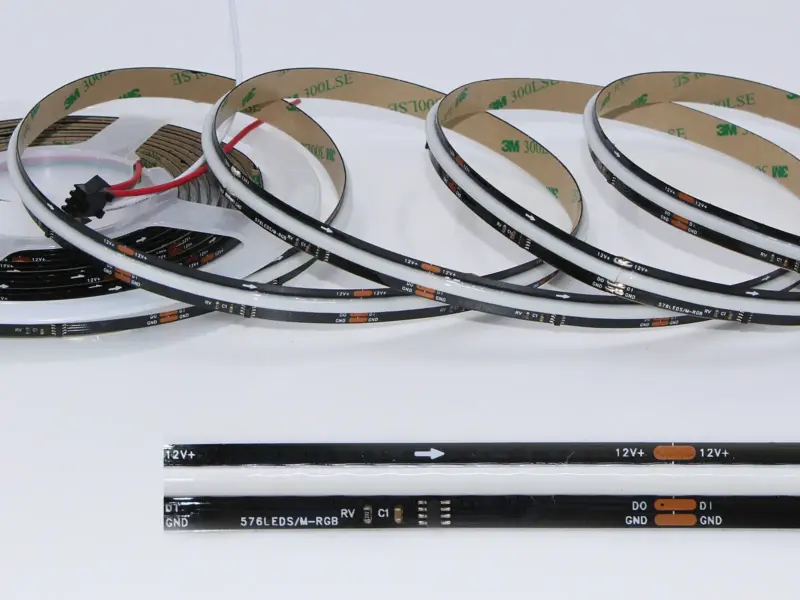
DMX512
Native DMX512 strip patches straight into consoles and architectural control systems — no SPI bridge, standard 512-channel protocol.
| Model | LEDs/m | IC | Pixel config | Voltage |
|---|---|---|---|---|
| UT-A540-12-DMX | 540 COB | UCS512CLN | RGB | 24V |
| UT-AW80-12-DMX | 80 SMD | DMX512 | RGBW | 24V |
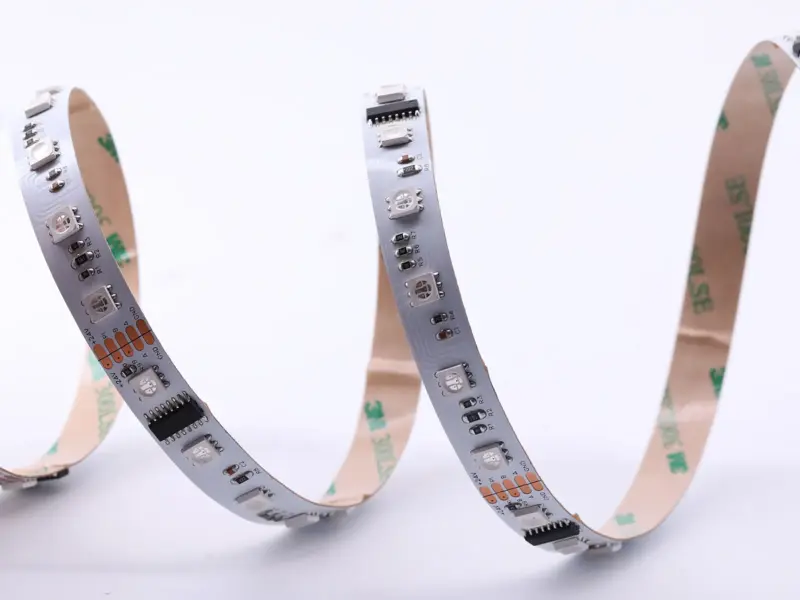
Chasing White
Dynamic white motion — a wave of light traveling along the run, in single white or dual-color 2700–6500K for effects that read as motion, not color.
| Model | LEDs/m | IC | Effect | Voltage |
|---|---|---|---|---|
| UT-A360-10-CW | 360 COB | WS2811 | dynamic white chase | 24V |
| UT-A420-10-CW | 420 COB | WS2811 | dynamic white chase | 24V |
| UT-A576-10-DCW | 576 COB | WS2811 | dual-color chase 2700-6500K | 12V / 24V |
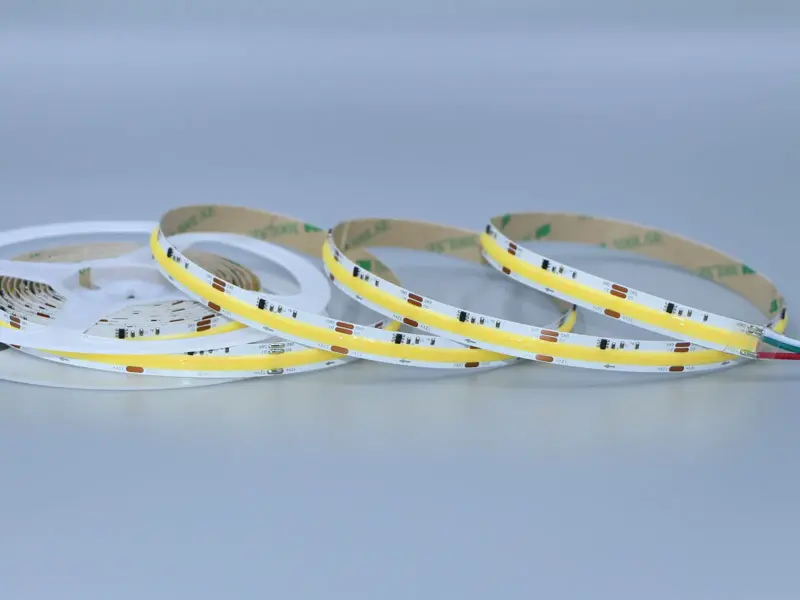
Master spec table
Representative models across all four families. Full photometric files and IES data ship with your quote.
How to read our model numbers: UT-A{LEDs per meter}-{PCB width mm}; suffixes: W RGBW · CW RGBCW/chasing white · SV side-view · BK black PCB · BP breakpoint resume · DMX DMX512 · DCW dual-color chase.
Tap a row for full specs.
| Model | LEDs/m | Construction | IC | Pixel config | Power W/ft (W/m) | Voltage | Cut increment | Max run | IP rating |
|---|---|---|---|---|---|---|---|---|---|
| UT-A30-10 | 30 | 5050 SMD | SK6812 | RGB | 2.2 W/ft (7.2 W/m) | 5V / 12V | 3.94 in (100 mm) | 10 ft (3 m)/feed | IP20 |
| UT-A60-10 | 60 | 5050 SMD | SK6812 | RGB | 4.4 W/ft (14.4 W/m) | 5V / 12V / 24V | 1.97 in (50 mm) | 10-16 ft (3-5 m)/feed | IP20 |
| UT-AW60-12 | 60 | 5050 SMD | SK6812 | RGBW | 5.8 W/ft (19 W/m) | 12V / 24V | 1.97 in (50 mm) | 16 ft (5 m)/feed | IP20 |
| UT-A84-12 | 84 | 5050 SMD | FW1935 | RGB | 5.8 W/ft (19 W/m) | 24V | 2.46 in (62.5 mm) | 16 ft (5 m)/feed | IP20 |
| UT-A432-10 | 432 | COB · dot-free | WS2811 | RGB | 2.4 W/ft (8 W/m) | 12V | 2.46 in (62.5 mm) | 10 ft (3 m)/feed | IP20 |
| UT-A576-10 | 576 | COB · dot-free | WS2811 | RGB | 2.4/4.9 W/ft (8/16 W/m) | 12V / 24V | 2.46 in (62.5 mm) | 16 ft (5 m)/feed | IP20 |
| UT-A576-10-BK | 576 | COB · black PCB | WS2811 | RGB · black PCB | 2.4/4.9 W/ft (8/16 W/m) | 12V / 24V | 2.46 in (62.5 mm) | 16 ft (5 m)/feed | IP20 |
| UT-A720-12 | 720 | COB · dot-free | WS2811 | RGB | 3.0/5.8 W/ft (10/19 W/m) | 12V / 24V | 1.97 in (50 mm) | 16 ft (5 m)/feed | IP20 |
| UT-A720-12-BP | 720 | COB · breakpoint resume | WS2818 | RGB · breakpoint resume | 3.7/6.4 W/ft (12/21 W/m) | 12V / 24V | 1.97 in (50 mm) | 16 ft (5 m)/feed | IP20 |
| UT-AW784-10 | 784 | COB · dot-free | WS2814 | RGBW | 6.4 W/ft (21 W/m) | 24V | 2.81 in (71.42 mm) | 16 ft (5 m)/feed | IP20 |
| UT-ACW840-15 | 840 | COB · dot-free | WS2805 | RGBCW | 7.9 W/ft (26 W/m) | 24V | 2.81 in (71.42 mm) | 16 ft (5 m)/feed | IP20 |
| UT-A630-8-SV | 630 | COB · side-view | WS2811 | RGB side-view | 3.4 W/ft (11 W/m) | 24V | 3.94 in (100 mm) | 16 ft (5 m)/feed | IP20 |
| UT-A540-12-DMX | 540 COB | COB · dot-free | UCS512CLN | RGB | 4.3 W/ft (14 W/m) | 24V | 3.94 in (100 mm) | 16 ft (5 m)/feed | IP20 |
| UT-AW80-12-DMX | 80 SMD | 5050 SMD | DMX512 | RGBW | 5.8 W/ft (19 W/m) | 24V | 3.94 in (100 mm) | 16 ft (5 m)/feed | IP20 |
| UT-A360-10-CW | 360 COB | COB · dot-free | WS2811 | Chasing white (dynamic) | 3.4 W/ft (11 W/m) | 24V | 3.28 in (83.33 mm) | 16 ft (5 m)/feed | IP20 |
| UT-A420-10-CW | 420 COB | COB · dot-free | WS2811 | Chasing white (dynamic) | 3.4 W/ft (11 W/m) | 24V | 3.94 in (100 mm) | 16 ft (5 m)/feed | IP20 |
| UT-A576-10-DCW | 576 COB | COB · dot-free | WS2811 | Dual-color chasing 2700-6500K | 3.7 W/ft (6+6) (12 W/m) | 12V / 24V | 1.64 in (41.66 mm) | 16 ft (5 m)/feed | IP20 |
Where addressable strip earns its keep
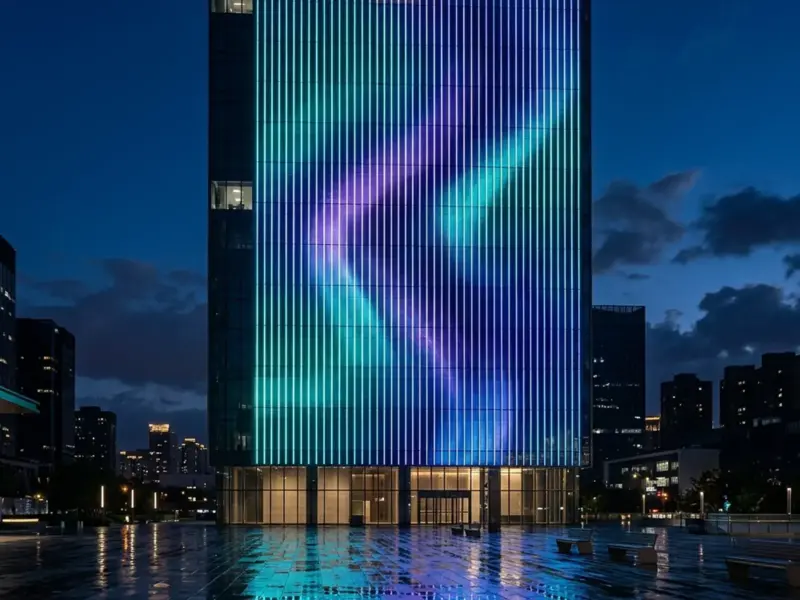
Media Facades
Video-mapped building facades and large-scale pixel canvases driven by SPI or DMX controllers. Outdoor versions are specified through our Outdoor line, with the wet location marking confirmed per model at quote.
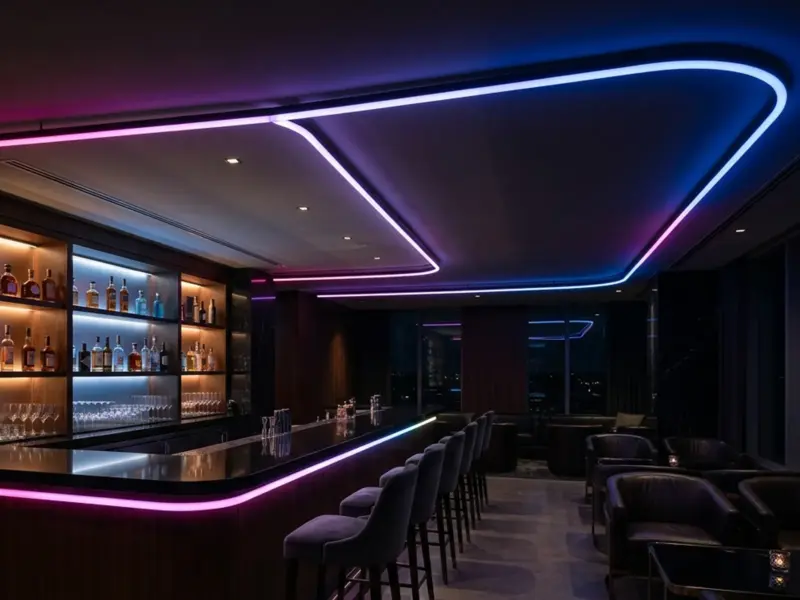
Entertainment & Hospitality
Bars, clubs, and themed venues where chases, gradients, and saved color scenes set the mood.
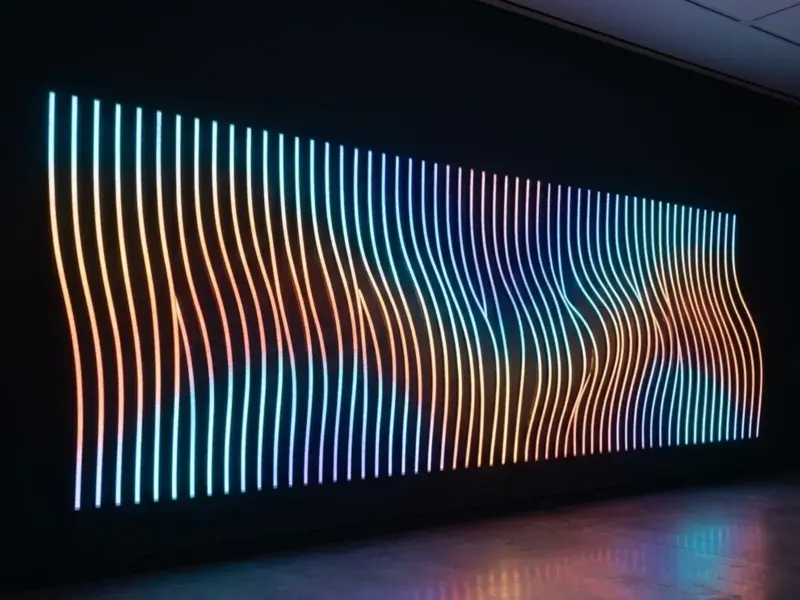
Feature Walls & Light Art
Programmable feature walls and light-art installations with independent per-pixel control.
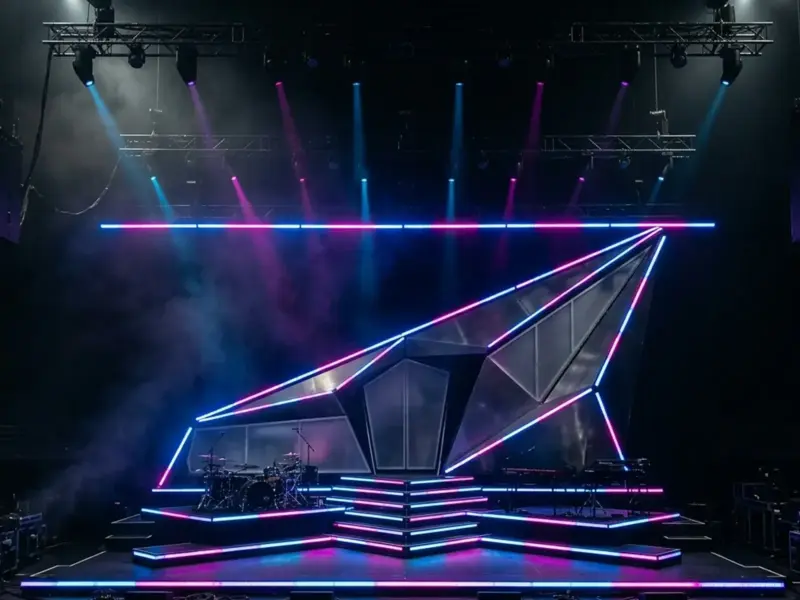
Stage & Events
Touring, broadcast, and event sets that need addressable effects on a continuous, cuttable line.
Certifications
Products are sourced from qualified manufacturing partners and are available with UL Listed, ETL Listed, FCC compliant, RoHS compliant and other applicable configurations. Certification coverage varies by model. Certification is held by the original manufacturing partner. Documentation and listing information are available upon request.
CE-compliant options available for buyers outside North America — contact us for EU specifications.
Related guides
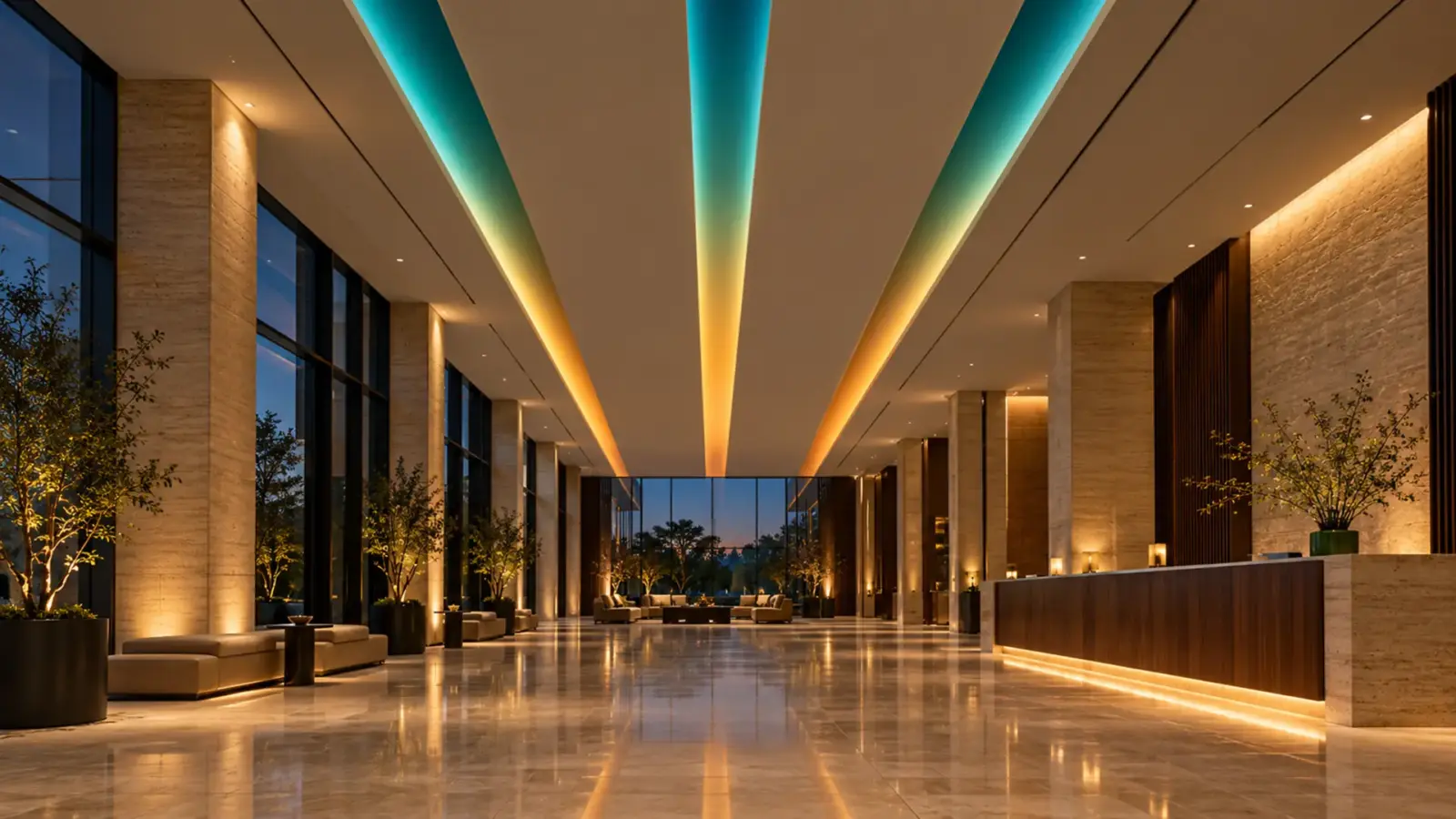
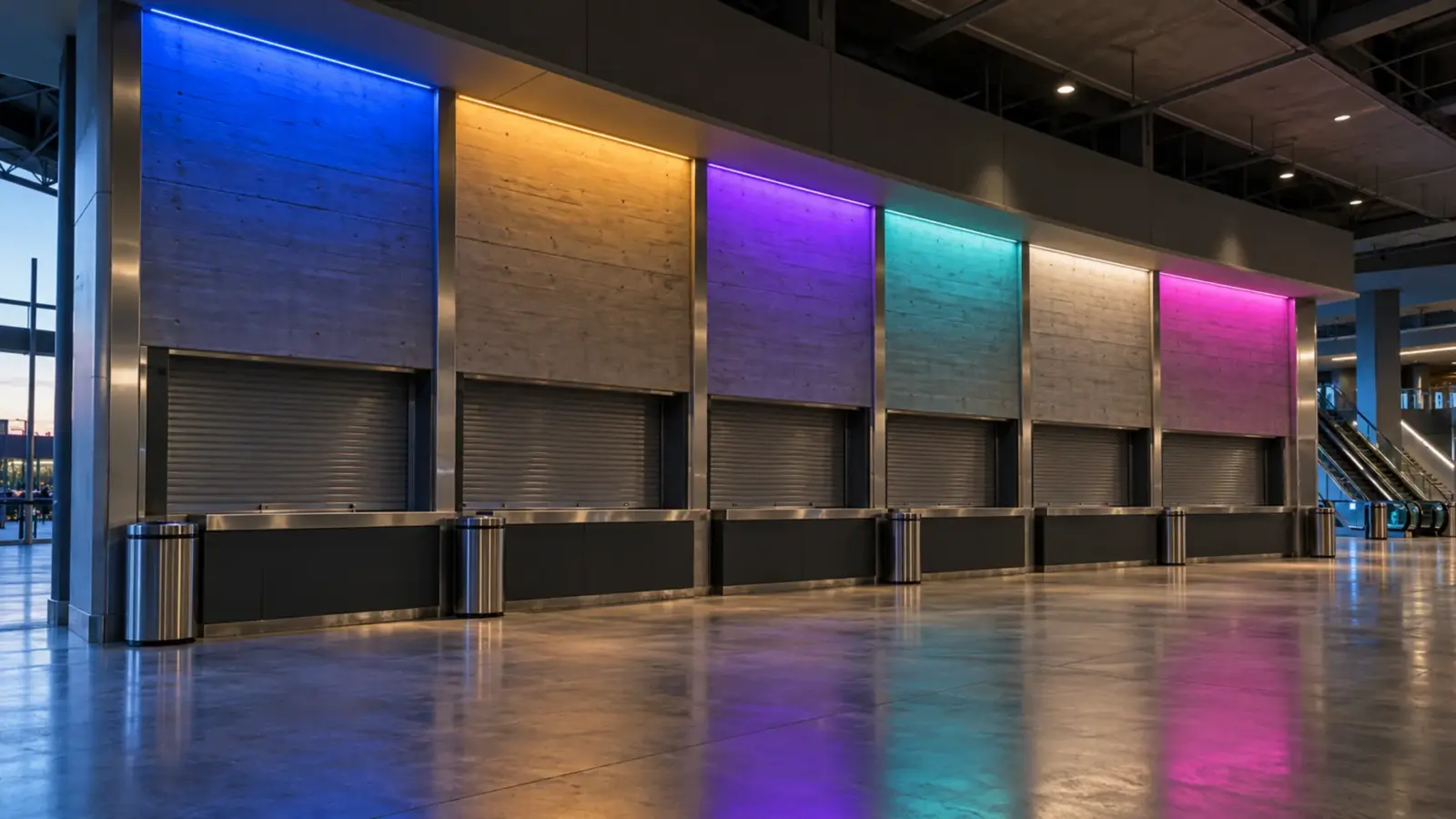
Specification, power and installation guides for this range.
Addressable questions
What is the difference between addressable and regular RGB strip?
A regular RGB strip changes color as one unit; an addressable strip gives every pixel its own control IC, so each point along the run can show a different color at the same time. That enables chases, gradients, and video-mapped effects from a single data line. If the whole run only ever needs one color at a time, analog RGB is the simpler, cheaper spec.
Should I choose 5V, 12V, or 24V addressable strip?
24V for long architectural runs: most 24V rows feed 16 ft (5 m) and the lower current keeps feed wire small. 5V gives per-LED control but feeds only short runs, 10 ft (3 m) or less. 12V rows feed 10 to 16 ft (3 to 5 m) depending on the model, and the spec table lists each. We match voltage to run length and effect resolution at quote.
Can addressable LED strip be cut?
Yes — at the marked cut points between pixel groups, from 1.64 in (41.66 mm) to 3.94 in (100 mm) depending on the model. Cutting never harms the remaining pixels; the data signal simply ends at the cut. Rejoin with connectors that match the model's pinout: single-data SPI strip uses 3 pins, while breakpoint-resume and DMX models carry extra data lines. The datasheet lists the pinout.
Which IC should I specify — WS2811, WS2818, or SK6812?
WS2811 is the workhorse for RGB pixel work on 12V/24V; SK6812 gives per-LED control on the 5V and 12V SMD rows and drives the RGBW SMD row; WS2818 adds breakpoint resume, so a failed pixel passes data through. For signage and long public runs, specify WS2818; for RGBW or RGBCW pixels, WS2814 and WS2805.
What controller do I need?
Any standard SPI pixel controller drives our SPI lines — including WLED-based systems and Madrix — while the DMX512 series patches directly into consoles and architectural control. Controller, data amplifier, and power injection plan are matched at quote time from our Drivers, Controllers & Connectors line.
How do I power a long addressable run?
Inject power at the max-run interval in the spec table, 10 to 16 ft (3 to 5 m) depending on the model, keep the data line continuous, and keep each driver's load at or below 80% of its rating. A long data cable between controller and strip may need a data amplifier; we plan injection points and amplifiers at quote.
What happens if one pixel fails?
On standard SPI strip, pixels downstream of a failure lose their data signal. Our breakpoint-resume models solve this: if one pixel fails, the data passes through and the rest of the run keeps playing. Specify a BP model for signage and long architectural runs.
Spec your addressable project
Send your project details — an engineer replies with matched strip, controllers, and documentation.
We typically respond within 24 hours. No spam, ever.