

Marine LED Strip Lights and Neon Flex for Ships and Cruise Projects
On a ship, LED lighting lives with salt air, vibration, daily washdown and limited access for maintenance. The strip, its fixings, its joints and its drivers all have to be chosen for that, and the approvals a vessel needs are settled with the shipyard before anything is ordered.
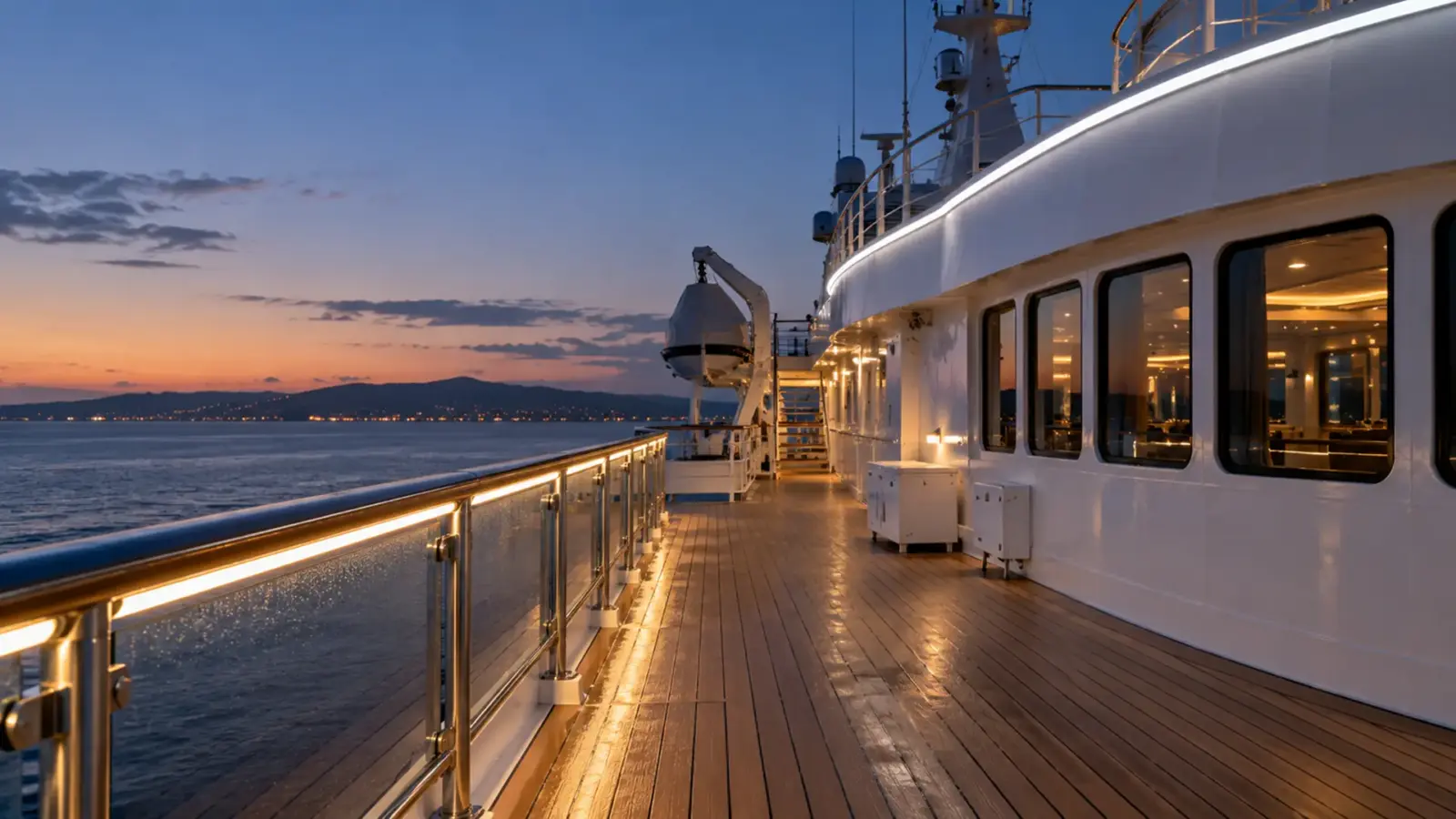
Marine LED strip lights and neon flex cover open-deck handrails and stair nosings, outlines along the superstructure, pool and spa decks, and the lounges, corridors and bars inside. Each zone sees a different mix of water, salt and movement, so the construction is picked zone by zone.
Marine configurations we usually supply
A starting point by zone. Every model comes from the outdoor, neon flex, COB, RGB and driver spec tables, and the marking each zone needs is confirmed at quote.
| Zone | Product | Example models | Feed | Watch for |
|---|---|---|---|---|
| Deck handrails and stair nosings | Sleeved IP67 strip in a sealed profile | UT-O480-10-67, UT-O120-12-67 | 16 ft (5 m) per feed | Stainless fixings, sealed ends, no adhesive-only mounting |
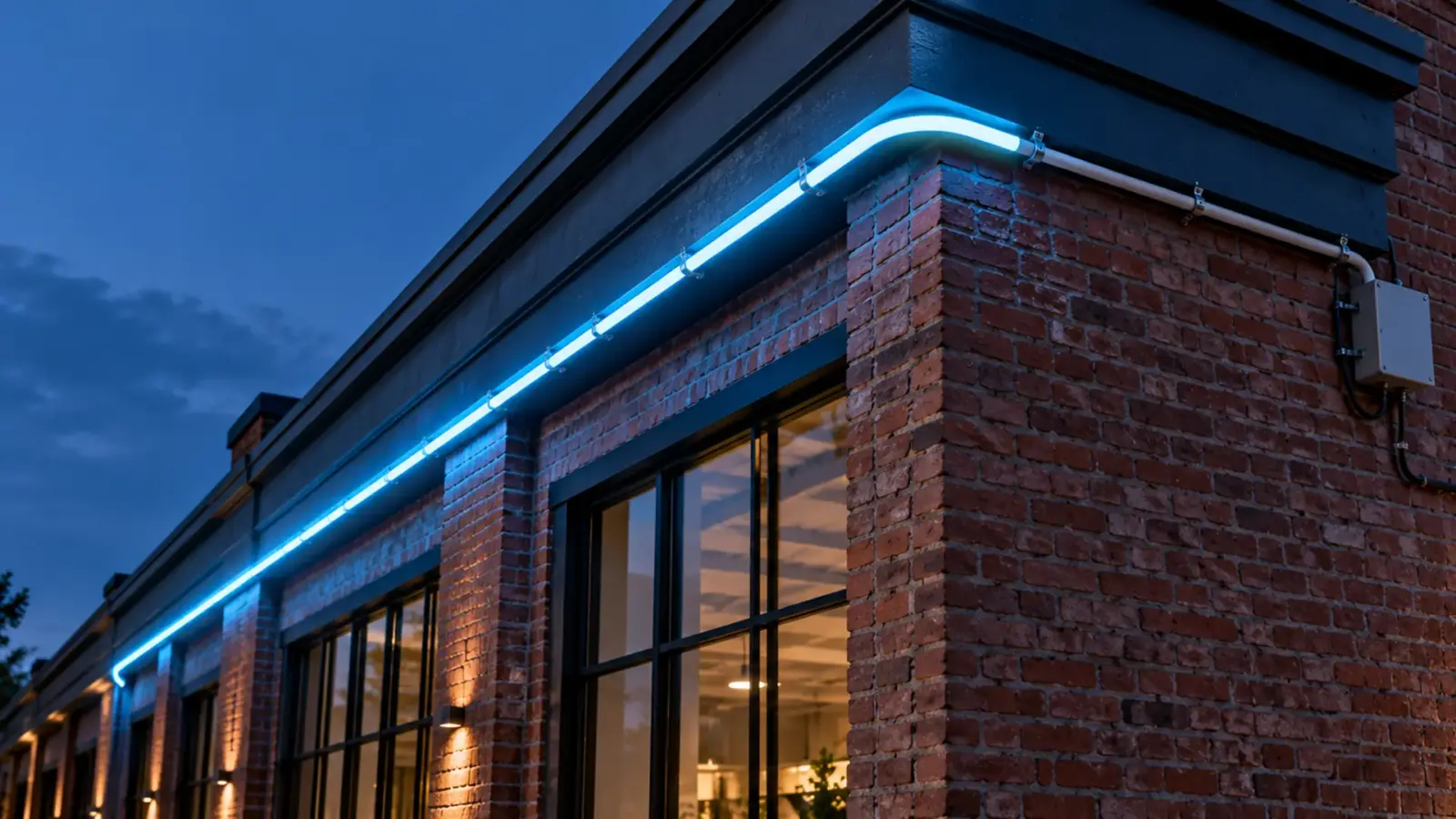
| Superstructure outlines | IP68 neon flex | UT-N1616-68 (IP68, IK10) | 16 ft (5 m) per feed | Mounting track every few feet, bend radius 3.94 in (100 mm) |
| Pool and spa decks | 12V pool series | UT-O120-12-PL, UT-O240-15-PL | 10 ft (3 m) per feed | Listing for the use, supply and distance rules |
| Lounges and corridors | COB strip in channel | UT-C480-8 | 16 ft (5 m) per feed | Dot-free line, dimming, access to drivers |
| Bars, theaters and feature color | RGBW strip | UT-RW84-12 | 16 ft (5 m) per feed | Control protocol agreed with the ship's system |
| Drivers in damp technical spaces | Potted IP67 driver | UT-D100-24-67, UT-D60-1224-67 | — | Reachable for service, out of washdown spray |
Six decisions on a marine job
Settle them with the shipyard and the owner's specification, and confirm the look and the fixing on a mockup before the order.
Approvals come from the vessel, not the reel
Lighting on a ship is approved against the vessel's flag, its class society and the owner's specification. Those requirements differ from one vessel to the next and from cabins to open decks, and they are set by the shipyard or the naval architect.
An IP code or a UL listing does not stand in for a marine approval. We confirm the listing of each model at quote and work to the documents the yard asks for; we do not claim a class or USCG approval for our products.
Splash, washdown and immersion
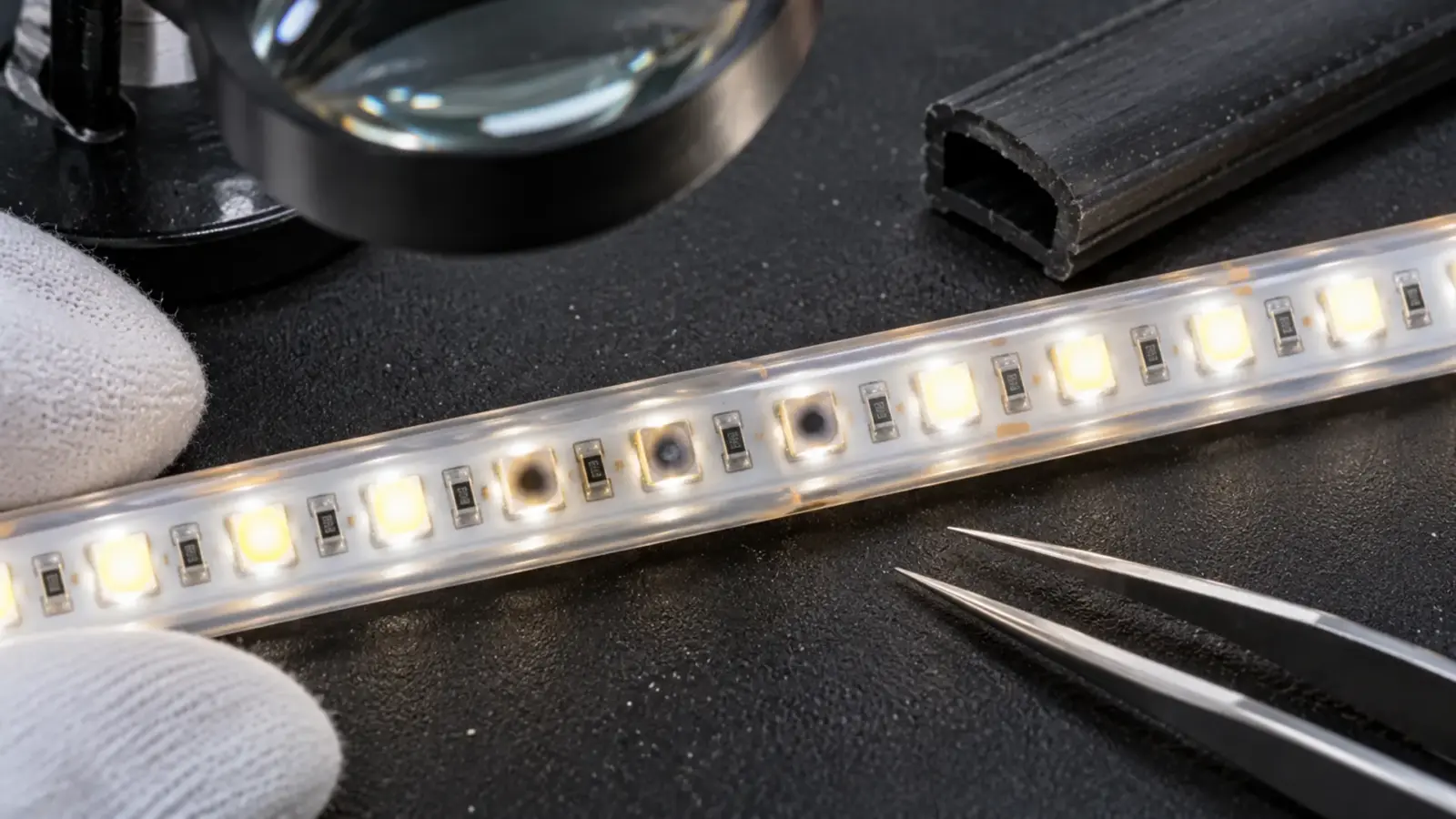
Open decks see rain, spray and daily washdown; pool decks see standing water. Our outdoor strip comes in three constructions: a silicone top coat at IP65 for splash, an extrusion sleeve at IP67 for temporary immersion, and a full silicone tube at IP68 for continuous submersion.
The installation is only as sealed as its weakest part: connectors, cut ends and the driver have to match the zone.
Salt air and corrosion
Salt air reaches strip that never gets wet. Sealed silicone constructions keep it off the board; the risk moves to everything around the strip: profiles, clips, screws and cable glands.
Specify fixings and profiles with a finish suited to salt exposure, keep dissimilar metals apart, and seal every cut end. Ask for the profile finish on the submittal, not only the strip.
Vibration and fixing
Engines, thrusters and waves keep a ship moving all the time. Adhesive tape alone can creep or let go; strip and neon on a ship are held mechanically, with clips or mounting track at short, even spacing, and joints are supported on both sides.
Leave a service loop at every feed so cables are not pulled tight as the structure flexes.
Cleaning and maintenance access
Crews clean decks, railings and public spaces every day, often with strong cleaners. Sealed constructions take the cleaning; open profiles collect residue.
Plan access before the ceilings and panels close: drivers where a crew can reach them at sea, feed points marked on the drawings, and a stock of spare strip from the same bin on board.
Feeds and driver location
Long deck and outline runs are split into sections within their rated run per feed: 16 ft (5 m) on most of our 24V outdoor strip and neon, 10 ft (3 m) on the 12V pool series.
Drivers go in dry, ventilated spaces where possible; where a technical space is damp, potted IP67 drivers such as UT-D100-24-67 suit it better than open IP20 drivers.
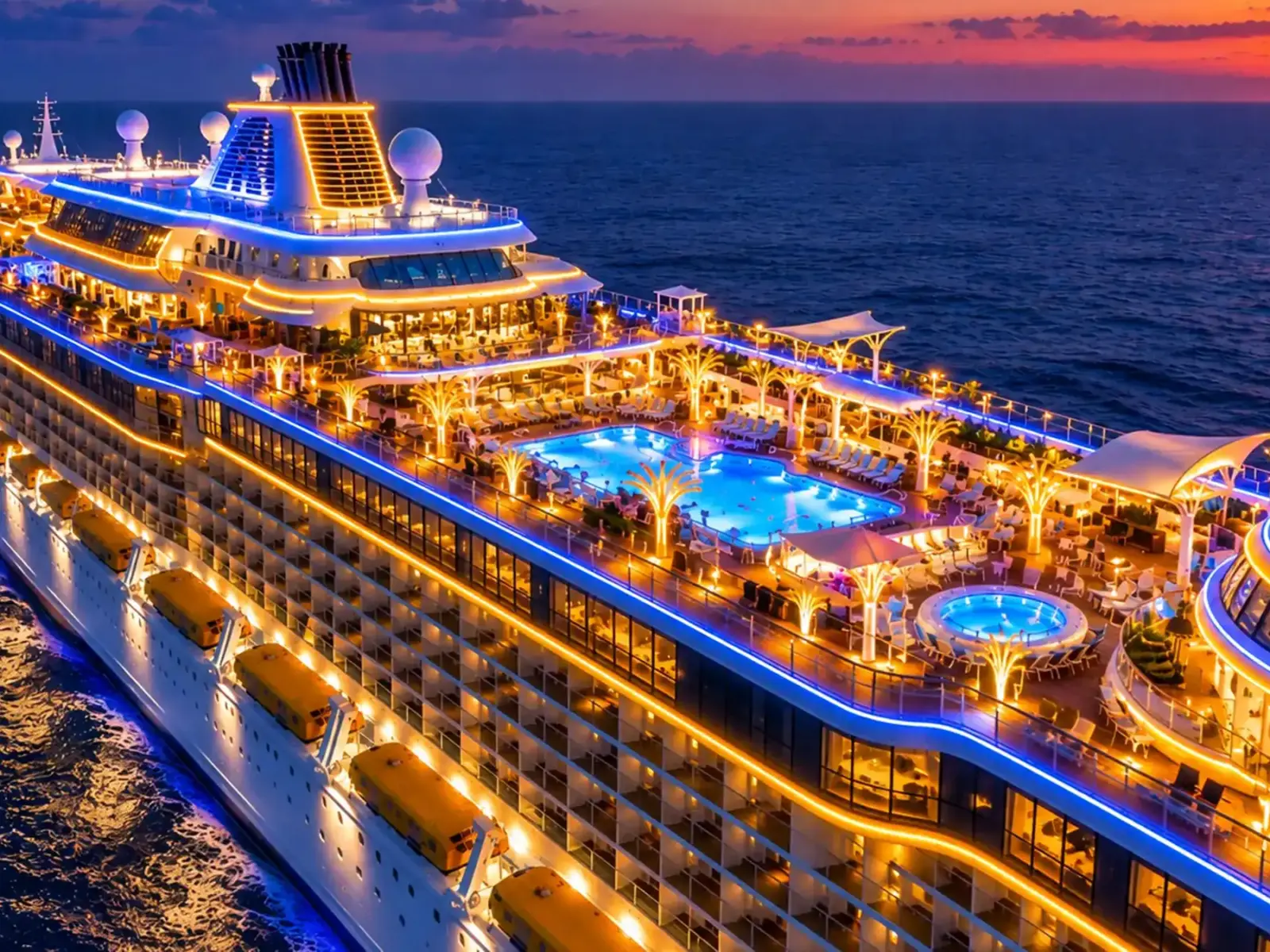
Go deeper on wet and exposed installations
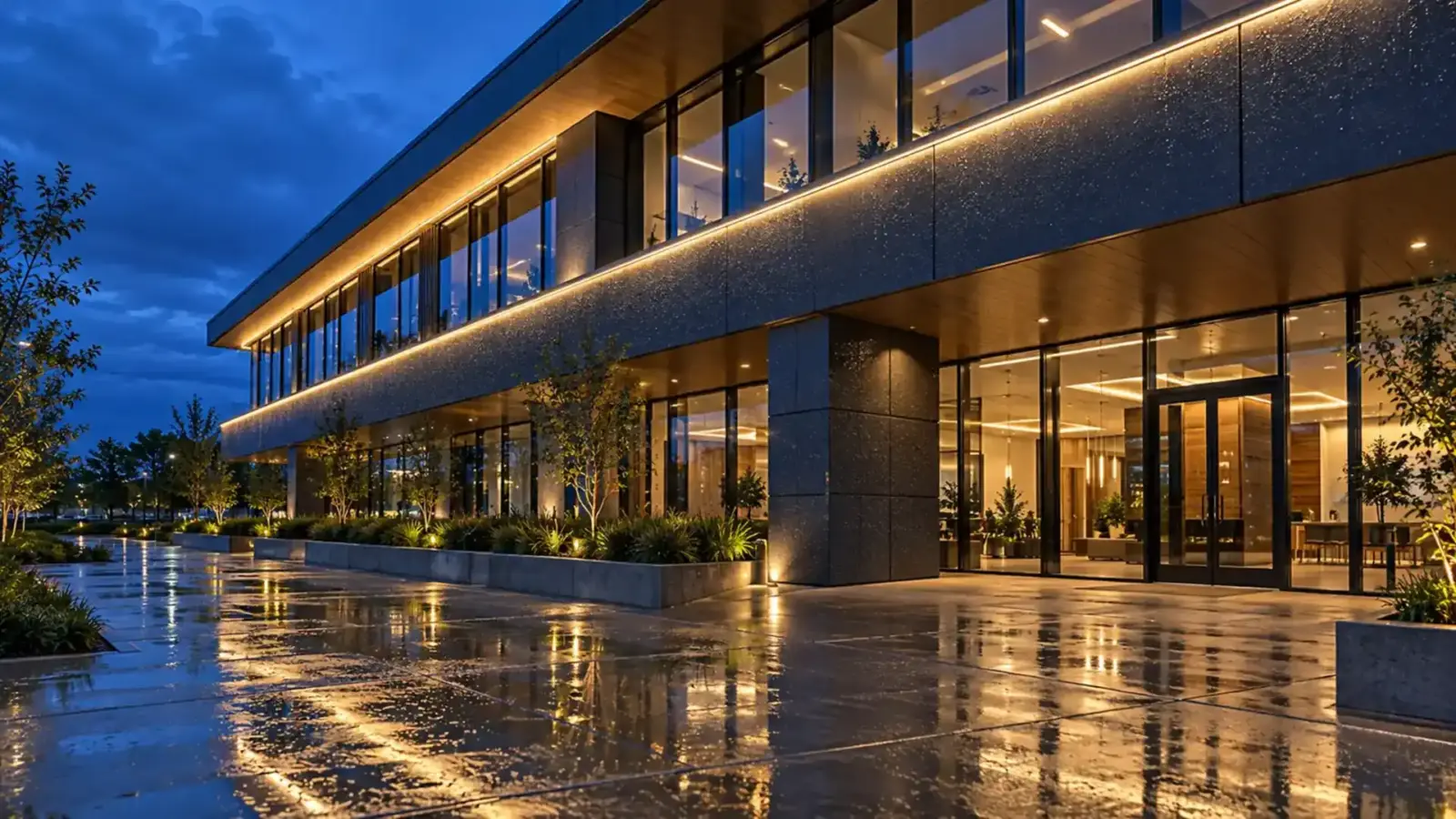
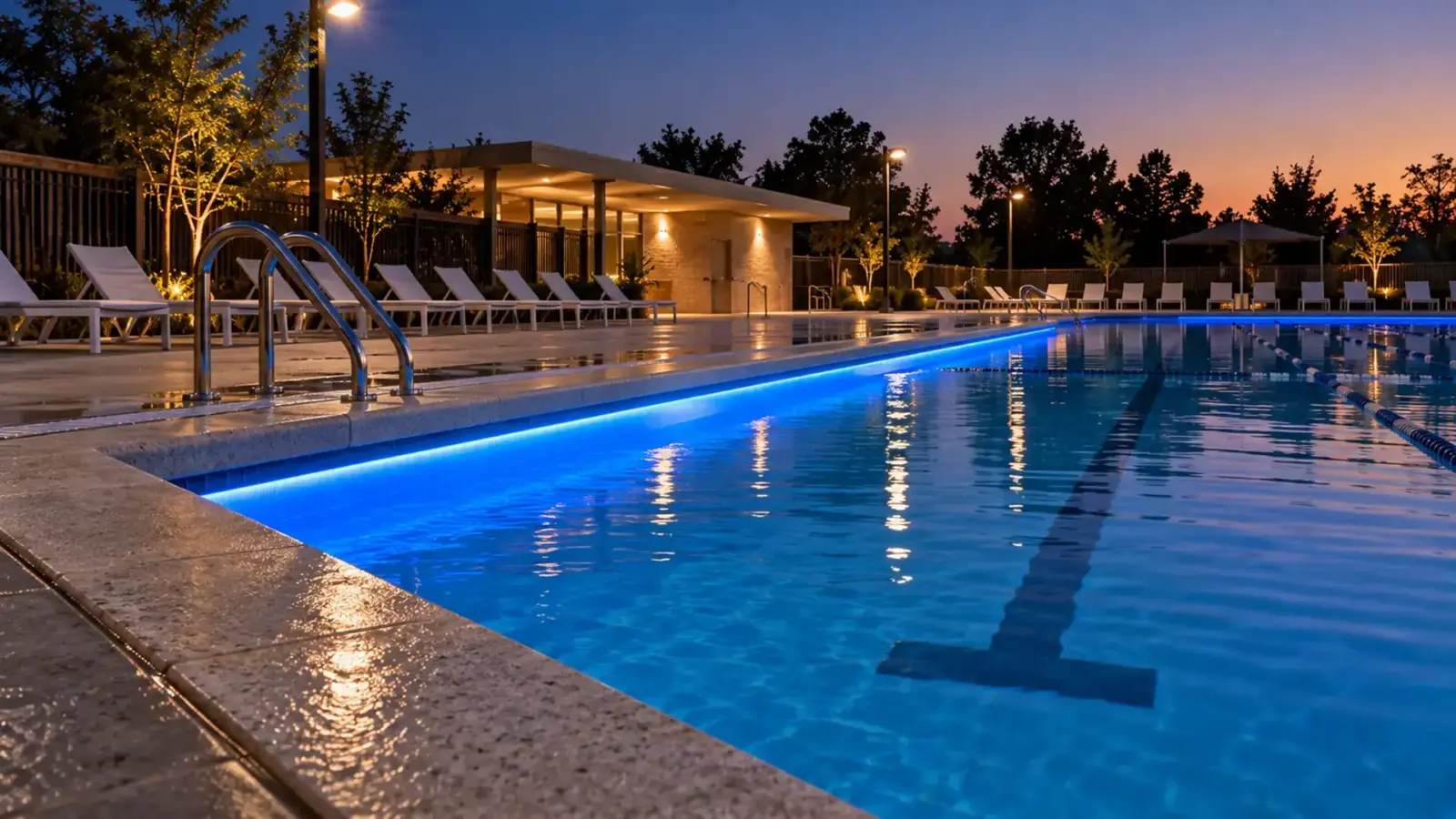
Marine and cruise questions
Is your LED strip approved for marine use?
We do not claim a marine, class-society or USCG approval for our products. The approvals a vessel needs depend on its flag, its class and the owner's specification, and the shipyard sets them. We confirm the listing of each model at quote and supply the documents the yard asks for.
Can LED strip be used on open decks?
Yes, in a sealed construction with sealed ends and connectors, held mechanically rather than by adhesive alone. IP67 sleeved strip suits handrails and nosings; IP68 tube or neon suits places where water can stand.
Does salt air damage LED strip?
Salt air attacks what is exposed: open boards, cut ends, profiles and fixings. Sealed silicone constructions keep it off the board, and sealed ends and corrosion-suited fixings protect the rest of the run.
Can neon flex take foot traffic or knocks on deck?
Our UT-N1616-68 neon is rated IP68 and IK10 for impact. Where people can step on or kick a line, choose an impact-rated profile and mount it in a protected position.
Can LED strip go in a ship's pool?
Only a product listed for underwater use, on a compliant supply, belongs below the waterline. Our 12V pool series is built for pool and water-feature work, and the listing for the use is confirmed at quote.
Can LED strip lights be used on a boat?
Yes, with the same zone logic as a ship: sealed IP67 or IP68 strip and neon flex on open decks and around water, IP65 or IP20 inside dry cabins, and connectors, cut ends and drivers matched to the zone. Boat LED strip lights run from the vessel's 12V or 24V DC supply through a driver or regulator that holds the strip's voltage steady.
Should marine LED strip be 12V or 24V?
24V where the run allows it: the same light draws half the current, so runs go further per feed and the voltage drop along a long deck line stays small. 12V is used where the vessel's DC system or an existing fixture is 12V and the runs are short. Constant-current strip and neon give the longest single feeds on long outlines.
Spec your vessel lighting
Send the general arrangement, the zones and the yard's lighting specification. An engineer replies with the strip, fixing, driver and control plan for each zone.
We typically respond within 24 hours. No spam, ever.