

Architectural Facade and Outdoor LED Lighting
Outdoor lighting is installed once and lives with weather, sun and water for years, so the whole system has to be built for the location: the strip, the optic, the connectors, the driver and every cut end.
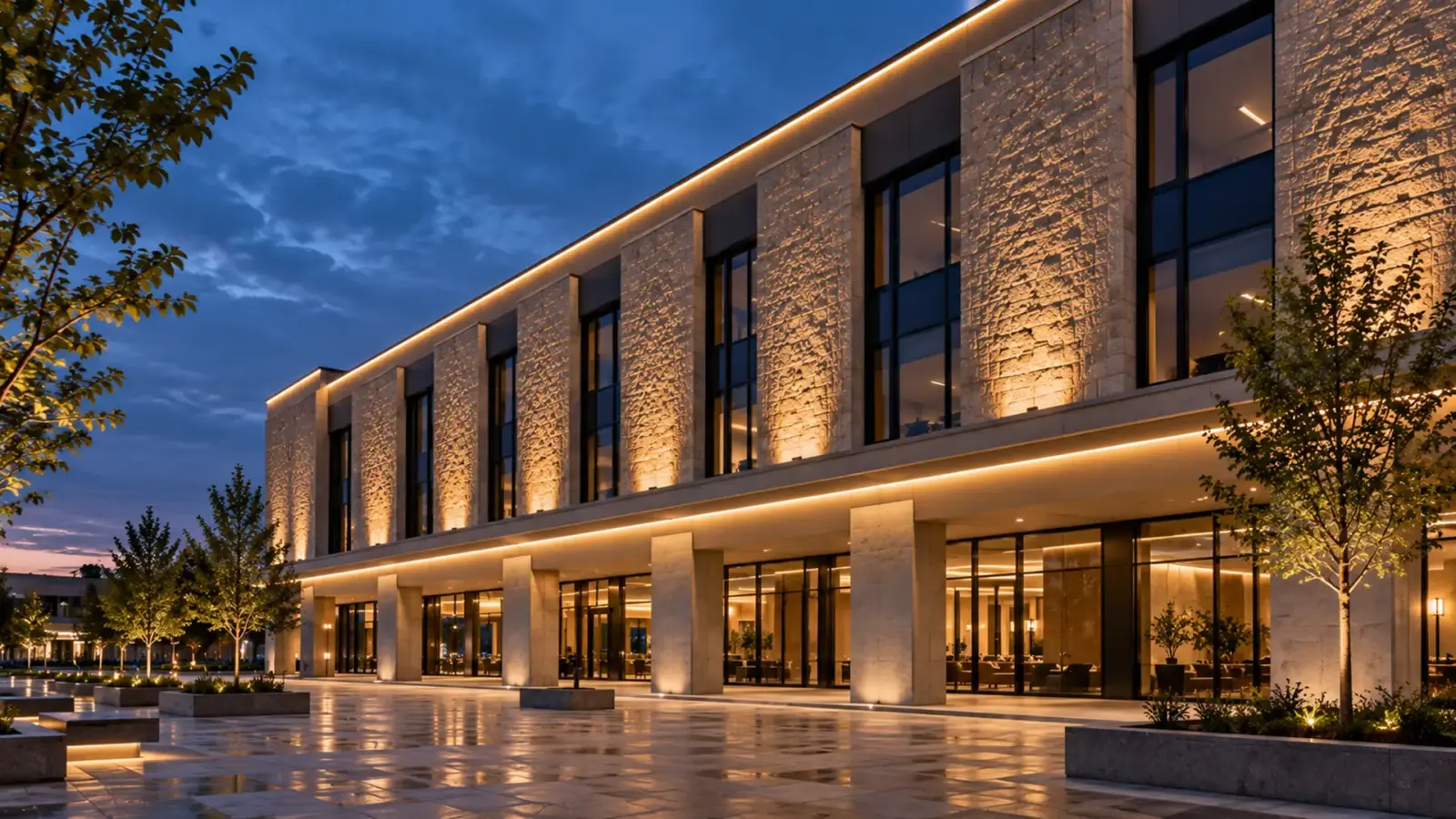
Facade and soffit lighting with permanent outdoor LED strip covers soffit and eave lines, building outlines, grazed and washed facades, canopies, steps and landscape walls. What separates a permanent installation from a seasonal one is the construction: sealed silicone strip and profiles, connectors and drivers matched to the location, and cut ends sealed to the same standard as the strip. This page covers the IP code and the wet location marking, wash or graze, optics, feeds, drivers and sealing, with the configurations we usually supply.
Outdoor configurations we usually supply
A starting point by element. Every model comes from the outdoor, wall washer or neon flex spec tables, and the wet location marking for each part is confirmed per model at quote.
| Element | Product | Example models | Optic / feed | Watch for |
|---|---|---|---|---|
| Soffit and eave lines | Silicone-sleeved COB strip | UT-O480-10-67, UT-O320-8-67 (IP67) | 16 ft (5 m) per feed | Connectors and driver matched to the location |
| Grazing textured masonry | Lensed wall washer bar | UT-WB27-1060 (10° × 60°), UT-WS20-30 (30°) | Within 6 in of the wall; 16.4 ft (5 m) per feed | A mockup on the real material |
| Washing a smooth facade | Wall washer bar | UT-WB27-45, UT-WS18-45 (45°) | 6 to 12 in from the wall | Bright band under a parapet if the setback is short |
| Building outlines and parapets | Top bend neon flex | UT-N1616-TB (62 ft / 19 m CC), UT-N2020-TB (98 ft / 30 m CC) | One plane; feeds behind the parapet | Bend radius at corners |
| Lines within public reach | IP68 / IK10 neon flex | UT-N1616-68 | 16 ft (5 m) per feed | Impact and vandal exposure |
| Canopies, steps and handrails | IP67 extrusion strip | UT-O320-8-67, UT-O120-12-67 | Channel or clips along the edge | Sealed end caps at every cut |
| Color-changing facades | DMX RGBW wall washer · RGBW neon flex | UT-WB27-1060-DMX, UT-WP24-RGBW, UT-N1616-TB (RGBW) | DMX zones per bay or column | White channel for clean white scenes |
Full spec tables: Outdoor · Wall washer · Neon flex · Drivers
Nine decisions on an outdoor job
Settle them on the elevation and the wall section, and confirm the look on a mockup against the real material at night.
IP code and the wet location marking
An IP code is a lab test of dust and water ingress; the wet location marking is a code classification that comes from the product's listing, and it is what the inspector reads. IP68 alone does not make a strip wet location rated, and an IP68 claim is incomplete without a depth and a duration.
The system is only as protected as its weakest part: the strip, the connectors, the driver and every cut end have to suit the location. We confirm the marking for each part per model at quote.
Wash or graze: the setback decides
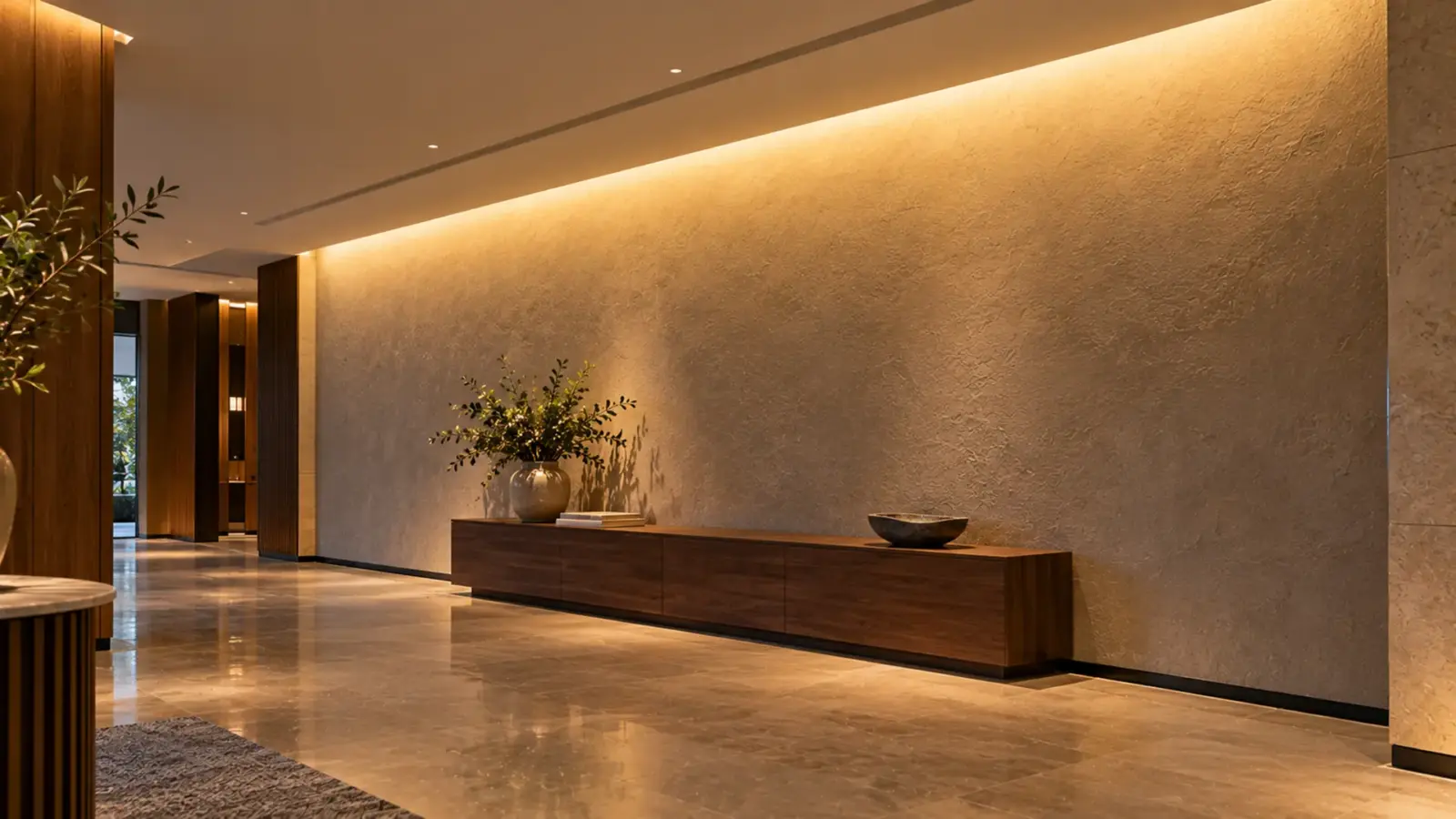
Setback is the distance from the wall to the light. Grazing sits within 6 in of the wall, so light rakes across the surface and brings out stone, brick or fluted panels. Washing sits 6 to 12 in from the wall and floods it with even light, which hides texture.
Choose by the material and the intent, then fix the setback before choosing the optic; a ceiling pocket or a ledge often sets the largest setback available.
Optic: where the light lands
The beam angle decides where the light lands on the wall. Narrow and asymmetric optics such as 10° × 60° reach further up a tall wall from a grazing position; 30° and 45° optics cover lower walls and washing positions; a wide beam reaches the wall sooner and needs more setback to stay even.
Rules of thumb for spacing and scalloping do not transfer between products, so verify with a mockup or the IES file before ordering.
Soffit and eave lighting with LED strip
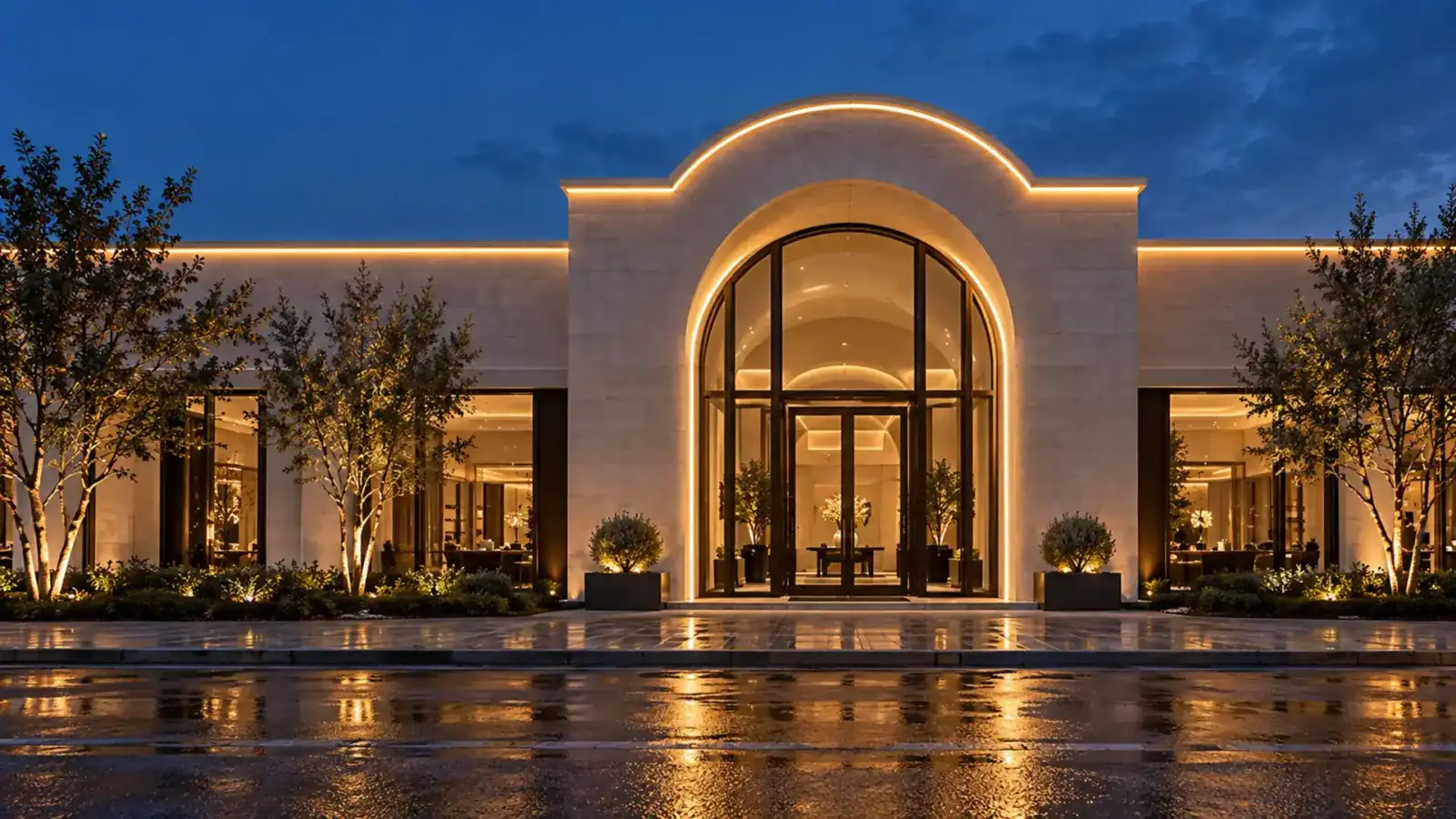
Soffit lighting is a continuous line of light recessed into the underside of a roof overhang, canopy or balcony, aimed down the wall or across the walkway; eave lighting runs the same line along the outer edge of the roof so the outline of the building reads at night. Both are permanent outdoor runs that are seen every evening from the street, so the line has to be even from end to end.
Linear LED strip is the usual choice over puck or recessed soffit downlights: the strip gives one unbroken line with no scallops between fixtures, washes the wall evenly and follows a long overhang without a fixture every few feet. Pucks suit a single entrance or a column; a run of more than a few feet, or a wall that should read as one plane, is strip in a channel.
A soffit is a damp or wet location, so the strip is IP65 or higher, with IP67 silicone-sleeved COB where the soffit is open to rain, wind-blown spray or hose washing. The connectors, the sealed cut ends and the driver have to match that rating; the wet location marking for each part is confirmed per model at quote. Where the soffit also has to graze a stone or fluted wall below it, a lensed wall washer bar replaces the strip.
Mount the strip in an aluminum channel with an opal diffuser, set back from the fascia so the diffuser is hidden from the street, and draw the lead exit toward the feed point before the fascia closes. Put the driver indoors, in the attic or in a sealed enclosure in the soffit void, with an access panel within reach of every feed. Outdoor strip feeds 16 ft (5 m) per run, so a long overhang is fed from several points with the feed wire sized for the distance from the driver; check each home run with the feed-wire voltage drop calculator and keep one color temperature across every soffit, eave and entrance run that can be seen together.
Runs, feeds and junctions
Outdoor strip feeds 16 ft (5 m) per run, wall washer bars 16.4 ft (5 m), and constant-current neon flex goes further from one end: 62 ft (19 m) on UT-N1616-TB and 98 ft (30 m) on UT-N2020-TB. Longer elevations add feed points, and each one is a junction that has to be sealed and reachable.
Put feed points behind parapets, in soffits or inside the building where the wire can be protected, and draw them on the elevation.
Drivers outdoors
Our Class 2 drivers are IP20 and stay in a dry space, inside the building or in an enclosure suited to the location. Where a driver has to sit in a damp or wet location, potted IP67 drivers such as UT-D100-24-67 are the choice, with connectors matched to the same rating.
Keep each driver's load at or below 80% of its rating, and keep drivers reachable for service without lifts or demolition where the building allows.
Cut ends, end caps and joints
Every field cut opens the seal. Cut only at the marked points, re-seal each open end with the matching silicone end cap and adhesive, and count the cuts on the drawing so the caps are ordered with the strip.
Fewer joints mean fewer places for water to get in, so plan pieces to the elevation and order long runs as single pieces where one feed allows.
What makes it permanent
Outdoor strip and profiles in this range are built in silicone, from a silicone top coat at IP65 to extrusion sleeves at IP67 and full tubes at IP68, for weather, UV and temperature swing.
Permanence also comes from the installation: continuous support along the run, drip loops at feeds, sealed penetrations, and drivers and joints placed where they can be serviced.
Color, zones and control
Single-color facades usually dim through 0-10V drivers on a schedule or a photocell. Color-changing facades use DMX512 RGBW wall washers or RGBW neon flex, with each bay or column on its own zone; the white channel keeps material and grain readable in white scenes.
The control system, the zones and the data runs are matched at quote, together with the drivers.
Related projects
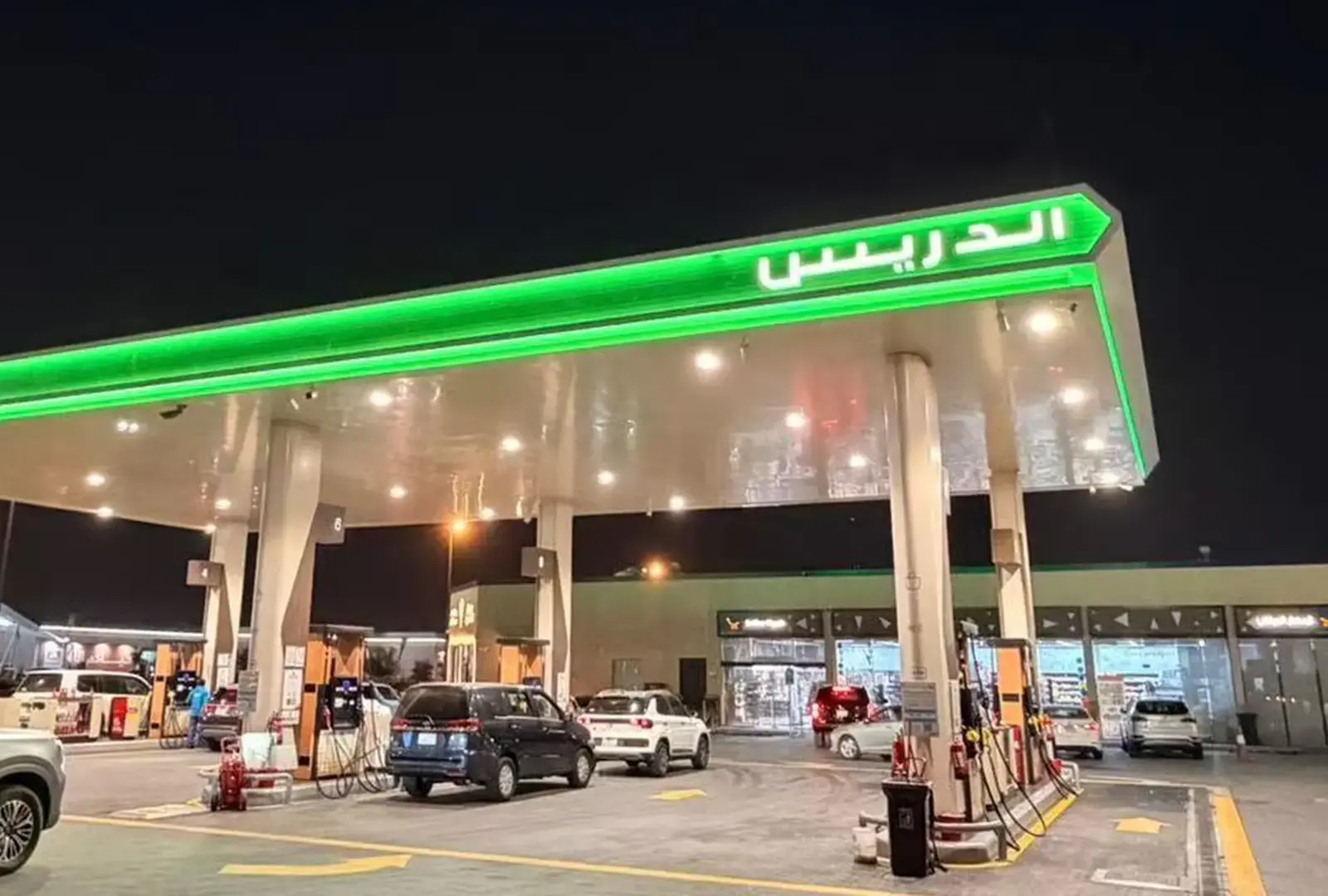
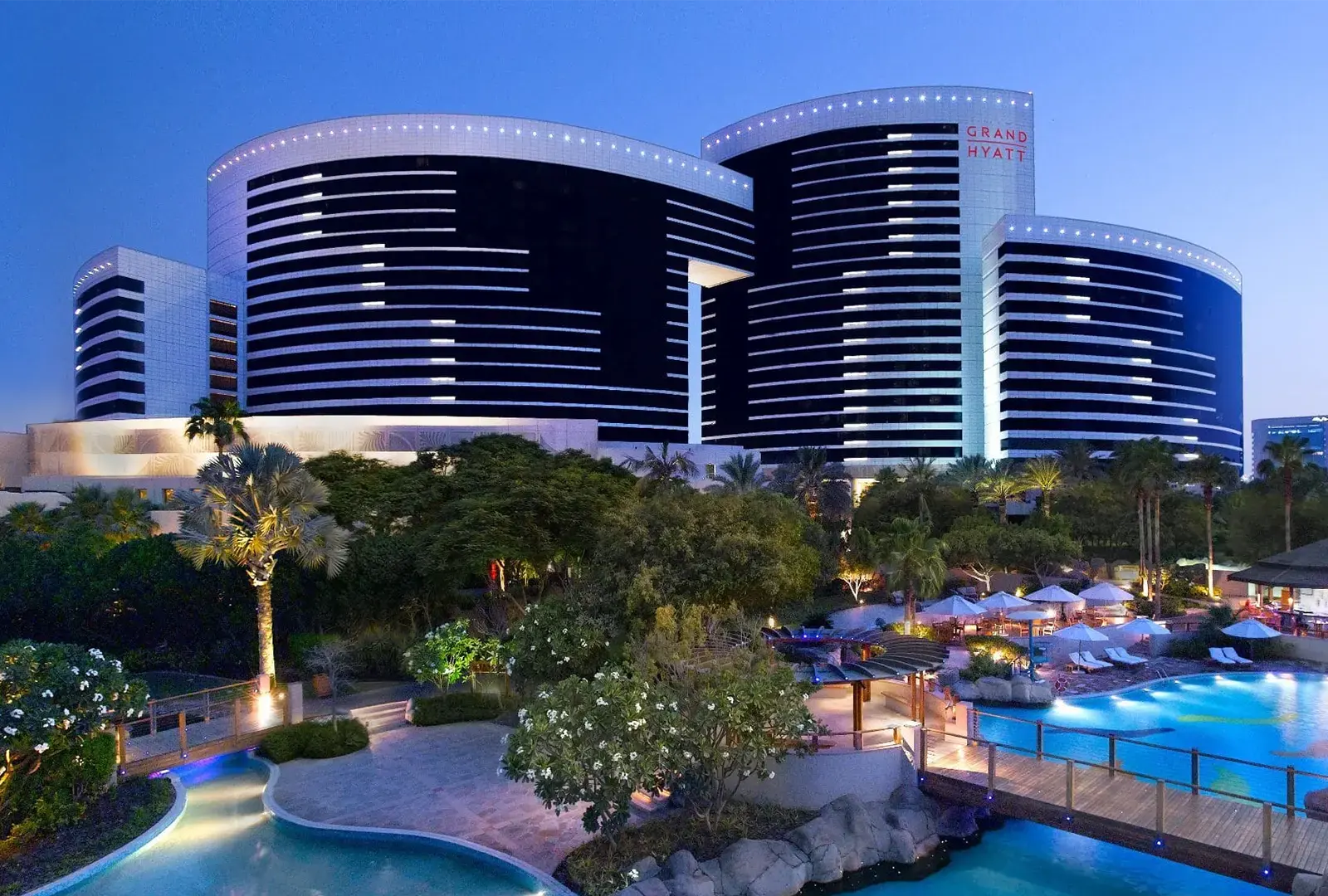
Projects that use this range.
Go deeper on outdoor lighting

Facade and outdoor questions
What makes outdoor LED strip suitable for permanent installation?
Sealed silicone construction (a top coat at IP65, an extrusion sleeve at IP67 or a full tube at IP68), connectors and drivers matched to the location, sealed cut ends, and an installation with continuous support and serviceable drivers and joints.
Is IP68 LED strip rated for wet locations?
Not by the IP code alone. IP68 is a lab test of ingress; the wet location marking comes from the product's listing, and the connectors and driver have to match too. We confirm the marking per model at quote.
How far from the wall should a facade wall washer sit?
Within 6 in to graze a textured surface, and 6 to 12 in to wash a smooth one evenly. Fix the setback first, then pick the beam angle, and confirm on a mockup.
Where should the driver go on an outdoor installation?
Indoors or in a dry enclosure where possible; our Class 2 drivers are IP20. Where a driver must sit in a damp or wet location, use a potted IP67 driver such as UT-D100-24-67 with matching connectors.
Can a facade change color?
Yes, with DMX512 RGBW wall washers or RGBW neon flex, each bay or column on its own zone. Outdoor addressable versions are also available, with the marking confirmed per model at quote.
What is soffit lighting?
A continuous line of light recessed into the underside of a roof overhang or canopy, usually an LED strip in an aluminum channel with an opal diffuser, aimed down the wall or onto the walkway. On a permanent outdoor job the strip is IP67 silicone-sleeved, every cut end is sealed, feeds are placed every 16 ft (5 m), and the driver sits indoors or in a sealed enclosure.
Can LED strip be used for eave lighting?
Yes. Eave lighting runs the strip along the outer edge of the roofline so the building outline reads at night, in the same IP67 channel-and-diffuser construction as a soffit run. Plan it on the roof-edge section: hide the diffuser from the street side, keep a feed and an access point per 16 ft (5 m) run, and match the color temperature to the soffit and entrance lines.
What is the best LED strip for soffit lighting?
IP67 silicone-sleeved COB strip in an aluminum channel with an opal diffuser: the sleeve takes rain and spray, the COB gives a dotless line, and the channel keeps the run straight and serviceable. Use 24V for runs up to 16 ft (5 m) per feed, 2700K or 3000K to match entrance and facade lighting, and sealed connectors and end caps rated like the strip.
How long can one soffit run be before it needs another feed?
16 ft (5 m) per feed on our outdoor strip; a longer overhang is fed from several points, often from both ends of a reel. The feed wire from the driver adds its own voltage drop, so size each home run for its length, and check it before the driver location is fixed.
Spec your facade
Send the elevations, the wall sections and the materials. An engineer replies with the strip, optic, driver and control plan for the location.
We typically respond within 24 hours. No spam, ever.