

Aluminum LED Channels & Diffusers for LED Strip
Aluminum mounting channels with click-in diffusers for LED strip — surface, recessed, and corner profiles.
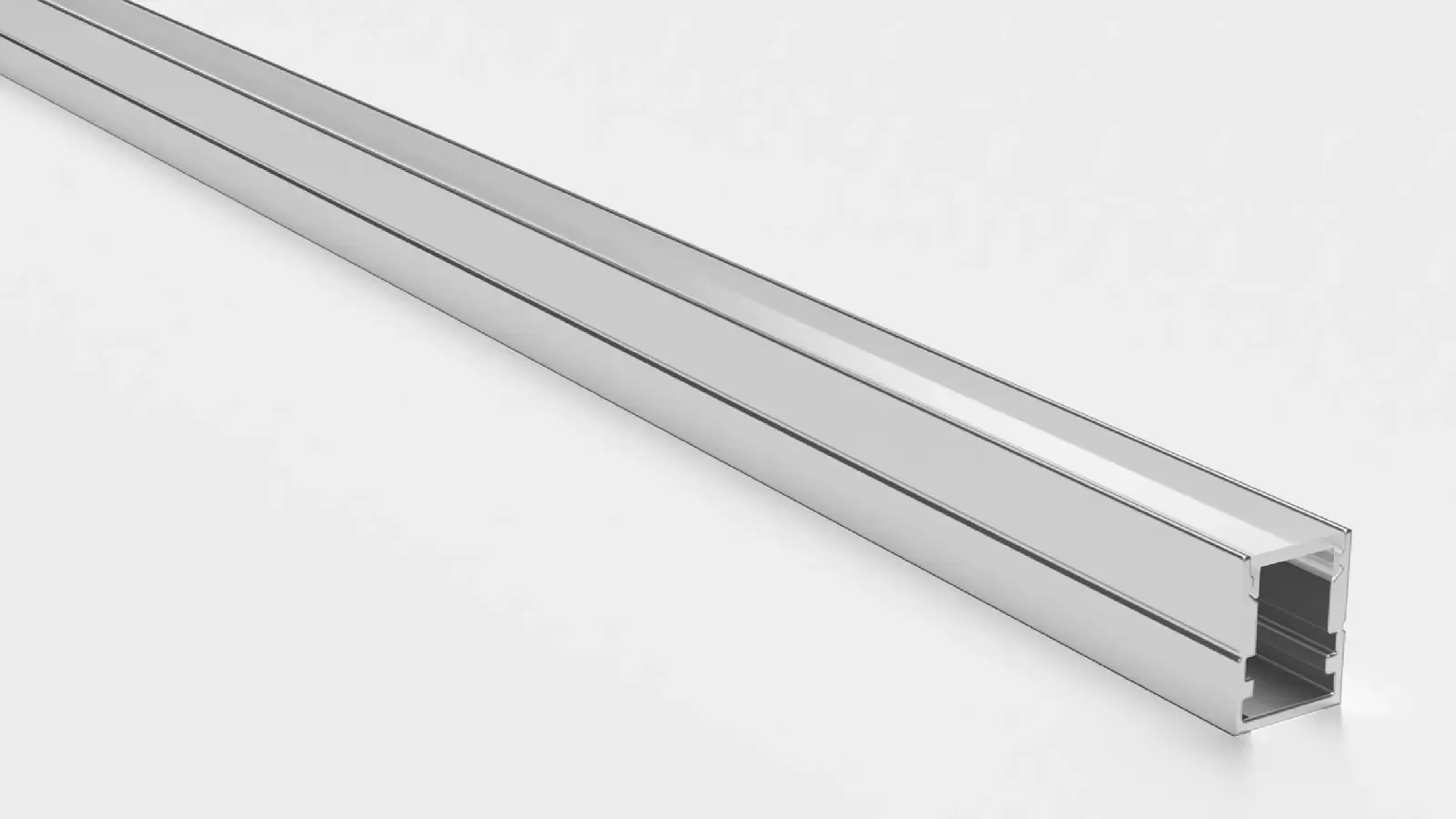
Our aluminum LED strip channel program covers recessed, surface-mount, and 45° corner profiles in AL6063 anodized aluminum, from a 12×7 mm compact up to a 30×20 mm wide-body — every model with PC clear and PC opal click-in diffusers, end caps, and mounting clips in the box. Standard lengths are 6.6 ft (2 m) and 9.8 ft (3 m), cut to your run schedule on request. Channels are matched to strip PCB width by number, so the strip you spec from any of our categories drops straight in.
Why contractors spec our channel system
AL6063 anodized aluminum
Architectural-grade alloy that pulls heat off the strip and holds a straight line.
Click-in diffusers
Tool-free PC covers seat by hand and lift out for strip service.
Dot-free with opal covers
Deep profiles blend LEDs into one continuous line — no dotting.
Three mounting families
Recessed, surface, and 45° corner — one diffuser system across all.
Cut to your run schedule
Supplied in 6.6 ft (2 m) or 9.8 ft (3 m) lengths, or factory pre-cut and labeled per run.
Complete kit in the box
Diffuser, end caps, and mounting clips ship with every channel.
Three profile families, one diffuser system
Recessed Channels
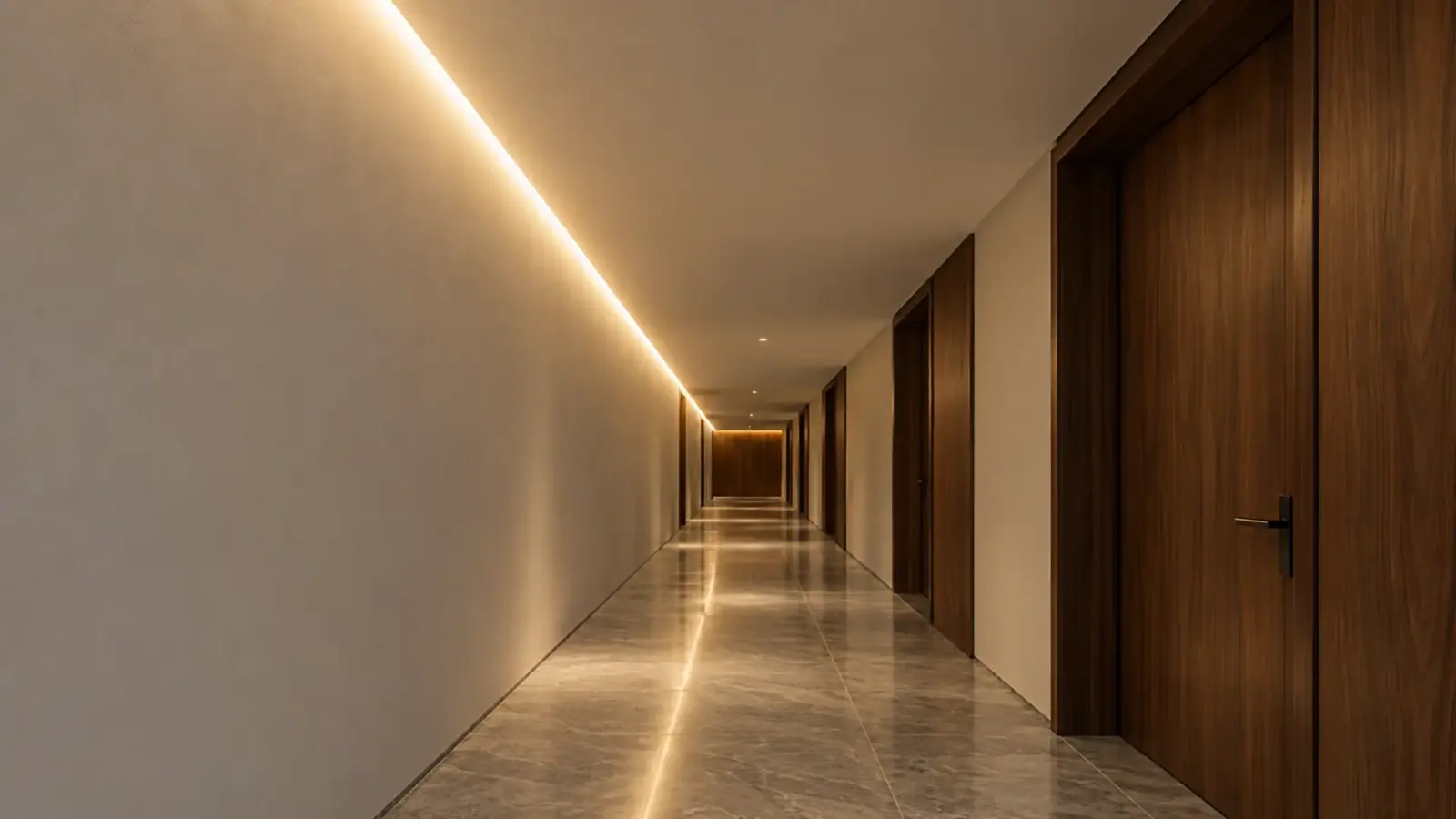
Recessed profiles rout into millwork or plaster into drywall so only the lit line shows. The UT-CH2020's mounting wings take joint compound directly for a trimless, plaster-in detail — the channel disappears into the ceiling plane.
| Model | W×H | Mounting | Max strip |
|---|---|---|---|
| UT-CH2020 | 20.2×19.5 mm | Plaster-in, trimless | 12 mm |
| UT-CH1708 | 17×8 mm | Recessed, flanged | 10 mm |
| UT-CH1715 | 17×15 mm | Recessed, flanged | 12 mm |
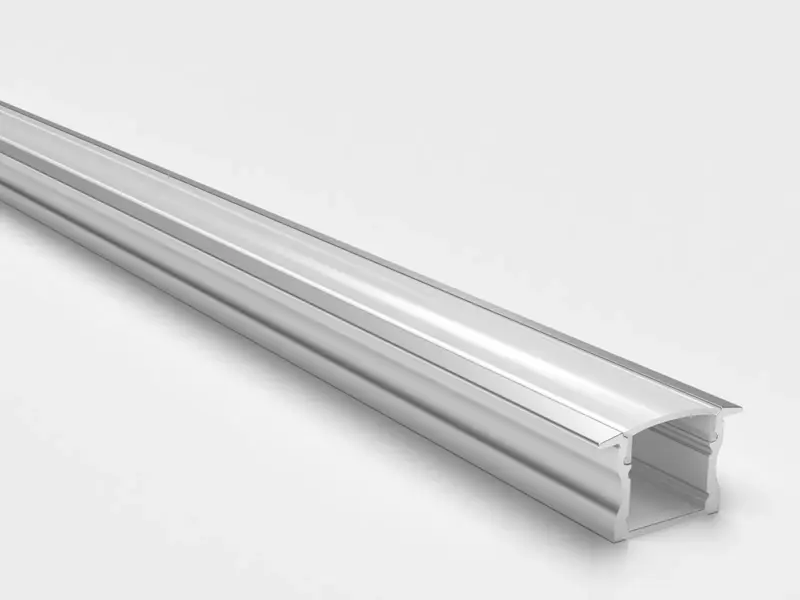
Surface-Mount Channels
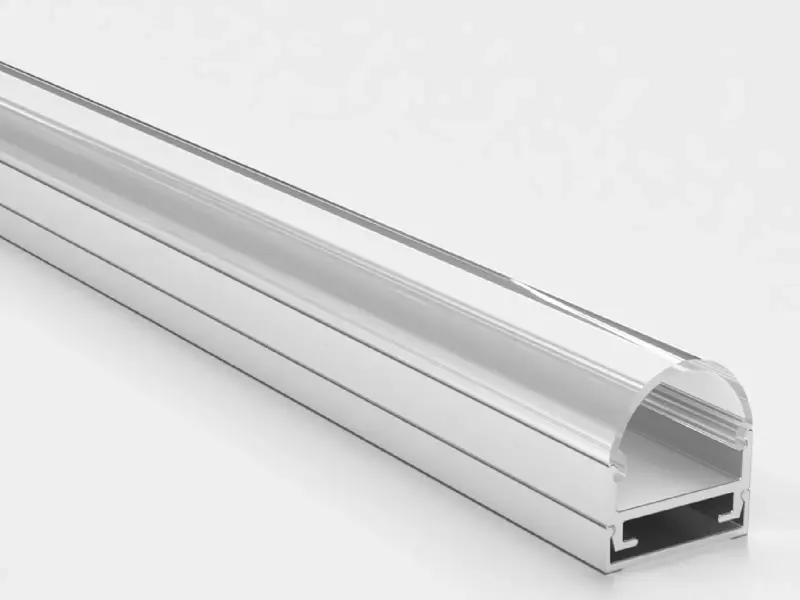
Surface profiles clip or screw to the finished surface — no cutting, no substrate work. The slim UT-CH1013 sits under upper cabinets at just 10 mm tall; the UT-CH1207 tucks into shelving reveals, and the UT-CH3020 carries wide or doubled strip for higher output.
| Model | W×H | Mounting | Max strip |
|---|---|---|---|
| UT-CH1013 | 13×10 mm | Surface, slim | 10 mm |
| UT-CH1207 | 12×7 mm | Surface, compact | 8 mm |
| UT-CH2415 | 24×15 mm | Surface, deep dot-free | 15 mm |
| UT-CH3020 | 30×20 mm | Surface, wide | 20 mm |
Corner Channels
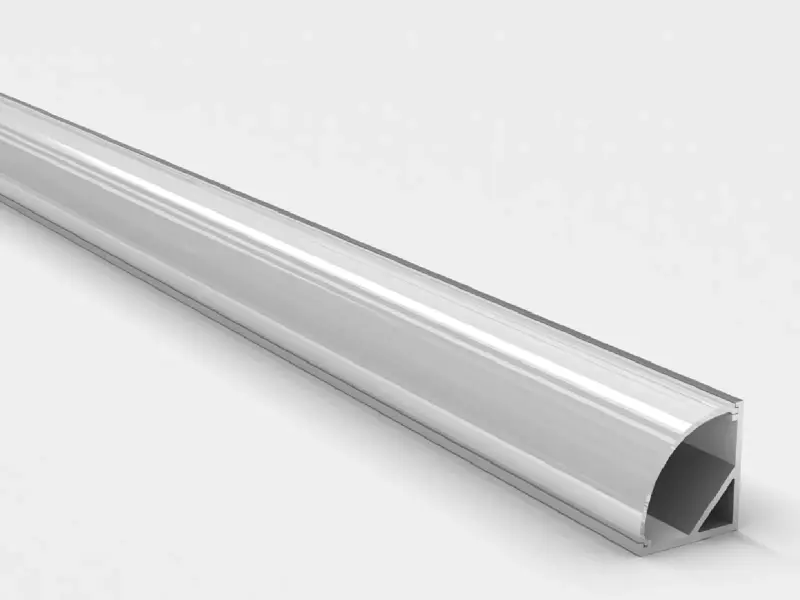
The UT-CH1616's triangular body seats into a 90° corner and aims the strip out at 45° — the natural geometry for coves, closet interiors, and display case joinery.
| Model | W×H | Mounting | Max strip |
|---|---|---|---|
| UT-CH1616 | 16×16 mm | Corner, 45° aim | 10 mm |
Clear or opal — the diffuser decides the light
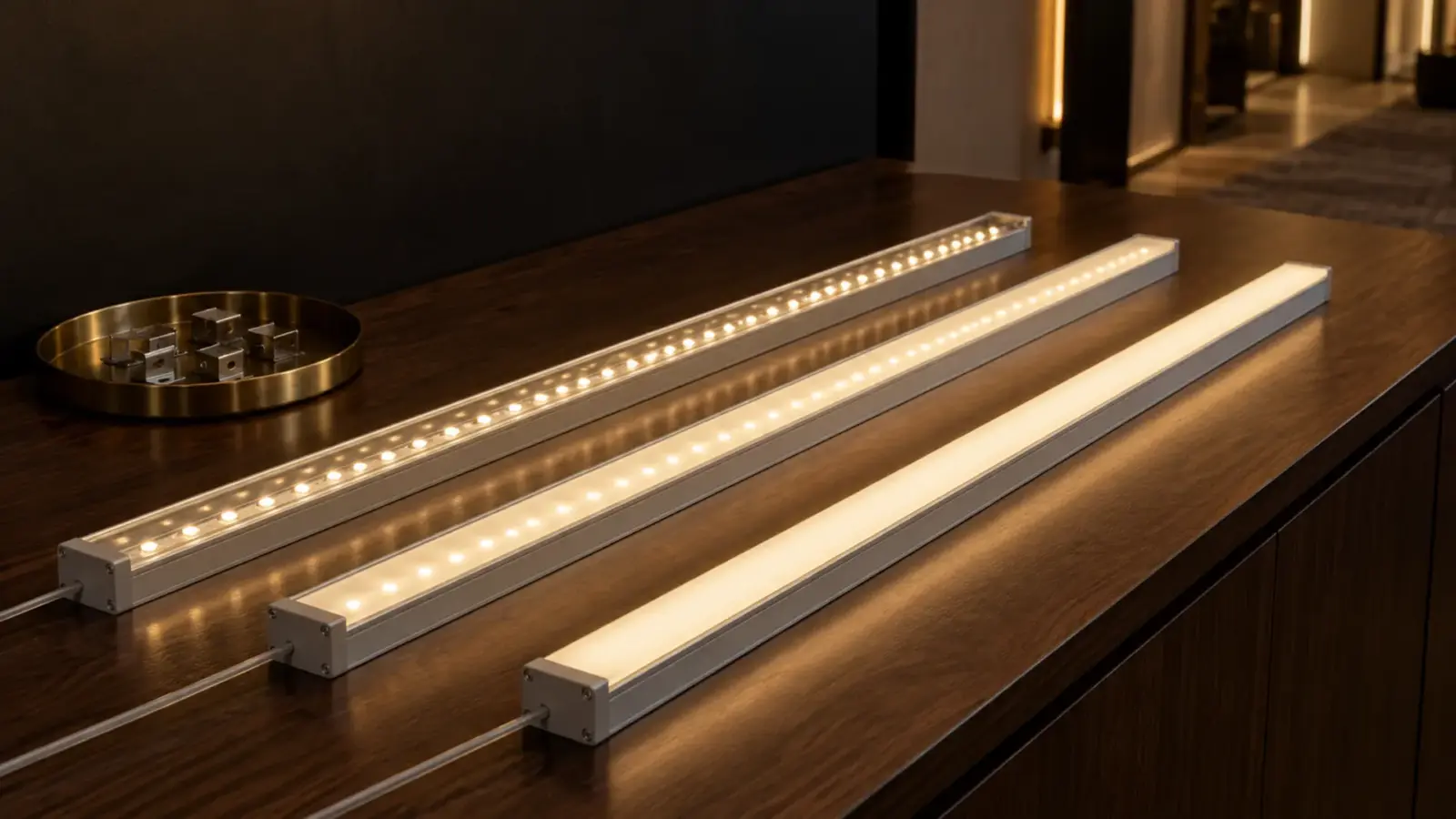
Every channel takes the same two polycarbonate covers. PC clear maximizes output and leaves the LEDs visible; PC opal trades some output for one continuous, dot-free line. Where the fixture is seen directly, spec opal — and give the light room to blend: the deeper the profile, the smoother the line. The UT-CH2415's 14.5 mm optical depth delivers fully diffused, dot-free output even with standard-density strip.
Maximum output, visible dots
Transmits roughly 90–95% of strip output. Individual LEDs read as dots — right for concealed positions where only the reflected light is seen, or where every lumen counts.
One continuous, dot-free line
Transmits roughly 70–80% of strip output and blends every LED into a single line. The default for coves, shelves, and under-cabinet — anywhere the fixture itself is on show.
Set the diffuser over the channel lips
Press down along the run — it clicks in
Cap the ends — seated, serviceable, done
Diffusers lift back out with a plastic trim tool — strip stays serviceable for the life of the install.
What ships in every channel kit
Four parts, one system — the same anatomy across all eight profiles.
Exploded view, not to scale. Every kit ships with diffuser, two end caps, and mounting clips at 19.69 in (500 mm) spacing.
Master spec table
All channel models in one table. CAD section drawings ship with your quote.
How to read our model numbers: UT-CH{width}{height} in mm, rounded — UT-CH2020 = 20.2 mm wide × 19.5 mm tall. Match your strip PCB width to the Max Strip Width column.
Swipe sideways for all columns — the model column stays put.
| Model | Mounting type | Dimensions W×H | Max strip width | Diffuser options | Standard length | Finish |
|---|---|---|---|---|---|---|
| UT-CH2020 | Recessed · trimless plaster-in | 20.2×19.5 mm (0.80×0.77 in) | 12 mm | PC Clear / PC Opal | 2 m / 3 m (6.6 / 9.8 ft) | Anodized silver |
| UT-CH1708 | Recessed · flanged | 17×8 mm (0.67×0.31 in) | 10 mm | PC Clear / PC Opal | 2 m / 3 m (6.6 / 9.8 ft) | Anodized silver / black |
| UT-CH1715 | Recessed · flanged | 17×15 mm (0.67×0.59 in) | 12 mm | PC Clear / PC Opal | 2 m / 3 m (6.6 / 9.8 ft) | Anodized silver / black |
| UT-CH1013 | Surface · slim | 13×10 mm (0.51×0.39 in) | 10 mm | PC Clear / PC Opal | 2 m / 3 m (6.6 / 9.8 ft) | Anodized silver / black |
| UT-CH1207 | Surface · compact | 12×7 mm (0.47×0.28 in) | 8 mm | PC Clear / PC Opal | 2 m / 3 m (6.6 / 9.8 ft) | Anodized silver |
| UT-CH2415 | Surface · deep dot-free | 24×15 mm (0.94×0.59 in) | 15 mm | PC Clear / PC Opal | 2 m / 3 m (6.6 / 9.8 ft) | Anodized silver / black |
| UT-CH3020 | Surface · wide | 30×20 mm (1.18×0.79 in) | 20 mm | PC Clear / PC Opal | 2 m / 3 m (6.6 / 9.8 ft) | Anodized silver |
| UT-CH1616 | Corner · 45° aim | 16×16 mm (0.63×0.63 in) | 10 mm | PC Clear / PC Opal | 2 m / 3 m (6.6 / 9.8 ft) | Anodized silver / black |
Related guides
Specification, power and installation guides for this range.
Channel & diffuser questions
Recessed vs surface-mount channel — which should I spec?
Spec recessed channels when the ceiling or millwork is still open — the profile plasters or routs in flush, and the trimless version disappears entirely into drywall. Spec surface-mount for retrofit and under-cabinet work: it screws or clips to the finished surface with no cutting. Same diffusers, same light quality — the difference is whether you can open the substrate.
Clear vs frosted (opal) diffuser — how much light do I lose?
A PC clear diffuser transmits roughly 90–95% of strip output but leaves individual LEDs visible. A PC opal (frosted) diffuser transmits roughly 70–80% and blends the LEDs into one continuous line. For any application where the fixture is seen directly — coves, shelves, under-cabinet — spec opal and size the strip output up one step to compensate.
Can channels be cut to length on site?
Yes. Aluminum channels and PC diffusers cut cleanly with a miter saw and a non-ferrous metal blade; end caps re-seat on the cut end. For larger projects we pre-cut channels to your run schedule at the factory, so each piece arrives labeled for its location.
How do I match channel width to my LED strip?
Check the strip PCB width against the channel's max strip width — the PCB must sit flat on the channel floor with about 1 mm of clearance. Common PCB widths are 8, 10, and 12 mm; every model in our spec table lists its max strip width so you can match by number. When in doubt, send the strip model with your quote request and we pair the channel for you.
Does LED tape need an aluminum channel at all?
Not because of a channel rule: we have found no NEC section that requires one. A channel becomes required when the listed product's instructions call for a heat-conducting mounting, and it also protects the adhesive from heat. Check the instructions for the strip you are installing.
Why can I still see LED dots through the diffuser?
The LEDs sit closer to the cover than they sit to each other, or the run is seen from an angle the mockup never tested. Fix it in cost order: check the cover, add distance to the cover, then change to a denser or dot-free strip. A new cover alone rarely solves it.
What is the difference between an LED channel and an LED strip diffuser?
The channel is the aluminum profile that carries the strip, sinks its heat and gives it a straight mounting line; the diffuser is the polycarbonate cover that clicks into the channel and spreads the LED points into one line of light. Every channel in our range ships with its clear and opal diffuser, so they are specified together as one part number.
Which aluminum LED channel fits a 10 mm LED strip?
Any profile whose inside floor is wider than the strip's PCB, with a little clearance for the adhesive edge: a 12 mm floor takes 8 mm and 10 mm strip, a 17 mm floor takes 10 mm to 15 mm strip. Match by the PCB width printed in the strip's spec table, then pick depth from how far the diffuser has to sit from the LEDs to hide the dots.
Can LED channel be used as recessed linear lighting in an office ceiling?
Yes. A recessed or trimless channel with an opal diffuser in a drywall or grid ceiling is the usual way to get a continuous linear line in an office without a fixture every 4 ft. The depth decides whether the dots show, the channel length sets the joints, and the driver and dimming zone are coordinated with the ceiling before it closes.
Can an LED channel be suspended from the ceiling?
Yes, with a surface-mount or wide-body profile hung on aircraft cable from structure or reinforced grid, the driver above the ceiling and the feed run down through a canopy. Set the hang points so the channel stays level before the diffuser is trimmed, and keep the run clear of sprinklers and detectors.
Can LED strip in a channel replace a linear fixture?
Often, with six things moving to the installer: the listing, the photometrics, lengths and corners, heat, control and service. The channel, strip, driver and diffuser are specified as one system so the inspector and the designer get the same answers a fixture datasheet would give.
Spec your channel project
Send your project details — an engineer replies with matched channels, diffusers, and documentation.
We typically respond within 24 hours. No spam, ever.