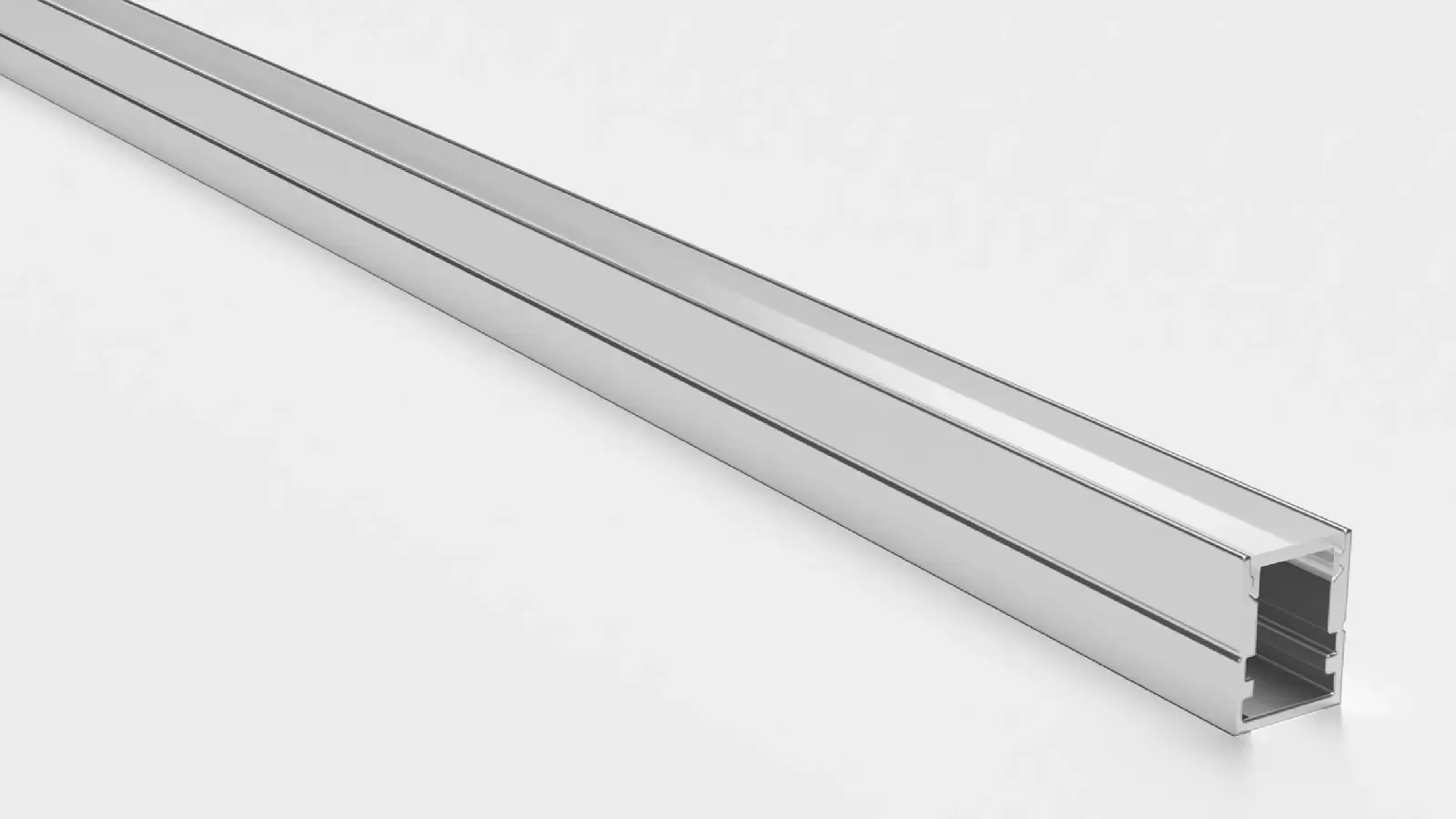
The code does not say LED tape must sit in a metal channel. We have found no NEC section that does, and an inspector who tags tape for lacking one is usually enforcing something else: the mounting instructions, or a worry about heat and adhesive. Real reasons for a channel on some strips, but not a code requirement.
That distinction decides what you do at the walkthrough, so this guide separates three questions: what the code says, what the product’s instructions say, and what heat and adhesive do to a strip that has no channel.
What the Code Says, and What It Does Not
In 2025, an electrician on the Mike Holt forum reported being failed by an inspector who said LED tape had to be in a metal channel. According to our reading of that thread, neither the forum members nor the inspector could point to an NEC section that says so. We could not reopen the thread for this edition, so treat that as a reading and not a quotation.
What the Code does contain is a general rule about instructions. As quoted by forum members, NEC 110.3(B) requires listed or labeled equipment to be installed and used in accordance with the instructions in its listing or labeling. The wording has changed between editions (later text adds equipment “identified for a use”), and an informational note allows the instructions to come as printed material, a QR code or a web address. We could not read the clause itself, so check the wording in the edition your jurisdiction has adopted. Our NEC guide explains how to find that edition.
So there are two different statements. “The NEC requires a metal channel under LED tape” is not something we can support. “The NEC requires the tape to be installed the way its instructions say” is. If a listed product’s instructions call for a heat-conducting mounting, the channel is required because of the instructions, not because of a channel rule.
The authority having jurisdiction (AHJ) makes the final call, and local amendments exist.
The Instructions Decide
The instructions are the datasheet, the installation sheet and the listing documents that come with the product. Read them before the inspection, and keep a copy in the submittal. Look for three things:
- A mounting requirement. Words such as “mount on a heat-conducting surface” or “install in an aluminum channel” are instructions.
- A temperature or enclosure limit. A maximum ambient or a statement about enclosed spaces limits where the strip can go.
- An output limit. Some high-output products are specified only in a channel.
Our COB page states one such rule: series above 800 LEDs per meter should always be channel-mounted. It also says a channel lowers the operating temperature and protects lumen maintenance. For the listing side of the question, what a UL listing does and does not cover and how to read a certificate’s scope apply to the strip and its parts.
Warranty follows the same logic. Our warranty covers defects under normal use and installation as described in the product datasheet, so installing a strip against its own mounting instruction is a risk to the warranty and not only to the inspection.
Heat: What Warms the Strip
Every LED strip warms in use. The question is whether the heat has somewhere to go. Four things set it: watts per foot, how densely the LEDs are packed, what the strip is stuck to and whether the space around it is open or enclosed.
Watts per foot is the first number to check, and our own range spans a wide spread.
| Model | Type | Power | Our channel guidance |
|---|---|---|---|
| UT-C320-8 | Standard COB | 2.4 W/ft (8 W/m) | No channel rule on the page; the datasheet decides |
| UT-S2835-120 | SMD, 120 LEDs/m | 4.4 W/ft (14.4 W/m) | Per datasheet |
| UT-S2835-240 | SMD, 240 LEDs/m | 6.7 W/ft (22 W/m) | Per datasheet |
| UT-C960-15 | COB, 960 LEDs/m | 7.6 W/ft (25 W/m) | Always channel-mounted (above 800 LEDs/m) |
| UT-C1600-30 | COB, 1,600 LEDs/m | 12.2 W/ft (40 W/m) | Always channel-mounted; 30 mm is wider than any channel we make, so send the run details |
Outside sources disagree about how often the heat matters, and the disagreement is informative. Waveform Lighting, a strip maker, says its strips do not need heat sinks: they warm noticeably, but each LED is driven far below its rated current, and the answer is no as long as the strip is built from good materials without over-driven diodes. HitLights, a channel seller, points out that elevated temperature can cause lumen depreciation, color shift and adhesive failure, and recommends a channel where strips run hot. Both can be right. A low-output strip on a sound surface and a 12 W/ft strip in a closed cove are different problems.
The surface and the space matter as much as the strip. Metal draws heat away. Wood and plastic are poor heat paths, and tape on foam inside an enclosure is a common bottleneck. A strip in a sealed soffit has nowhere to put its heat, whatever its watts per foot.
A worked comparison: two strips, two answers
Ten feet of UT-C320-8 draws about 24 W. Ten feet of UT-C1600-30 draws about 122 W, five times the input power in the same length. A large share of that power leaves the strip as heat, so the second strip puts five times the heat into whatever it is stuck to. A surface that is fine for the first can be the wrong one for the second, which is why our COB page sets a channel rule by LED density and not by surface alone.
For a submittal, state it per run: model, watts per foot, mounting surface, and whether the space is open or enclosed. That one line shows the inspector the decision was made, and it makes the channel conversation a question of data.
Adhesive: Where Tape Lets Go
The tape on the back of a strip is a bond, and bonds have limits. Heat softens an adhesive, so a warm strip stuck to a warm surface is the usual place it lets go. Dust, texture and porous surfaces weaken it from the start, and overhead and vertical runs load it every day.
When the adhesive fails, the strip sags, pulls on its joints and can come to rest on whatever is below it. That is the failure an inspector is trying to prevent when they ask for a channel, even if they cite the wrong reason. A channel holds the strip mechanically and gives the adhesive heat somewhere to go. Clips do part of the same job on a strip that does not need the channel.
General practice, not a spec for any one product: clean and dry the surface first, press the strip down along its whole length, and back the adhesive with clips on ceilings and on any run where the surface is not smooth.
Channel or Not: A Decision Table
| Situation | Channel? | Why |
|---|---|---|
| Low-output strip, sound flat surface, dry, open space | Optional | The datasheet decides |
| Strip above 800 LEDs per meter | Yes | Our COB page rule |
| Enclosed cove, millwork or soffit with no airflow | Recommended | The heat has no path out |
| Wood, plastic or foam substrate | Recommended | Poor heat path |
| Overhead or vertical run, adhesive in doubt | Channel or clips | Mechanical support |
| Visible line that needs a diffuser | Channel | Optics; see our channel selection guide |
| Datasheet or listing says to | Yes | The instructions require it |
The last row overrides the others. If the instructions require a channel, the rest of the table does not matter.

When the Inspector Asks for One
Stay practical, and stay polite.
- Ask for the section number and the edition. If the inspector is citing the Code, you are entitled to read what it says. If they are citing the manufacturer’s instructions, ask which document.
- Show the datasheet and the installation sheet. If the instructions allow the mounting you used, say so and offer the pages.
- Offer the channel if it is cheap. Where the run is short and the channel costs less than a dispute, adding one resolves it and improves the install. The heat and adhesive reasons are real, and you can say so.
- Ask for the requirement in writing if the AHJ insists on one without a citation, and put it in the submittal so the next job knows.
Do not argue clause numbers you cannot read. Our guide to inspector checks on a Class 2 driver lists the items that do come up on the supply side, and that is a good place to spend the walkthrough.
Aluminum, Plastic and No Channel
If a channel is chosen, aluminum and plastic do different jobs. Aluminum carries heat away from the strip and is the usual choice where heat is the reason; plastic channels hold and diffuse but conduct less. A plastic channel on a high-output strip fixes the sag and the dust without helping the temperature much. Match the material to the reason you chose a channel, and check that the channel’s diffuser and the strip’s width fit; our channel selection guide has the width table.
FAQ
Does LED tape need a heat sink?
Not always. Low-output strips on a sound surface often run without one, and one strip maker says so for its own products. High-output strips, dense strips and strips in enclosed spaces benefit from a heat path. Follow the datasheet for the model.
Does the NEC require a metal channel for LED tape?
We have found no NEC section that does. The Code requires equipment to be installed per the instructions in its listing or labeling, so a channel can be required through the instructions. The AHJ decides, and the edition and local amendments matter.
Can LED strip be stuck directly to wood or drywall?
Many datasheets allow it for low-output strip, and adhesion depends on clean, smooth, dry surfaces. Wood is a poor heat path, so high-output strip and enclosed spaces call for a channel. Back the adhesive with clips on ceilings.
Does leaving the channel out affect the warranty?
Our warranty covers normal use and installation as described in the product datasheet. Where the datasheet calls for a channel, such as COB series above 800 LEDs per meter, leaving it out is outside that description. We confirm the mounting for the model at quote.
What to Verify With the AHJ
Before rough-in, confirm which NEC edition applies, whether the AHJ expects a channel for LED tape and on what basis, and which documents they will accept as the installation instructions. Keep the datasheet and the answer in the submittal.
Our LED channels and diffusers range lists the profiles by strip width and mounting type.