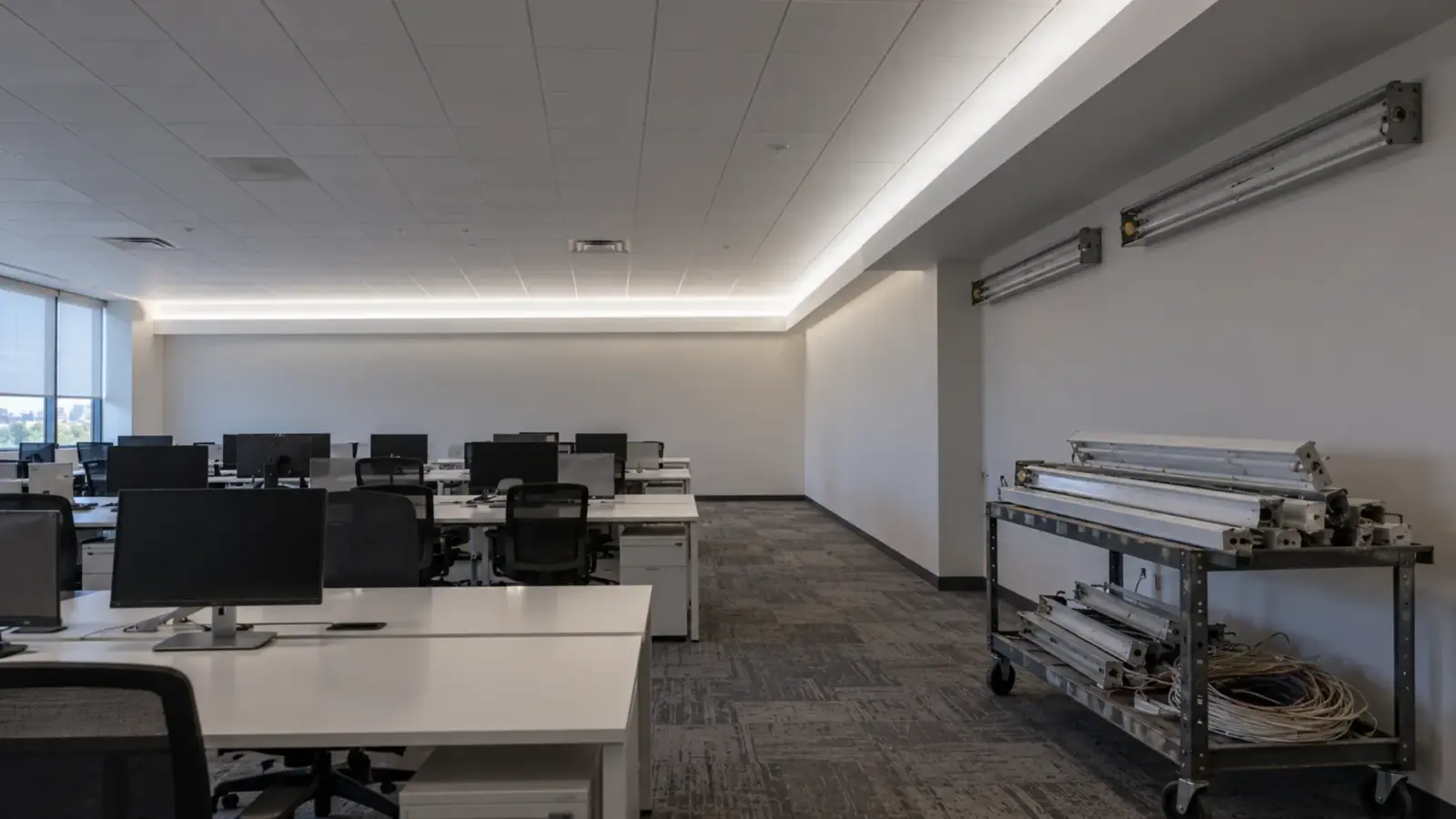
The NEC edition that governs a low-voltage LED strip job is the one your jurisdiction has adopted, not the newest one published. The 2026 edition is out, and Texas applies it to permit applications from September 1, 2026, while other states still enforce earlier editions. Find the adopted edition first, then check the strip system against the list below.
The same 24V cove can be inspected against two different books in the same month. A permit filed in Houston this fall is read against the 2026 NEC. A permit in a state that is still on an earlier edition is read against that edition, and section numbers do not always match between them. Whether the work needs a permit at all, and who may do it, is a separate local question; who can install LED strip and when a permit applies covers it.
Adopted Edition: Find It Before You Read a Section
Texas shows how this works. According to the Houston Permitting Center, the 2026 NEC takes effect there on September 1, 2026, and it applies to permit applications submitted on or after that date. The only timing rule on the page is the submission date.
Other jurisdictions run on their own schedules. Many states are still on earlier editions, and cities can add local amendments on top of the state’s choice. The IAEI keeps a state-by-state adoption table, and your building department can confirm the edition in a phone call.
Edition changes move text around. In the 2023 edition, Class 1 power-limited circuits moved into a new Article 724, while Class 2 and Class 3 circuits stayed in Article 725, with cable requirements gathered into a new Article 722 and fault-managed Class 4 systems in Article 726. Material we reviewed about the 2026 edition describes further reorganization of the low-voltage chapters, but we could not confirm the final numbering. So this guide names articles only where a source shows them for a named edition, and it tells you to quote the section number from the book your inspector uses.
What Article 411 Sets
Article 411 is the NEC article for low-voltage lighting systems. LED strip on a low-voltage driver is the typical case. The 2023 edition, section 411.3, limits the operating voltage of the system and its associated components to 30 volts ac or 60 volts dc. Where wet contact is likely, the limit drops to 15 volts ac or 30 volts dc. An informational note in that section points to 680.1 for swimming pools, fountains and similar installations.
Read those two limits against the strip you are specifying.
| System | Under the 2023 text | What to check |
|---|---|---|
| 12V or 24V DC strip, dry location | Inside the 60 V dc limit | Supply type and wiring method |
| 24V DC strip, wet contact likely | Inside the 30 V dc wet-contact limit | The listing for the wet location, not only the IP rating |
| 48V DC strip, dry location | Inside the 60 V dc limit | Supply type; the wet-contact limit does not apply |
| 48V DC strip, wet contact likely | Above the 30 V dc wet-contact limit | Do not specify without the AHJ’s written answer |
| 120V AC strip | Not a low-voltage system | Different rules; see our 120V vs 24V guide |
The table follows the 2023 text only. Check whether your adopted edition keeps the same numbers.
Wet locations also involve the listing. We cover that side in what UL and the NEC require for wet locations.
Class 2 or Not: The Supply Decides the Wiring
A Class 2 supply is power-limited by design. That is why it matters on a strip job: the power source determines how you can wire the secondary circuit. Class 2 and Class 3 circuits sit in Article 725 in the 2023 edition. The Class 2 power limit for a supply of this voltage is about 100 VA; verify the exact figure in the Chapter 9 table of the edition you are working under. Electricians in forum threads dispute how that table applies to a listed Class 2 supply, which is one more reason to read the nameplate and the adopted text rather than a rule of thumb.
A driver is Class 2 only if its output is limited and marked that way. UL 8750 alone does not make it Class 2. Our Class 2 driver guide shows how to read the nameplate.
The limit also decides how big a job splits. Our 24V Class 2 drivers are rated at 60 W each, which is below the cap, so a long cove often needs several drivers and several secondary circuits. The reasoning behind that split is in why big jobs split into several circuits.
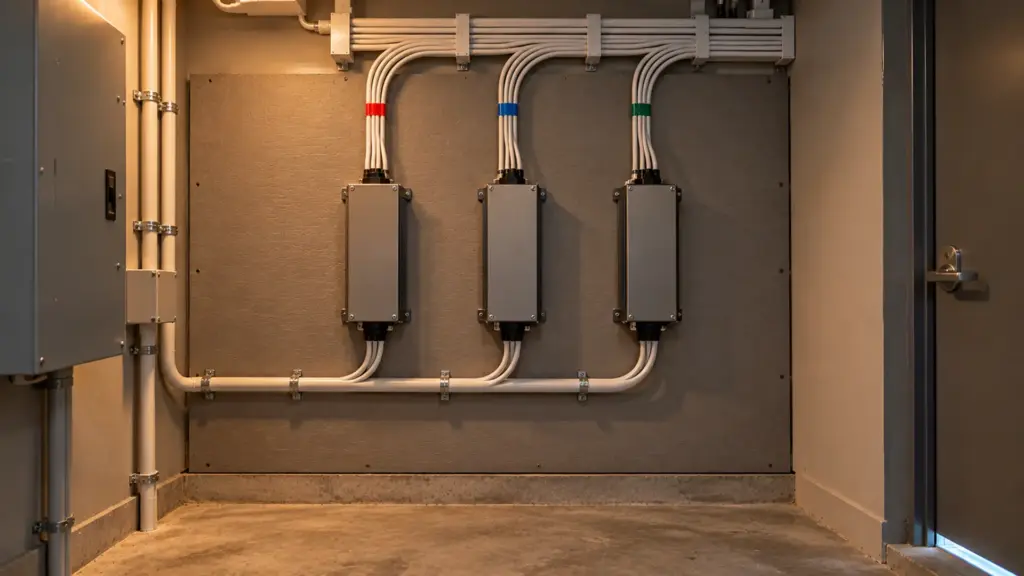
Concealed Wiring: Where Inspectors Disagree
The most argued question on strip jobs is the cable from the driver to the strip when it passes through a wall, floor or ceiling. Mike Holt Forum threads show two readings of the same article. One says concealed low-voltage wiring needs a Chapter 3 wiring method. The other says wiring from a listed Class 2 power source, installed under the Class 2 rules, is allowed to be concealed. Posters also disagree on whether the Class 2 cable has to come with the power supply or only has to be Class 2 itself.
What the threads agree on is practical. The cable must be marked CL2 or CL3, not just CM. The supply must be a listed Class 2 unit, and the nameplate must say so. And inspectors have failed these jobs, including one reported failure over LED tape in a metal channel.
Commentary in the same threads gives two ways through. Ask the inspector to cite the section they are applying, and put the Class 2 reading next to it. Or use a Chapter 3 method, such as conduit, and the argument ends. These are forum readings of older editions, not code text. Which of them holds on your job depends on the adopted edition and the inspector.
Wiring Methods and Cable Markings
Wiring from a Class 2 supply falls under the Class 2 and Class 3 circuit rules, Article 725 in the 2023 edition. Manufacturer guides we reviewed say inspectors often read Article 411 for the luminaire system and Article 725 for the wiring. They say listed Class 2 cable may run without conduit where the code permits and the cable type suits the environment, and they name the markings to look for: CL2 for general use, CL2P for plenum spaces and CL2R for risers; our in-wall wiring guide reads each marking against the space. Clause numbers differ between editions, so we do not quote them.
The same guides warn that some large cities add local rules, such as metallic raceway, on top of the NEC. An inspector there will not read it from the national book. Ask for the local amendments before the cable is ordered, not when the rough-in is already closed.
Listed System or Listed Parts
Commentary on Article 411 describes two routes: a lighting system listed as a complete system, or one assembled from listed parts. Which route your edition allows, and what each requires, is written in the adopted text. Our UL listing guide explains the standards behind the listings, and which questions to put to the supplier.
A Typical Job: One Cove, Three Questions
This is a typical retail renovation, not a specific project. A ceiling cove runs around a sales floor on 24V strip. The drawings show two drivers in a back-of-house closet, and the permit is filed after the jurisdiction’s new edition took effect.
The first question is the book. The electrical contractor pulls the adopted edition and the local amendments before the submittal, because the spec was written to an earlier edition and cites section numbers that may have moved. The second is the supply. The nameplates must show a Class 2 marking if the drawing relies on Class 2 wiring methods, and the driver count must match the run lengths so no single secondary circuit is asked to carry more than its supply allows. The third is the wall. If the cable from the closet passes through one, the contractor decides before rough-in whether it is a CL2-marked cable or a conduit run, and gets the inspector’s answer first.
None of those three is exotic. They fail because they are decided late, by different people, from different documents. Put the edition, the supply type and the cable path on one sheet that the inspector will also see.
Four Ways Strip Jobs Fail the NEC Review
- Wrong book. The submittal quotes a section from an edition the jurisdiction has not adopted, or from the one it has already left.
- IP rating treated as approval. An IP67 strip in a splash zone still needs the wet-location listing and the voltage limit that goes with it. Our wet location guide separates the two, and how LED strip is waterproofed covers the constructions behind each rating.
- UL 8750 read as Class 2. A driver evaluated to UL 8750 is an LED power supply. Its output is Class 2 only if it is limited and marked that way.
- Driver in the wrong place. A supply with no access, no ventilation or a long dimming lead is a service call waiting to happen. Where to put it is covered in our under-cabinet driver placement guide, and the logic carries over to coves.
Installation Checklist
| Item | What to check | Where the answer lives |
|---|---|---|
| System voltage | Within the voltage limit of the adopted edition | NEC text, supply nameplate |
| Wet contact | Strip, connectors and driver rated for the location | Product listing, adopted NEC |
| Supply | Class 2 marking on the nameplate, or the alternative wiring path | Nameplate, adopted NEC |
| Secondary wiring | Method for exposed and concealed runs; cable marked CL2 or CL3 | Adopted NEC, product instructions |
| Pools, spas, fountains | Distance and Article 680 reference | NEC 411.3 note, Article 680, AHJ |
| Listing | Documentation for the exact models | Certificate, file number |
| Supply location | Accessible, ventilated, within the run budget | Drawings, driver datasheet |
| Voltage drop | Feed points sized for the run | Our voltage drop guide |
Local amendments change the answer in places. Some jurisdictions add rules about raceways or listed equipment on top of the NEC. Ask the building department for the amendments list at permit time, not at inspection.
FAQ
Which NEC edition applies to my project?
The edition your state or city has adopted for the date of your permit application. Texas applies the 2026 edition to applications from September 1, 2026. Other jurisdictions may still be on earlier editions, so confirm with the building department.
Does LED strip need conduit in a wall?
It depends on the adopted edition and the inspector. Two readings circulate: a Chapter 3 wiring method, or CL2-marked cable from a listed Class 2 supply. Ask the inspector to cite the section, or use conduit and avoid the argument.
Does a 24V LED strip fall under NEC Article 411?
Under the 2023 text, low-voltage lighting systems up to 30 V ac or 60 V dc are the Article 411 case, so a 12V or 24V DC strip system sits inside the limit. Where wet contact is likely, the limit is 15 V ac or 30 V dc.
Is the 2026 NEC in force everywhere?
No. It was published in 2025 and adopted by jurisdictions at different dates. Texas applies it from September 1, 2026. Look up your jurisdiction instead of assuming.
Do your drivers come in Class 2?
Our drivers, controllers and connectors range includes 24V Class 2 supplies rated at 60 W each. Certification coverage varies by model, so check the nameplate and the documentation for the exact driver.
What to Verify With the AHJ
- The NEC edition and local amendments in force for your permit date.
- The voltage limit and the wet-contact limit for the strip system you specified.
- Whether the supply must be Class 2 for the wiring method you drew.
- Which wiring method the inspector expects for concealed strip circuits, and which section they cite.
- The documents they want on site: listing, nameplate photos, instructions.
Send the drawings and run lengths with your quote request and we will check the driver count and supply type against the layout.