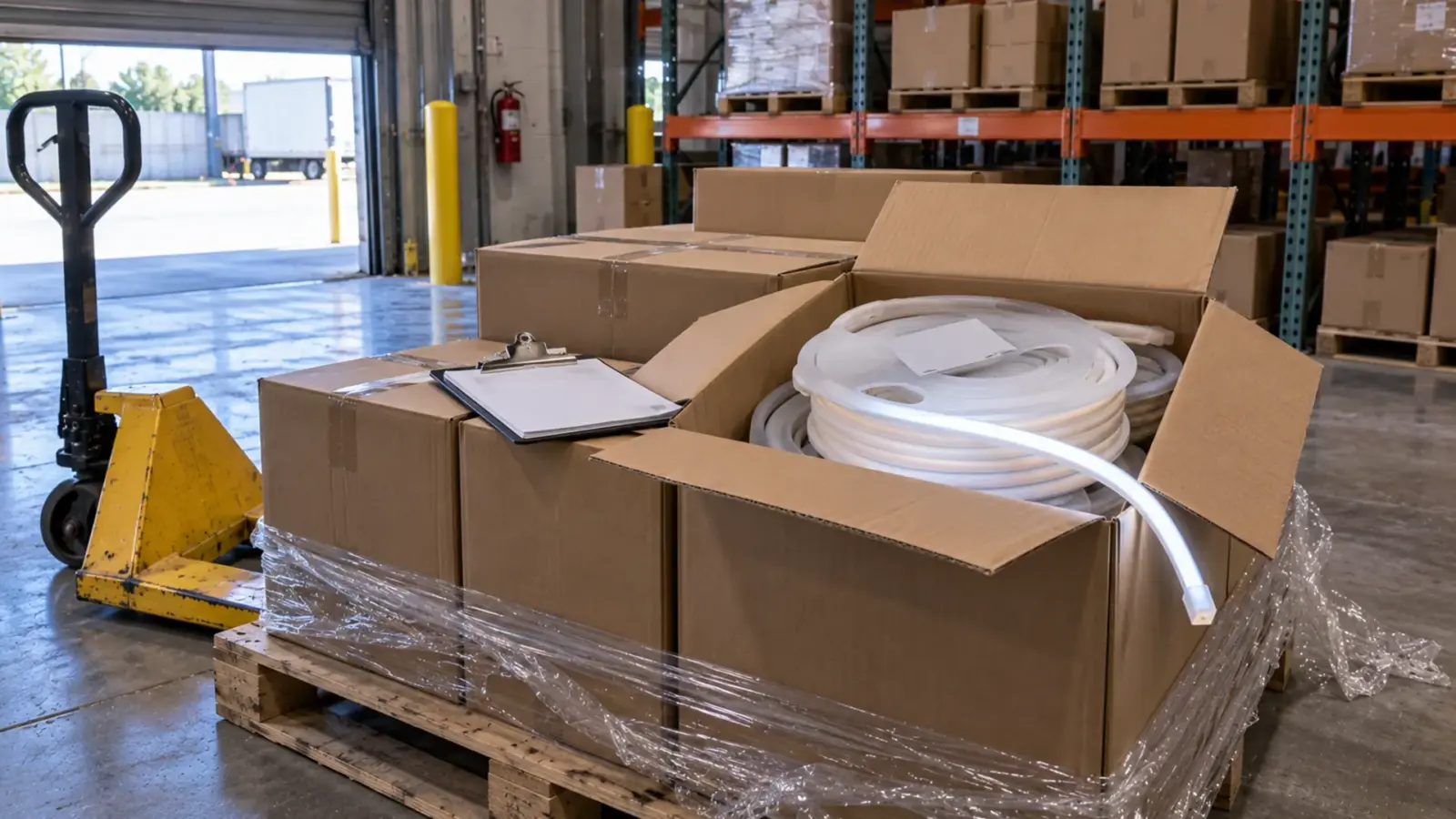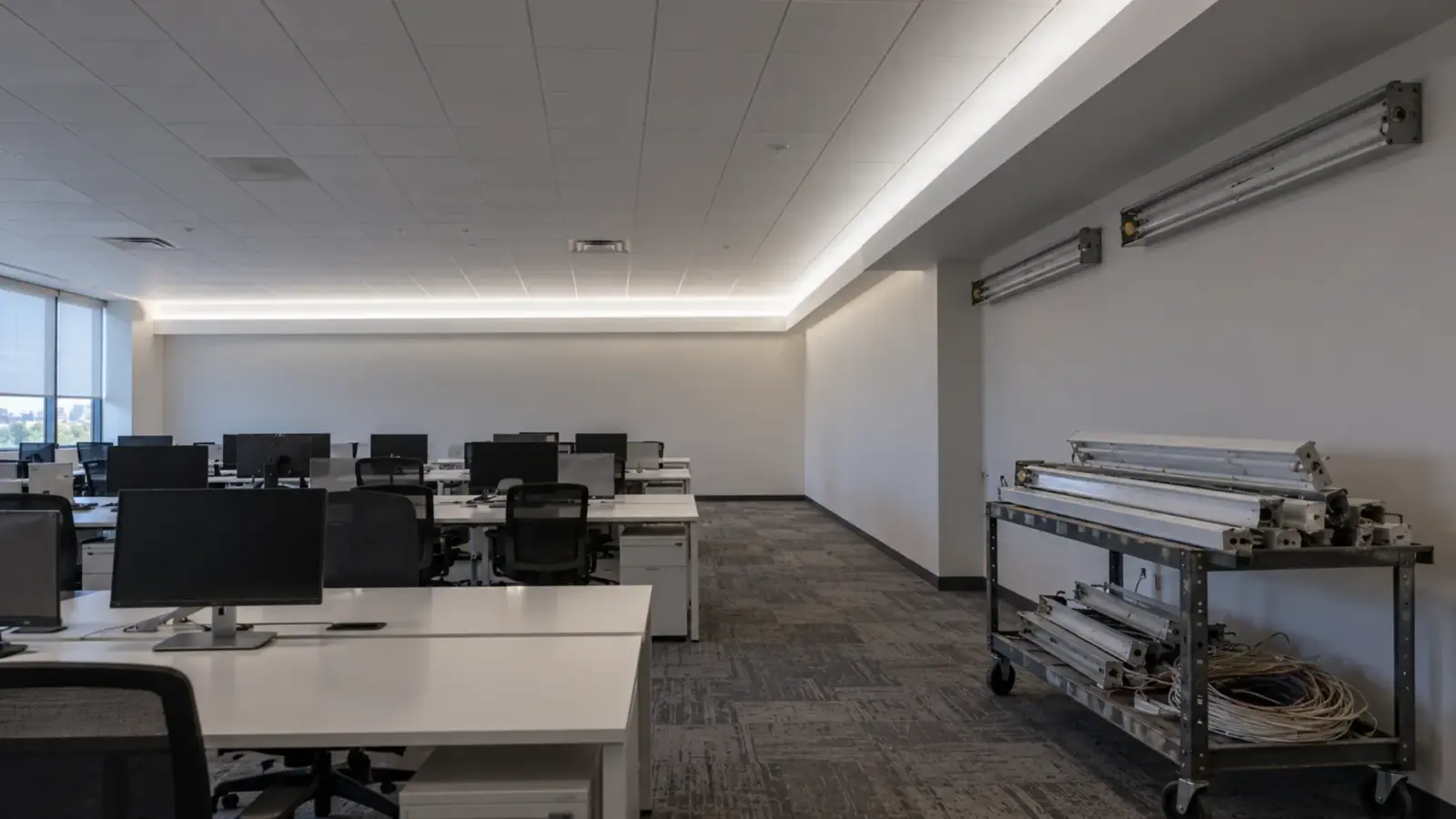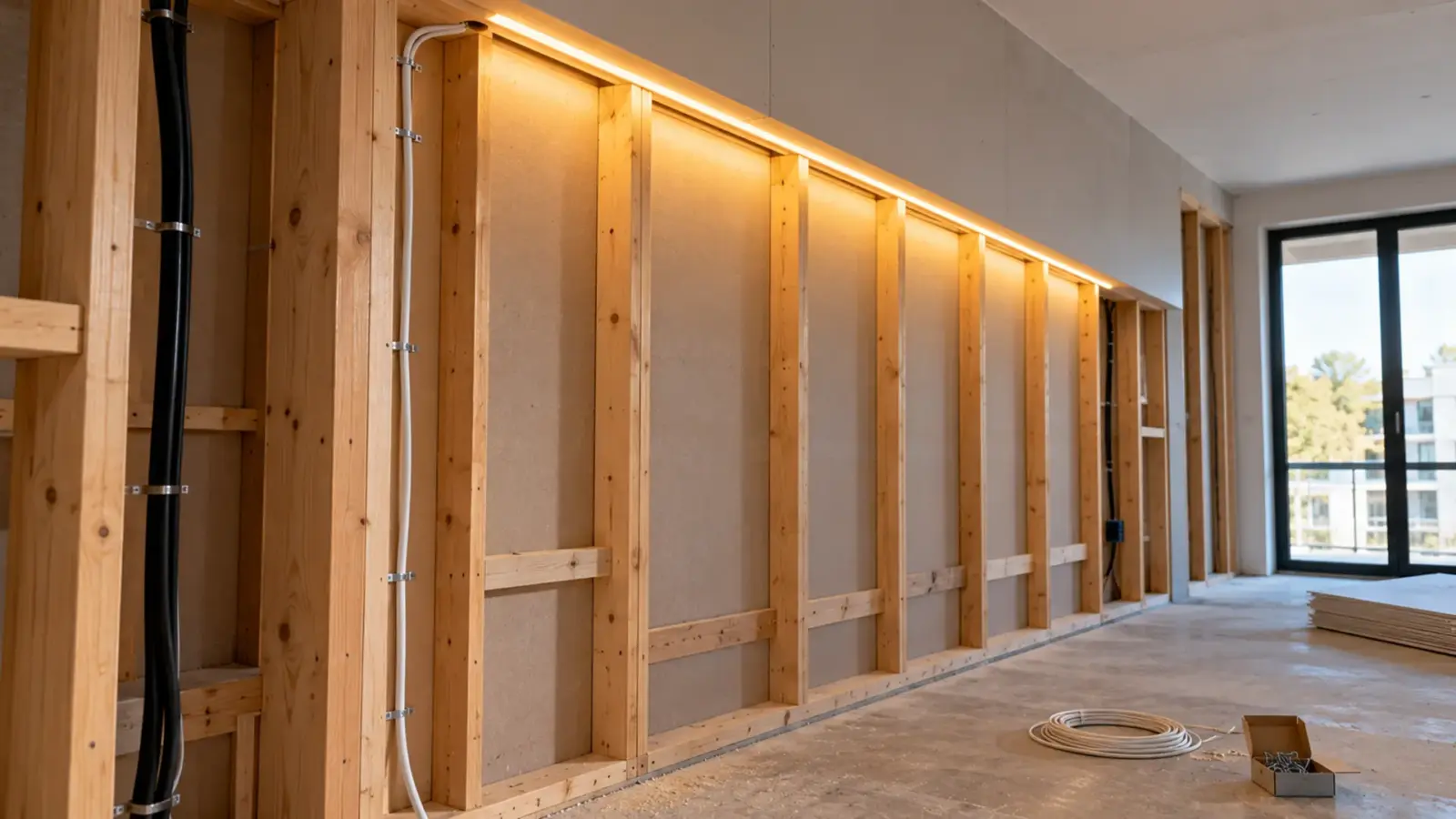
A Class 2 power supply does not make every wire in the wall Class 2 cable. The supply decides the circuit class, the cable’s own marking decides where it may run, and the space, a wall cavity or the plenum above the ceiling, decides which marking you need. Three separate questions, three separate answers.
NEC references here are general. The authority having jurisdiction (AHJ) and the NEC edition your area has adopted decide what applies on your job, and we name a section only where a source shows it for a named edition.
Three Separate Questions: Supply, Cable, Space
The supply. A Class 2 driver limits its own output power and says so on its nameplate. That makes the output circuit a Class 2 circuit. A driver that is not Class 2 puts the output under a different wiring method, and Class 2 cable is not the answer to that. Our Class 2 driver guide covers what the inspector reads.
The cable. Cable carries its own listing and marking. A conductor that is not marked is not listed Class 2 cable, however low the voltage. The marking is printed along the jacket, so a cut length still shows it; photograph it before the wall closes, and keep the spool tag or data sheet with the submittal so the inspector can match the marking to the listing.
The space. A wall cavity, a ceiling void used for air return and a vertical shaft between floors are different spaces with different marking requirements. Which space you are in comes from the building, the drawings and the AHJ, not from the cable.
Mixing these up is the common mistake. An installer buys a Class 2 supply, assumes any low-voltage wire will do, and pulls unmarked cable into a closed wall.
Reading the Marking: CL2, CL3, P, R and CMP
The marking is printed on the jacket. This is how vendors and our NEC guide describe it.
| Marking | Reads as | Where it is described as used |
|---|---|---|
| CL2 | Class 2 circuit cable | General use, including walls |
| CL3 | Class 3 circuit cable, rated for higher voltage | Where CL2 is permitted, according to vendors who cite the substitution table |
| CL2R, CL3R | The riser version | Vertical runs between floors |
| CL2P, CL3P | The plenum version | Air-handling plenum spaces |
| CMP | Communications cable, plenum rated | Vendors list it as an acceptable substitute where CL2 cable is called for |
As an example of what a vendor publishes, Flexfire’s 20/2 CMP wire is sold for most Class 2 and Class 3 circuits and is described as usable in plenum, riser and in-wall spaces. Its data sheet lists it as ETL listed to UL 444 and UL 1424, rated CL2P, CMP and FPLP, at 300V and from -4 °F to 167 °F (-20 °C to 75 °C). Another maker, Vertical Cable, sells a CL3-rated in-wall cable with 14 AWG conductors on a 500 ft spool for LED strip and architectural lighting, a heavier gauge for long runs.
The substitution rules that let a plenum cable stand in for a CL2 one are cited by vendors as Table 725.154(A). We could not read the code to check which editions use that number. Our NEC guide notes that the 2023 edition reorganized these articles: Class 2 and Class 3 circuits stay in Article 725 and the cable requirements moved to a new Article 722. Find the equivalent table in the edition your inspector uses, and quote that.
In the Wall or Above the Ceiling
A wall cavity is not a plenum by default, and a ceiling void is not either. Some ceiling voids are used for air return, and those are plenum spaces; which ones are plenums is a building question. Marked plenum cable can be used in both, which is why many contractors stock one plenum-rated cable instead of two.
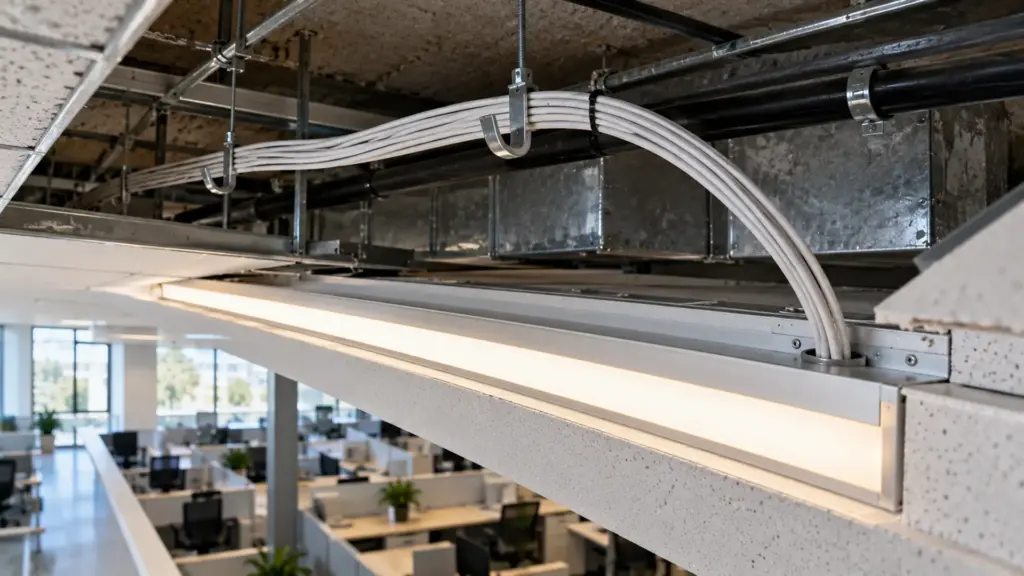
The practical rule: the more spaces a marking allows, the fewer questions at the walkthrough. A cable with the P marking will not be rejected for a plenum, and vendors describe it as usable in walls too. A plain CL2 cable is rated for general use, and it is the wrong choice where the drawing shows an air plenum.
Mike Holt forum threads show the other side of the argument. In them, a reply argues that Chapter 3 wiring methods such as NM cable are needed only when a circuit is larger than Class 2 or Class 3, and another poster says an inspector rejected a similar install. Those are opinions on an older edition, and they disagree. Do not rely on either; ask the AHJ before rough-in.
Protect the cable where it can be damaged, for instance where it passes through studs or behind a cabinet back. Whether a given route needs more protection is the AHJ’s call. On a job with several low-voltage runs, a simple cable schedule helps the walkthrough: one line per cable with its marking, gauge, conductor count, route and the driver it comes from. An inspector who can find the marking and the schedule in a minute asks fewer questions about the rest.
Size the Conductor for the Run
Cable rating says what the jacket may do. The conductor size says how much voltage the strip receives. A thin cable on a long pull can lose more than the strip itself, and Class 2 does not change the physics.
The loss is current times resistance over the loop length, as our voltage drop guide shows. Take a full 32 ft (10 m) run of UT-C384-8, about 96 W, which draws 4 A at 24V, on a 25 ft one-way pull. With nominal copper resistance at 68 °F, the cable loses:
| Conductor | Ohms per 1,000 ft | Loss on 25 ft one way at 4 A |
|---|---|---|
| 22 AWG | 16.1 | 3.2 V (13%) |
| 20 AWG | 10.15 | 2.0 V (8.5%) |
| 18 AWG | 6.39 | 1.3 V (5.3%) |
| 16 AWG | 4.02 | 0.8 V (3.4%) |
Those are the cable’s loss alone, before the strip’s. The common 20/2 plenum wire is a 20 AWG pair, so it is fine for short, low-current pulls and too thin for this one. For a long pull, use a heavier gauge, move the driver closer, or split the run, and check the cable’s own listing for the gauges it comes in.
Multi-Channel Strip Needs Multi-Conductor Cable
A single-color strip needs two conductors. RGB needs four, RGBW five and RGB+CCT six, so a color job needs multi-conductor cable, and the conductor count has to match at the connector. Vendors sell their plenum wire in 20/2, 20/4 and 20/5 versions for this reason, and they follow the same rating pattern.
Our connector guide page lists the circuits our connectors cover. A cable with too few conductors cannot be fixed at the connector, so decide the conductor count before the cable is pulled, with the strip type in hand.
A Worked Pull: Three Spaces on One Job
A lobby floor shows how the answers change by space. The Class 2 drivers sit in a closet. A 40 ft run goes up a wall cavity, across the ceiling void above the corridor and down to a cove.
| Segment | Space | Marking to look for | Note |
|---|---|---|---|
| Closet to wall | Wall cavity | CL2 or CL3 at minimum | Cable to stay clear of the line-voltage feed to the closet |
| Wall to ceiling | Ceiling void used for air return | A plenum marking (P or CMP) | Confirm with the AHJ whether the void is a plenum |
| Ceiling to cove | Open cove, then slot | CL2, CL3 or the same plenum cable | Heavier gauge for the long pull |
One plenum-rated cable covers all three segments, which is the practical argument for stocking it. The gauge is a separate decision: on a 40 ft pull (an 80 ft loop) at 4 A, 18 AWG loses about 2.0 V, 8.5% of 24V, and 16 AWG about 1.3 V, 5.4%, using the nominal resistances in the table above. Pull the run at the heavier gauge or split it.
Labels and Pulling Order
Cable gets pulled before the drywall goes up, so coordination matters more than the cable. Label each cable at both ends with the run it feeds, the conductor count and the gauge. Pull low-voltage cable on its own route, away from the line-voltage feeds. Leave a service loop at the strip end and at the driver, and record the route and the gauge in the as-builts so the next technician finds it without opening a wall.
Keep It Away From Line Voltage
A cable marked for Class 2 is still kept separate from line-voltage conductors in the same space. As quoted from the 2023 text on a forum, the Class 2 conductors stay at least 2 in. from power conductors unless a listed condition applies, such as both being in a raceway. Our driver guide covers the separation question in more detail, and the AHJ’s reading governs.
120V LED strip is a different case. It is a line-voltage product wired by line-voltage methods, not Class 2, so none of the Class 2 cable rules above apply to it. Our 120V vs 24V guide explains the difference.
FAQ
Can I run Class 2 LED tape wire in a wall without conduit?
In many cases listed Class 2 cable may run in a wall without conduit, but it depends on the supply being Class 2, the cable carrying the right marking for the space and the AHJ’s reading of the edition. Confirm all three before the wall closes.
Is plenum cable required inside walls?
Not by itself. Plenum marking is required where the space is a plenum. Plenum-rated cable can be used in walls too, according to vendors, which is why it is a common single choice.
Can I use speaker wire or outdoor low-voltage cable for LED tape in a wall?
Only if it carries the marking for that use. Wire without a CL2 or CL3 marking, or an accepted substitute, is not listed Class 2 cable, and an inspector looks for the marking on the jacket.
What gauge wire should I use for 24V LED tape?
It depends on the current and the length of the pull. For a 4 A run on a 25 ft pull, 20 AWG loses about 8% of the voltage and 18 AWG about 5%, before the strip’s own loss. Heavier cable or a closer driver fixes a long pull.
What to Verify With the AHJ
Before rough-in, confirm the adopted NEC edition and the table or section the AHJ uses for cable substitutions, which spaces are plenums, whether Class 2 cable may run without conduit in this occupancy, and how the AHJ reads the separation from line voltage. Write the answers into the submittal.
Our drivers, controllers and connectors page lists the Class 2 supplies and their outputs.