This article covers how LED strip and its parts are classified for US import: the headings a reel can land in, the CBP rulings behind each, how drivers, connectors and channels are treated, and what the commercial invoice has to say so a broker can classify the shipment.
It gives no duty rates and does not replace the broker. The importer of record is responsible for classification, and a licensed broker or a binding ruling settles a doubtful case.
Three Headings a Reel Can Land In
Ask three vendors for the HS code of LED strip and you get three answers, and the rulings explain why. The same product has been placed in three headings depending on what was in the box and how it was described.
| Heading | HTSUS text | What CBP put there | Ruling |
|---|---|---|---|
| 9405.42 | “Other, designed for use solely with light-emitting diode (LED) light sources”, with 9405.42.84 “Other” and the statistical lines “Other lighting sets” and “Other” | Flexible LED strip lights sold as accent lighting, ruled in 2007 under 9405.40, the line the 2022 edition split into 9405.41, 9405.42 and 9405.49 | NY N015810 (2007): “various lengths of flexible cables incorporating one to three LEDs”, low-voltage accent lighting, classified as other electric lamps and lighting fittings |
| 8539.51 | “Light-emitting diode (LED) modules” | A board with LEDs on it that is a light source for a fixture, not a fixture itself | NY N326081 (2022): a round aluminum printed circuit board with three LEDs, low voltage, connects to a driver, “does not have a cap designed for easy installation onto a luminaire”, classified as an LED module |
| 8543.70 | Heading 8543, “Electrical machines and apparatus, having individual functions, not specified or included elsewhere”; 8543.70 “Other machines and apparatus”; the US line 8543.70.71 (8543.70.70 in 2014) reads “Electric luminescent lamps” | LEDs mounted on 1-inch aluminum strips entered as components of tube lights, with the diffuser and extrusion as parts | NY N254740 (2014): LEDs on aluminum strips in 8543.70.7000 and the polycarbonate diffuser and aluminum extrusion in 8543.90.8880 as parts |
Two of the three are live lines for strip today, and the line between them is the open question. A reel of flexible strip sold as a lighting product, with its adhesive back, cut marks and leads, has followed the N015810 reasoning since 2007, which puts it with lighting fittings; after the 2022 split that is 9405.42. A board of LEDs that only becomes light inside someone else’s fixture follows N326081 into 8539.51. No published ruling since 2022 has placed a bare flexible reel in either line, and the 2022 edition’s Chapter 85 Note 11 defines an LED module as an LED light source arranged in a circuit with further electrical, mechanical, thermal or optical elements and no cap, which a broker could read onto a reel of strip. That is the question to settle before the first entry. The 8543 ruling predates the 2022 change, concerned 1-inch aluminum strips entered as parts of a tube light, and gave no reasoning, so it is the one to cite least and the one a broker should know exists.
What Decides It: Fitting, Module or Kit
The heading follows the construction and the way the goods are presented, not the word “strip” on the invoice.
A flexible strip on a reel, with the LEDs, resistors, copper and adhesive that make it usable as a light once it is stuck down and powered, reads as a lighting fitting. That is the lighting-fitting case. The 2022 edition split the old 9405.40 into 9405.41 for photovoltaic LED fittings, 9405.42 for other fittings “designed for use solely with” LED sources, and 9405.49 for the rest, so a strip that is a fitting lands on the LED-only line.
A board or a module whose only job is to be the light source inside a luminaire reads as an LED module under 8539.51, which the same 2022 change created alongside 8539.52 for LED lamps. The N326081 board was low voltage, connected to a driver and had no cap for installation onto a luminaire, which is the test Chapter 85 Note 11 sets: LED modules have no cap, LED lamps do.
A strip entered with its channel, diffuser, driver and controller in one carton raises the kit question. Under the General Rules of Interpretation, goods put up in sets for retail sale are classified by the component that gives the set its essential character, and goods entered as separate components are classified separately. The N254740 request asked about a dimmer and connectors without describing them, and got no classification for those parts. How the carton is described decides which rule the broker can apply.
Drivers, Controllers, Channels and Connectors
The parts of a strip system do not inherit the strip’s heading.
| Part | Where the rulings have put it | Note |
|---|---|---|
| Driver, power supply | 8504.40, static converters: the transformer/plug power lead in NY N050421 | A driver entered alone is an electrical article in its own right, whatever it will later feed |
| Switch, dimmer | 8536.50 for the switch in N050421; the N254740 dimmer was not classified for lack of description | Describe the control function and the voltage, or it is not classified at all |
| Wire harness, lead cable | 8544.42, insulated conductors fitted with connectors, in N050421 | Cable with connectors has its own line |
| Diffuser, aluminum channel | 8543.90.8880 as parts in N254740, when entered with LEDs classified in 8543 | A channel entered alone as an aluminum profile, or as a part of a 9405 fitting, may land elsewhere; ask the broker before the entry, not after |
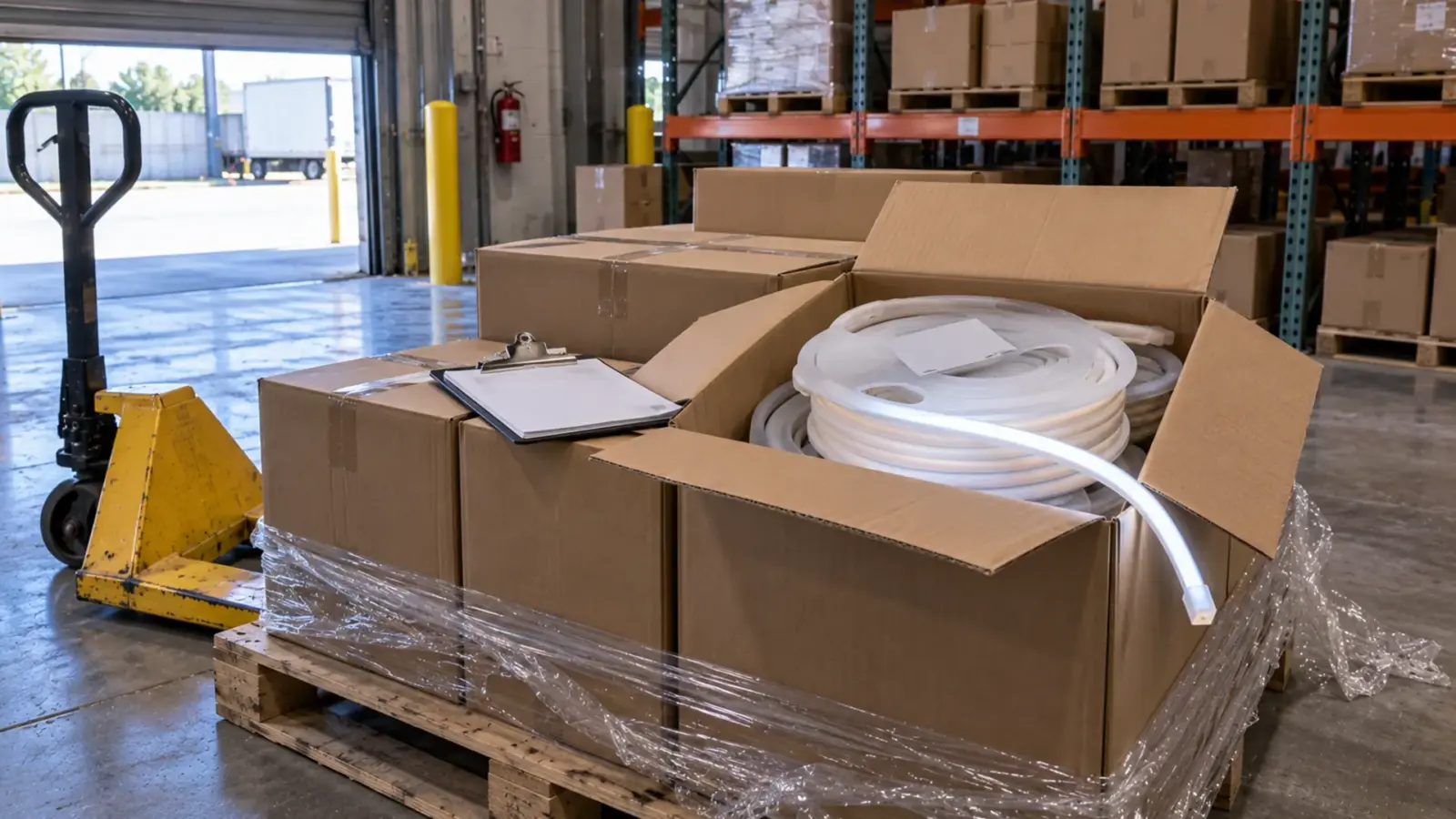
| Neon flex | No ruling found for flexible LED neon; the nearest analogue is NY N062504 (2009), an LED light rope in 9405.40 | Describe it as a flexible LED lighting fitting in a silicone jacket and let the broker classify it with the strip rulings in hand |
The pattern is that the ruling follows the description. Where the requester described the part, CBP classified it; where the requester did not, CBP declined. That is the practical lesson for the invoice.
Rulings You Can Cite
CBP publishes its rulings in the CROSS database, and a broker who can point to one is in a stronger position than one who argues from a tariff-lookup website. Five are worth keeping on file for strip.
NY N015810, August 2007, classified flexible LED strip lights as other electric lamps and lighting fittings. It predates the 2022 renumbering, so its subheading number is historical, but the heading reasoning is the one a flexible reel still relies on.
NY N326081, May 2022, classified an LED module, a board with LEDs that is a light source for a ceiling fixture, under the new LED-module line, and spelled out the facts that mattered: low voltage, connects to a driver, no cap for installation onto a luminaire. It also told the importer to report an additional Chapter 99 subheading where one applies, which is the place where origin and additional duties enter the entry; those belong to the broker and to our guide to importing LED strip yourself versus buying through a US supplier, not to this article.
NY N254740, July 2014, placed LEDs on aluminum strips and their diffuser and extrusion under 8543 as luminescent-lamp components and parts, without explaining the choice, and declined to classify the dimmer and connectors. It is the ruling to know about because a broker may raise it.
NY N050421, February 2009, classified the rectifying power supply, the touch switch and the wire harness of a lighting product separately, an example of drivers and cable entered as their own articles; the same ruling declined to classify the LED light strip itself because strip classification was under review at CBP headquarters, which is as good a summary of the subject as any.
NY N344708 and NY N345372, January and February 2025, are country-of-origin rulings on an “LED tape light”, described as a 5 m strip wound on a spool that may be cut at solder pads or joined for longer runs. They decide origin, not heading, and are cited here for two reasons: they show the product as CBP recorded it, and they show that origin is a separate question with its own rulings.
What the Invoice Has to Say
A broker classifies from the description, and the rulings above were decided from the description. The commercial invoice and the packing list should let the broker answer, line by line:
- What the article is in CBP’s own terms: “flexible LED strip light on a 5 m reel, adhesive-backed, cut marks every 50 mm, 24V DC, with lead wires”, or “LED module, printed circuit board with LEDs, for installation in a luminaire”, not “LED strip” alone.
- Whether it is a finished lighting fitting, a light source for a fixture, or a part, and of what.
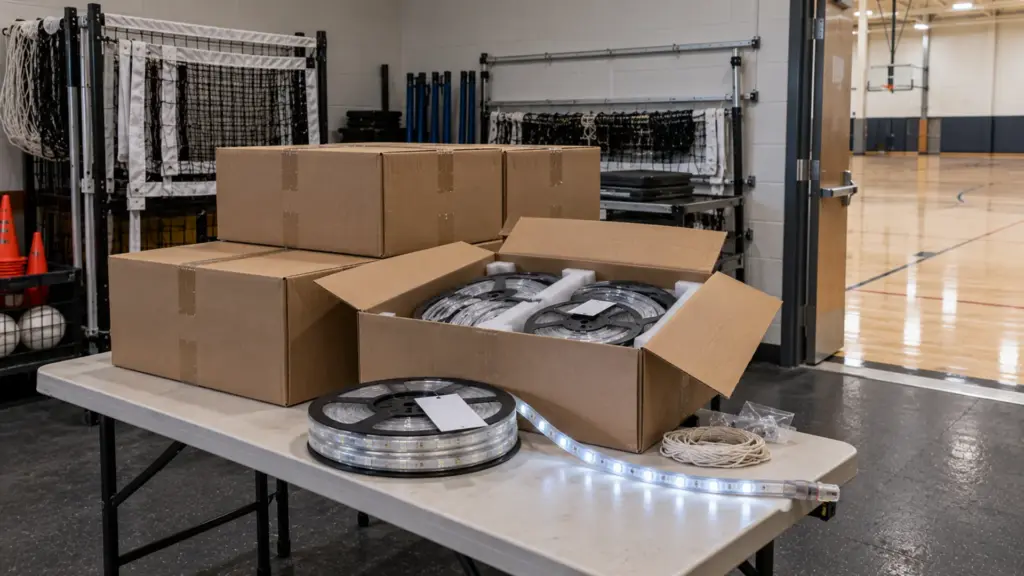
- What is in the carton with it: strip alone, strip with channel and diffuser, strip with driver and controller, each as its own line with its own quantity.
- The electrical facts the rulings cared about: voltage, whether it connects to a driver, whether it has a cap, plug or housing.
- The 10-digit HTSUS line the importer proposes for each article, and the ruling it rests on.
- The model number and the datasheet reference, so the broker can check the description against the product.
A reel described that way lands where the rulings put it. A carton described as “LED lighting kit, 1 set” invites the broker to guess at the essential character and invites CBP to ask.
What Changes the Answer
Four things move a shipment from one line to another after the description is right. A change in how the goods are put up: strip alone, strip in a retail set with its driver, or strip as components, each follows a different rule. A change in the schedule: the 2022 edition created 8539.51 and 8539.52 and split 9405.40 into 9405.41, 9405.42 and 9405.49, and the two lighting rulings from before that year carry subheadings that no longer exist, so the heading reasoning survives and the digits do not. A change in origin: additional Chapter 99 subheadings attach by origin, change with trade policy, and are reported alongside the classification; that is the broker’s quarterly job, not a number to put in an article. And a change in market: the first six digits are international, the rest are national, so the US line, the EU line and others diverge below the subheading.
Our guide to when to choose a factory, importer or distributor covers who carries this work in each route, and our guide to FCC, Prop 65 and labeling for LED strip covers the other federal rules that travel with the shipment.
FAQ
Is there one HS code for LED strip lights?
No. A flexible strip sold as a lighting product was classified in 2007 as a lighting fitting, on the line that became 9405.42 in 2022; a board of LEDs that is a light source for a fixture under 8539.51 as an LED module; and LED strips on aluminum entered as tube-light components under 8543.70. No ruling since 2022 has placed a bare flexible reel, so the description of the goods and the broker, or a binding ruling, settle it.
Is an LED driver classified with the strip?
Not when it is entered as a separate article: CBP has classified a lighting product’s power lead under 8504.40 and its switch and harness under their own headings. A driver packed with strip as a retail set raises the essential-character question under the General Rules, which is why the invoice should say whether it is a set or components.
Do we need a binding ruling for LED strip?
Not for a routine entry where the description matches an existing ruling. Where the product sits between a fitting and a module, or the shipment is large and repeated, a prospective ruling request to CBP settles the line before the first entry; the broker prepares it from the product description and the datasheet.
What to Verify With the Broker
Which heading each article follows and which ruling supports it; whether the carton is entered as a set or as components, and that the invoice says so; the 10-digit line for each article in the current edition of the schedule; any Chapter 99 subheading that attaches by origin, checked quarterly; and whether a prospective ruling is worth filing for a repeated shipment. Our product pages describe each model’s construction, voltage and cut points, which is the description the broker needs; the COB LED strip page is the example, and the same lines go on any commercial invoice we prepare.