Importing LED strip yourself makes sense when you buy steady volume, can carry the paperwork and the schedule risk, and have someone who knows customs. For a single project, or a contractor who needs listing documents in a submittal, buying through a US supplier usually costs less once every line between the factory and the site is counted.
The factory quote is per foot, EXW. The job needs the reels on site in five weeks, with listing records in the submittal and someone to call when a run fails. The unit price on that quote is real. It is also the smallest part of the decision.
The Two Routes Side by Side
We sell both ways, so here is the comparison as we explain it to buyers. Our FAQ describes the two routes: take delivery factory-direct and act as the importer of record, or buy through Unitop US on one US invoice and never be the importer of record. Our prices are normally quoted EXW or FOB at the port of shipment, freight is paid by the buyer on either route, and every quote says which route it assumes.
| Import it yourself (factory-direct) | Buy through a US supplier | |
|---|---|---|
| Who is importer of record | You | The supplier |
| Who pays duty, brokerage, bond | You | The supplier, inside the price |
| Who handles listing paperwork | You collect it and check it | The supplier provides it for the model sold |
| Freight | You arrange or pay it | Paid by the buyer on our quotes; arranged per quote |
| Invoice | Foreign invoice | One US invoice |
| Warranty claim | Across a border | With a US company |
| Best for | Steady volume, an import desk, repeat SKUs | Single projects, mixed SKUs, submittal-heavy work |
Neither column is better in general. The rest of this article helps you see which one costs less for your job.
Landed Cost: Every Line Between the Factory and the Site
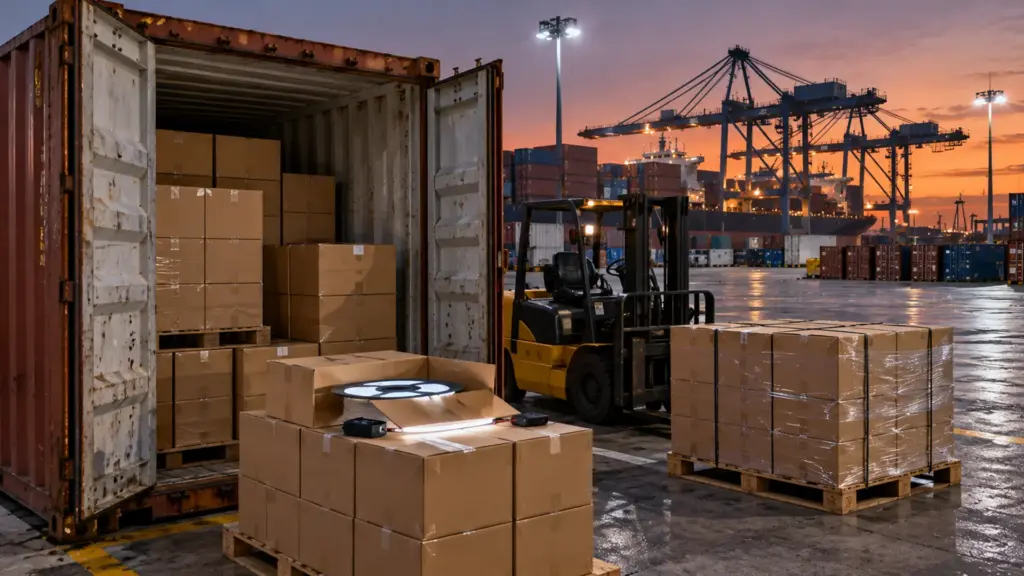
Landed cost is everything you pay until the product is on your site, ready to install. For imported strip, list every line, even the ones you think are small:
- Product at the factory price.
- Export packing and pallets.
- Inland freight to the port, if the quote is EXW.
- Ocean or air freight.
- Cargo insurance.
- Customs broker fees.
- A customs bond.
- Duty and any other import charges.
- Port, harbor and processing fees.
- Drayage from the port to your warehouse.
- Receiving, inspection and testing.
- Samples and their shipping.
- Document collection and checking.
- Shipping for warranty returns.
- The cash tied up from deposit to delivery.
- 1Factory gatePackingPallets, cartons
- 2To the portInland freightIf the quote is EXW
- 3Main freightOcean or airPlus insurance
- 4CustomsBroker, bond, duty, feesImporter of record
- 5DrayagePort to warehouseScheduling
- 6ReceivingInspection, testingBefore site
- 7DocumentsListing, test recordsFor the submittal
- 8ReturnsWarranty shippingAcross a border
We do not publish rates for these lines: they change with the route, the season and trade policy, and they belong in a quote from a broker and a forwarder for your shipment. What matters is that every line is on the comparison. A factory price compared with a delivered US price, with lines 2 to 15 missing, is not a comparison.
Volume: When Direct Import Starts to Pay
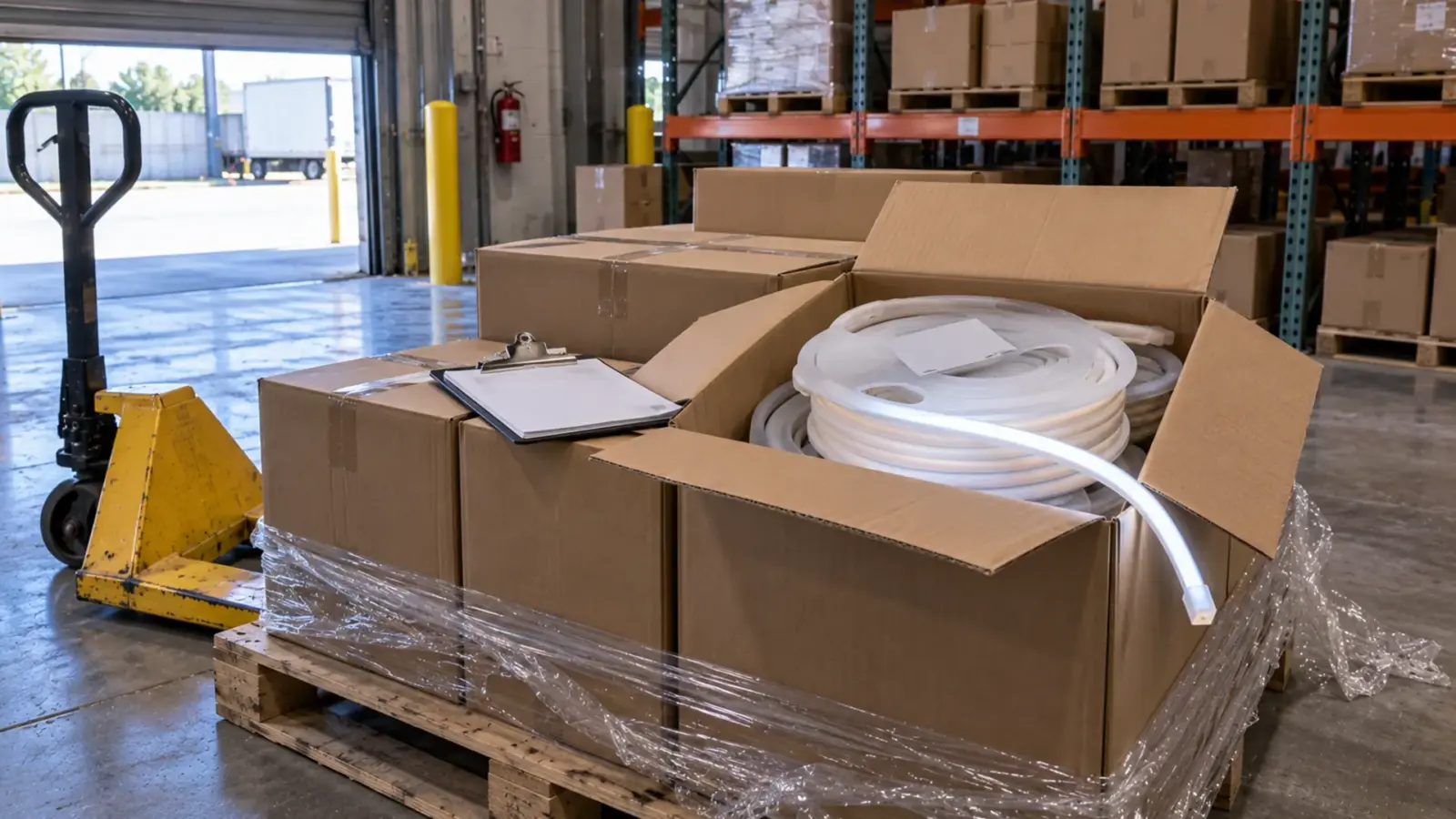
Most of the landed-cost lines are fixed per shipment, not per foot: the broker’s fee, the bond, the port fees, the drayage, the inspection and the time someone spends on documents. A full container of a few repeat SKUs spreads those costs thinly. A few cartons for one project carry them almost in full.
That is the arithmetic behind the route table below. A distributor that imports the same strip every month has already paid for the people, the bond and the broker relationship; the next shipment adds little. A contractor who imports once for one job pays for all of it on that job, and still owns the schedule and the claims.
Minimums matter too. Our standard items start at one full reel per SKU, so a single run never forces a bulk buy on either route, but a factory order with many SKUs in small quantities still buys many reels and ships many cartons.
Importer of Record: What You Sign Up For
The importer of record is the party legally responsible for the shipment entering the country. According to USA Customs Clearance, the importer of record must use reasonable care to classify and value the goods under 19 U.S.C. § 1484, and carries any fines or penalties that result from the entry.
In practice, that means:
- Classification and value are your responsibility, even when a broker prepares the entry.
- A customs bond is required for commercial entries above a value threshold, or when another agency regulates the goods; the broker can confirm which applies.
- Records of the entry are kept for five years, according to the same source.
- Compliance of the product is on you. According to a Global Sources case study on LED products, the importer is responsible for compliance, and a supplier’s declaration on its own is not enough.
A licensed customs broker can act for you and file the entry, but the responsibility stays with the importer of record. None of this is unusual for a company that imports regularly. It is a lot for one project. It also continues after delivery: a question about the entry can arrive long after the strip is installed.
Listing and Paperwork for the Submittal
An inspector and a general contractor do not care how the strip arrived. They care whether the model is listed for its use and whether the documents match the product on the wall.
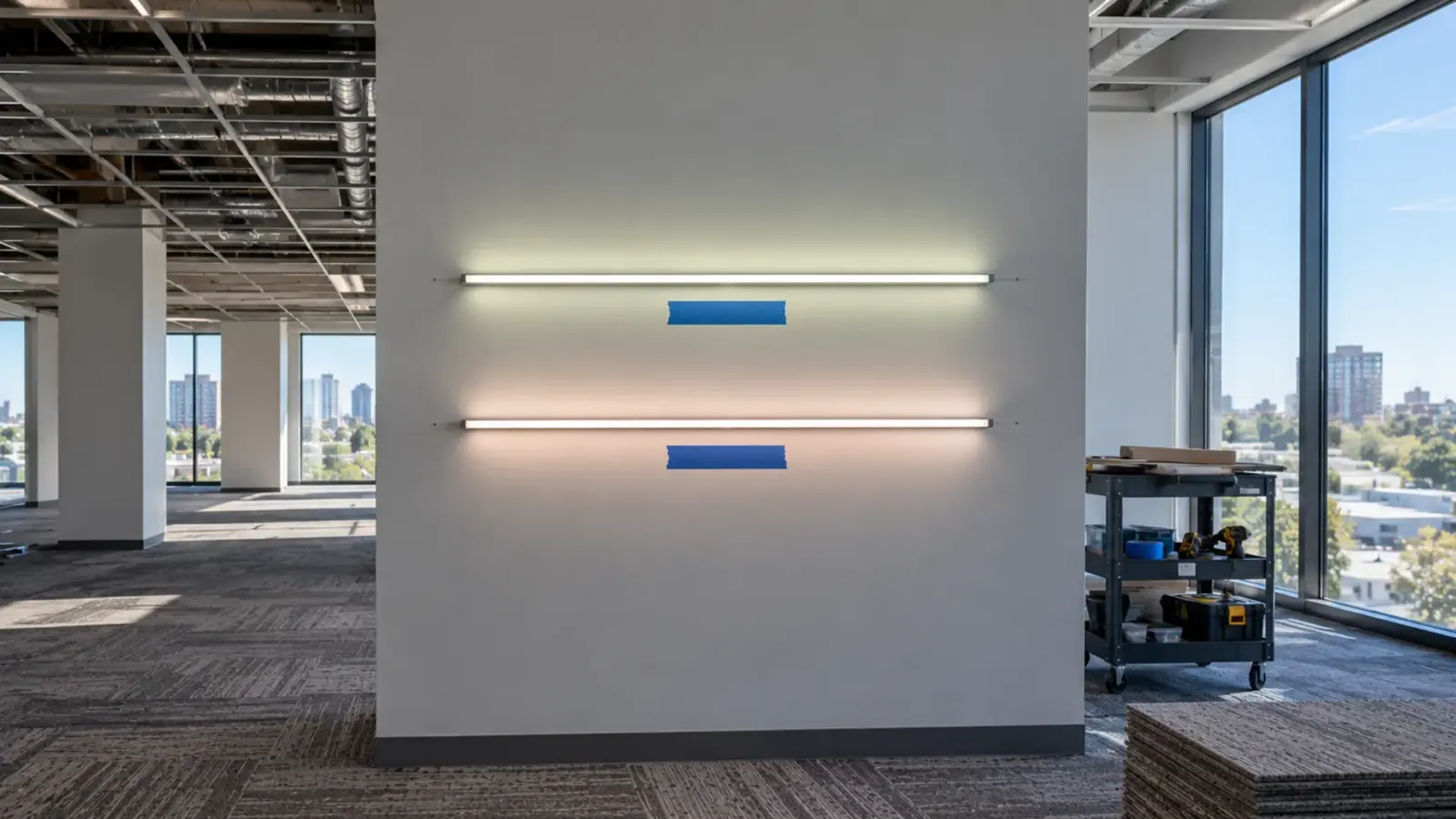
When you import, check the listing yourself before the order ships: the file number, the listing holder, the model with its suffix, and the category. Our guide to looking up a UL or ETL listing shows how. If the brand on the reel differs from the listing holder, get the authorization in writing.
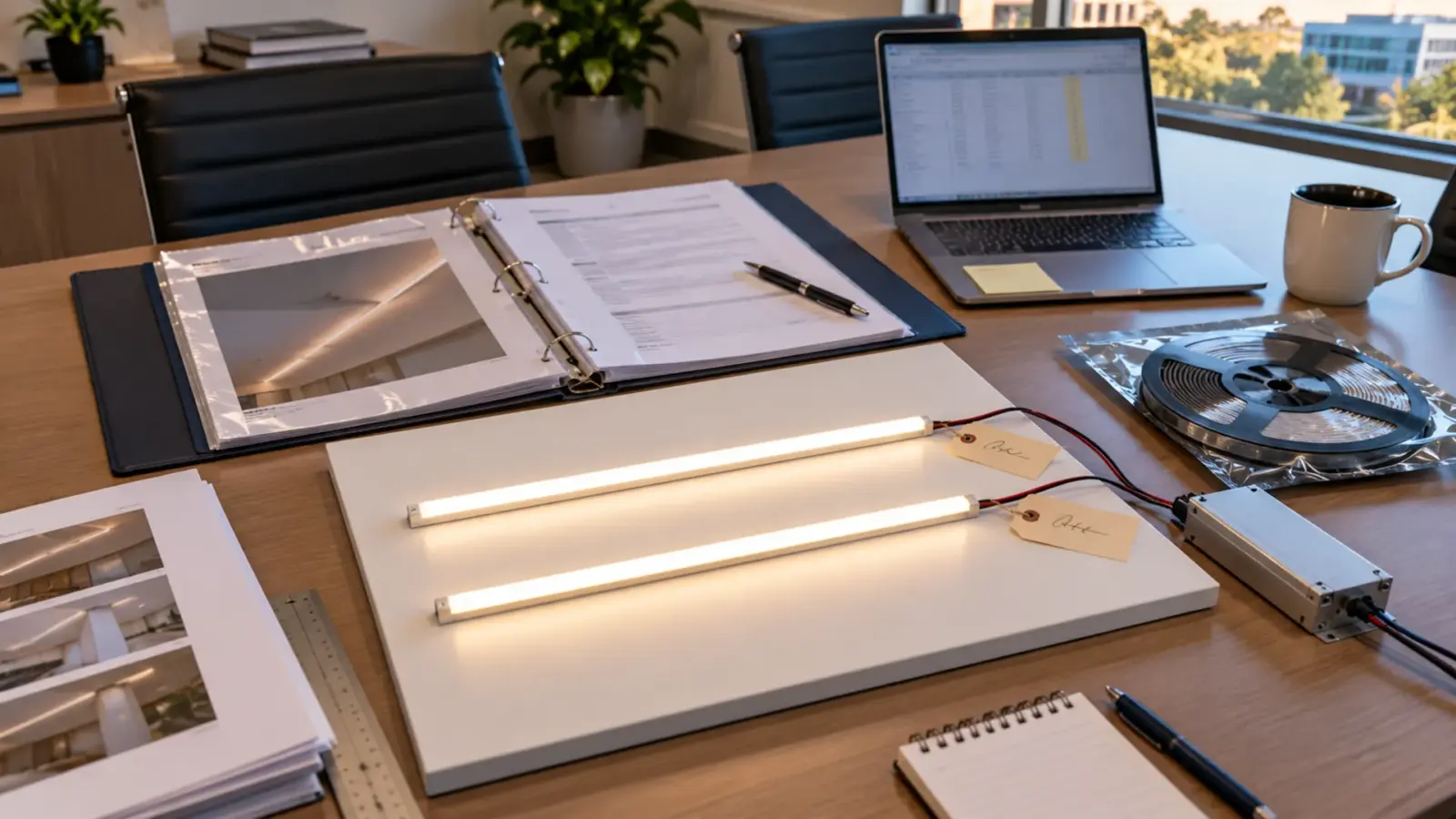
When you buy through a supplier, ask for the same records and check them the same way. Our own wording is that UL Listed options are available, certification is held by the original manufacturing partner, coverage varies by model, and the listing for each model is confirmed at quote. Our guide to UL Listed, UL Recognized and ETL Listed explains why the mark alone is not enough.
Schedule: Lead Time, Transit and Clearance
The schedule risk sits with whoever imports. Add up the whole chain:

- Production. On our range, standard CCT and Color Rendering Index, 0–100: how truthfully the light shows colors next to a reference source. Ra≥90 is the usual bar for interiors. combinations ship in 1 to 2 weeks; custom builds add roughly two to three weeks.
- Transit. Ocean or air, plus the time to book space.
- Clearance. Usually short, occasionally not.
- Delivery to site. Drayage and your own receiving.
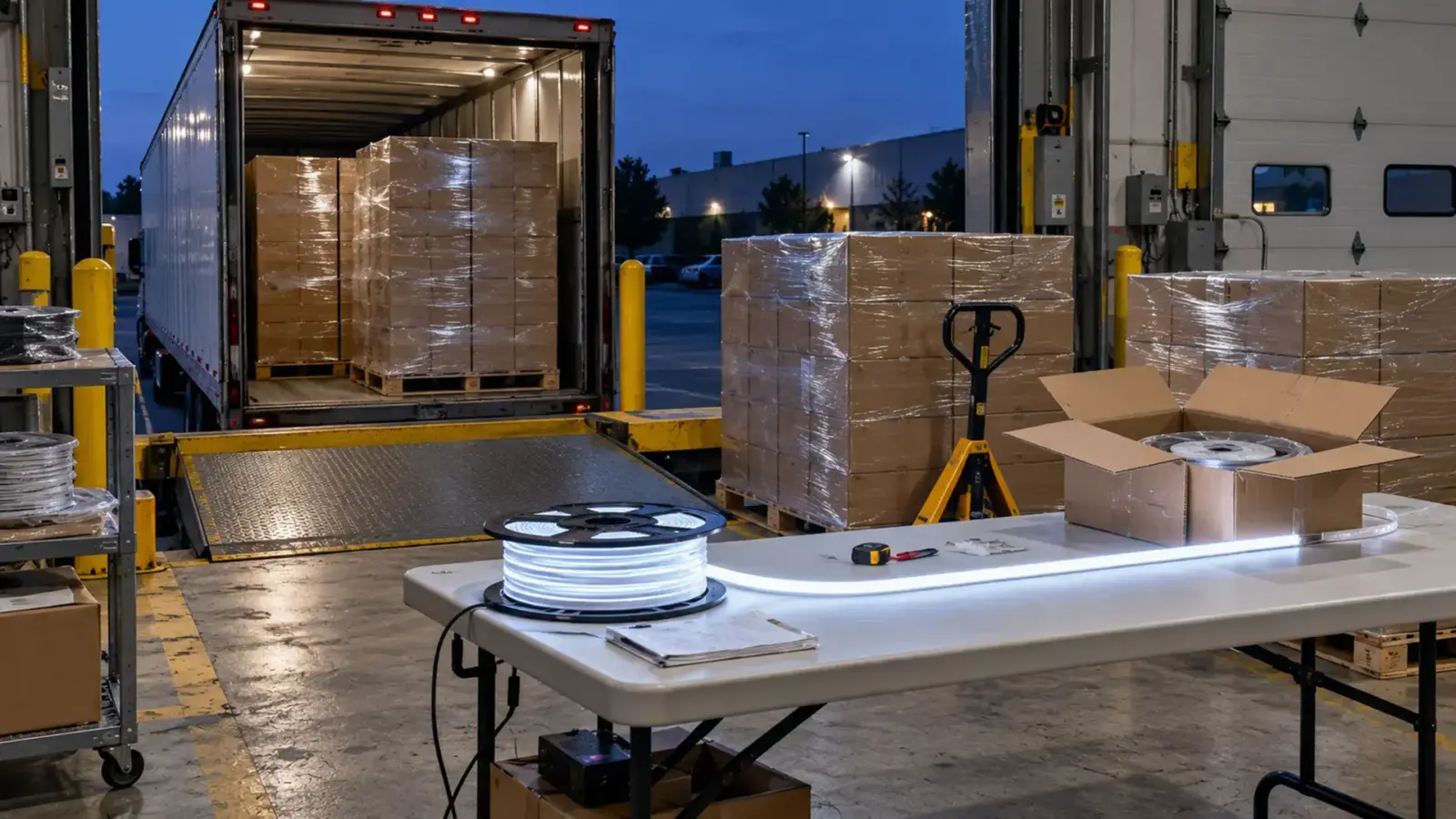
On a job with a fixed install window, a delay at any step lands on your crew. A US supplier carries that risk on its own stock and schedule; on our side, phased releases are agreed at quote so later deliveries follow the job. Our project supply service describes how phased shipments work.
Warranty and Returns Across a Border
Every supplier offers a warranty. What matters is how a claim works in practice.
On our product, LED strip carries a limited warranty of up to 5 years, with the period for each series stated on the quote and order confirmation. Claims start with an email with the order number and photos; we may ask for samples. Like most warranties in the industry, ours does not cover removal, reinstallation, scaffolding or electrician labor.
When you import direct from any factory, ask three questions before the order: who pays to ship a sample back, how long the evaluation takes, and what the remedy is, replacement, repair or credit. A remedy that ships a replacement reel across an ocean in six weeks is not the same as one that ships from a US warehouse.
Custom and Private-Label Orders
Custom builds change the comparison. A nonstandard density, PCB width, connector or packaging is made to order on either route, and on our range it adds roughly two to three weeks to the standard lead time. Samples are approved before any volume run, and the approved sample is kept as the reference for later batches.
For a lighting brand building its own line, direct import as a program is usually the right shape: the brand needs to own the specification, the documents and the relationship with the listing holder. Our OEM and private label service describes how those programs are quoted.
Questions to Ask Any Factory
Before a first direct order, get written answers to these:
- Which listing covers this exact model, and who holds it?
- What binning and test records ship with each lot?
- What is the production lead time, and how is a delay communicated?
- How are reels labeled, and is the bin on the label?
- How does a warranty claim work, who pays return shipping, and what is the remedy?
- Can a small trial order be run first?
Which Route Fits Which Buyer
| Buyer | Usually better route | Why |
|---|---|---|
| Distributor with an import desk and repeat SKUs | Import directly | Volume spreads the fixed costs; staff handle compliance |
| Lighting brand building a private-label line | Import directly, as a program | Custom specs, samples and documents managed per model |
| Electrical contractor, single project | US invoice | Paperwork, schedule and warranty risk stay with the supplier |
| Contractor with mixed SKUs and a submittal | US invoice | Many small lines; documents needed before approval |
| Owner buying spares for a portfolio | Either | Depends on volume and who manages it |
A first order from a new factory deserves a test either way. A boating forum thread in the sources gives advice that holds for strip too: buy a small batch, run it for a while, and only then order in volume. Hitlights adds that distributors carrying many brands are weaker on custom specifications; a supplier with a defined range and documents per model is a different case.

FAQ
Is it cheaper to import LED strip directly?
Often per foot, not always per job. Add every landed-cost line, the schedule risk and the cost of handling warranty claims across a border before comparing with a delivered US price.
What is an importer of record?
The party legally responsible for a shipment entering the country. According to USA Customs Clearance, the importer of record must classify and value the goods with reasonable care and carries the resulting penalties.
Do imported LED strips need to be UL listed?
The job decides: the inspector, the specification and the location. Check the listing record for the exact model before the order ships, not after it arrives.
Who pays freight when buying through Unitop?
The buyer. Our prices are normally EXW or FOB at the port of shipment, freight is paid by the buyer on both routes, and every quote states the Incoterm it assumes.
Decision Rule
Import directly when the volume is steady, the SKUs repeat, and you have the people to handle customs, compliance and claims. Buy through a US supplier when the job is one project, the SKUs are many, the submittal needs documents up front, or the schedule cannot absorb a delay. For the full cost picture, our guide to where the money goes on a commercial LED strip job lays out the budget lines, and our article on choosing between a factory, importer or distributor compares the channels.
Tell us which route your quote should assume, factory-direct or one US invoice, and send the run schedule. We will quote it with the Incoterm, the lead time and the documents stated: request a quote.