Ninety-six feet of 24V COB strip at 3.2 W/ft is about 307 W: on 60 W Class 2 drivers loaded to 80%, seven runs, seven drivers, seven home runs. On 120V strip it is one feed. That difference, not the tape price, is where most of the money on a commercial LED strip lighting job goes.
This article lays out the lines of an installed-cost budget, shows how each line is set, and points to the deeper guides in this series. It contains no prices: those depend on your market, your crew and the day you buy. It gives you the structure that every price goes into.
Material Cost Is Not Installed Cost
A price per foot for strip is the start of a budget, not the budget. On a commercial job, the strip is one of eleven lines, and several of the others scale with decisions the strip forces: how many feeds, how many drivers, how much channel, how much labor at height.
Two jobs with the same footage can differ sharply in installed cost:
- A long cove fed from one end with a long-run strip, drivers in one closet, a single dimming zone.
- The same footage in short pieces across millwork, each piece needing its own feed, a driver in a cabinet and a joint at every corner.
The second job has more feeds, more drivers, more connectors, more labor per foot and more places to fail. Our guide to LED strip price per foot covers what sets the material line; the rest of the budget is below.
The Eleven Lines in an LED Strip Budget
| # | Line | What sets it |
|---|---|---|
| 1 | Strip | Footage, density, CRI, IP rating, voltage, waste at cut points |
| 2 | Channel, diffuser, end caps, clips | Footage, channel type, cover, corners |
| 3 | Drivers | Total watts, the 80% rule, Class 2 or not, dimming method |
| 4 | Controls | Dimmers, decoders, sensors, scene controllers |
| 5 | Wiring | Number of feeds, home runs, boxes, conduit where required |
| 6 | Connectors and joints | Corners, breaks, feed points |
| 7 | Labor | Run type, height and access, wiring, programming |
| 8 | Samples and mockups | Approval steps the design needs |
| 9 | Submittals and documents | Datasheets, listings, dimming records |
| 10 | Freight, duty and handling | Incoterm, route, lead time |
| 11 | Contingency and rework | Risk on site and in the design |
According to Hitlights’ quoting guide, an LED lighting quote breaks down into material, labor, markup, overhead and contingency. The eleven lines here split the first two so that the decisions behind them are visible.
Strip: What Sets the Material Line
The strip line looks simple, footage times a unit price, but four details move it.
- Waste at cut points. Strip can only be cut at its marks. A run of 9 ft 4 in on a strip with a 1.97 in (50 mm) cut interval loses less than an inch; the same run on 120V strip with a 19.7 in (500 mm) interval can lose most of a section. Add the waste per run, not as a flat percentage.
- Full reels. Our minimum is one full reel per SKU, and most suppliers sell by the reel. A job with ten SKUs in small quantities buys ten reels. Rationalize the schedule to fewer SKUs where the design allows.
- Spares. Owners of hotels, offices and retail chains need matching strip for repairs years later. A small spare quantity from the same bin, bought with the job, costs less than a color-matched reorder.
- Specification. Higher Color Rendering Index, 0–100: how truthfully the light shows colors next to a reference source. Ra≥90 is the usual bar for interiors., tighter binning, IP coating and higher density raise the unit price. They also change other lines: an IP65 strip may remove the need for a sealed channel, and a denser strip may allow a shallower one.
The strip line is the one most often cut in value engineering. Our article on value engineering LED tape shows which parameters can change without moving cost into rework.
Feet to Feeds to Drivers: The Worked Example
Take 96 ft of strip on a single wall cove and run it three ways.

| Option | Strip | Watts | Runs and feeds | Drivers |
|---|---|---|---|---|
| A | UT-C480-8, 24V COB, 3.2 W/ft, 16 ft (5 m) per feed | About 307 W | 7 runs of up to 15 ft, so each stays under 48 W | 7 × 60 W Class 2 (UT-D60-24-C2) |
| B | Same strip | About 307 W | 6 runs of 16 ft | 3 × 150 W linear (UT-D150-24-L), two runs each |
| C | UT-H120-60, 120V, 2.7 W/ft, 98 ft (30 m) single feed | About 259 W | 1 feed | Rectifier or listed end cap, no separate driver |
Each option moves cost between lines:
- Option A keeps every circuit Class 2, which is simpler to wire, but has the most drivers, home runs and joints. Our Class 2 driver guide explains what the inspector checks.
- Option B halves the driver count, but a 150 W driver is not Class 2, which changes the wiring method and often the labor.
- Option C removes the low-voltage drivers and most of the feeds, but trades CRI (Ra≥80 against Ra≥90 on the COB), a much longer cut interval (19.7 in (500 mm)) and line-voltage dimming. Our article on when to spec 120V strip covers that trade.
None of these is the cheap option by default. The cheapest installed cost depends on where the drivers can live, how the room is dimmed, and how much labor the feeds take. Our power supply sizing guide shows the driver math for any strip.
Channel, Diffuser and Mounting
Channel often costs more per foot than the strip it holds, and it carries most of the visual result. Budget it by footage and by type: recessed and plaster-in channels need more labor than surface channel, and corners need extra pieces.
Two choices change this line most. Deep channels and opal covers hide dots but cost light, which can push you to a denser strip; shallow channels with sparse strip save on both and then show dots. Our guide to channel covers by depth helps set the pair before the budget is fixed.
Controls and Wiring
Controls are where budgets surprise people late. A wall dimmer per zone is cheap to buy and simple to wire. A 0-10V system needs control wiring to every driver. DALI and DMX systems need controllers, addressing and programming time.
Settle the control method before the wiring is priced, because it changes the drivers too. A 0-10V driver such as our UT-D96-24-010 and a TRIAC driver such as UT-D60-24-TRC are different products, and a change from one to the other after the drivers are ordered is a rework line. Our dimming guide compares the methods; pick one per area and write it on the schedule.
Wiring follows the feed count. Every feed is a home run or a branch, a junction box, a penetration and a connection. On long runs, our article on why the far end goes dim shows where extra feeds are needed; each one is a wiring line item.
Labor: Time per Run Type
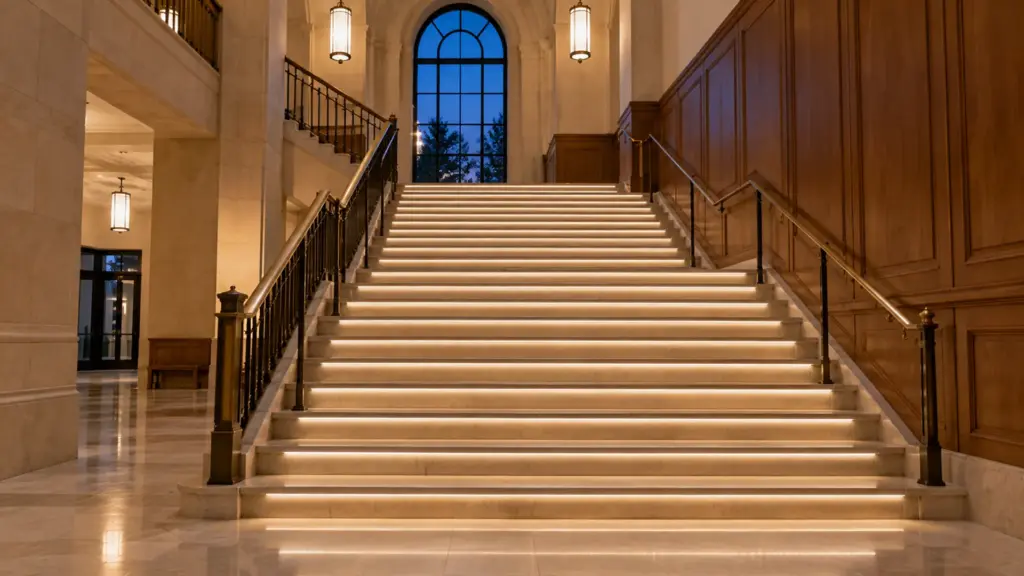
Labor is usually the largest line. Hitlights publishes typical install times for LED strip that make a useful starting point:
| Run type | Typical time (Hitlights) |
|---|---|
| Simple under-cabinet run | 20–30 min per 8 ft section |
| Cove or soffit | 30–45 min per 10 ft run |
| Recessed custom channel | 45–90 min per run |
| Multi-zone wiring with dimmer | 60–120 min per zone |
| Stair riser lighting | 3–6 hours per flight |
Adjust for your crew, ceiling height and access: a cove at 9 ft from a stepladder and the same cove at 24 ft from a lift are not the same line. EC&M’s column on the estimating sequence treats supervision and site logistics as separate items, not hidden inside unit times, and that matters on jobs with lifts, night work or occupied buildings. Programming time for controls belongs here too. Our guide to quoting an LED strip lighting job turns these times into a bid.
Samples, Mockups and Submittals
Commercial jobs approve before they buy. Samples, a mockup of one bay, and a submittal package with datasheets, listings and dimming records are real work with real time. According to Zigaflow, the luminaire schedule should be signed off before purchase orders go out; on strip jobs, the mockup is usually where that sign-off happens.
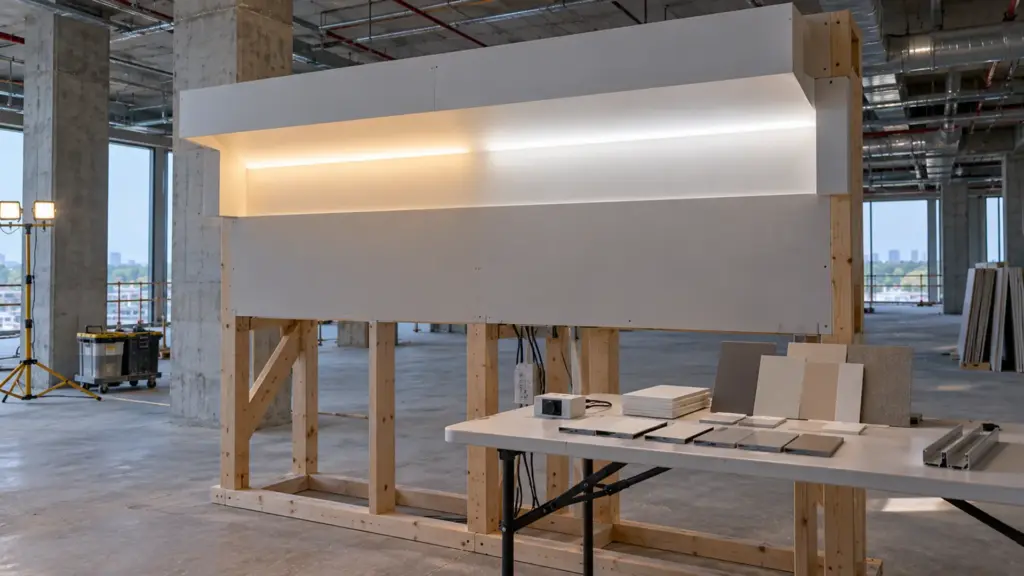
Our guide to the LED strip submittal package lists what goes in it. Budget the mockup materials and the hours to build and adjust it.
Freight, Duty and Lead Time
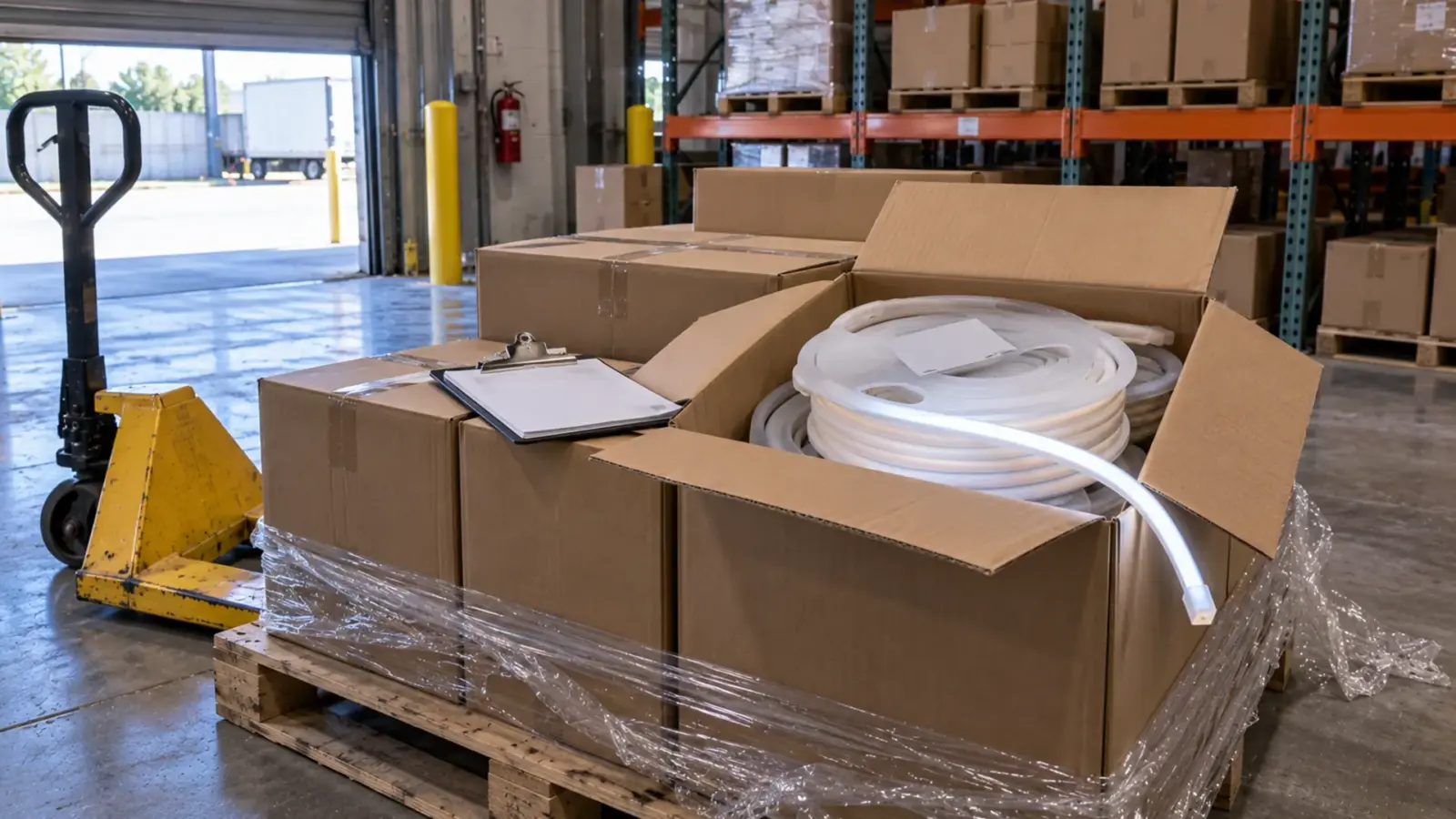
Material prices are quoted on terms. Our quotes, for example, are normally EXW or FOB at the port of shipment, with freight paid by the buyer, and every quote states the Incoterm. That means freight, and for imported goods duty, brokerage and handling, sit on the material line, not in the supplier’s price. Our guide to importing LED strip yourself vs buying through a US supplier lists every line between the factory and the site.
Lead time is a cost too. Standard CCT and CRI combinations on our range ship in 1 to 2 weeks; custom builds add roughly two to three weeks. A schedule that cannot absorb that pays for expediting or for a substitution.
Rework: The Line Nobody Budgets
Rework is the most expensive line, because it is paid at the worst time: after the ceiling is closed. The usual causes on strip jobs are predictable:
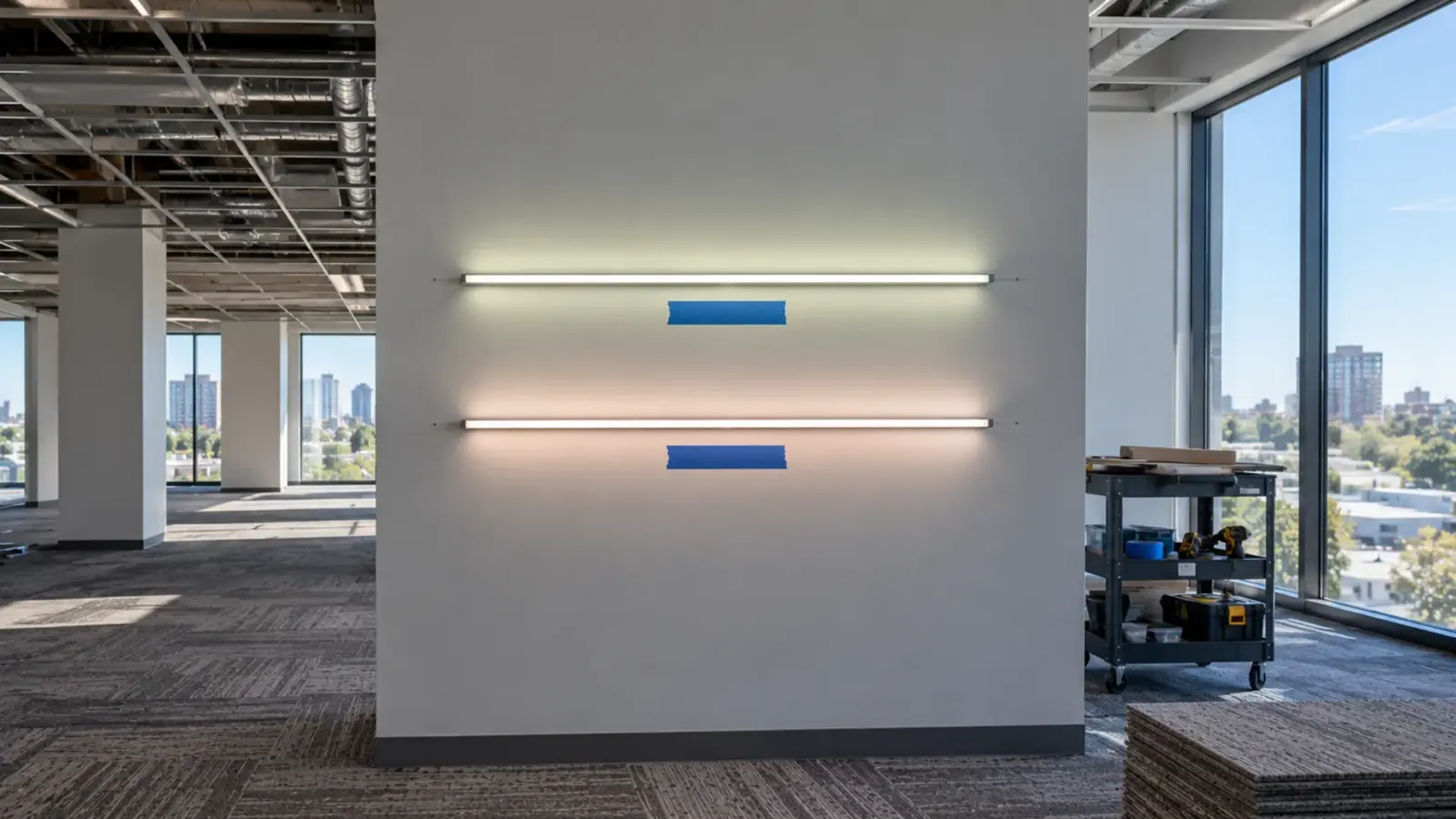
- Dots that show through the cover from a viewpoint nobody checked.
- Color mismatch between reels from different bins; our article on why the second reel doesn’t match covers it.
- A dim far end on runs longer than the rated run per feed.
- Drivers nobody can reach above hard ceilings; see our driver placement guide.
- Dimming that does not work with the installed dimmers.
Hitlights recommends a contingency of 10–15% on LED strip quotes. A good mockup and a submittal checked against these five causes is how that contingency stays unspent.
Who Carries Which Line
On many commercial jobs the eleven lines do not sit with one party. Before comparing budgets, check who carries each line:
- Supply-only quotes from a strip supplier usually cover lines 1 to 4 and 6, sometimes samples. Wiring, labor and freight sit elsewhere.
- The electrical contractor carries wiring and labor, and often drivers and controls when they are on the electrical schedule.
- A controls integrator may carry line 4 and its programming on projects with DALI, DMX or a scene system.
- The owner or the GC may carry mockups, spares and some allowances.
Two budgets that look far apart are often the same job with lines in different places. Lay them out in the eleven lines before deciding which is cheaper.
Lifetime Cost in One Paragraph
Installed cost is the first number; the owner also pays for energy and maintenance. The lines that decide lifetime cost are the ones set at design time: efficacy of the strip, how hard the drivers work, whether drivers can be reached for replacement, and whether spare strip from the same bin exists. Energy savings and payback are a separate calculation, but a budget that saves on driver access or spares usually spends it back on the first service call.
FAQ
Do LED strip lights qualify for utility rebates?
Sometimes. Many programs require the product to appear on a qualified list such as DLC or ENERGY STAR, and strip products have to be checked model by model. Confirm eligibility with the utility before the budget counts on it.
How much contingency should an LED strip budget carry?
Hitlights suggests 10–15% on LED strip quotes for site surprises such as wiring, uneven surfaces and extra connectors. Jobs with closed ceilings or unclear control systems deserve the upper end.
Who pays freight on LED strip orders?
It depends on the Incoterm. Our prices are normally EXW or FOB at the port of shipment, with freight paid by the buyer, and each quote states its Incoterm so landed cost can be compared.
Before You Price It
- Count runs and feeds, not just feet.
- Choose the driver strategy, and with it the wiring method.
- Fix channel and cover together with the strip.
- Agree the control system before the wiring is priced.
- Put samples, mockups and submittals on the budget as lines.
- Put freight, duty and lead time on the material line.
- Price the rework risks out with a mockup, then keep a contingency.
We supply COB, SMD and 120V strip with matched drivers and controls for commercial jobs across the US. Send the drawings or the run schedule, and we will return the feeds, the driver count and a quote you can drop into these lines: request a quote.