

Under Cabinet Lighting with LED Strip: Millwork & Toe-Kicks
Millwork lighting is close to the eye and close to the work, so small choices show: where the strip sits under the cabinet, what the counter reflects, and where the driver goes for the next ten years.
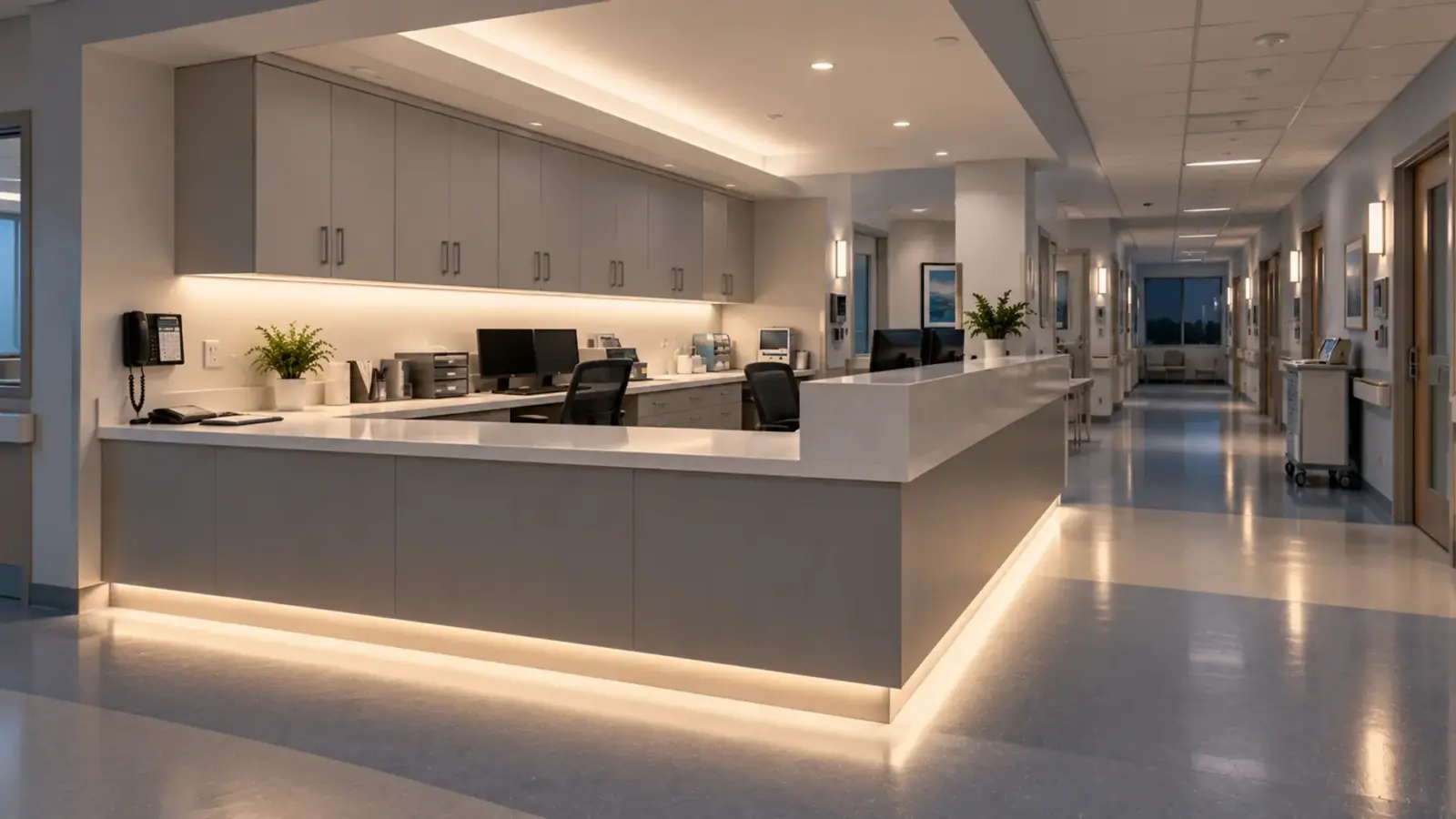
Under cabinet lighting with LED strip lights a work surface a foot or two below it, toe-kick strip lights the floor in front of the base, and casework strip lights whatever is on the shelf. In each case the strip is close to people and to reflective finishes, so the dots, the hot spots and the driver all show sooner than in a ceiling cove. This page covers strip position, task light on the counter, channels, driver size and location, toe-kicks and casework, with the configurations we usually supply.
Millwork configurations we usually supply
A starting point by location. Every model comes from its category spec table; the final pick is confirmed on your millwork drawings and a taped-in sample.
| Location | Strip | Example models | Channel / power | Watch for |
|---|---|---|---|---|
| Under upper cabinets, visible line | 8 mm dot-free COB | UT-C480-8 (3.2 W/ft), UT-C320-8 (2.4 W/ft) | UT-CH1013 with opal diffuser | Reflections in polished stone |
| Shallow rails and reveals | Narrow COB · CSP | UT-C400-3 (3 mm PCB), UT-CSP-320-N | UT-CH1207, 8 mm strip max | PCB width must fit the channel |
| Deep channel, continuous look with SMD | High-efficacy SMD | UT-S2835-128-HE (2.9 W/ft) | UT-CH2415 with opal diffuser | Size up one step for opal loss |
| Toe-kicks and plinths | COB · IP65 silicone-coated strip | UT-C320-8, UT-O320-8-65 | Surface channel set back from the front edge | Mopping water; driver never in the toe kick |
| Shelves and display casework | High-CRI SMD · Ra≥97 SCOB | UT-S2835-480-FS (Ra≥98), UT-SC320CRI97-15 (Ra≥97) | UT-CH1616 corner channel | Efficacy drops at the higher CRI tiers |
| Hospitality millwork, warm evening scenes | Dim-to-warm | UT-T120-8-DTW (SMD), UT-T672-10-DTW (COB) | Matching DTW driver and control | Control pairing at quote |
Full spec tables: COB · CSP · SMD · Channels & diffusers · Drivers
Eight decisions on a millwork job
Most of them are settled with a short length of strip taped in place and a look from standing height, before anything is cut or stuck.
Strip position: front, middle or back
Position decides what the strip lights. Toward the front edge, aimed down and slightly back, it lights the work surface and stays out of a standing viewer's sightline behind the light rail. Toward the wall it lights the backsplash and leaves the counter dimmer.
Polished stone changes the math: a strip near the front edge can show as a bright reflected line on the counter. An opal diffuser softens it and moving the channel back a little loses it, but push it too far and the work surface goes dark.
Tape a short length in place before cutting anything and look at it from standing height with the counter finish in place.
Task light on the counter: how to set and check it
Write the target as footcandles on the counter, measured on the horizontal plane at counter height (1 fc = 10.76 lux). Name the surface and the use, because a food-prep counter, a nurse station and a retail wrap desk are lit for different tasks.
Check it at three points along the depth: the front edge, the middle and the backsplash line, and at the ends of each run as well as the middle. The front edge is where the work happens and where an under-lit design shows first.
Work back from that target to the strip's lumens per foot, allowing for distance, diffuser loss and the counter finish; the method is the same as for a cove.
Channel and diffuser
Under-cabinet strip lives in a surface-mount aluminum channel: the cabinet is already built, the channel hides the strip from a standing viewer, and the aluminum carries heat away from the strip.
Match the strip's PCB width to the channel's maximum strip width. UT-CH1013 (13×10 mm, strip up to 10 mm) is the slim default under upper cabinets; UT-CH1207 (12×7 mm, 8 mm strip only) suits shallow rails and reveals; UT-CH2415 (24×15 mm, strip up to 15 mm) is the deep profile for SMD that has to look continuous.
Clear covers transmit roughly 90 to 95% and leave the LEDs visible; opal covers transmit roughly 70 to 80% and blend them into one line.
Driver size: how much strip one driver carries
Load is watts per foot times feet; keep it at or below 80% of the driver's rating. Our Class 2 drivers are rated 60 W, so one carries 15 ft (4.5 m) of UT-C480-8 at 48 W, and a 40 W driver carries 10 ft (3 m).
A kitchen or pantry with several cabinet runs usually splits into zones by run, each with its own driver or its own circuit from a larger supply.
Driver location: rank it by service, not by looks
The driver is the part someone will touch again. In order of preference: a remote equipment closet or a ceiling space with a hatch; inside an adjacent cabinet in a blank-cover box with air around it; on top of the upper cabinets if that stays reachable; high on the side wall of a sink base, above the leak line; and a plug-in driver at a receptacle on small retrofits. The toe kick is not a driver location: heat is trapped there and access means removing a panel.
Wherever it goes, leave air around it, keep it reachable without demolition, and label which driver feeds which run at both ends. Our Class 2 drivers are IP20 and belong in dry locations; potted IP67 drivers such as UT-D100-24-67 cover damp spots.
Lead wire: 24V travels, 12V does not
A remote driver trades a hidden box for a longer lead, and the drop on that lead adds to the drop along the strip. For 48 W of strip on 14 AWG, a 40 ft remote lead drops about 2% at 24V and about 8.4% at 12V.
That is why remote drivers and long millwork runs are 24V jobs; keep 12V for short runs with the driver close by.
Toe-kicks and plinth lines
A toe-kick line lights the floor, not the base. Set the channel back from the front edge of the plinth so the strip is hidden from standing height and only the wash on the floor shows.
Floors get mopped and toe-kicks collect dust, so use a silicone-coated strip with sealed ends where cleaning water can reach, and keep the driver out of the toe kick, where heat is trapped and access means removing a panel.
Shelves, casework and color
Display cases and shelves put the merchandise a few inches from the strip, so color rendering shows. Ra≥90 covers most millwork; food, cosmetics and apparel justify Ra≥95 or higher. Ask for R9 along with Ra, and budget for the lower efficacy of the higher tiers.
Cut only at the marked cut points, plan each length to the cabinet or shelf it serves, and match the color temperature to the room's other fixtures so a 3000K shelf does not sit under 4000K downlights by accident.
Go deeper on millwork lighting
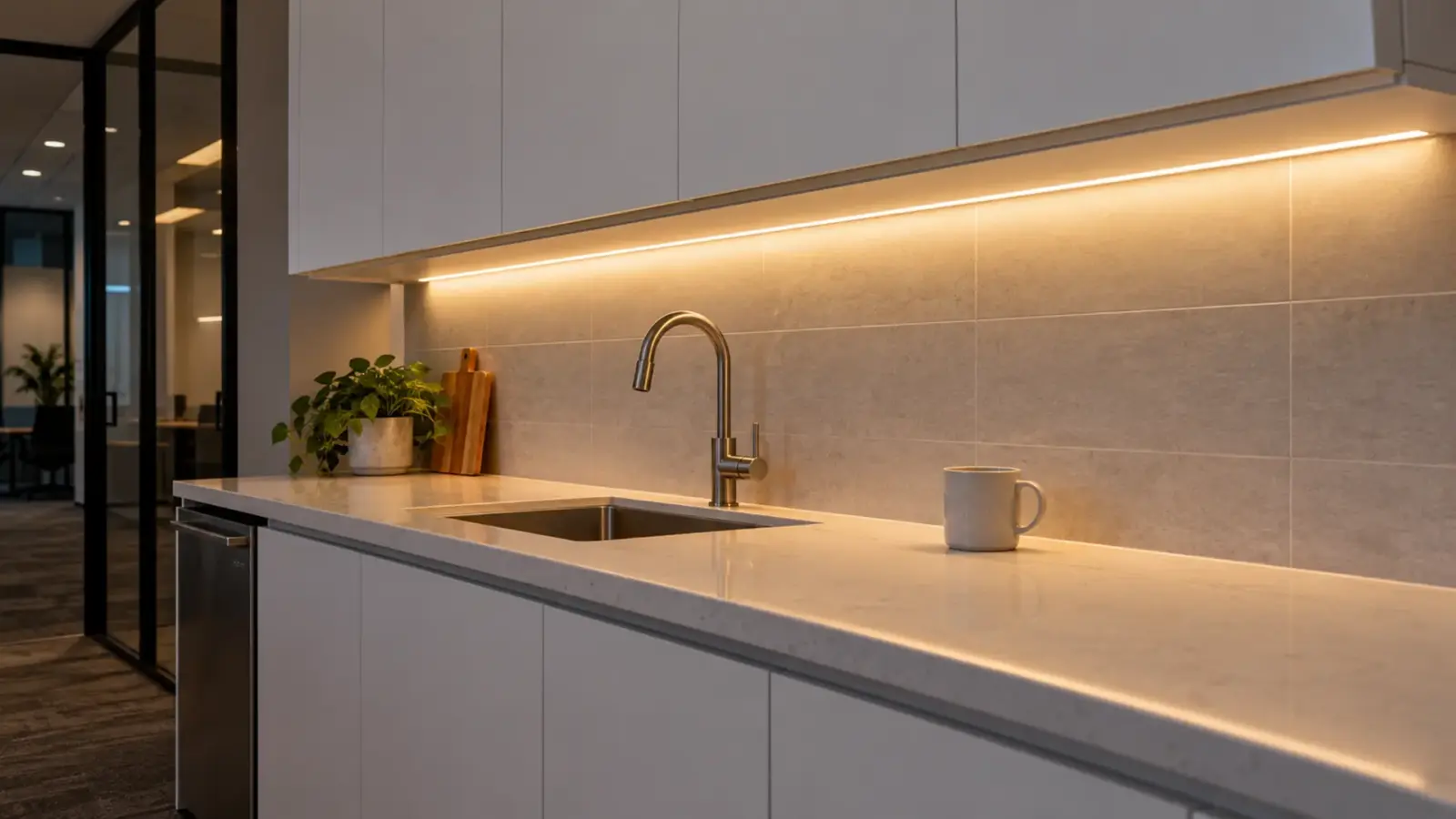
Where to Put the Driver on an Under-Cabinet LED Strip Job
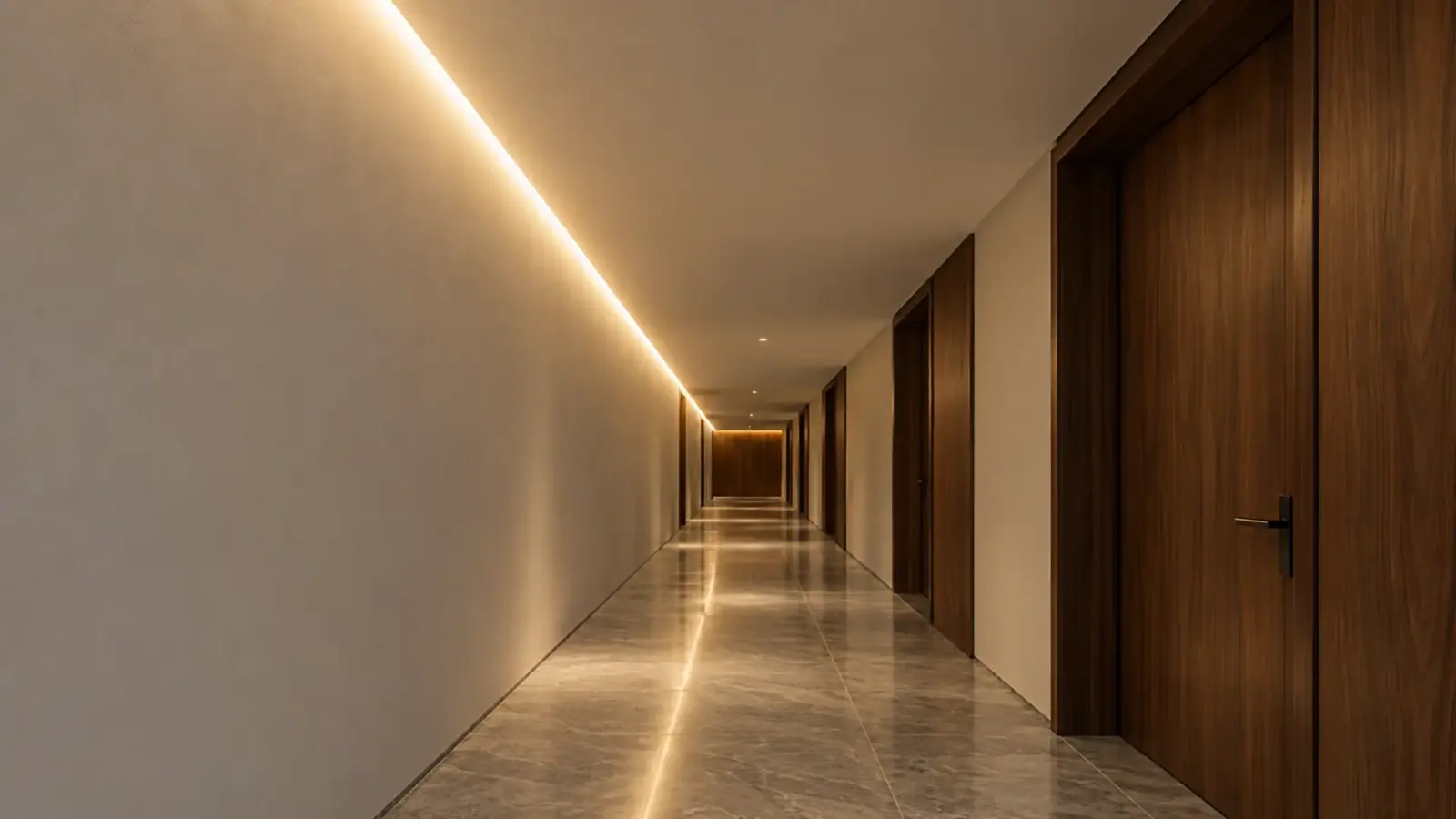
Which LED Channel Fits the Detail, Recessed, Surface or Corner?
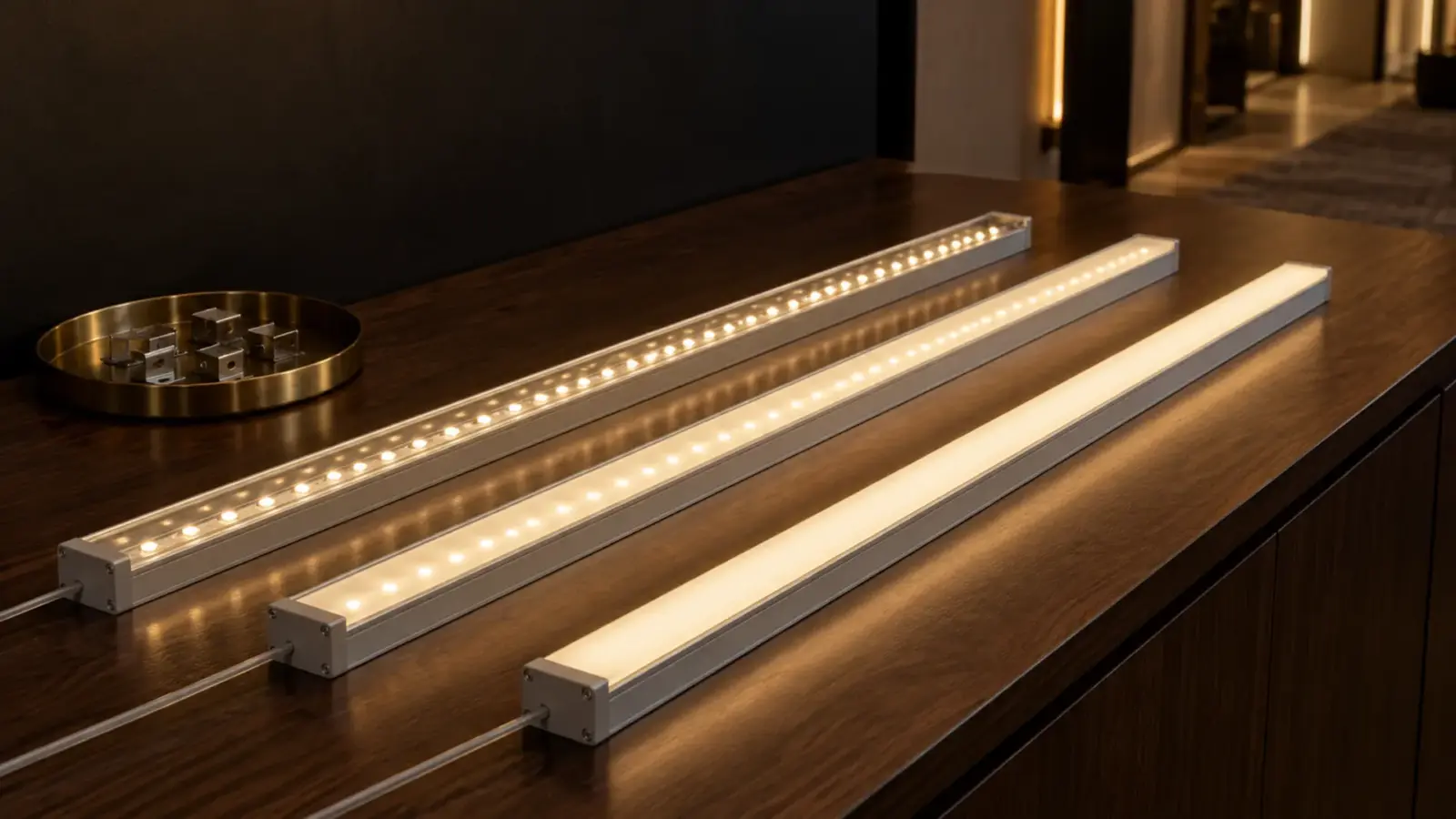
Clear, Frosted, or Opal? Pick the LED Channel Cover by Depth
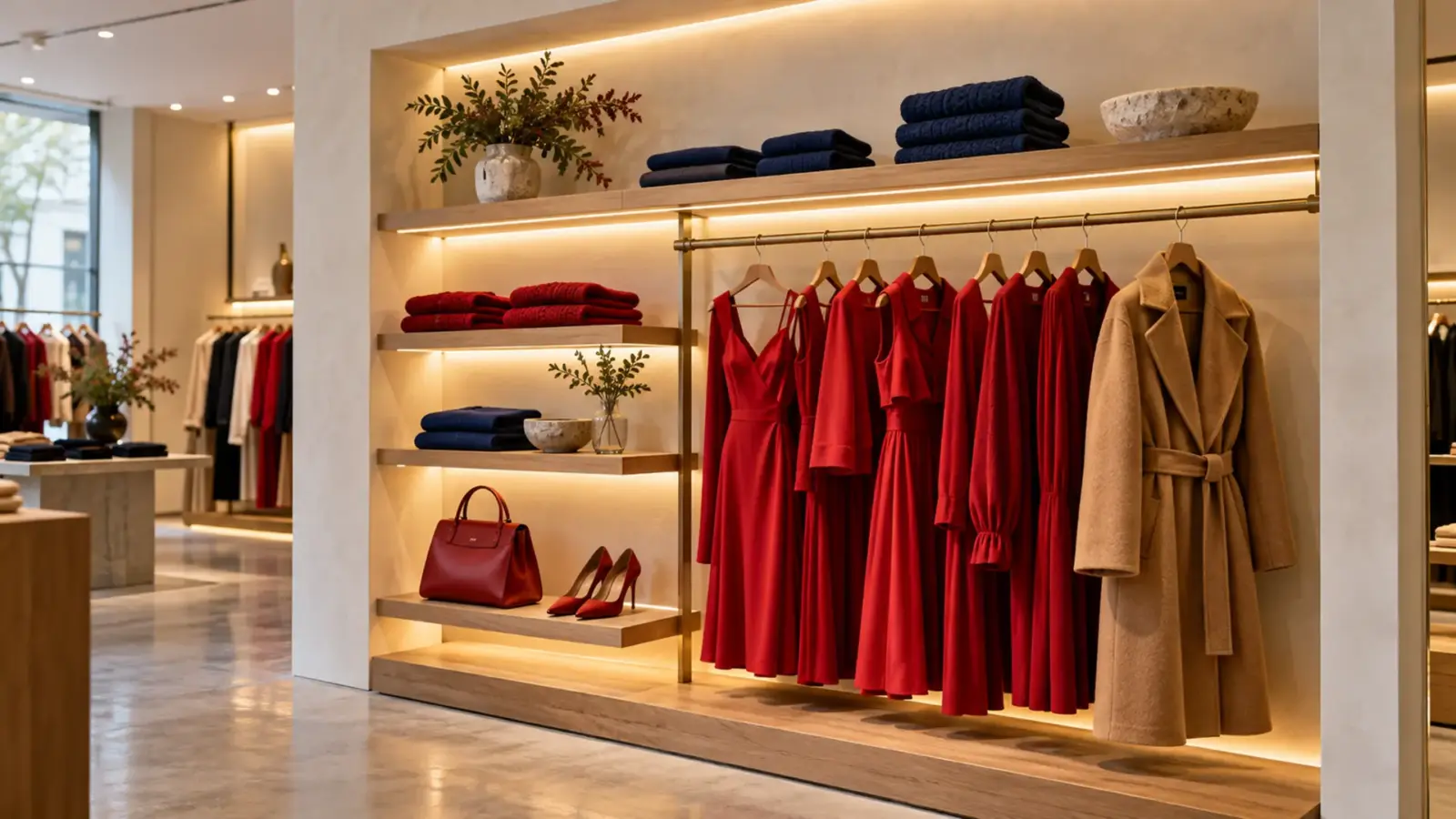
CRI 90, 95 or 98? Pick High-CRI LED Strip by What It Lights
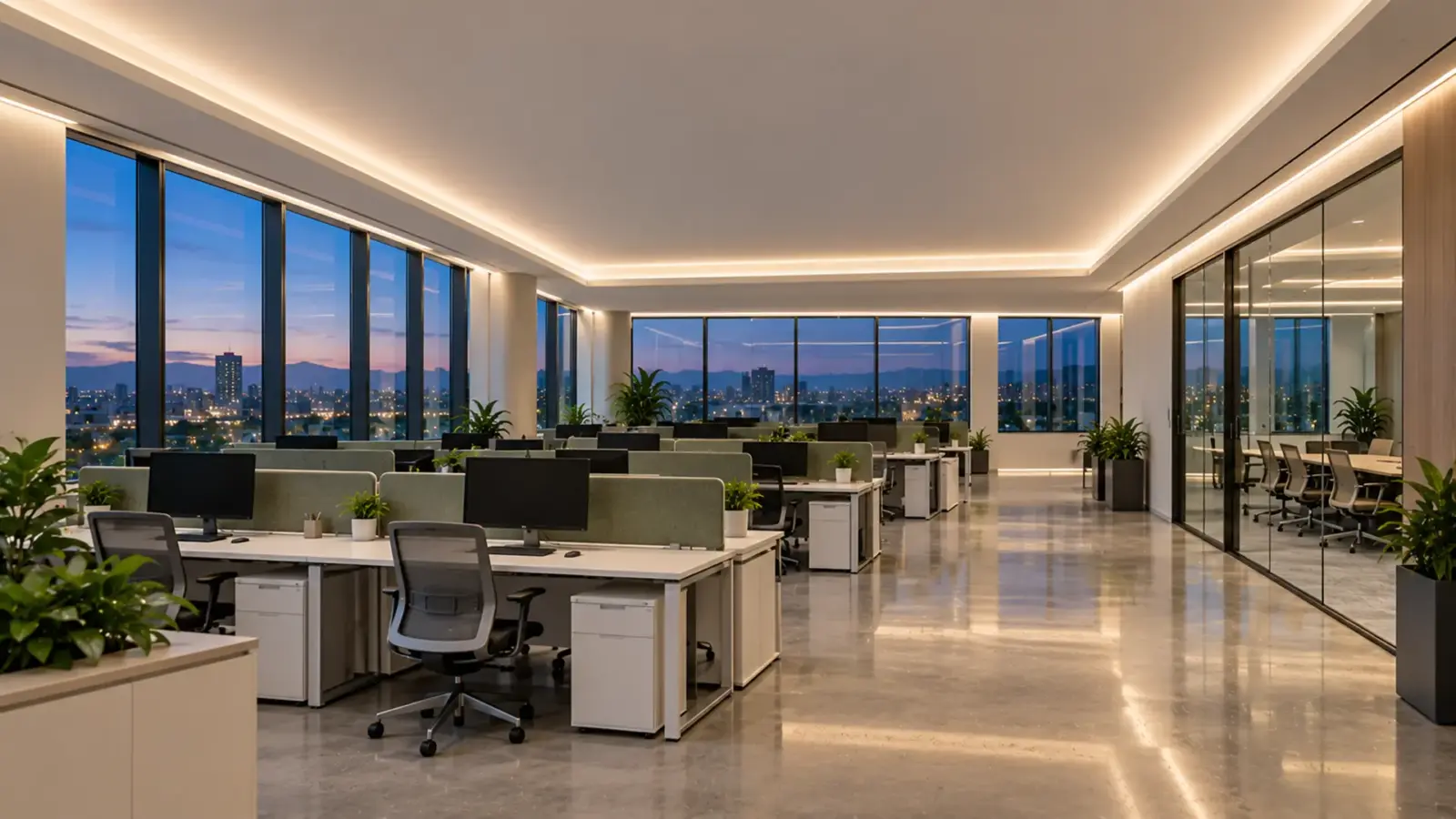
Where 5000K LED Strip Beats 4000K, and Where It Backfires
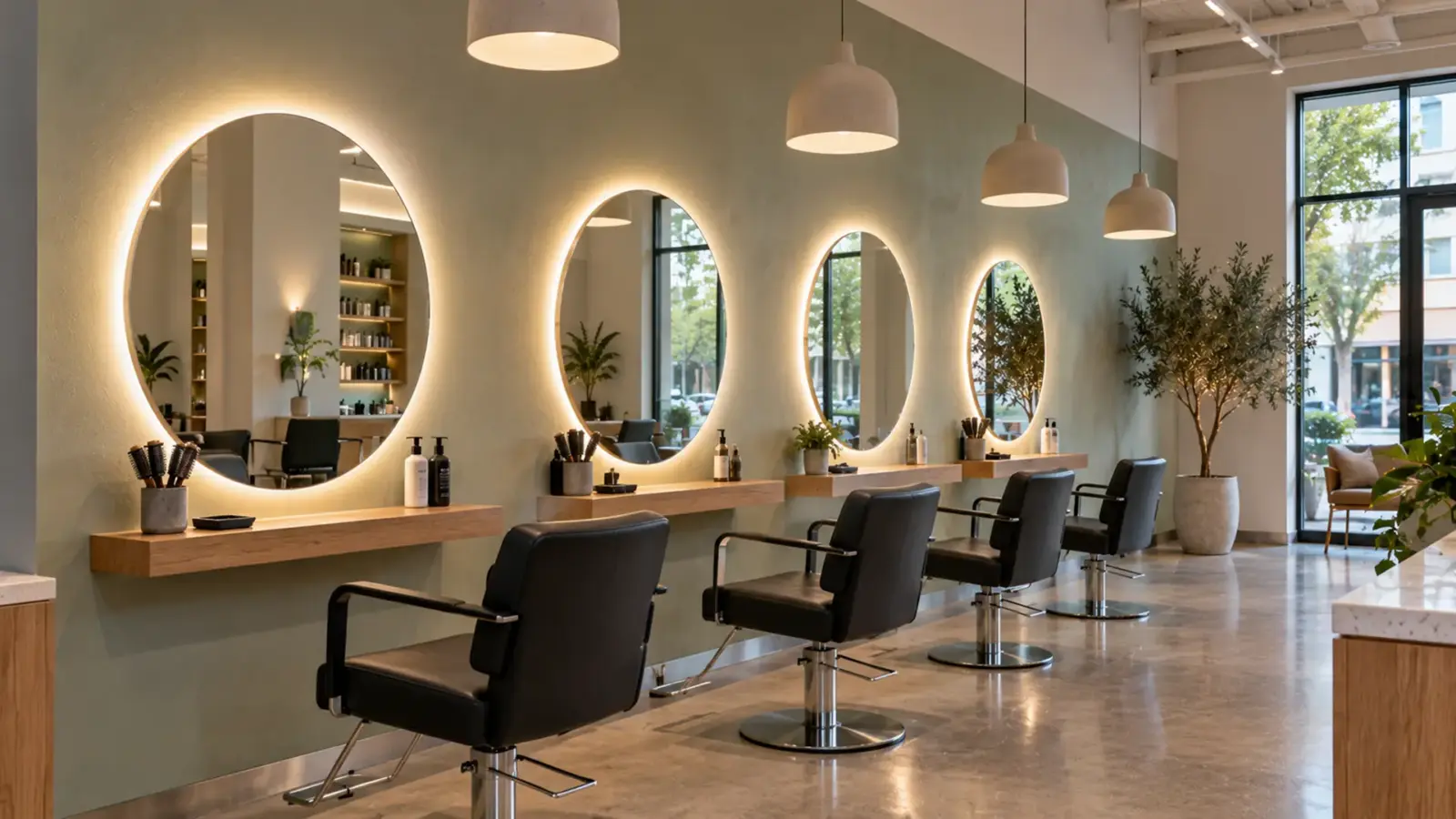
What Goes Behind a Backlit Mirror: Strip, Driver and Moisture
Under-cabinet and millwork questions
Which LED strip is best under cabinets?
For a visible line or a polished counter, 8 mm dot-free COB at Ra≥90 in a slim aluminum channel with an opal diffuser. High-efficacy SMD works in a deeper channel that hides the dots.
Where should the under-cabinet strip sit: front or back?
Toward the front edge, aimed down and slightly back, to light the counter and stay behind the light rail. Move it back a little if a polished counter reflects the line; too far back and the work surface goes dark.
How much under-cabinet strip can one driver run?
Keep the load at or below 80% of the driver's rating. One of our 60 W Class 2 drivers carries 15 ft (4.5 m) of UT-C480-8; a 40 W driver carries 10 ft (3 m).
12V or 24V for under-cabinet lighting?
24V for most jobs, and always when the driver is remote: the same load draws half the current, so the lead and the strip lose less. 12V suits short runs with the driver close by.
Can LED strip go in a toe kick?
Yes, set back from the front edge so only the floor wash shows, and use a silicone-coated strip with sealed ends where mopping water can reach. The driver should not go in the toe kick.
Is LED strip or puck lights better for under cabinet lighting?
LED strip in a channel gives one continuous line of task light along the counter with no scallops between fixtures, which is why it is the default for kitchen cabinet lighting and commercial millwork. Pucks suit a single shelf or a display niche. A strip run also dims as one zone and is fed from one driver, which keeps the wiring inside the casework simple.
What color temperature is best for kitchen cabinet lighting?
2700K to 3000K where the kitchen is part of a living space or a hospitality interior, 3500K to 4000K where it is a work area such as a commercial or staff kitchen. Keep one Kelvin value across every run that can be seen at the same time, and confirm it against the counter finish, since a dark stone and a white quartz show the same strip differently.
Spec your millwork lighting
Send the cabinet elevations, run lengths and counter finish. An engineer replies with the strip, channel and driver plan.
We typically respond within 24 hours. No spam, ever.