A lighting substitute was rejected on one line: Color Rendering Index, 0–100: how truthfully the light shows colors next to a reference source. Ra≥90 is the usual bar for interiors. 85 against a specified 90. That is the whole story of value engineering LED tape. A proposed equal can match on price, watts and color temperature and still fail on the single parameter the designer cared about. Compare every line before you submit, not after.
Value engineering is meant to keep the design and lower the cost. On LED tape it often does the opposite: the cost moves from the material line to a rejected submittal, a failed mockup or a rework after handover. This article separates the parameters that can change from the ones that cannot, and gives the sheet that proves which is which. Once the order is released, even an approved change costs more; what a change costs after order release shows how by stage.
Value Engineering Is Not a Cheaper Part Number
The examples in the sources are consistent. According to Regency Lighting, one project swapped a specified 3000K fixture for a 5000K fixture with low color rendering, and the floors looked dull. A lighting designer’s column describes two luminaires with the same 1,300 lumens, one with a glare rating (UGR) of 15 and the other of 30. On paper both were equal; in the room they were not.
LED tape has its own versions of this:
- A substitute with a longer cut interval cannot stop where the drawing stops, so runs end short and dark.
- A substitute with a shorter rated run per feed needs more feeds, more drivers and more wiring than the bid allowed.
- A substitute in a different bin does not match the reels already installed on the floor above.
- A substitute with a different dimming method does not work with the dimmers in the specification.
None of these shows in a price comparison. All of them show on site.
Where Tape Substitutions Come From
Substitutions on LED tape usually start in one of four places, and each needs a different response:
- Budget. The bid came in over and the owner asks for savings. This is true value engineering: decide with the designer which lines can move.
- Availability. The specified product cannot meet the schedule. The question is whether a phased release of the specified product, or a true equal, is the safer path.
- Contractor preference. A brand the crew knows and trusts. Fine if it passes the sheet; the familiarity is worth something on site.
- Distributor alternates. A product offered as “equal” on a quote. Ask for the sheet before taking the word.
Knowing the reason tells you how much evidence the reviewer will want. A budget swap is judged hardest, because the designer is giving something up by definition.
Lines That Cannot Move
Three groups of parameters are fixed unless the designer agrees in writing.

Compliance. Listing scope, the location it covers (dry, damp, wet), Class 2 or not on the driver side. A substitute that changes any of these changes the inspection. Our guide to UL Listed, UL Recognized and ETL Listed explains why the mark alone is not enough.
Visual result. CCT, CRI and R9, binning, dot visibility in the specified channel, and output in lumens per foot. These are what the owner sees. Our guide to CRI 90, 95 or 98 shows where a few points of CRI matter.
System fit. Board width in the specified channel, cut interval against the drawn lengths, rated run per feed against the feed points already designed, and the dimming method against the specified controls. A substitute that changes any of these moves cost into other trades.
Lines That Can Move With Evidence
Some parameters can change if the substitute proves the result is the same or better:
- LED package and density, if lm/ft, CRI and dot visibility in the channel are equal or better.
- Watts per foot, if the drivers and feeds still work. Lower watts at the same light is an improvement; higher watts may overload the specified drivers.
- Construction, such as COB instead of high-density SMD, if the visual result in the mockup is equal.
- Brand and source, if the listing, documents and warranty are equal.
According to the Wisconsin DOT specification in the sources, the named manufacturer in a spec is used to set the quality and performance level only. That is the right way to read most tape specifications: the model number describes a performance, and an equal has to prove it meets that performance.
The Twelve-Line Comparison Sheet
Fill one sheet per tape type in the specification, with the specified product on the left and the proposed equal on the right.

| # | Line | What to compare | Example from our tables |
|---|---|---|---|
| 1 | Light output | lm/ft from the datasheet, same CCT | UT-CSP-320-N: 296–316 lm/ft |
| 2 | Power | W/ft | UT-CSP-320-N: 3.05 W/ft (10 W/m) |
| 3 | CRI and R9 | Ra minimum, R9 minimum | UT-S2835-480-FS: Ra≥98 |
| 4 | Binning | SDCM | UT-CSP-320-N: SDCM ≤3 |
| 5 | CCT | Nominal and available steps | 2700–6500K on most standard strip |
| 6 | Cut interval | Against the drawn lengths | UT-C480-8-48V: 1.97 in (50 mm) |
| 7 | Run per feed | Against the designed feed points | UT-C480-8-48V: 65 ft (20 m) single feed |
| 8 | Board width | Against the channel’s maximum strip width | UT-C480-8: 8 mm |
| 9 | IP and location | IP code and the listing’s location | UT-O480-8-65: IP65 |
| 10 | Driver and dimming | Voltage, CV or CC, dimming method | UT-C480-8-CC: 24V constant current |
| 11 | Warranty | Period and terms on the quote | Up to 5 years, by series |
| 12 | Documents | Datasheet, listing record, test and binning records | Per model |
- 1ComplianceFixedListing scope, location, Class 2
- 2VisualFixedCCT, CRI and R9, bin, lm/ft
- 3System fitFixedWidth, cut, run per feed, dimming
- 4DocumentsEvidenceDatasheet, listing, bin records
- 5MockupSide by sideIn the real channel
A blank in the right-hand column is a failed line until the supplier fills it. Our guide to strip width and channel fit covers line 8, and our article on why the second reel doesn’t match covers line 4.
Drivers and Controls Are Part of the Equal
A tape substitute rarely travels alone. Check the parts around it:

- Voltage and circuit. A 24V constant-voltage tape and a constant-current tape such as UT-C480-8-CC need different drivers. A substitute that changes the circuit changes the driver schedule.
- Load. Higher watts per foot can push specified drivers past the 80% rule and force extra drivers or feeds.
- Dimming. The specified dimmers were tested with the specified driver. A new driver, or a new tape on the same driver, needs a new dimming test; our guide to testing driver and dimmer compatibility shows how.
- Connectors and channel. A wider board may not fit the specified channel or its connectors.
List any knock-on change in the deviation table, with its cost. A tape that saves on the strip line and adds three drivers has not saved anything.
Documents That Prove an Equal
The substitution request is a document package, not a claim. Public bid documents in the sources ask for the same things:
- A comparison of qualities. The City of Madison specification asks for complete data, drawings and samples, including a comparison of the proposed product’s qualities with the specified one.
- A statement of equality. A CSI-style substitution form used in a University of South Carolina addendum has the bidder certify that the product is equal or superior in all respects, with the same warranty, the same maintenance service and source of parts, and no adverse effect on other trades or the schedule.
- Cost data. The same form states that the cost data is complete and that later claims for added cost from the substitution are waived.
For tape, add the datasheet of the exact model, the listing record and a binning record for the lot that will ship. Our guide to the LED strip submittal package lists the full set.
The Deviation Table
Equal is rarely equal on every line. Be the one who lists the differences, rather than the reviewer who finds them.
| Spec line | Specified | Proposed | Deviation | Effect on the design | Accept? |
|---|---|---|---|---|---|
| Light output | (value) | (value) | (+/–) | (brighter, dimmer, same) | (designer) |
| Cut interval | (value) | (value) | (+/–) | (runs end short? by how much) | (designer) |
| Run per feed | (value) | (value) | (+/–) | (extra feeds? where) | (designer) |
One row per line where the values differ. A deviation with a stated effect is a decision the designer can make. A deviation discovered at the mockup is a rejection.
Mockup Before Approval
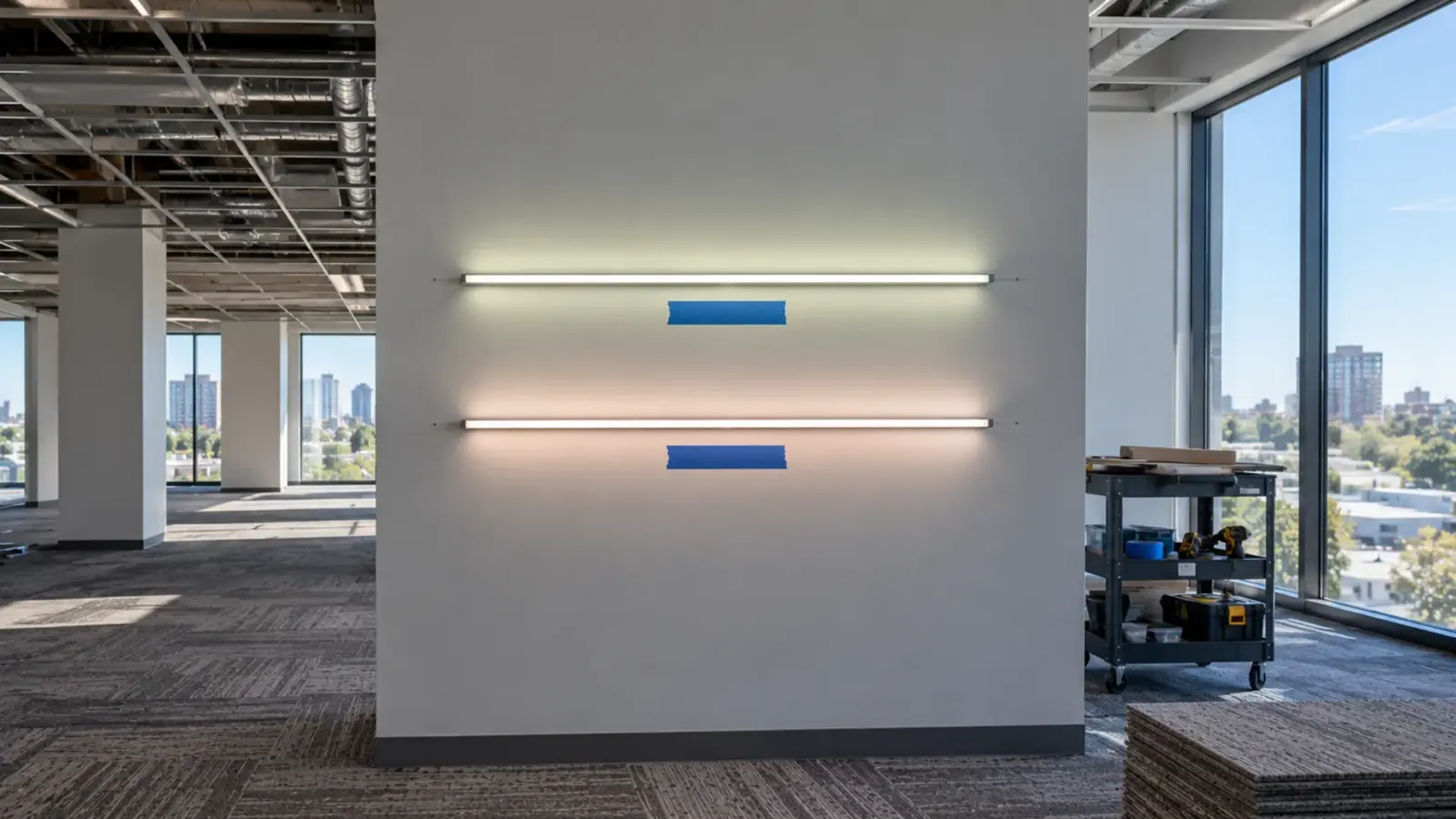
A sheet proves the numbers. A mockup proves the result. Install the specified tape and the proposed equal side by side in the specified channel, at the specified mounting, and look at them at the dimming level the space will use. Check color match, dot visibility, output and the low end of the dimming.
Invite the people who will judge the result: the designer, the owner’s representative and the installer. Record what was shown, at what settings, and who approved it. Keep the approved sample; our own practice is to keep the approved sample as the reference for later batches, so a reorder two years on is checked against the same piece of tape.
Lighting designers in the sources make the same point from the other side: substitutions found late, at installation or at handover, are the expensive ones. Zigaflow notes that the costliest outcome is a substitution that does not surface until the product is installed.
Who Decides and How It Is Recorded
The designer of record or the owner’s representative decides on an equal, usually by addendum during bidding or by a formal submittal response afterwards. Bid documents in the sources make this explicit: approvals are given in writing, product by product, sometimes with conditions attached.
Keep the paper trail tight. Zigaflow points out that substitutions tracked through email chains lead to disputes, and that records should link each installed product to its approved alternative. On tape jobs, that means the approved model number, the bin or lot, and the approval reference on the as-built schedule.
Timing: When Equals Get Reviewed
Equal requests have deadlines, and they are often early. According to the City of San Antonio’s procurement addendum, requests had to be in writing at least 10 days before bid opening so the design professionals could review them and approve or deny by addendum. The City of Madison specification warns that no request will be considered less than a week before the bid deadline.
Equal or Alternative?
Some bid documents distinguish two kinds of substitute. In the City of Winnipeg’s documents, an approved equal must be equal or superior in substance to what was specified, while an approved alternative only needs to be similar. On tape, an alternative might be a different construction with a different look that the designer accepts for a lower cost. An equal must disappear into the design. Say which one you are offering. A reviewer who is told up front that a product is an alternative judges it on its merits; one who discovers it judges the bidder.
Before You Submit the Equal
- Fill the twelve-line sheet, both columns, from datasheets.
- List every deviation with its effect.
- Attach the datasheet, the listing record and the binning record for the lot.
- Mock up specified and proposed side by side in the real channel.
- Submit before the deadline, in writing.
We supply COB, SMD and CSP strip with datasheets, listing records and binning records for project submittals. Send the specification and the tape schedule, and we will fill the comparison sheet line by line against the specified product: request a quote. The budget side of the same decision is in our guide to where the money goes on a commercial LED strip job.