The scope says “replace T5 cove lighting with LED”, the cove holds twelve 4 ft T5HO fixtures end to end with a ballast in each, and the owner wants it done without a new circuit. That sentence holds three different jobs, because three different products are called T5, and only one of them is a real alternative to LED strip.
The three gates below sort them, and a 48 ft cove at the end is worked all three ways.
Three Things Called T5
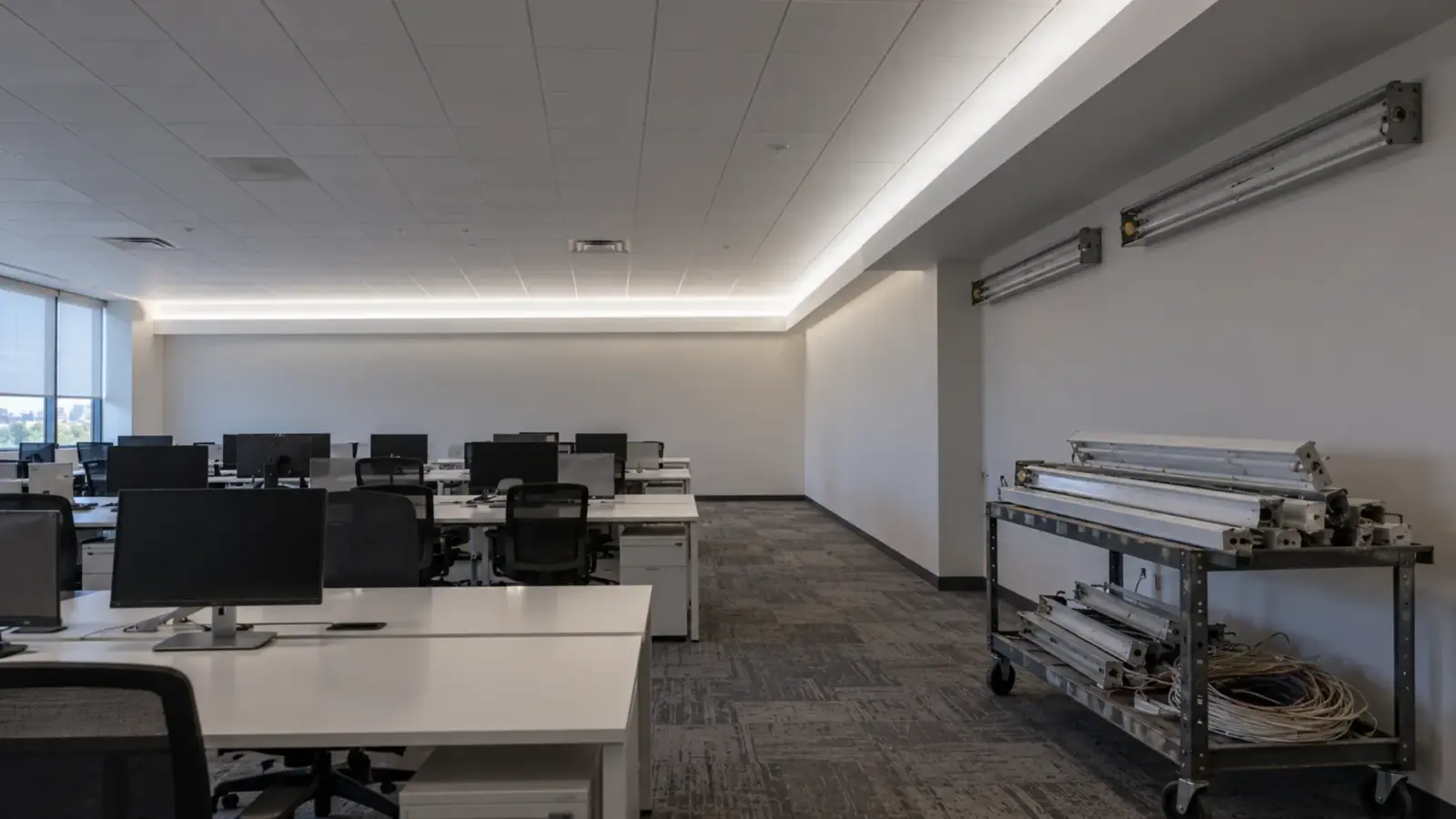
The T5 fluorescent fixture is the thing in the cove: a 4 ft strip fixture with two sockets, a ballast and a 54 W high-output lamp. According to the TCP specification sheet for an F54T5HO lamp, the lamp is rated at 54 W and 5,000 initial lumens, 4,750 mean lumens at 40 percent of rated life, at 92.6 lm/W. Twelve of them in a 48 ft cove draw 648 W of lamp load.
The LED T5 tube is a lamp that goes into that fixture. According to the 1000bulbs listing for a 3 ft Green Creative tube, a Type A unit draws 12 W for 1,420 lumens and runs on a compatible T5 ballast; other types bypass the ballast and wire to line voltage. The fixture, the sockets and the gaps between fixtures stay.
The T5-style LED bar is a fixture of its own: a rigid housing with its own LEDs, usually linkable end to end, sold for under-cabinet and shelf work. According to Super Bright LEDs’ comparison of strip and linear bars, a bar is a rigid fixture in a metal or plastic housing built for task lighting, most bars run from a low-voltage supply and some connect directly to 120V, and strip is the flexible, cut-to-length option. In practice the bar is a housing you see and strip is a line you do not. The bar competes with strip; the tube and the fluorescent fixture compete with each other.
| What you have or are offered | What it is | Circuit | Gaps in the line | Competes with strip? |
|---|---|---|---|---|
| T5 fluorescent fixture | 4 ft housing, two sockets, ballast, F54T5HO lamp | 120–277V branch circuit to each fixture | Yes, at every socket pair | No, it is what strip replaces |
| LED T5 tube | A lamp for the same fixture; Type A on the ballast, other types ballast-bypass | Existing fixture wiring, sometimes rewired to the sockets | Yes, the fixtures stay | No, it is a lamp swap |
| T5-style LED bar | A new linkable fixture, low-voltage or, on some models, 120V direct | Plug or hardwire, bar to bar | Small, at each link | Yes, where the fixture may be seen |
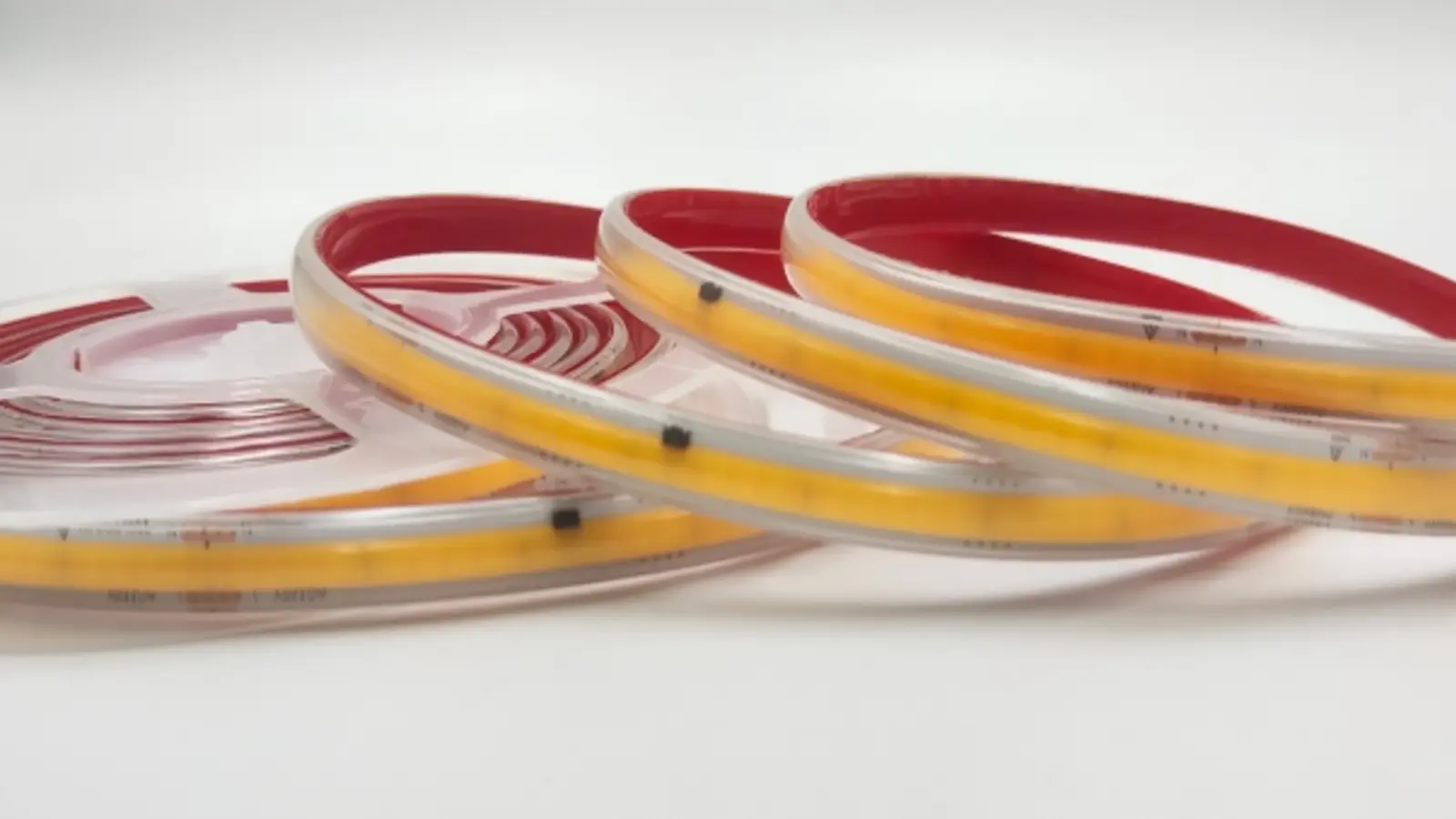
| LED strip in a channel | A cut-to-length system: strip, channel, cover, driver or 120V feed | 24V from a driver, or 120V direct with our line-voltage strip | None along the run | The subject of this article |
Gate 1: Does the Detail Need a Continuous Line?
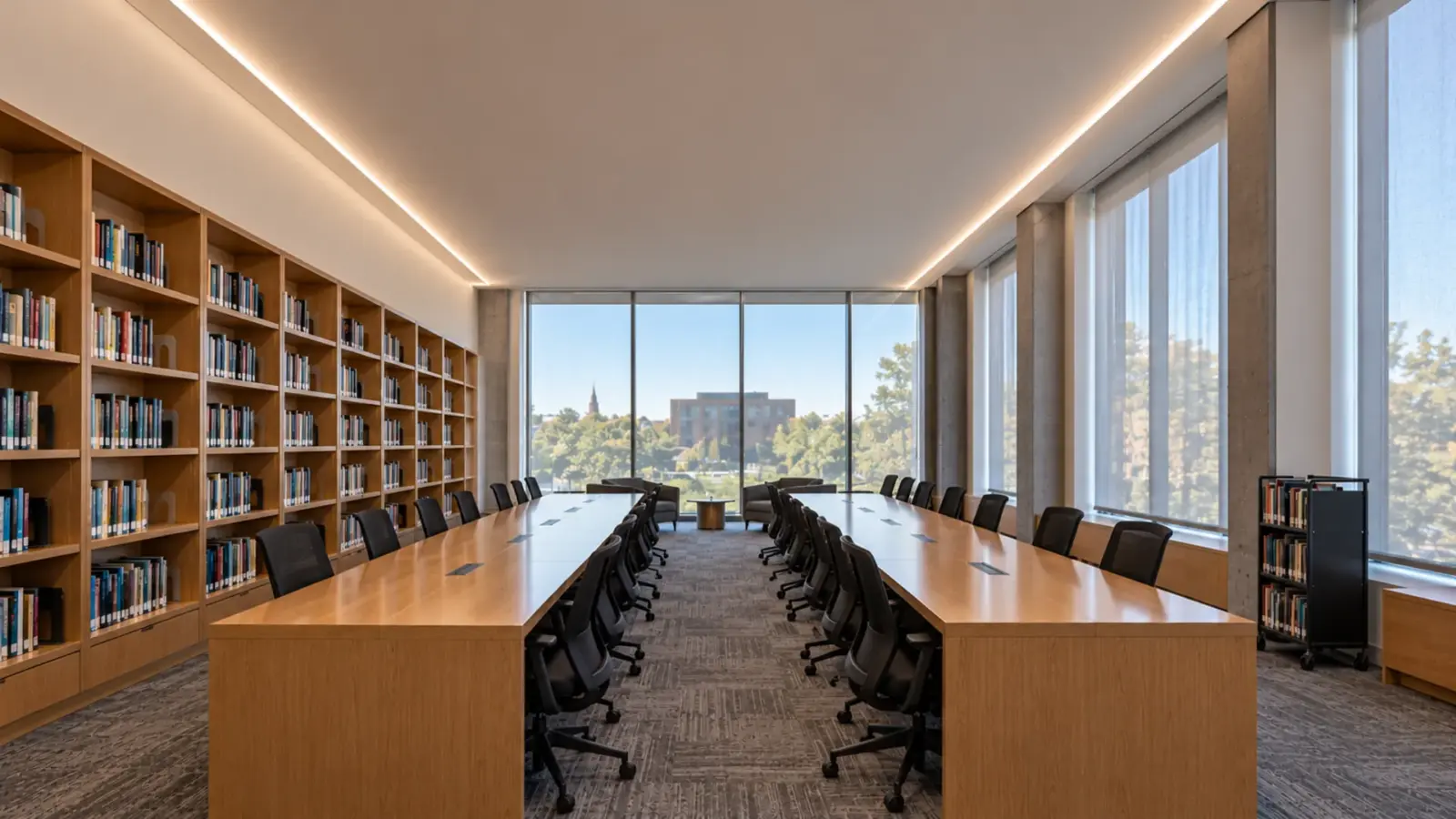
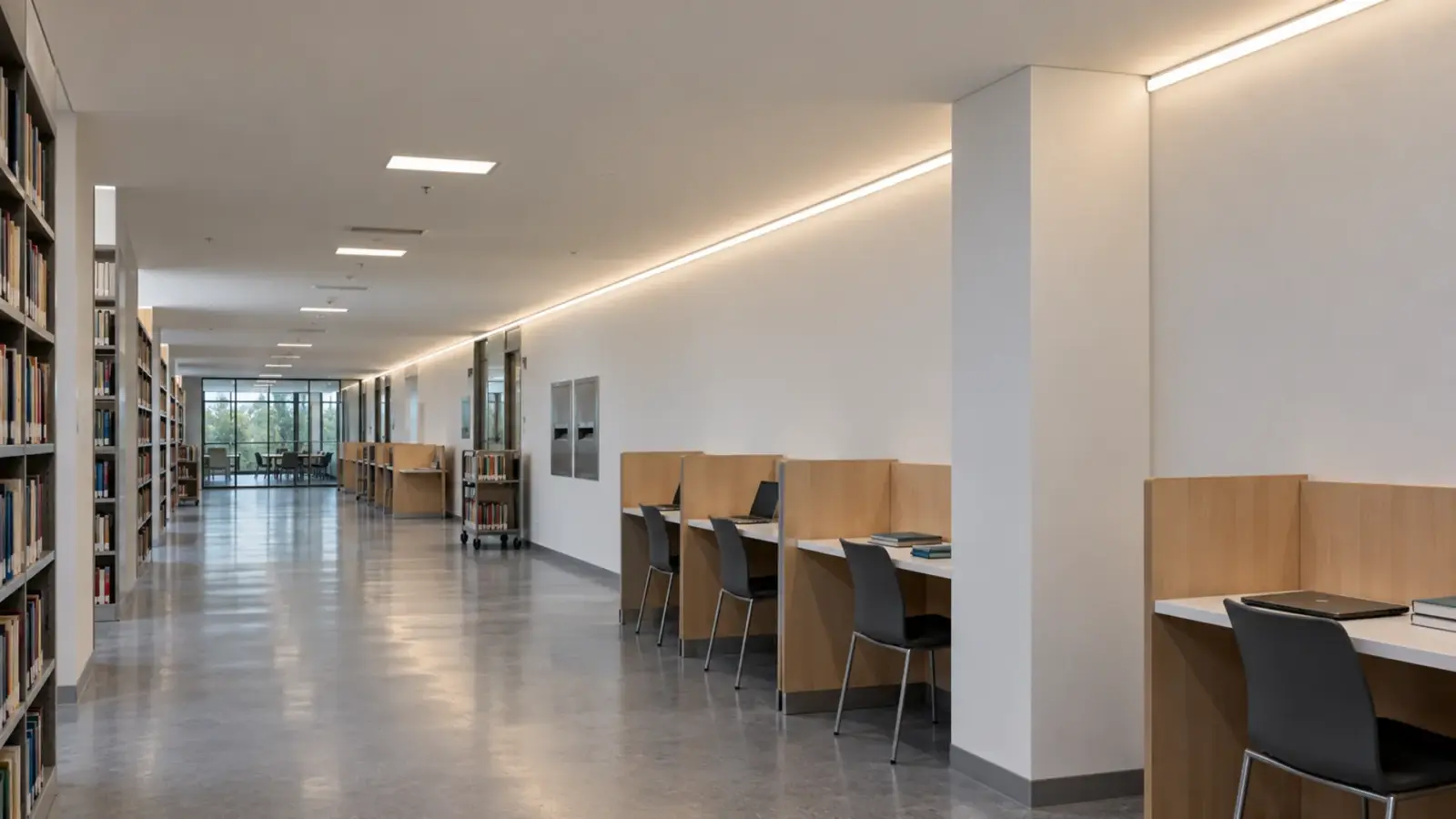
A cove, a shelf lip, a backlit panel and a long under-cabinet run want one unbroken line of light. A T5 fixture row cannot give one: each fixture ends in two sockets, and fixtures laid end to end leave a dark band at every joint. An LED tube inherits every gap. A linkable bar closes most of the gap but not all of it, and its housing has a visible end at each link. Strip in a channel runs continuous for the length of the channel, cut only at the marked points, which on our 120V series is every 19.7 in (500 mm) and on UT-C384-8 COB every 1.23 in (31.25 mm).
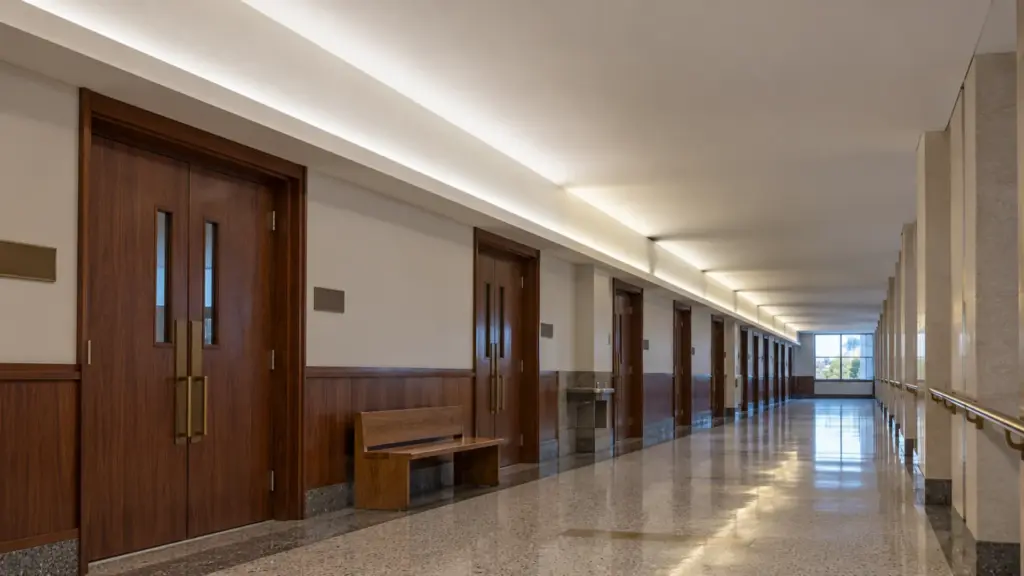
If the fixture itself will be seen, under a shelf at eye height, in a utility room, over a bench, the bar’s housing is not a fault and its rigidity is an advantage. If only the light should be seen, Gate 1 is decided: strip. Our guide to what changes when strip in a channel replaces a linear fixture covers the photometric and listing side of that swap in general.
Gate 2: What Happens to the Circuit?
The second gate is electrical, and it is where the bid is won or lost.
Keep the fixture, swap the lamp. A Type A LED tube rides the existing ballast and changes nothing in the wiring; it also inherits the ballast’s remaining life and its dimming limits. A ballast-bypass tube means opening each fixture, removing the ballast and rewiring the sockets to line voltage, fixture by fixture, under whatever the manufacturer’s instructions and the inspector require. The cove keeps its gaps either way.
Replace the fixture with a bar. The bar comes to the inspector as one complete product with whatever listing its maker holds; the electrician removes the T5 fixtures, mounts the bars and connects them, from the same circuit through the bar’s supply or, on a 120V model, directly. Dimming is whatever the bar offers, and the housing is visible at the joints.
Replace the fixture with strip. Two routes. On 24V, the strip sits in a channel and a driver sits at the end of the run or in a closet, fed from the old circuit; our guide to replacing fluorescent coves with LED strip floor by floor covers keeping the circuit and adding the driver. On 120V, our line-voltage LED strip connects to the branch circuit with a rectifier plug and no driver, runs up to 98 ft (30 m) from one feed, dims on standard TRIAC wall dimmers, and is the shortest path from a T5 cove to a continuous line: the same circuit, the same switch, one feed where there were twelve. The trade-offs are the 19.7 in cut interval, which is the length the run can be trimmed by, and Ra≥80 color rendering on UT-H120-72 against Ra≥90 on the 24V COB rows.
Whichever route, the listing question comes with it: a bar answers to the inspector as one product, strip in a channel is a field-assembled system, and a cut strip has its own rules. Our guide to whether cutting LED strip voids its UL listing and the linear-fixture guide above hold that discussion; this article only flags where it starts.
Gate 3: How Will It Dim and Who Will Service It?
A T5HO fluorescent on a non-dimming ballast is on or off. An LED tube on that ballast is the same. A bar dims if its driver does, usually by phase cut. The 120V strip dims by phase cut from the wall dimmer already there. The 24V strip dims by whatever the driver speaks: phase cut, 0-10V or a control system, as set out in our guide to the four ways to control strip from a wall box. If the renovation keeps the existing wall dimmer, the 120V strip or a phase-cut bar fits it; if it adds a building control system, 24V strip on a 0-10V driver is the route.
Service is the question the facilities manager asks in year five. A failed T5 lamp is a lamp. A failed bar is one bar, unplugged and replaced, if the model is still made. A failed strip section is a cut piece between two marked points, replaced from the attic stock of the same lot, which means the order has to include that stock and the reel label has to carry the lot. The run is only as serviceable as the access to its driver or its feed, so one hatch or one reachable closet per driver goes on the drawing before the ceiling closes.
A 48 ft Cove, Three Ways
Take the cove in the opening: 48 ft, twelve 4 ft T5HO fixtures, one 120V circuit, one wall switch.
| Route | Load | Feeds and drivers | Line | Dimming | What changes in the cove |
|---|---|---|---|---|---|
| Keep fixtures, LED T5 tubes | Falls from 648 W toward a quarter of that on 12 W-class tubes | 12 fixtures as before | 12 fixtures, 24 sockets, 11 joints | On or off with the ballast, unless the tube and ballast allow more | Nothing; a lamp change |
| 120V strip, UT-H120-72 | 48 ft × 3.0 W/ft = 144 W | One feed; the series runs to 98 ft (30 m) from one end, no driver | One continuous line, cut to 19.7 in increments | TRIAC from the existing wall dimmer | Fixtures out, channel in, one connection |
| 24V COB strip, UT-C384-8 | 48 ft × 3.0 W/ft = 144 W | Three feeds of 16 ft, 48 W each, one 60 W driver per feed loaded to 80 percent; the 32 ft no-drop limit is not the constraint, the driver is | One continuous line, cut to 1.23 in increments, Ra≥90 | Phase cut, 0-10V or a control system by driver | Fixtures out, channel in, driver location and access added |
The tube route is the cheapest afternoon and leaves the cove looking as it did, with the gaps. The 120V route is the shortest conversion: one feed, no driver, the existing dimmer, and a cut interval that the cove’s end wall has to absorb. The 24V route costs a driver plan, three feeds and three drivers here, and gives the finest cut interval, the higher CRI and any control protocol. The method for matching the new output to what the old lamps delivered is in the floor-by-floor guide linked above; the numbers here are power and feeds, which is what the circuit cares about.
Where T5 Still Wins
A T5-style bar is the right answer in three places. Where the fixture will be seen and handled: workshop benches, utility rooms, back-of-house shelving, anywhere a rigid housing survives better than a strip in a channel. Where the job is a dozen short runs with no continuity between them, each on its own plug, and the labor of channel, strip and driver per run outweighs the bar’s joints. And where the owner’s standard already names a bar product and the maintenance staff carries it.
An LED T5 tube is the right answer where the fixture row is accepted as it is, the budget is a lamp budget, and the dark bands between fixtures were never the complaint. It is the wrong answer where the complaint was the gaps, because it keeps them.
FAQ
Can LED strip replace T5 fluorescent cove lighting?
Yes, and it is the only one of the three LED routes that removes the socket gaps. The fixtures come out, a channel goes in, and the strip is fed either from a driver on the old circuit or directly from the circuit with 120V strip, which runs up to 98 ft (30 m) from one feed and dims on a standard TRIAC wall dimmer.
Are T5 LED bars better than LED strip under cabinets?
They are different products. A bar is a rigid linkable fixture that is meant to be seen and is quick to mount and replace; strip in a channel is a cut-to-length system that disappears behind the cabinet lip and runs continuous. Choose the bar where the fixture will be visible or handled; choose strip where only the light should show.
Can LED strip run on the existing T5 circuit?
Yes. The 120V branch circuit that fed the fixtures feeds either a driver for 24V strip or a 120V strip directly, with the ballasts removed along with the fixtures. The existing wall dimmer works with 120V strip or a phase-cut driver; other dimming protocols need their own control wiring.
Before You Order
Name which T5 you have, fixture, tube or bar. Decide at Gate 1 whether the detail needs a continuous line. Decide at Gate 2 whether the circuit keeps a ballast, feeds a bar, feeds a driver or feeds 120V strip directly, and where the listing question lands. Decide at Gate 3 how it dims and what the facilities team replaces in year five. Count feeds and drivers for the run length, put the driver access on the drawing, and order attic stock from the same lot.
Unitop Lighting supplies 120V and 24V LED strip, channels and drivers for commercial retrofits across the US. Send the cove lengths, the existing circuit and dimmer, and a photo of one fixture, and we return the route, the feed count and the driver positions before anything is quoted: request a quote.