

LED strip power supply sizing calculator
Pick the strip, enter the runs, and see the connected load, the driver rating at your loading rule, how many Class 2 outputs the job needs and which of our drivers fit. It also says what to change when nothing fits.
From watts per foot to a driver rating
Strip load only. Dimmers, controllers and the cable between driver and strip are separate checks; the feed-wire calculator covers the cable.
What the number counts, and what it leaves out
-
01
The arithmetic
Connected load = watts per foot × run length × number of runs. Driver rating needed = load ÷ loading rule. At our 80% rule a 96 W load needs a driver rated at least 120 W. Current = load ÷ strip voltage, which is why 12V draws twice the amps of 24V for the same strip.
-
02
What it leaves out
Temperature derating and minimum load, which the driver datasheet sets per model. Dimmers, decoders and controllers, which add their own load and have their own maximum. And the cable from driver to strip, which loses voltage before the strip starts.
-
03
Where the values come from
Watts per foot, voltage and run limit per feed are read from the spec table on each product page. Driver models and ratings come from the drivers page. The 80% rule is our sizing rule, used across our guides; it is not a code requirement, and you can change it above.
Drivers the calculator picks from
Constant-voltage drivers from our drivers page. Class 2 rows are power-limited outputs rated 60 W or 40 W; that is the rating of our drivers, not the Class 2 category limit. 48V and constant-current supplies are matched at quote and are not in this table.
| Model | Output | Rating | Load at 80% | Dimming | IP | Class 2 |
|---|---|---|---|---|---|---|
| UT-D40-24-C2 | 24V DC | 40 W | 32 W | Non-dim | IP20 | Yes |
| UT-D60-1224-67 | 12/24V DC | 60 W | 48 W | Non-dim | IP67 | No |
| UT-D60-24-C2 | 24V DC | 60 W | 48 W | Non-dim | IP20 | Yes |
| UT-D60-24-C2-010 | 24V DC | 60 W | 48 W | 0-10V | IP20 | Yes |
| UT-D60-24-TRC | 24V DC | 60 W | 48 W | TRIAC (fwd/rev phase) | IP20 | No |
| UT-D96-24-010 | 24V DC | 96 W | 77 W | 0-10V | IP20 | No |
| UT-D100-24-010-67 | 24V DC | 100 W | 80 W | 0-10V | IP67 | No |
| UT-D100-24-67 | 24V DC | 100 W | 80 W | Non-dim | IP67 | No |
| UT-D150-24-L | 24V DC | 150 W | 120 W | Non-dim | IP65 | No |
| UT-D400-24-L | 24V DC | 400 W | 320 W | Non-dim | IP20 | No |
The guides behind the numbers

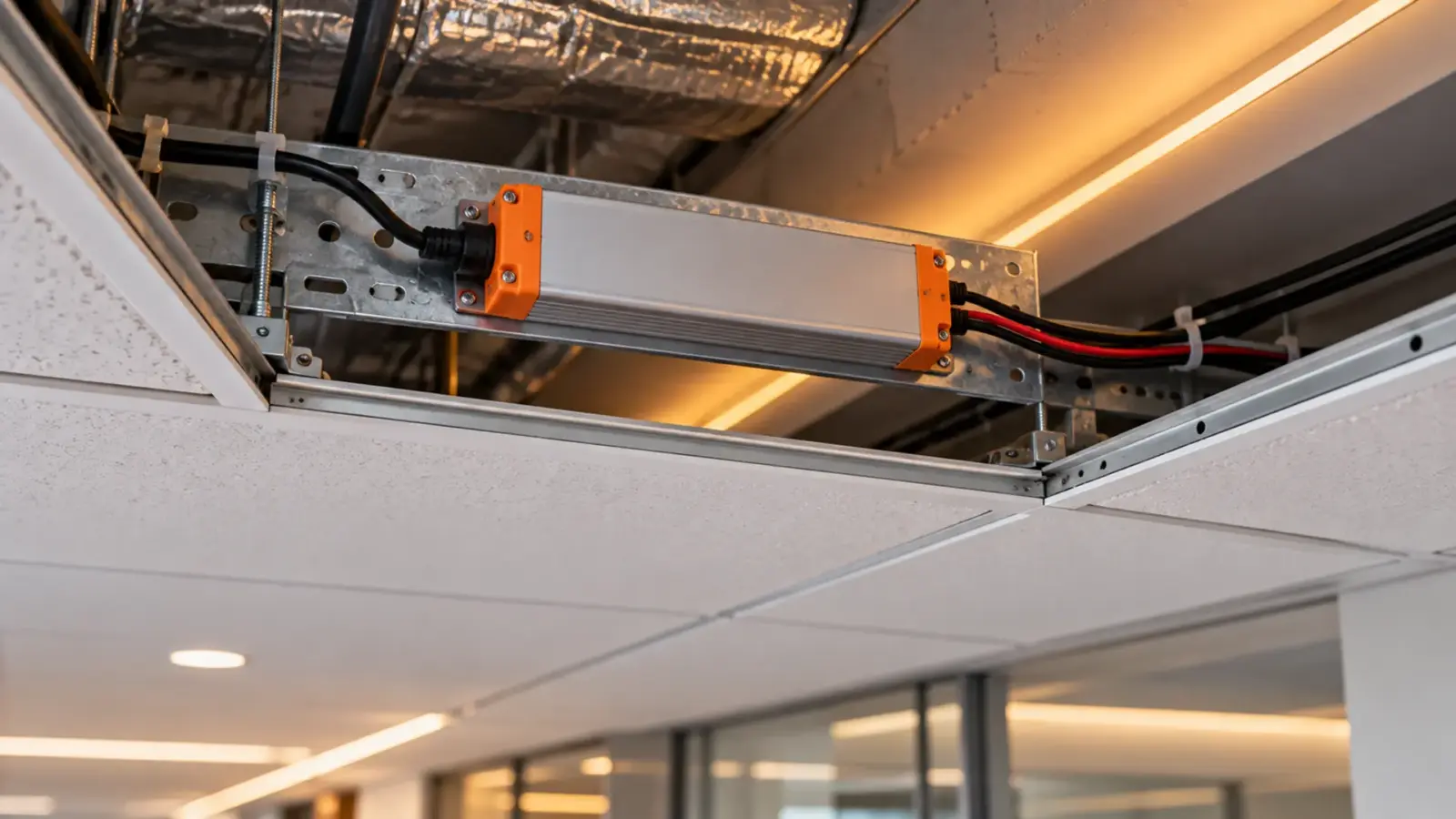

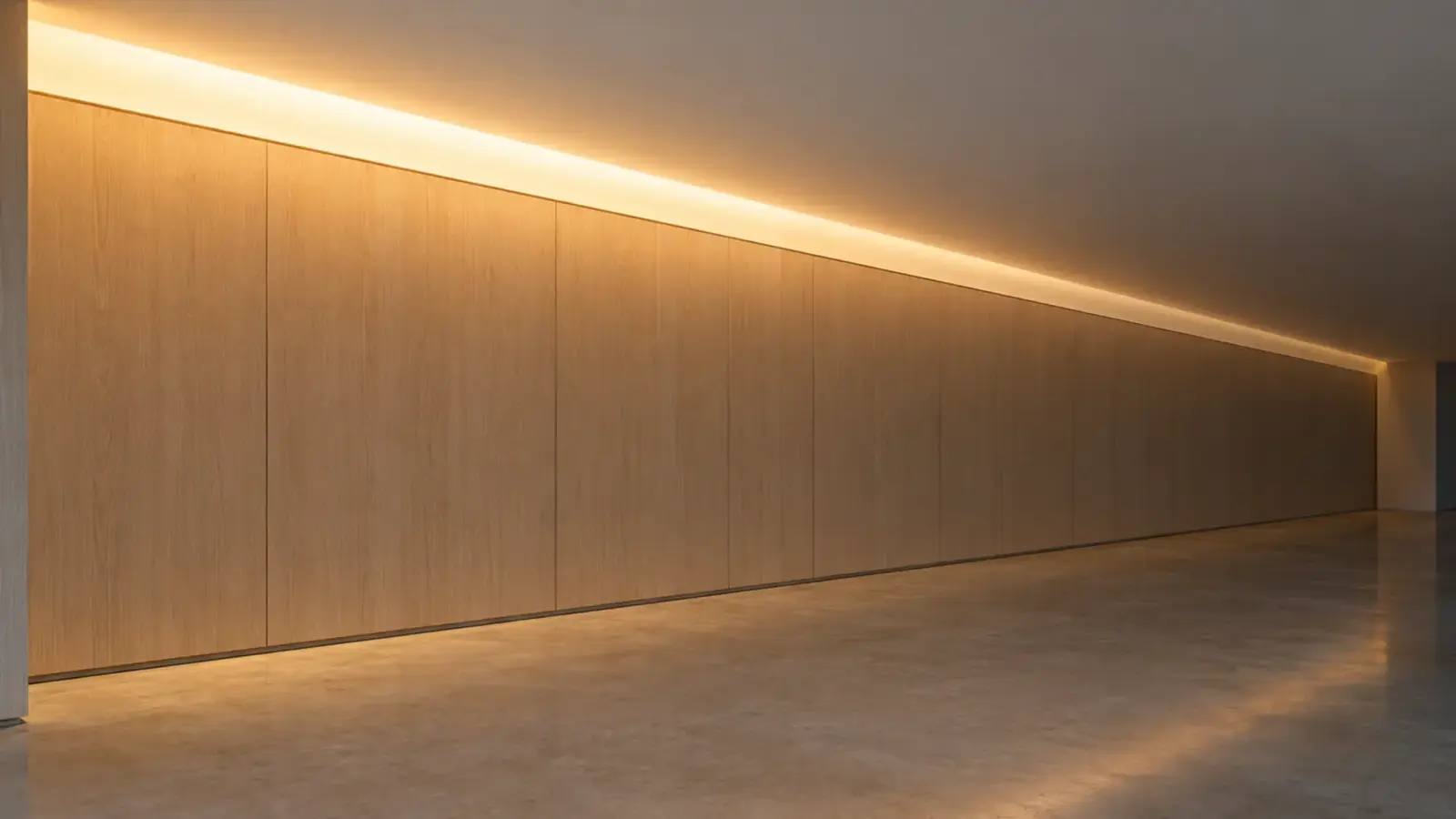
Reading the result
Is 60 W the Class 2 limit?
No. 60 W is the rating of our Class 2 drivers, UT-D60-24-C2 and its 0-10V version, with UT-D40-24-C2 at 40 W. The NEC caps a Class 2 output at about 100 VA, and the figure to use is the one in the edition your jurisdiction has adopted. So a 90 W load is within the Class 2 category in principle, yet it still needs two of our 60 W outputs, each with its own secondary circuit.
Why divide by 80%?
Headroom. A driver loaded to its nameplate runs warmer, and heat is behind most of the drop-outs installers report. 80% is our sizing rule, used across our guides; vendor calculators run from about 83% to contractor forums at 75%, and one installer was told to stay under 50% with high-output tape. Change the rule above to match the datasheet you are bound to.
Why does the model's run limit still matter after the driver is sized?
The driver rating sets how much strip one supply can feed in total. The run limit per feed sets how much strip one feed point can carry before the far end dims. A 60 W driver at 80% can power 15 ft of 3.2 W/ft strip, but if that strip's limit is 16 ft per feed, a 30 ft run still needs two feed points even though one driver has the watts.
Can I put several runs on one driver?
Yes, as long as the total load stays inside the rule and each run keeps to its own run limit per feed. Enter the number of runs above and the calculator totals them. Each run then gets its own home run from the driver, or a wire-to-strip connector rated for its current; our strip connectors are rated 5 A.
Why are there no 48V drivers in the list?
Our published driver table is 12V and 24V constant voltage. 48V supplies and constant-current drivers for CC strip and CC neon are matched at quote to the model and the run. The calculator still gives you the load and the rating you need at 48V; send those with the layout.
Send the runs and we write the driver schedule
Reflected ceiling plan, run lengths and the dimming system are enough. An engineer replies with the driver schedule, circuit split and feed points, in writing.
- 1 reel minimum
- Drawings welcome
- US-based support