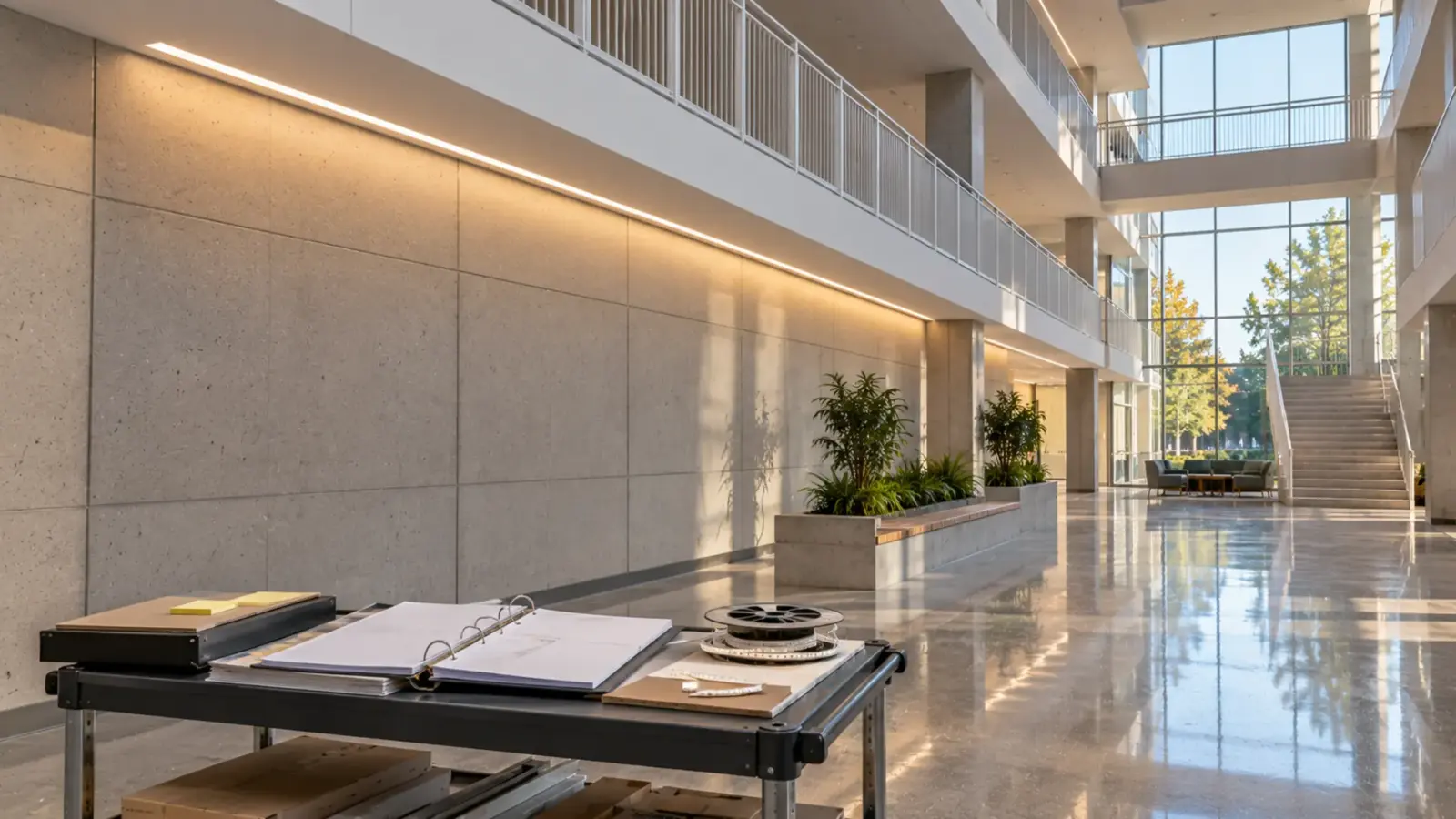
Outside the darkest zones, dark-sky rules rarely ban facade lighting. The model ordinance and Title 24 meter it: by lighting zone, by a lumen or watt allowance per square foot of lit facade, by where the light may go, and by the hour it must dim. Facade lighting passes review when those four limits are on the drawing first.
The rules below come from the 2011 Model Lighting Ordinance that the International Dark-Sky Association and the Illuminating Engineering Society published, California’s Title 24, and the ordinances of a few towns that adopted their own. Each town writes its own version, so read the adopted text; the pattern is what carries from town to town.
What a Dark-Sky Ordinance Actually Regulates
Most outdoor lighting ordinances, whether modeled on the MLO or written locally, regulate the same handful of things:
- Lighting zone. The town is mapped into zones, from LZ0 for places meant to stay dark up to LZ4, which the MLO reserves for special cases of very high ambient light, and every other limit scales with the zone.
- How much light. A cap in lumens or in watts, often with extra allowances for specific uses such as building entrances and facades.
- Where the light goes. Shielding, uplight limits and aiming rules, often written as BUG ratings (backlight, uplight, glare).
- When it is on. A curfew after which lighting is reduced or turned off.
- What color it is. Some newer codes add a cap on correlated color temperature.
- What crosses the property line. A maximum light level at the line, called light trespass or spill.
A facade wash touches all six. Treat each as a line item on the lighting submittal.
Lighting Zones Decide Whether a Facade May Be Lit
The first question is whether the zone allows facade lighting at all. In the MLO’s Table E, the building facade allowance is zero in LZ0 and LZ1. Title 24’s 2025 Table 140.7-B lists the facade allowance as “Not applicable” in LZ0 and “No Allowance” in LZ1, and the Energy Commission’s compliance manual, in its 2019 edition, says it plainly: “Building façade lighting is not permitted in Lighting Zone 0 and Lighting Zone 1.”
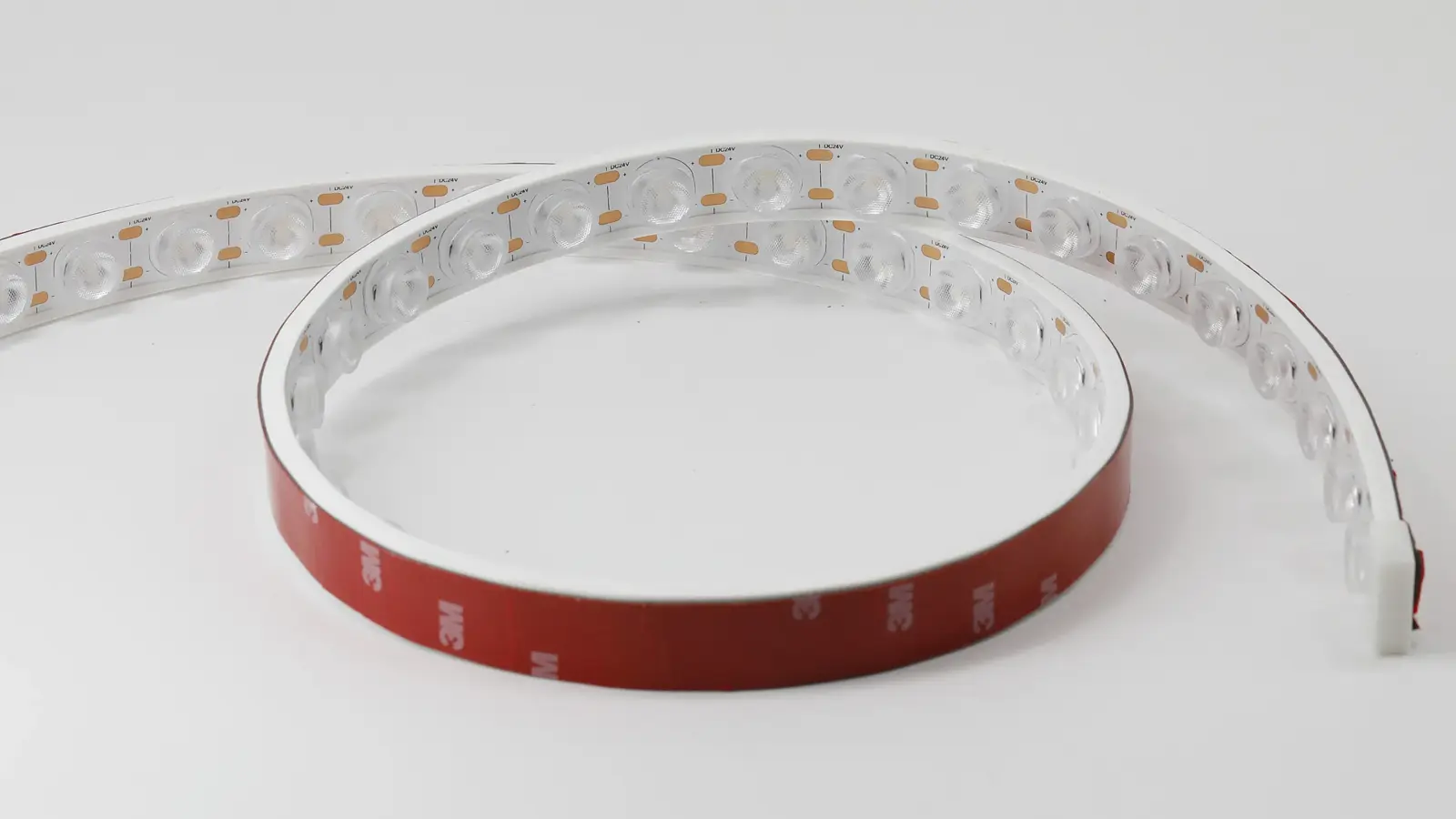
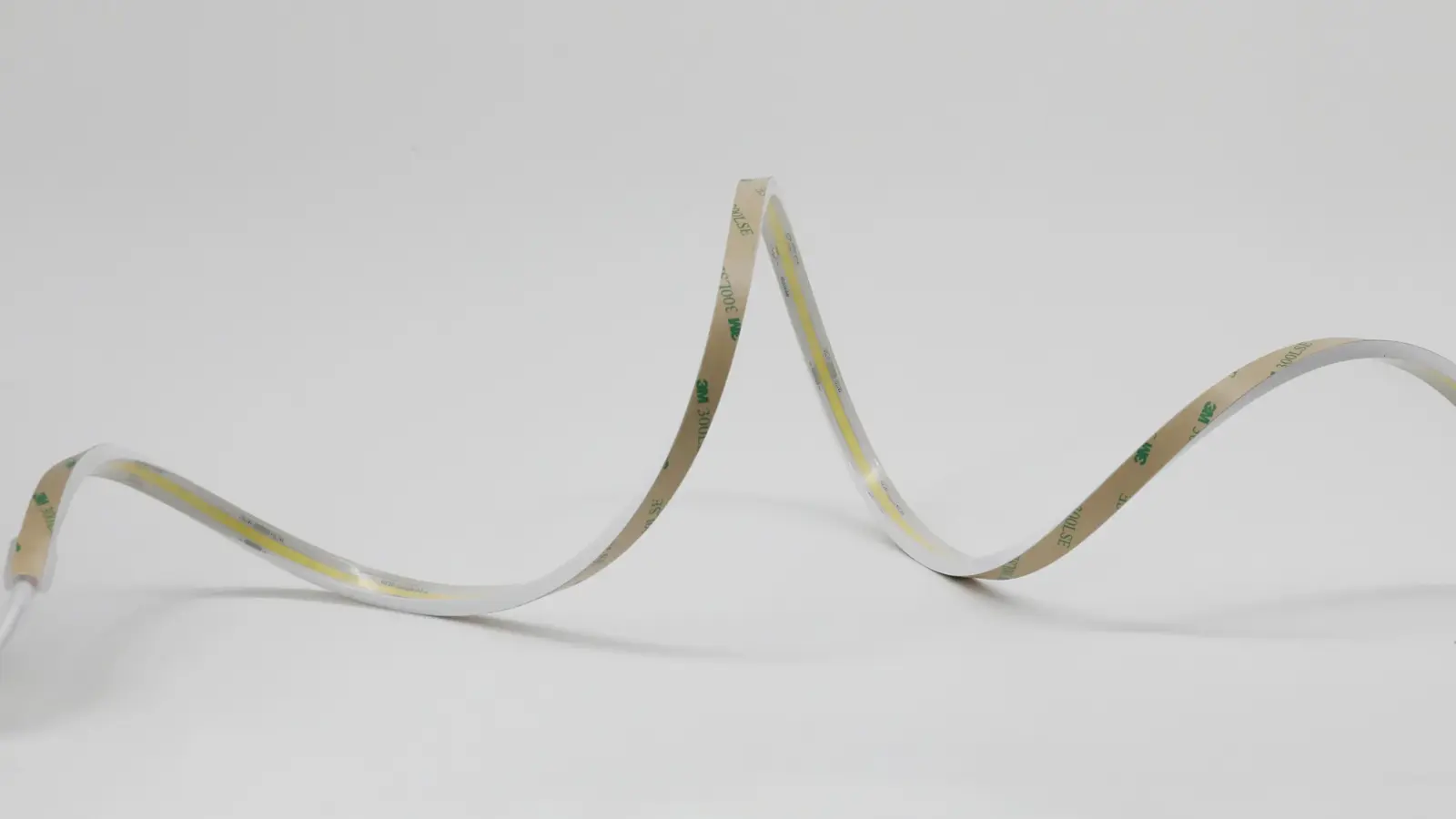
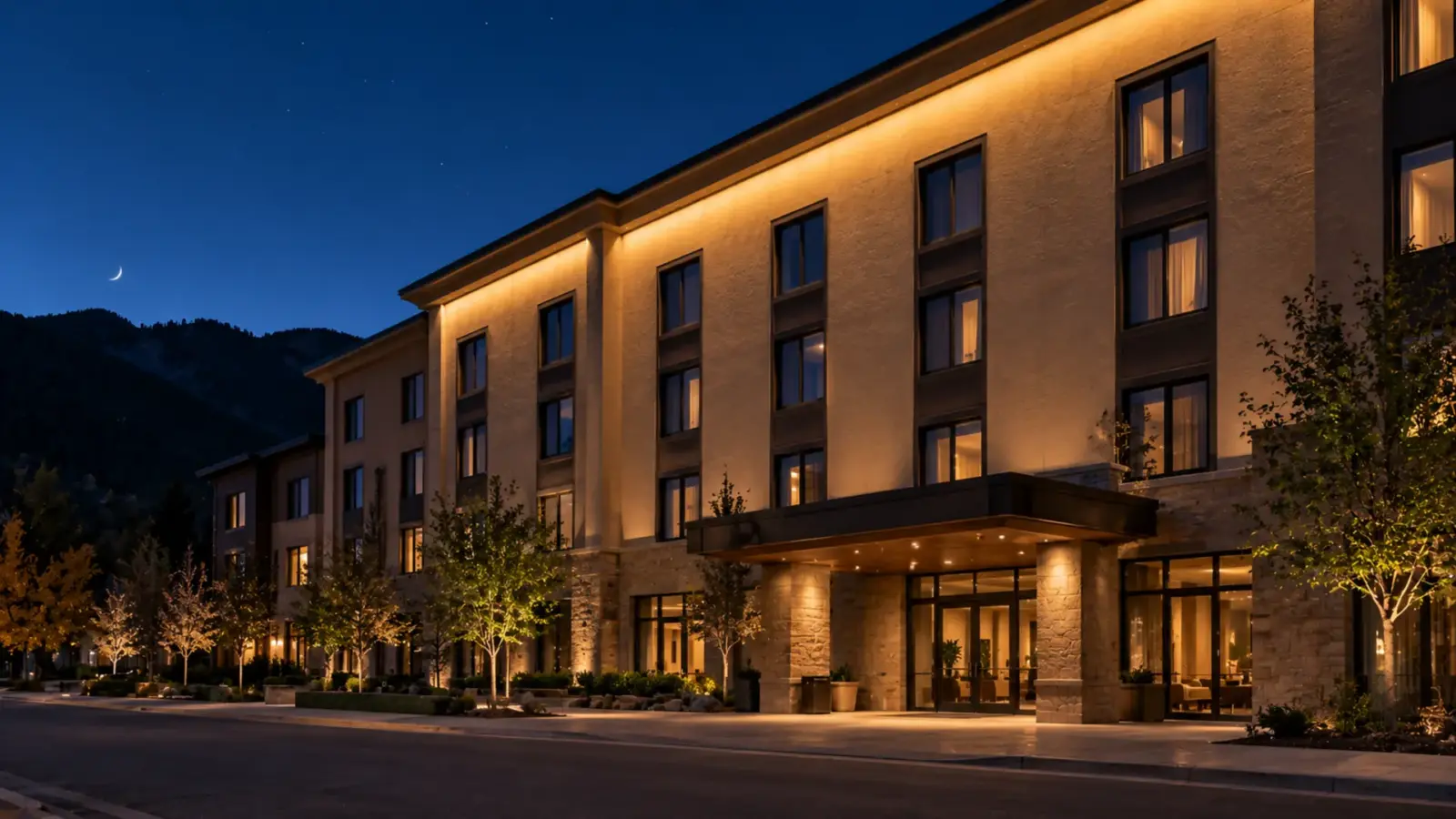
So a hotel on the edge of a rural town in LZ1 starts with no facade allowance, whatever the fixture. That is a planning question to raise before design, not a product question. In LZ2 through LZ4 the facade gets an allowance, and the allowance is where strip and linear wall washers earn their place: they put most of their light on the wall, so nearly every lumen counts toward the wall it is meant to light.
The Cap, Worked on One Facade
Both documents count only the facade area that is actually lit. Under its performance method (Table E), the MLO gives additional initial luminaire lumens per square foot of illuminated facade: 8 in LZ2, 16 in LZ3 and 24 in LZ4. Title 24’s Table 140.7-B gives watts per square foot: 0.100 in LZ2, 0.170 in LZ3 and 0.225 in LZ4, and the Energy Commission’s manual measures the area as the projected facade, with columns and recesses ignored.
Take a typical job: a hotel facade 120 ft wide, washed over its top 30 ft, 3,600 sq ft of lit facade. The allowances become a length of wall washer once the product’s lumens and watts per foot are known:
| Zone | MLO lumens | Title 24 watts | UT-WB27-2030 (675 lm/ft, 8.2 W/ft) | UT-WS18-45 (562 lm/ft, 4.4 W/ft) | UT-WP24-WHT (452 lm/ft, 6.1 W/ft) |
|---|---|---|---|---|---|
| LZ2 | 28,800 lm | 360 W | 42 ft / 43 ft | 51 ft / 81 ft | 63 ft / 59 ft |
| LZ3 | 57,600 lm | 612 W | 85 ft / 74 ft | 102 ft / 139 ft | 127 ft / 100 ft |
| LZ4 | 86,400 lm | 810 W | 128 ft / 98 ft | 153 ft / 184 ft | 191 ft / 132 ft |
Each cell is the maximum feet under the MLO lumens, then under Title 24 watts; the smaller one governs where both apply. Title 24’s 2025 text, section 130.0(c)5, lets LED tape be counted as installed length times its rated watts per foot, or as the rated input of its driver; if the driver input is used, the Title 24 feet shrink.
How the lit area is measured changes the answer as much as the product does. The Energy Commission’s compliance manual works an example of a city hall with a colonnade: the allowance uses “the projected area of the illuminated façade”, with “columns, recesses, facets, etc.” ignored, so a 30 by 150 ft facade is 4,500 sq ft and earns 765 W in LZ3 whatever its depth. Only the area the luminaires actually light counts, and the MLO adds that facade luminaires must be “aimed at the façade and capable of illuminating it without obstruction”. A wash that is blocked by a canopy does not earn allowance for the wall behind it.
The allowance also stays with the facade. Title 24 lets unused general site allowance move to specific applications, but not the other way: allowances for specific applications “shall not be traded between specific applications, or to hardscape lighting”, and the manual calls them “use it or lose it”. Design the facade to its own number.
Read the table against the 120 ft facade. In LZ2 no product washes the full width; the design lights part of the facade, piers or bays, or drops output. In LZ3, UT-WS18-45 is under the MLO and Title 24 numbers across a 102 ft run. Only LZ4 allows the whole width with the lower-wattage rows. The MLO also says its allowances are “use it or lose it” and caps a project at three of them, so the facade allowance cannot be banked for the parking lot. Our wall washer design guide covers optics, spacing and layout for an even wash; this table says how much the town allows.
Uplight and Aim
Uplight is the usual sticking point. The MLO’s prescriptive method “restricts uplighting” and rates every luminaire by BUG, and some towns go further. Robinson, Texas, requires building lighting to be “fully-shielded type, not allowing any upward distribution of light”, and for facade floodlights requires that the fixture “limit the fixture’s direct light distribution solely to the building façade or feature being illuminated” and “block all view to the floodlight fixture’s recessed lamp, bulb or filament” from walkways, drives and neighbors.
Two aiming strategies answer that language:
- Top-down. Mount the linear wall washer at the parapet or under a cornice and aim down the wall. The light lands on the facade and the ground below, nothing goes skyward, and the parapet hides the source.
- Bottom-up, tight to the wall. Mount at grade or on a ledge close to the facade with narrow optics, so the beam stays on the wall. UT-WB27-1060, at 10° by 60°, is built for that. Stop the run short of the parapet, and expect some codes to call it uplight anyway. Ypsilanti, Michigan, allows ornamental uplighting only with approval and caps it at 400 lumens per fixture and 3000K; one foot of UT-WB27-1060 already gives 494 lumens, so a continuous linear uplight would not fit that rule.
Where the ordinance counts any upward light, top-down is the safer submittal. Our grazing vs washing guide explains how setback changes the look, which matters more when the source has to sit at the top. Planning reviewers often ask for photometric files; our IES file guide covers what to send for linear products.
Curfews: Off or Down After Hours
The MLO asks the town to set curfew times after which total outdoor lumens are “reduced by at least 30% or extinguished”, and its User’s Guide says curfews typically start one hour after the close of business, with exceptions for businesses that run 24 hours. Robinson’s rule is simpler: “All non-essential lighting shall be turned off after business hours, leaving only necessary lighting for site security.”
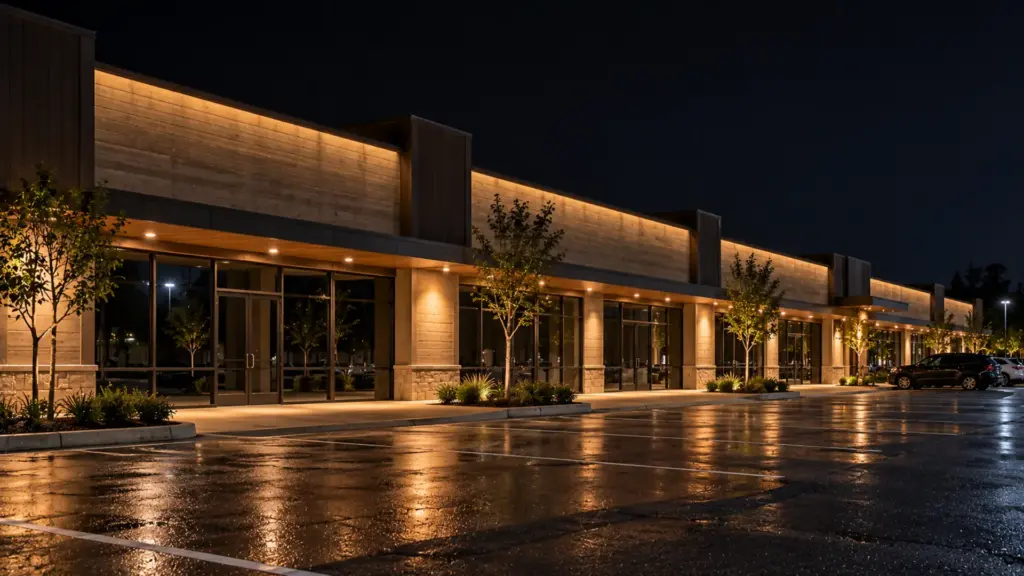
A hotel never closes. Under the MLO’s own text a 24-hour business is exempt from the reduction, and code-required lighting at building entrances is exempt anyway; adopted codes often narrow that, and rules like Robinson’s treat decorative lighting as non-essential, so ask planning which applies. Design two states: full output until curfew, then off or dimmed by at least the required share, with entrance and egress lighting on its own circuit. That means a dimmable driver or a separate zone for the wash, and a schedule the controller enforces. Our photocell and timer guide covers the hardware and the Title 24 control rules that implement it.
Color Temperature Caps
Color is becoming part of some ordinances. Ypsilanti, Michigan’s dark-sky fact sheet is one example: “Fixtures may not exceed 3000 Kelvin.” Our outdoor wall washers come in warm options that sit inside that cap: UT-WB27-2030 in 2700K and 3000K, UT-WS18-45 and UT-WP24-WHT from 2700K. Check the cap before the CCT is chosen for brand reasons; a 4000K facade that a brand standard calls for may not be allowed in the town where the hotel is built.
Color-changing facades raise their own questions; Ypsilanti’s sheet, for one, prohibits flashing, blinking or oscillating lights. If the facade is RGBW, ask planning how it is classified before the controller is programmed.
Light Trespass at the Property Line
The last limit is measured at the lot line. Ypsilanti caps spill at 0.5 footcandles at the property line, and for buildings on or built to the lot line, 8 footcandles at that line. A downtown hotel built to the sidewalk is a lot-line building, held to 8 footcandles at that line, and that limit is the reason narrow optics and top-down aim matter on infill sites. A photometric calculation with the property line drawn in answers the question before the review does.
FAQ
Can you have uplighting under a dark-sky ordinance?
Some ordinances ban upward light outright; Robinson, Texas, requires building lighting that allows no upward distribution and facade floodlights that keep their light on the facade. The MLO restricts uplight through BUG ratings. Top-down washing usually avoids the question.
What color temperature is dark-sky compliant?
There is no single national rule. Some newer ordinances cap it at 3000K; Ypsilanti, Michigan, writes “Fixtures may not exceed 3000 Kelvin.” Check the adopted code in the project’s town.
Is facade lighting allowed in every lighting zone?
No. The Model Lighting Ordinance gives no facade allowance in LZ0 and LZ1; California’s Title 24 gives none there either, and the Energy Commission’s manual says facade lighting is not permitted in those zones. LZ2 to LZ4 get an allowance per square foot of lit facade.
What is a lighting curfew?
A time after which outdoor lighting must be reduced or turned off. The MLO calls for at least a 30% reduction or full shutoff, typically one hour after the close of business, with exceptions such as 24-hour businesses.
What to Ask Planning Before You Order
- Which lighting zone the site is in, and whether facade lighting is allowed in it.
- Whether the cap is in lumens or watts, per square foot of lit facade, and how the lit area is measured.
- Whether any upward light is allowed, and how the code treats wall washers mounted at grade.
- The curfew time, and whether the facade must go off or may dim.
- The color temperature cap, and any rule for color-changing light.
- The light level allowed at the property line, and whether the building counts as built to the lot line.
The wall washers in the table are on our LED wall washer page with lumens and watts per foot for each model, and the wall washers are IP65 or IP67; other sealed strip is in our outdoor LED strip range.