Often yes, with conditions. Under NEC 300.22(C), as EC&M and Legrand describe it, equipment in a ceiling cavity used for return air must have a metal enclosure or a nonmetallic enclosure listed for the use, and the wiring around it must be a permitted method. Check the driver’s marking and the mechanical drawings before rough-in.
You have a ceiling that carries return air, a driver for every cove run, and a drawing that says “above the ceiling.” Whether that works depends on three things the electrical plan does not show: what the cavity is, what the driver’s case is made of, and what runs in and out of it.
A Typical Hotel Corridor
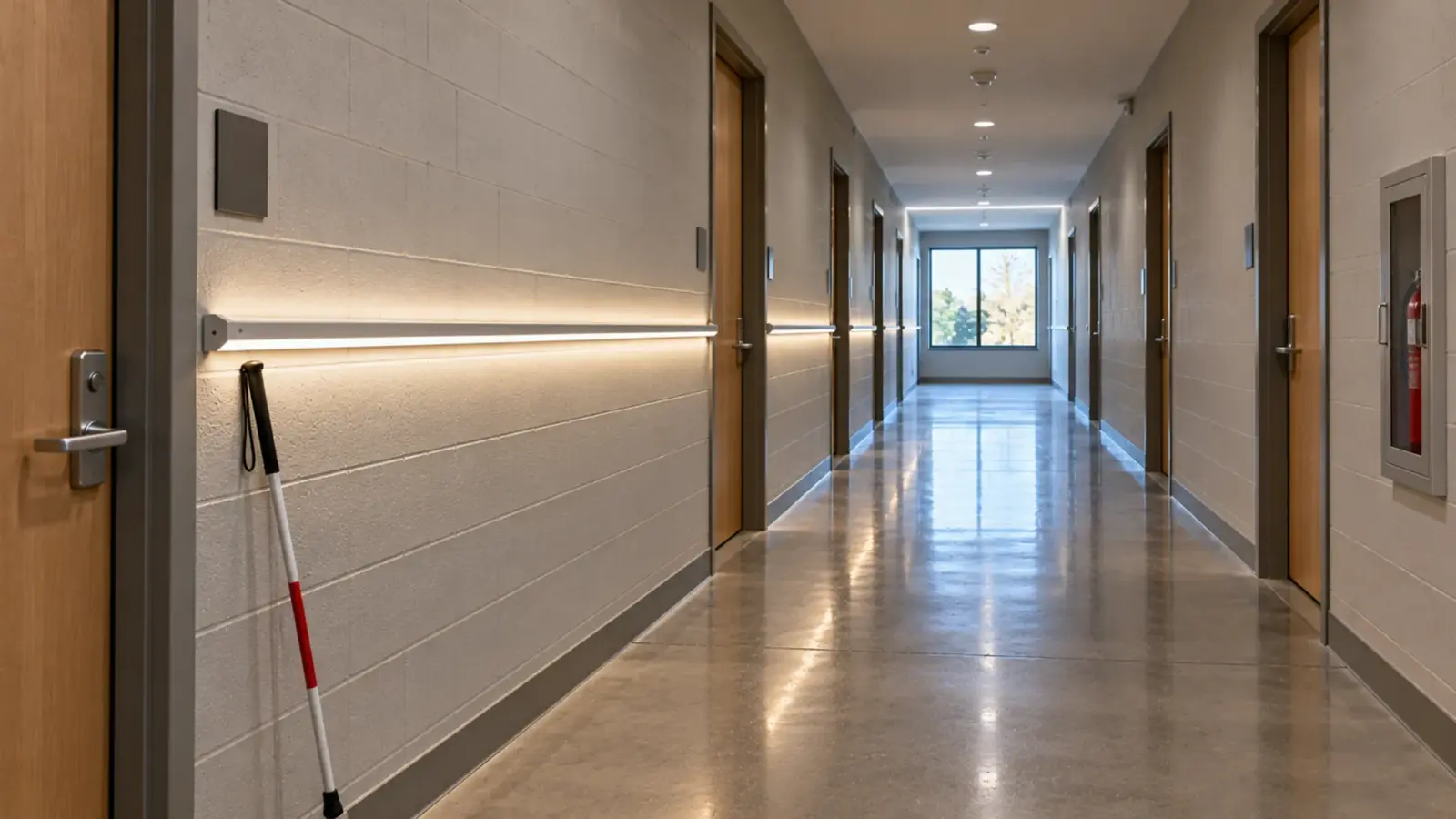
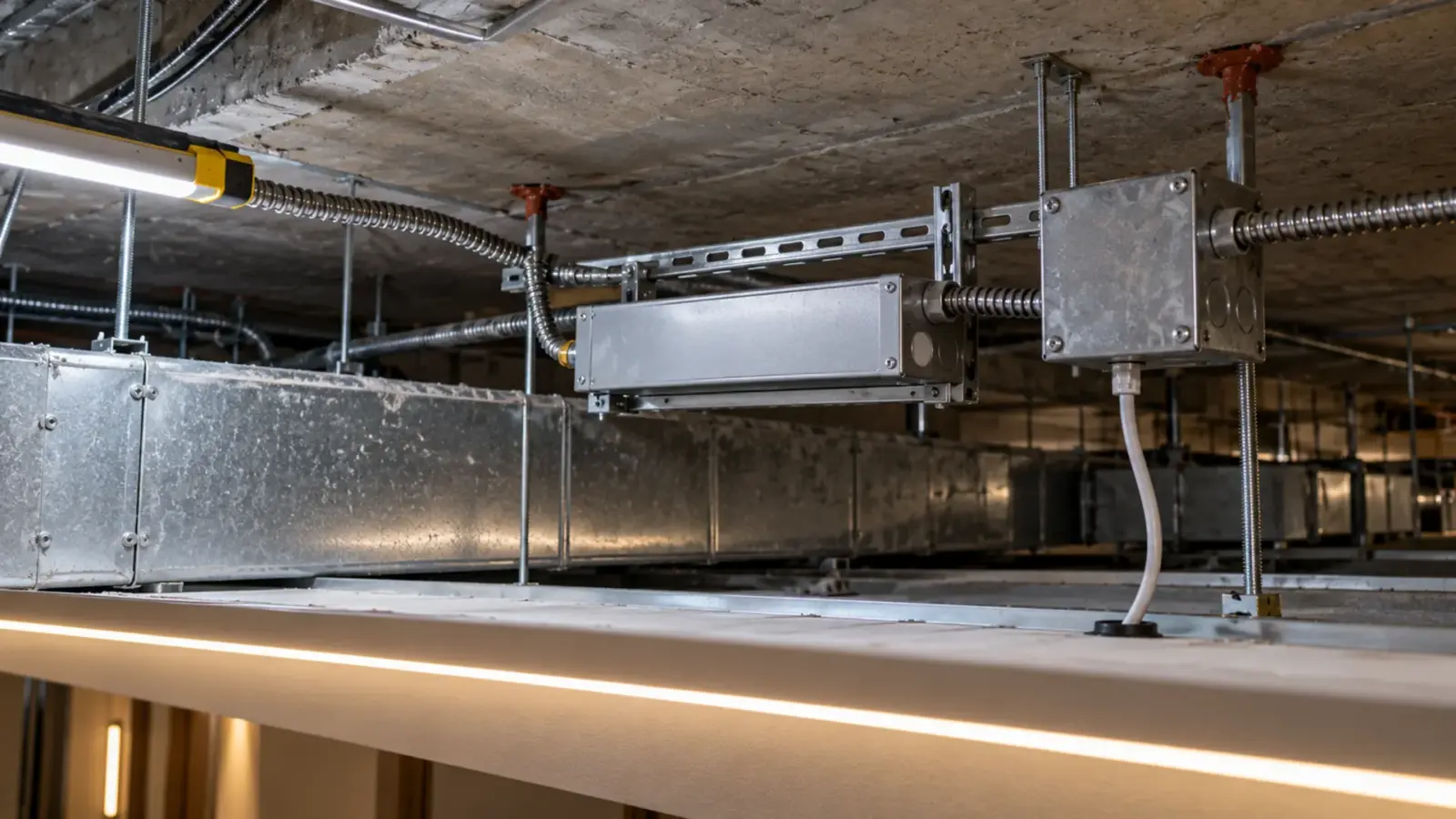
Take a typical corridor job, not a named one. The reflected ceiling plan shows a cove along both walls and a note: drivers above the ceiling, 60 ft apart, reachable through a tile. The mechanical drawings, drawn by another firm, show the corridor ceiling as the return path for the guest-room floor. Nobody has put the two sheets side by side. The electrician orders the drivers that fit the budget, brackets them to the strut, and finds out at the above-ceiling inspection that the case is plastic and nobody has a listing for it. The fix on that day is a ladder, new drivers and a second inspection slot.
The sections below are the questions that would have caught it on the day the drawings met.
Plenum or Other Space: Two Words That Change the Answer
The NEC separates a plenum from “other space used for environmental air.” Legrand’s bulletin quotes the Article 100 definition of a plenum as a “compartment or chamber to which one or more air ducts are connected, and that forms part of the air distribution system,” and then quotes 300.22(C): the “space over a hung ceiling used for environmental air-handling purposes is an example of the type of other space.” Legrand adds that “some people incorrectly refer to this ‘other’ space as a plenum.”
That matters because Legrand says installation is greatly restricted in a plenum proper while the NEC treats the hung-ceiling space separately, and because people on site often call the cavity “the plenum.” Mike Holt’s EC&M answer in 2023 titles the same section “Plenum Spaces for Environmental Air” and calls cavities above suspended ceilings examples of the plenum spaces it covers, so expect to see both words for one cavity. It states the scope plainly: the section “applies only to the space above a suspended ceiling or below a raised floor used for environmental air.” So the first question is not about the driver. It is whether the mechanical drawings use the cavity above the ceiling as part of the return path, or ducted return and a sealed cavity.
What 300.22(C) Lets Into the Ceiling
For equipment, the sentence Legrand quotes is short: equipment “with a metal enclosure or with a nonmetallic enclosure listed for the use and having adequate fire-resistant and low smoke producing characteristics.” Holt’s examples of what fits are air handlers, junction boxes and dry-type transformers. The test that nonmetallic equipment is usually listed to is UL 2043; Legrand describes it as a standard that “lays out strict fire and smoke producing test requirements,” with a passing product receiving the “Plenum Rated” mark.
One trap on paper. Legrand, undated, numbers that equipment sentence 300.22(C)(2). Both of Holt’s answers, 2013 and 2023, number it (C)(3), and the 2013 one puts cable tray at (C)(2), so Legrand may be quoting an older text. Cite 300.22(C) and read the sentence in the edition the AHJ has adopted.
Metal, Listed or Neither: Where a Driver Falls
A driver is electrical equipment with a case, so the sentence applies to its case.
| Driver case | Under the sentence as the sources read it | What to ask for |
|---|---|---|
| Metal enclosure | Permitted equipment | The case material in the datasheet or the nameplate |
| Nonmetallic enclosure listed for air-handling spaces | Permitted | A “Plenum Rated” mark (Legrand) or a UL 2043 reference (Legrand, Nora Lighting) |
| Nonmetallic enclosure, no listing | Not shown as permitted by Legrand or Holt; Hancock says non-listed equipment goes in an appropriate non-combustible enclosure | Move it, swap for a metal or listed unit, or box it in an appropriate non-combustible enclosure |
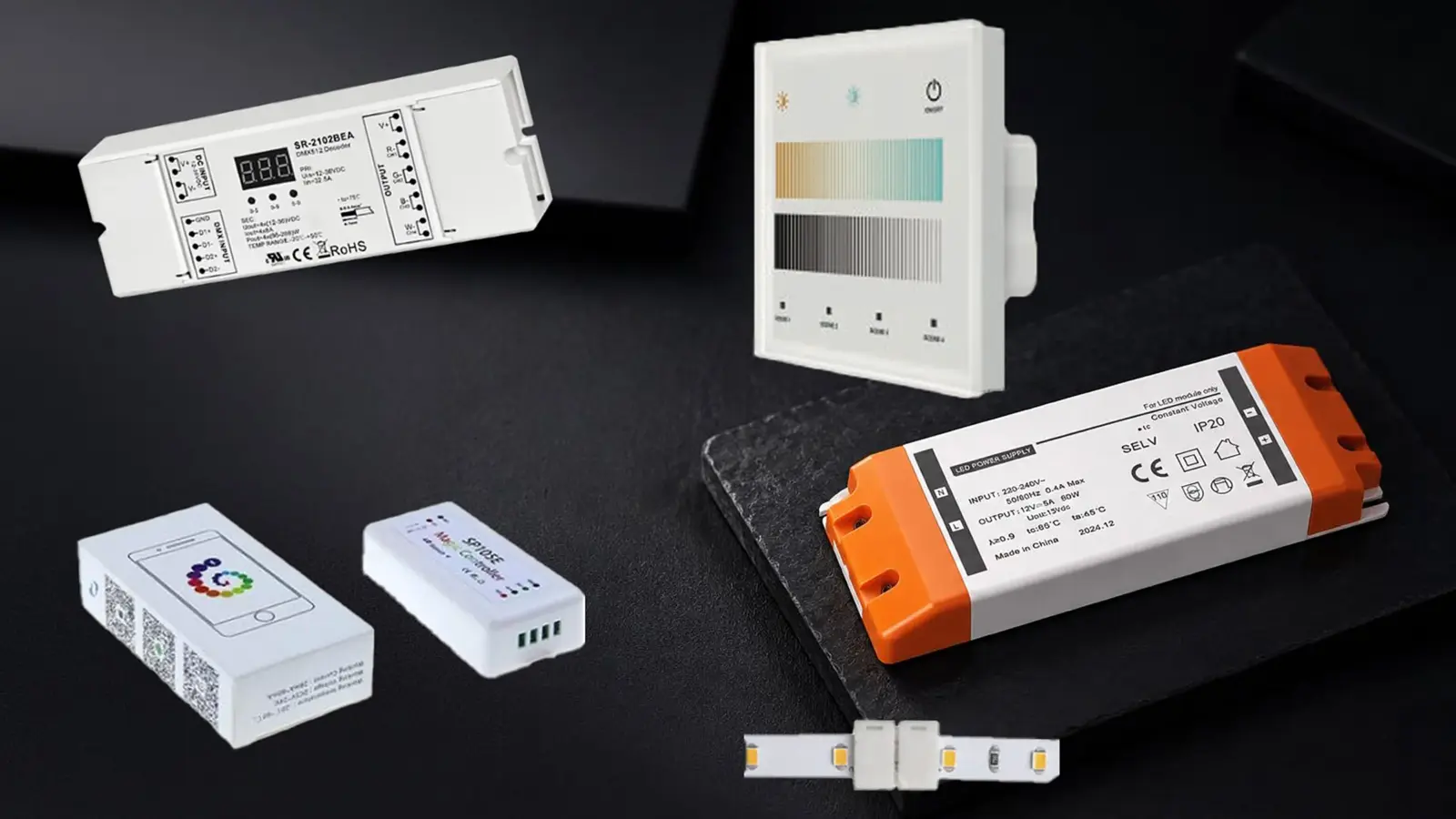
Our Class 2 drivers page gives each driver’s wattage, input range and ingress rating (IP20 for the 40 W and 60 W Class 2 models, potted IP67 for the damp and wet-location models). For the Class 2 drivers it does not state the case material or an air-handling listing, so we make no claim about them here; both are documents we confirm at quote. Nora Lighting adds a caution worth taping to the submittal: “UL guidelines may not be accepted in all jurisdictions.” Hancock adds a second one: a listing has to cover the complete assembly, and “it’s not unusual to have a piece of equipment tested without all of the necessary accessories or supporting hardware.” Our reading for a driver: the listing covers the case with its terminals and leads as shipped, so a drilled case or an added bracket is a question for whoever holds the listing.
The Wiring Around It
A driver in the cavity has a line-voltage input and a Class 2 output, and both are in the same space.
| Circuit | What the sources allow in the cavity | Note |
|---|---|---|
| Driver input, line voltage | Metal raceways, Type AC cable, Type MC cable without a nonmetallic cover | Holt 2023 |
| Class 2 output to the strip | Plenum-rated Class 2 cable, or wiring in metal conduit | Holt 2023 for plenum-rated Class 2 cables; Nora Lighting says “plenum-rated (CMP or CL2P)” or metal conduit |
| Cable ties and supports | Listed for use in a plenum space | Holt 2023 |
| Not permitted | PVC conduit, ENT, liquidtight flexible conduit, nonmetallic cables | Holt 2013 |
Our in-wall wiring guide covers CL2 and plenum cable types, and the inspection punch list lists non-rated cable as the first write-up. A strip-side lead run through the cavity follows the same table.
Three Other Things the Inspector Sees Above the Ceiling
Brian Hancock of Henderson Engineers wrote in EC&M in 2011, working from the 2008 NEC, about what ends up in an air-handling ceiling, and three of his points land on drivers.
- Non-listed items go in a non-combustible enclosure. For the supporting items he lists, he says that unless they are listed and labeled for the space you must install them “within an appropriate non-combustible enclosure.” For wall-wart transformers, usually in non-rated combustible material, the choice is an appropriate enclosure or a listing for plenum use. A plastic driver is the same problem.
- No flexible cord above the ceiling. He notes that flexible power cords are prohibited in concealed spaces above a ceiling under Sec. 400.8(5) of that edition. On Hancock’s reading, a plug-in driver on a cord has the same problem.
- Do not hang low-voltage cable on the grid. Cabling must be supported properly. Using the ceiling grid as support is prohibited, and using its support wires is prohibited unless the ceiling maker allows it and, where applicable, it is tested as part of the fire-rated assembly (Sec. 300.11).
The inspection itself is scheduled. A university building official’s list of common inspection types has “Electrical Above Ceiling” as its own visit, covering conduit paths, wiring and electrical boxes, low-voltage wiring included, scheduled before the ceiling is closed. That list is one owner’s practice, not a code, and the AHJ’s list governs.
Heat and Access: Reasons to Move It Anyway
Passing the sentence does not make the cavity a good place for a driver. Our drivers page says it plainly: “A driver above a sealed ceiling or in a closed cabinet is where heat and service problems start.” Our drivers page lists the Class 2 drivers at -4 to 122°F (-20 to 50°C) ambient as typical values, confirmed against the datasheet at quote, and the derating guide works through what a hot ceiling does to a driver. The other cost is a visit: a driver above a rated or hard-lid ceiling is a service call with a ladder, or a ceiling cut, and the remote driver layout guide sets out the alternatives, a closet or plant room, an access hatch or a removable millwork panel. If the answer is “it may go there” and “it should not,” choose the closet.

| Where the driver goes | Strength | Watch for |
|---|---|---|
| Electrical or IDF closet | Reachable, cool, outside the air path | Voltage drop on the longer Class 2 run |
| Millwork or casework box | Next to the strip, easy access | Ventilation in the box; a closed cabinet runs hot |
| Corridor wall box with a cover | Reachable from the floor | A clean cover detail; check the wall’s rating |
| Bracket above the ceiling, tile access | Shortest output run | Everything above: case, listing, cord, support, heat |
The strengths and cautions are our judgement, not a sourced ranking.
FAQ
Is a drop ceiling a plenum?
Not in the code’s own terms. A plenum is a chamber connected to air ducts that forms part of the air distribution system. The space over a hung ceiling used for air handling is the code’s example of “other space used for environmental air.” People on site often call both “the plenum”; EC&M’s 2023 answer uses “plenum spaces” for the cavity too, so check the mechanical drawings and the adopted text.
Does an LED driver need a plenum rating?
Not if its enclosure is metal, on the reading of Holt’s EC&M answer. A nonmetallic case needs a listing for the use, which is where UL 2043 comes in. The driver’s marking and documentation decide, and the AHJ accepts or does not.
Can I put a plastic Class 2 driver above the ceiling?
Only if it is listed for air-handling spaces, or boxed in an appropriate non-combustible enclosure, which is Hancock’s route for non-listed items. Neither Holt nor Legrand shows an unlisted nonmetallic case as permitted. The listing is on the product, not on the strip.
What about a plug-in driver with a cord?
A cord does not belong above a ceiling. Hancock cites Sec. 400.8(5) of the 2008 NEC, which prohibits flexible cords in concealed spaces above a ceiling, whether or not the space handles air. A hardwired driver on a bracket avoids the question.
Does the Class 2 output cable need to be plenum-rated?
In the cavity, the sources say plenum-rated Class 2 cable or metal conduit. Rating the cable does not rate the driver, and rating the driver does not rate the cable.
What to Verify with the AHJ
Get these five answers in writing before the drivers are bracketed:
- Do the mechanical drawings use the cavity above this ceiling for environmental air?
- Which edition of 300.22(C) is adopted, and does the AHJ read the equipment sentence as above?
- Will the AHJ accept the driver’s marking as proof of a listing, or does it want a metal enclosure?
- Which wiring methods for the driver input and the Class 2 output does the AHJ accept in that cavity?
- If the driver goes outside the cavity, what does the access rule ask for the new location?
The page lists wattage and input range for each model, and we confirm the case and listing documents at quote. The NEC edition question itself is covered in the NEC guide.