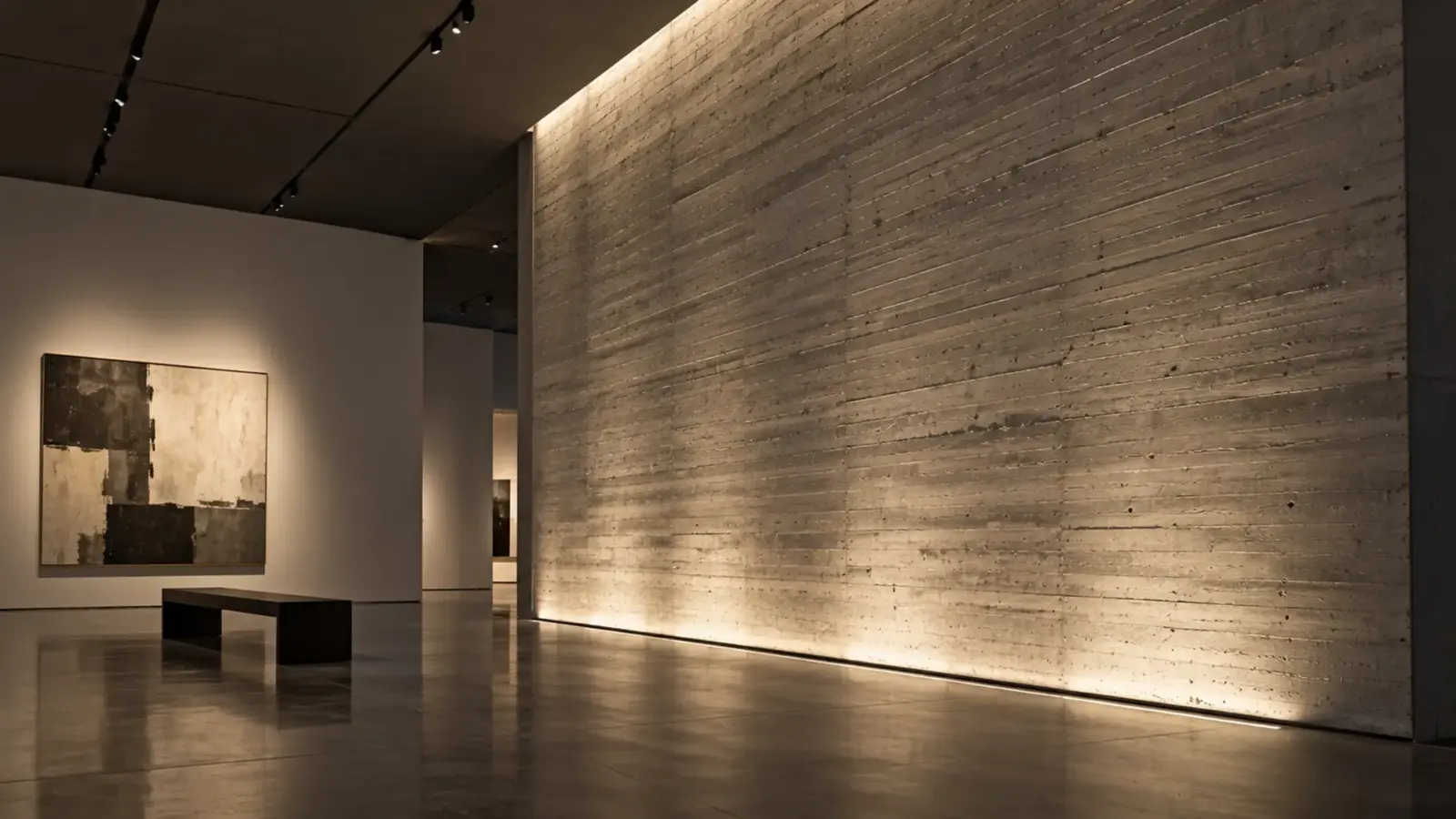
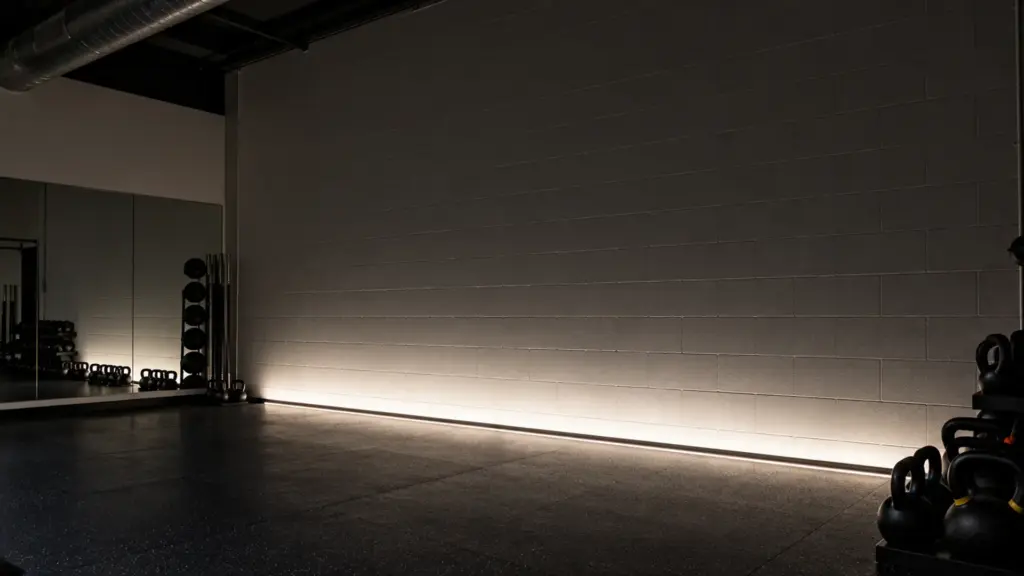
Bare LED tape throws its light in a wide fan, which lights everything near the strip and little far away. The strip that makes a cove ceiling glow leaves a bright band at the bottom of a tall wall and a dim top. Washing that wall evenly needs a narrower beam, and that takes a lens.
The number that tells you which you have is the beam angle on the spec sheet. On our CSP tables, bare white strip measures 140° to 170°; our wall washer optics run from 10° × 60° to 60°. The rest of this page explains what those numbers mean and how to choose between them.
What the Beam Number Measures
Beam angle is the width of the cone of light, measured between the two directions where the intensity falls to half of its peak. Inside that angle is where most of the light goes; outside it, light still leaves the strip, just less of it.
Two strips with the same lumens per foot can light a surface very differently. A wide beam spreads those lumens over a large area close to the strip. A narrow beam puts the same lumens into a smaller area, so that area is brighter and the light carries further before it spreads out.
Photometric reports sometimes give a second number, the field angle, measured where intensity falls to a tenth of the peak. It is always wider than the beam angle and describes where the light visibly ends. When two datasheets are compared, check that both quote the same one.
A beam angle on a datasheet should come from a photometric measurement of that model. When a datasheet says “120°” for every strip in a catalog, it is a nominal value, not a measurement.
Bare Tape: Wide by Design, and Why That Suits a Cove
A strip with no optic over the LEDs emits close to a hemisphere. Our measured figures for bare CSP strip show how wide that is:
| Model | Construction | Beam | Output |
|---|---|---|---|
| UT-CSP-320-N | Flat-coated, IP20 | 151.6° | 296–316 lm/ft |
| UT-CSP-480-N | Flat-coated, IP20 | 147.7° | 396–415 lm/ft |
| UT-CSP-320-DD | Dome diffused, IP20 | 170.5° | 238–271 lm/ft |
| UT-CSP-512-CCT | Tunable white, IP20 | 148.8° | 238–244 lm/ft |
| UT-CSP-300-MC12 | 12V, IP20 | 140.1° | 123–128 lm/ft |
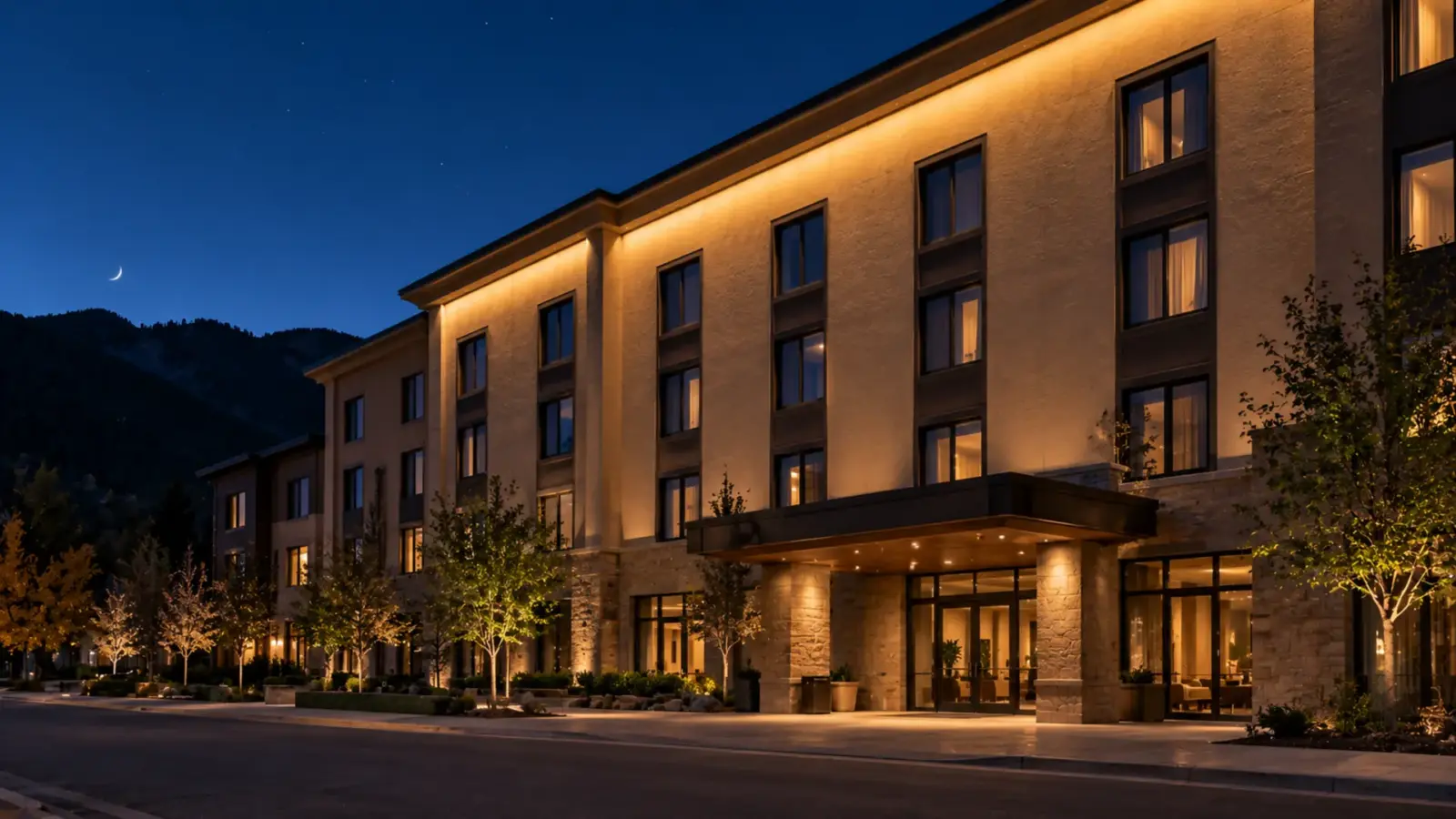
For indirect light that is exactly right. A cove needs light that spreads across the ceiling from a source a few inches away, and a wide beam does that with a soft gradient. Our cove guide covers COB and SMD in that detail; how many lumens a cove needs covers output.
The same width works against you when the surface is far away or tall. Most of the light lands in the first few feet.
Spread on the Surface
Simple geometry shows the difference. The width of the lit band on a surface is about twice the distance times the tangent of half the beam angle.
| Beam angle | Band width at 1 ft | at 3 ft | at 10 ft |
|---|---|---|---|
| 150° (bare strip) | 7.5 ft | 22.4 ft | 74.6 ft |
| 120° | 3.5 ft | 10.4 ft | 34.6 ft |
| 45° | 0.8 ft | 2.5 ft | 8.3 ft |
| 30° | 0.5 ft | 1.6 ft | 5.4 ft |
| 10° | 0.2 ft | 0.5 ft | 1.7 ft |
This is geometry, not photometry: it shows where the half-intensity edges land, not the brightness inside the band. It still makes the point. A bare strip at the base of a 12 ft wall spreads its light across more than 70 ft of space by the time it would reach the top, so the top of the wall gets a small share. A 10° optic keeps the beam under 2 ft wide over the same distance, so the light reaches the top.
Lensed Strip: 30° to 45°
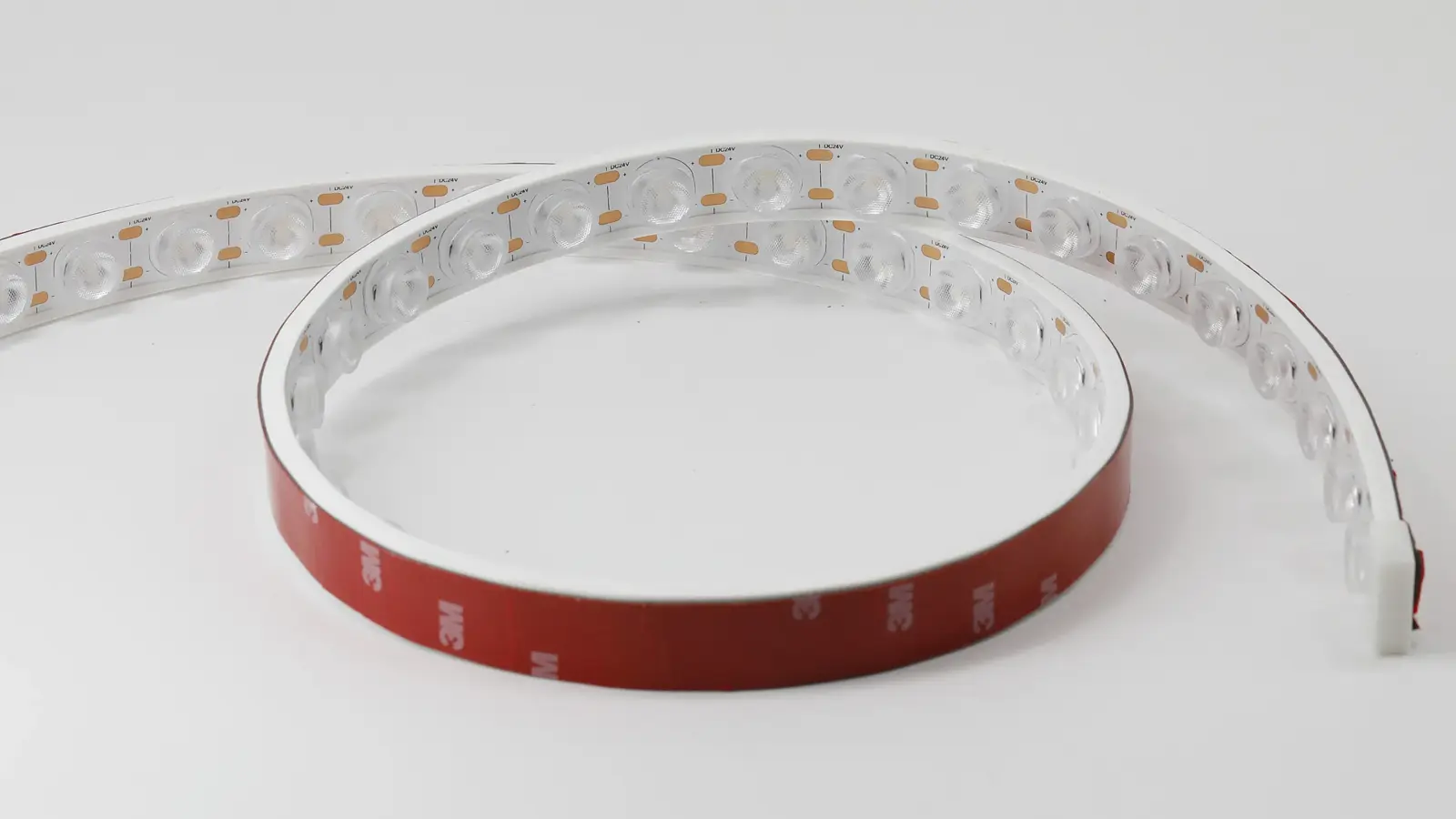
A lens over each LED, or a molded optic along the strip, narrows the beam. Our lensed families sit in the middle of the range:
| Model | Optic | Beam | Output |
|---|---|---|---|
| UT-WS20-30 | Silicone strip with built-in optic | 30° | 527 lm/ft |
| UT-WS18-45 | Silicone strip with built-in optic | 45° | 562 lm/ft |
| UT-WC84 | 10 mm PCB with lens | 36° | 312 lm/ft |
| UT-WP24-WHT | PU-potted, lens options | 30°, 45° or 30° × 45° | 452 lm/ft |
A 30° or 45° beam suits walls at mid distance, columns, shelves and signs, where the light needs to land on a surface rather than flood a ceiling. Diode LED’s linear grazer, for example, is offered at 10°, 30° and 60°, which shows how common 30° is for grazing.
Asymmetric Optics: 10° × 60°
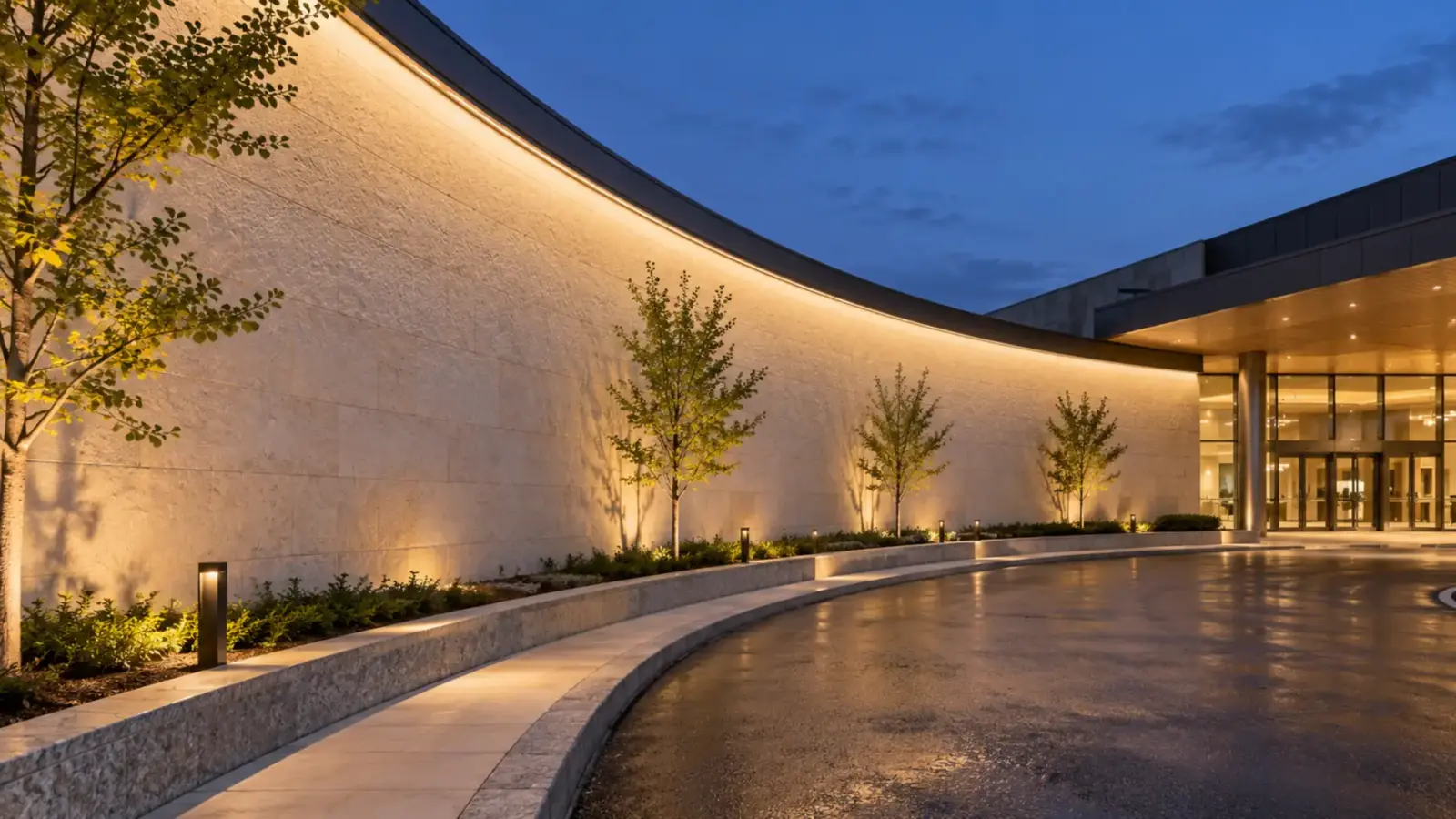
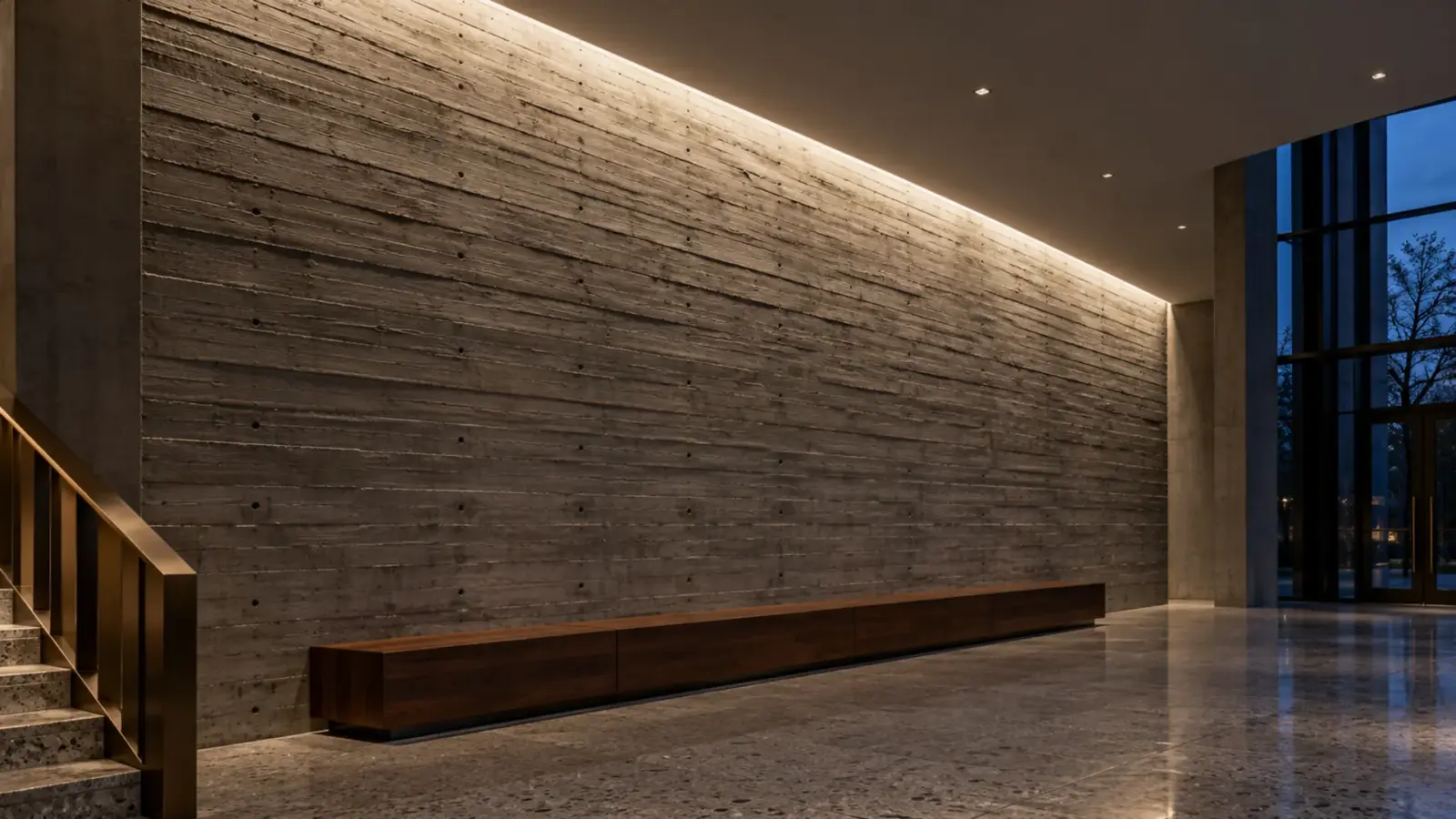
Some wall washer optics have two beam angles: narrow in one direction, wide in the other. Our UT-WB27-1060 is 10° × 60°: 10° up the wall, so the light reaches the top, and 60° along the wall, so neighboring sections blend into one wash.
Our wall washer page puts the choice simply: 10° × 60° for close-offset grazing of tall walls, 20° × 30° and 30° for mid-throw washing, and 45° or 60° for wide coverage at greater setbacks. On the bar families the lens is chosen separately from the color temperature, so the optic can change without reworking the rest of the schedule.
| Optic | Model | Typical use | Output |
|---|---|---|---|
| 10° × 60° | UT-WB27-1060 | Grazing tall walls from close | 494 lm/ft |
| 20° × 30° | UT-WB27-2030 | Mid-throw wash | 675 lm/ft |
| 45° | UT-WB27-45 | Wider coverage, more setback | 551 lm/ft |
Setback and spacing decide the rest; our guide to setting back and spacing a wall washer covers them, and the wall washer design guide goes from survey to mockup.
Covers, Jackets and Channels Change the Beam
The beam on the datasheet is for the configuration that was measured. Change the configuration and the beam changes with it.
- IP jackets: our IP68 CSP strip shows it. UT-CSP-320-68 measures 145.4°, close to the bare strip, while the jacketed UT-CSP-320-68WJ measures 115.5° and UT-CSP-320-68BJ 103.4°, with output falling to 183–201 and 91–104 lm/ft.
- Channels: a deep channel cuts off the widest part of the beam at its walls. Shiji Lighting notes that a channel narrows the beam and an opal cover makes it look wider and softer.
- Covers: an opal cover scatters the light, so the strip behaves more like a wide, soft source, whatever the LEDs underneath do. Our diffuser guide covers what each cover costs in output.
- Aim: tilting the strip moves the beam. Our UT-CH1616 corner channel aims the strip at 45°, which spreads a cove wash further across the ceiling than a strip lying flat.
Which Beam for Which Surface
| Surface and distance | Beam that usually works | Example from our range |
|---|---|---|
| Cove washing a ceiling, a few inches below it | Bare strip, 140° to 170° | UT-CSP-320-N, 151.6° |
| Shelf, display case or toe kick | Bare strip in a channel, or 30° to 45° aimed at the goods | UT-WS18-45, 45° |
| Column or narrow pier | 30° | UT-WS20-30 |
| Wall of 8 to 12 ft from a setback | 20° × 30° or 30° | UT-WB27-2030 |
| Tall wall from a slot at its base | 10° × 60° | UT-WB27-1060 |
| Color wash on a wall or facade | 30° to 65° color optics | UT-WP24-RGBW, UT-WA16-SPI 60° |
Treat the right-hand column as a starting point for a mockup, not a substitute for one. Surface finish changes the result: a matte plaster wall shows an even wash; a glossy tile wall reflects the source itself.
Beam Angle and Glare
A narrow beam concentrates light, and concentrated light seen directly is glare. A 10° optic aimed up a wall is comfortable because nobody looks into it; the same optic on a soffit facing a corridor puts a bright line in everyone’s eye.
Three rules keep narrow optics comfortable:
- Keep the source out of the sightline: in a slot, behind a lip or above eye level, aimed at the surface.
- Aim along the surface, not across the room: asymmetric optics help because their wide axis runs along the wall, not toward the viewer.
- Check reflections: a narrow beam on polished stone, glass or glossy paint reflects as a bright image of the source.
Bare wide-beam strip has the opposite problem: it rarely glares, but it spills light onto everything near it, including floors and ceilings you did not mean to light.
Ask for the IES File
Where the beam matters, ask for the IES file measured in the configuration you will install: the same model, the same jacket or cover, the same channel. A lighting calculation run with a bare-strip file will overstate what a jacketed strip in a deep channel delivers. Check that the file’s model and CCT match the schedule before anyone builds a calculation on it.
The Short Version
- Bare strip is wide, 140° to 170° on our CSP measurements: right for coves, wrong for tall walls.
- Lensed strip at 30° to 45° lands light on a surface at mid distance.
- Asymmetric 10° × 60° optics graze tall walls from close and blend along them.
- Jackets, channels, covers and aim all change the beam; measure the configuration you will install.
The beam, output and color options for each optic are listed on our LED wall washer page.