

LED strip diffuser distance calculator
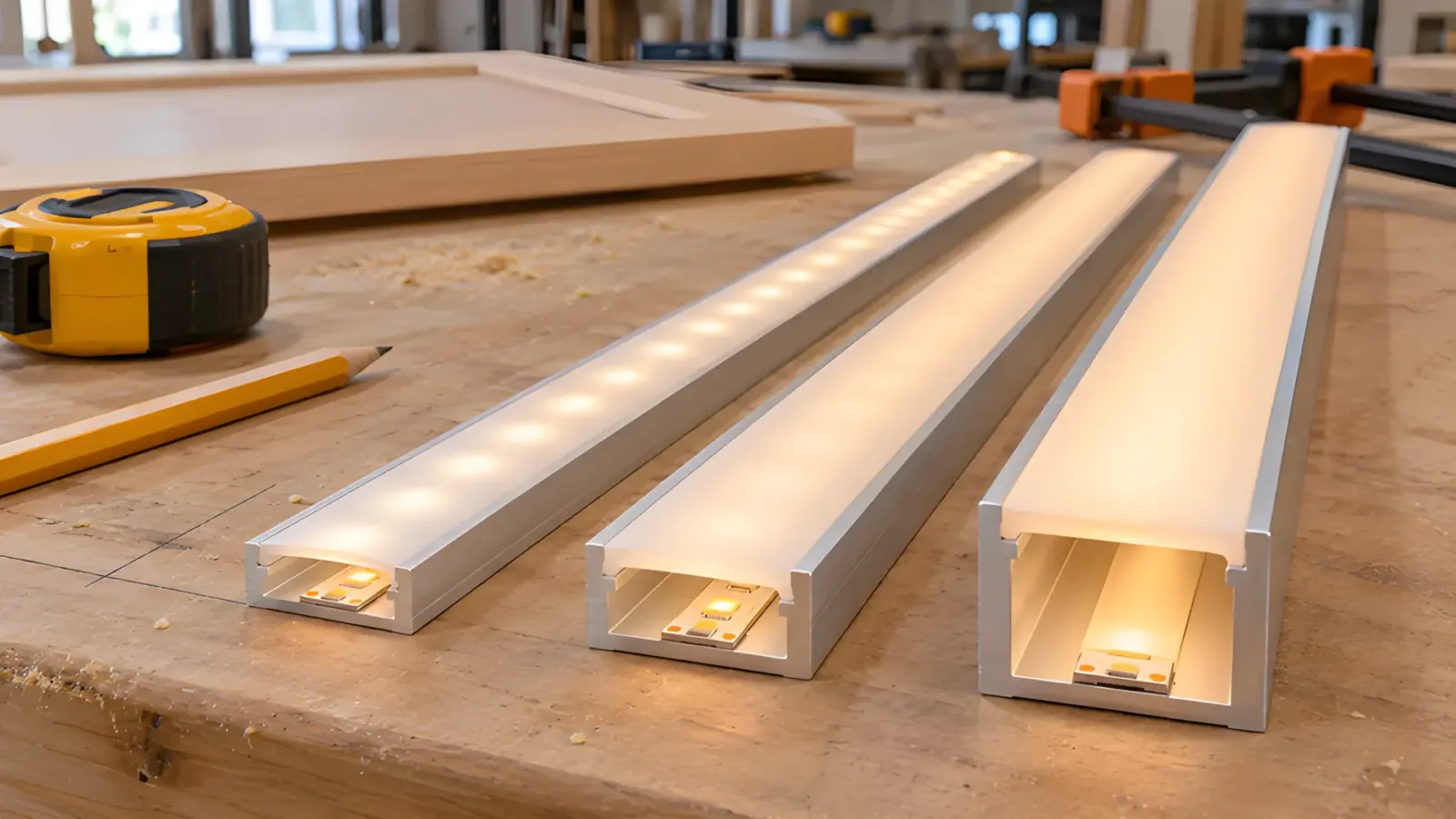
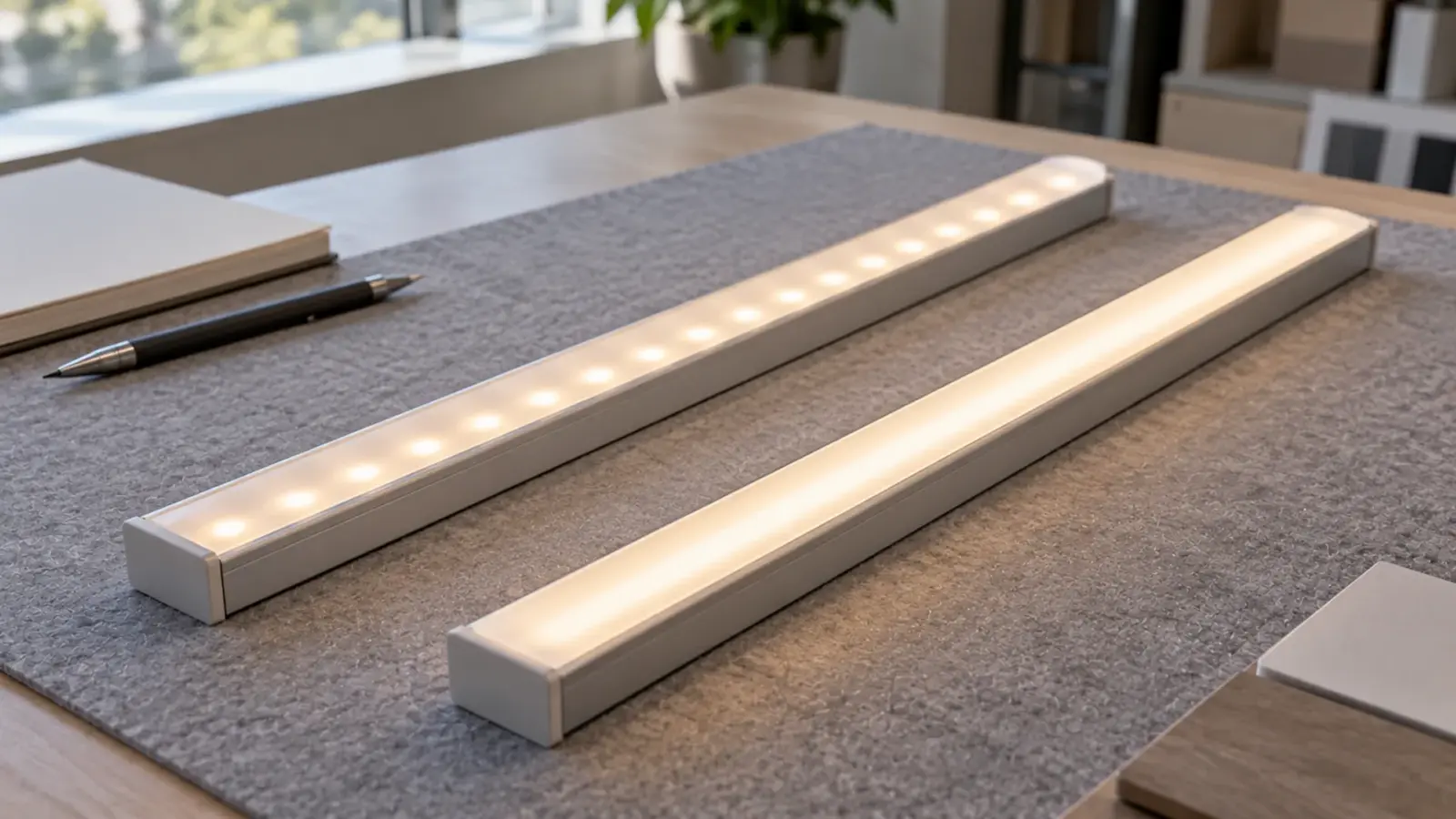
Dots show when the LEDs sit closer to the cover than they sit to each other. Pick the strip and the cover to see the pitch, the distance that hides it and which channels have that depth.
Pitch to depth
The safe rule is one pitch of distance under an opal cover. The vendor edge is shallower and only holds at full brightness from straight on.
The pitch rule, and where it bends
-
01
Pitch
1,000 mm divided by the LEDs per meter: 60 per meter is a 16.7 mm pitch, 120 per meter is 8.3 mm. COB and CSP rows run a continuous line and have no pitch to hide.
-
02
The safe rule
Keep the cover at least one pitch from the LEDs under an opal cover, about one and a half under frosted. Clear covers do not blend at any distance.
-
03
The vendor edge
Channel vendors publish shallower minimums: around 12 to 15 mm on 60 per meter and 7 to 10 mm on 120 per meter under a milky cover. They hold at full brightness, straight on; dimmed or from an angle the dots return first.
-
04
Real distance
Outside height minus the floor, the strip and the cover, about 3 mm in our channels. The calculator applies that and marks a channel as passing, at the edge or failing.
The guides behind the numbers
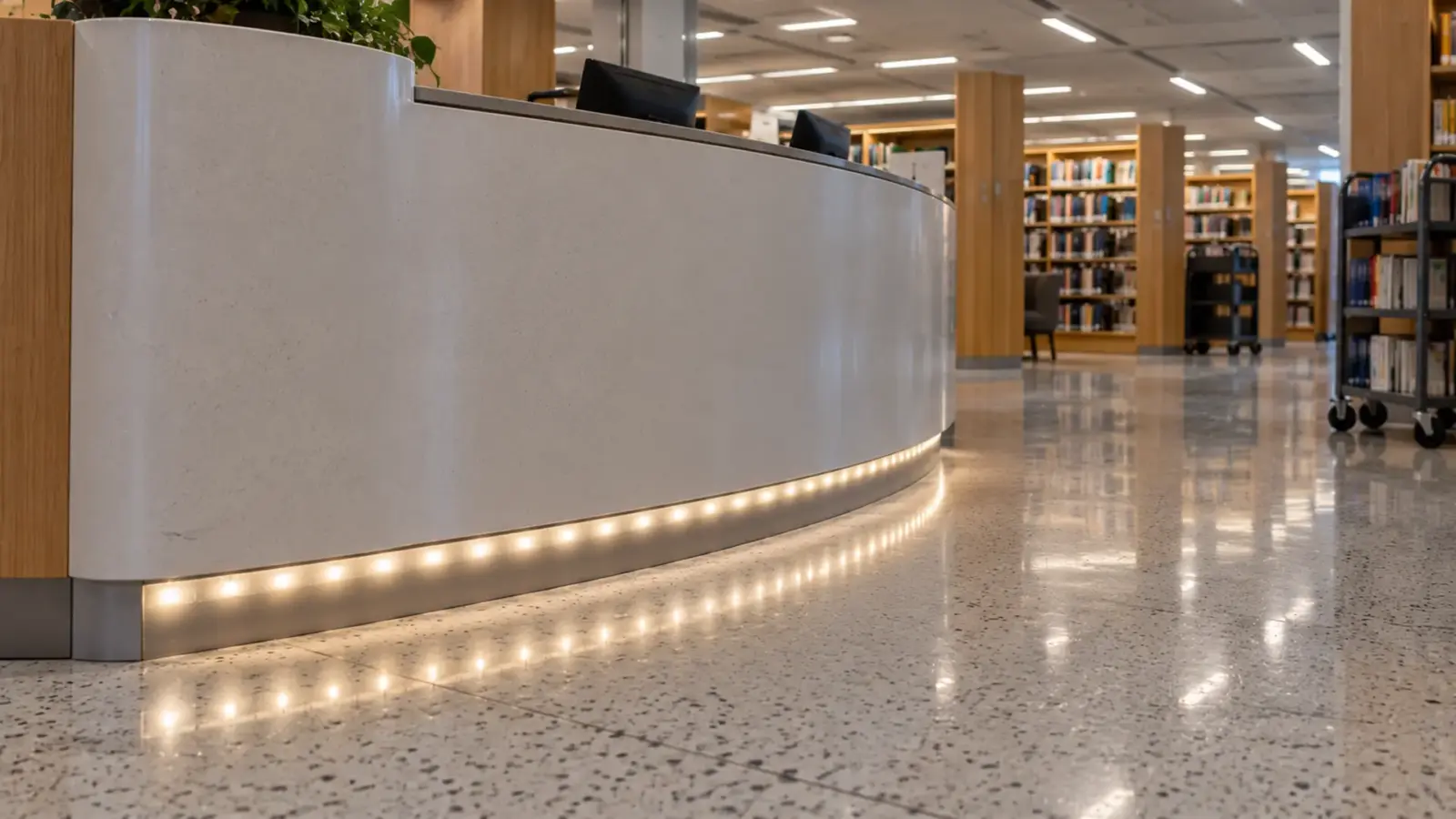
How to Fix LED Dots Showing Through a Diffuser After It Is Installed
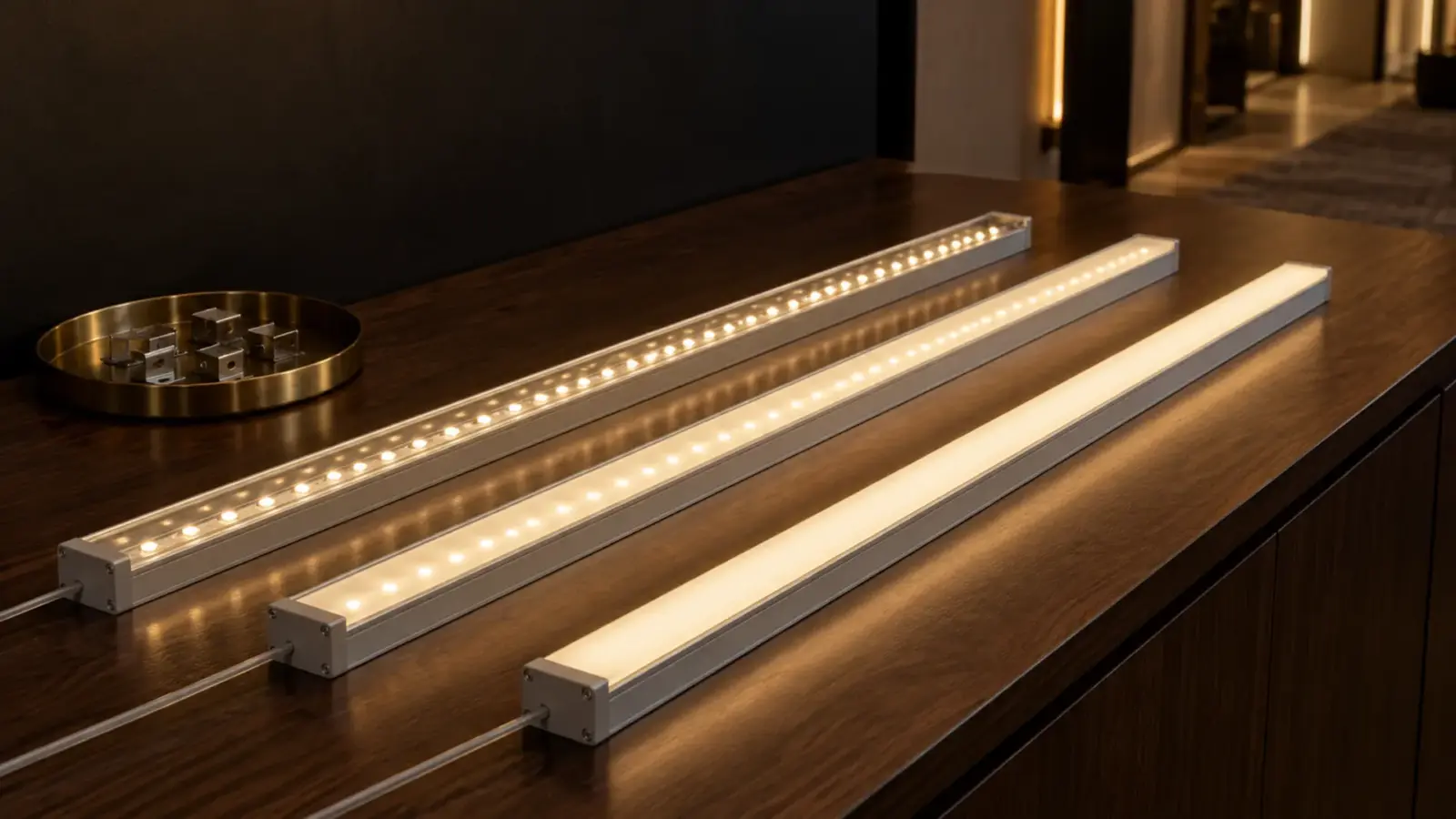
Clear, Frosted, or Opal? Pick the LED Channel Cover by Depth
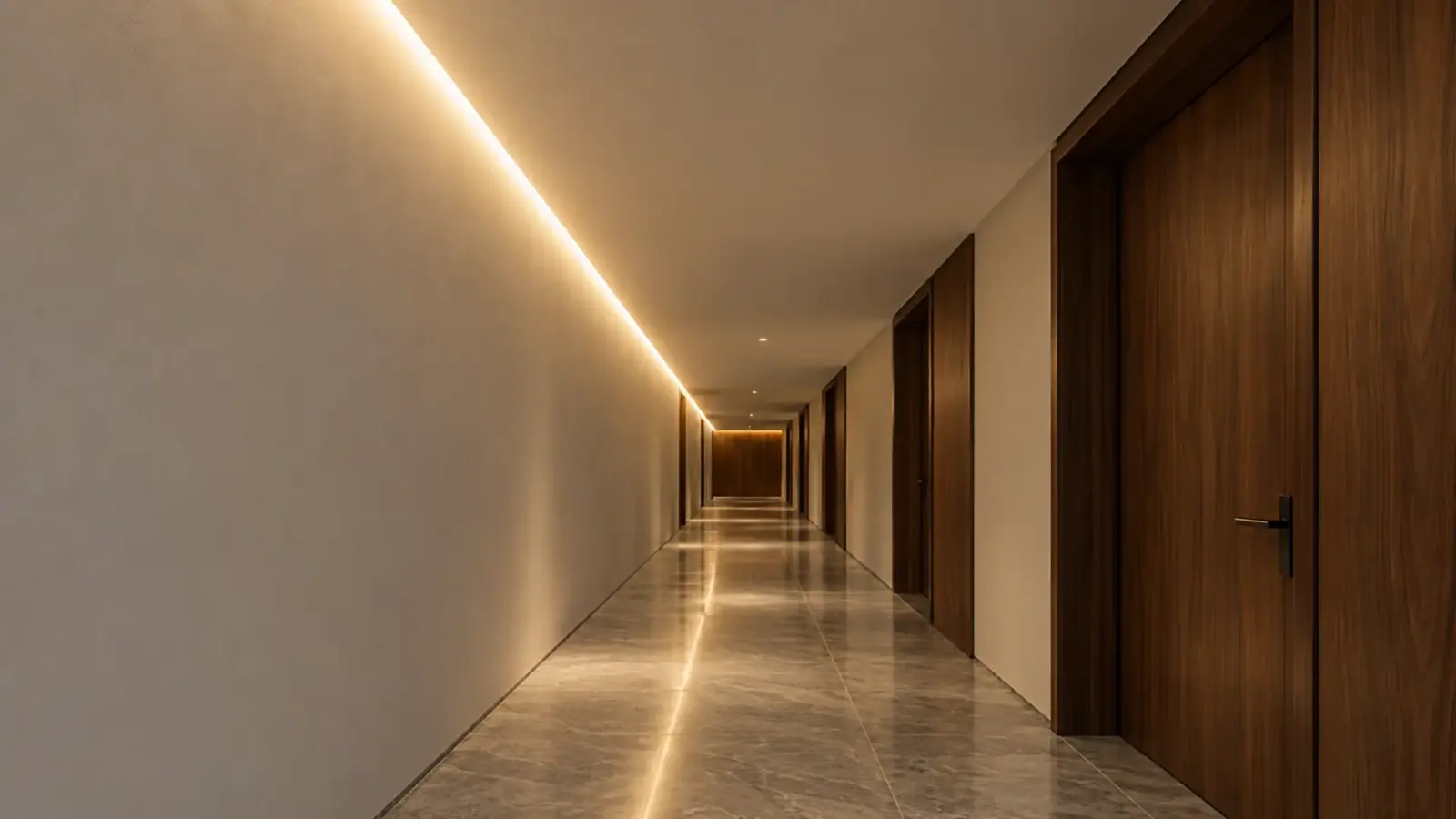
Which LED Channel Fits the Detail, Recessed, Surface or Corner?
How Many LEDs per Foot Before the Dots Disappear?
Does CSP LED Strip Really Outlast COB? What the Test Data Shows
LED Lighting Mockup Approval: What to Check Before You Sign
Reading the check
The channel passes the rule and I still see dots. Why?
Usually the sightline: the rule assumes you look at the cover from straight on at full brightness. From an angle, or dimmed low, the dots come back first. The other suspects are a cover that is clear or thin, and a strip sitting on spacers higher than planned.
Is a denser strip cheaper than a deeper channel?
Often yes on a finished run, because the channel is already in the ceiling. Moving from 60 to 120 LEDs per meter halves the pitch and halves the depth needed; a COB row removes the problem entirely.
Does the opal cover cost light?
Yes, around 20 to 30 percent, more than frosted and far more than clear. Spec the strip for the lumens after the cover.
Why no pitch for COB and CSP?
COB has a continuous phosphor layer and CSP chips sit a couple of millimeters apart, so both read as a line at any practical depth. Pick the cover for the look, not for hiding dots.
Send the section and we match strip, channel and cover
A section sketch with the depth you have, the finish and the viewing angle is enough. An engineer replies with the pitch, the channel and the cover that read as one line, in writing.
- Trade & project orders
- Drawings welcome
- US-based support