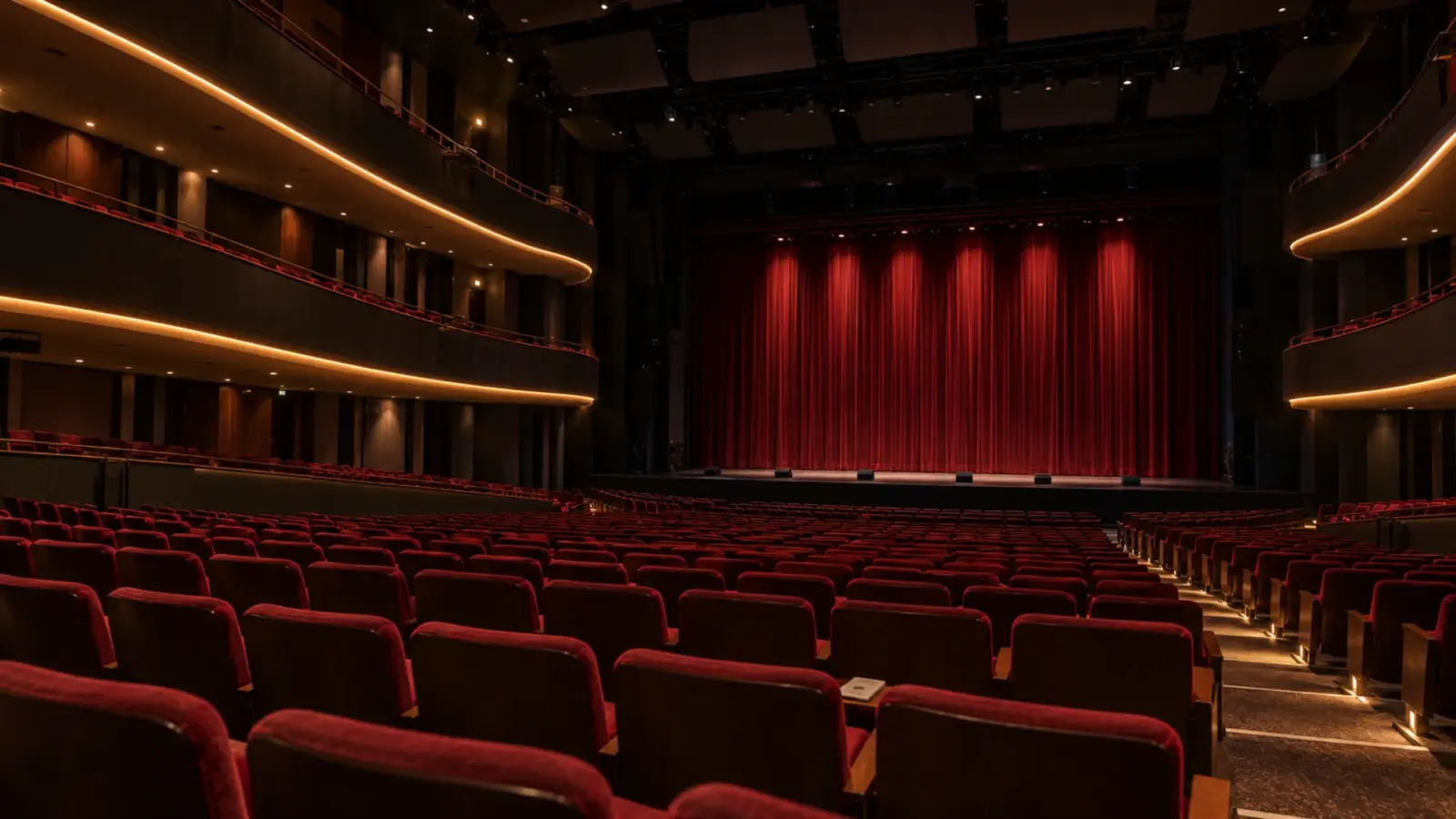
Does CSP LED strip outlast COB? Our spec pages cannot say. The CSP page lists type tests on file, such as 500 thermal-shock cycles, and the COB page lists none, so nothing compares them like for like. The real split is simpler: COB strip when the line is seen, CSP strip when the environment is the hard part.
This guide compares them on what decides a commercial job: construction, visible dots, environment, output, cut length and run length. Every product figure comes from our COB LED strip and CSP LED strip pages.
Short Answer: Pick by What the Job Punishes
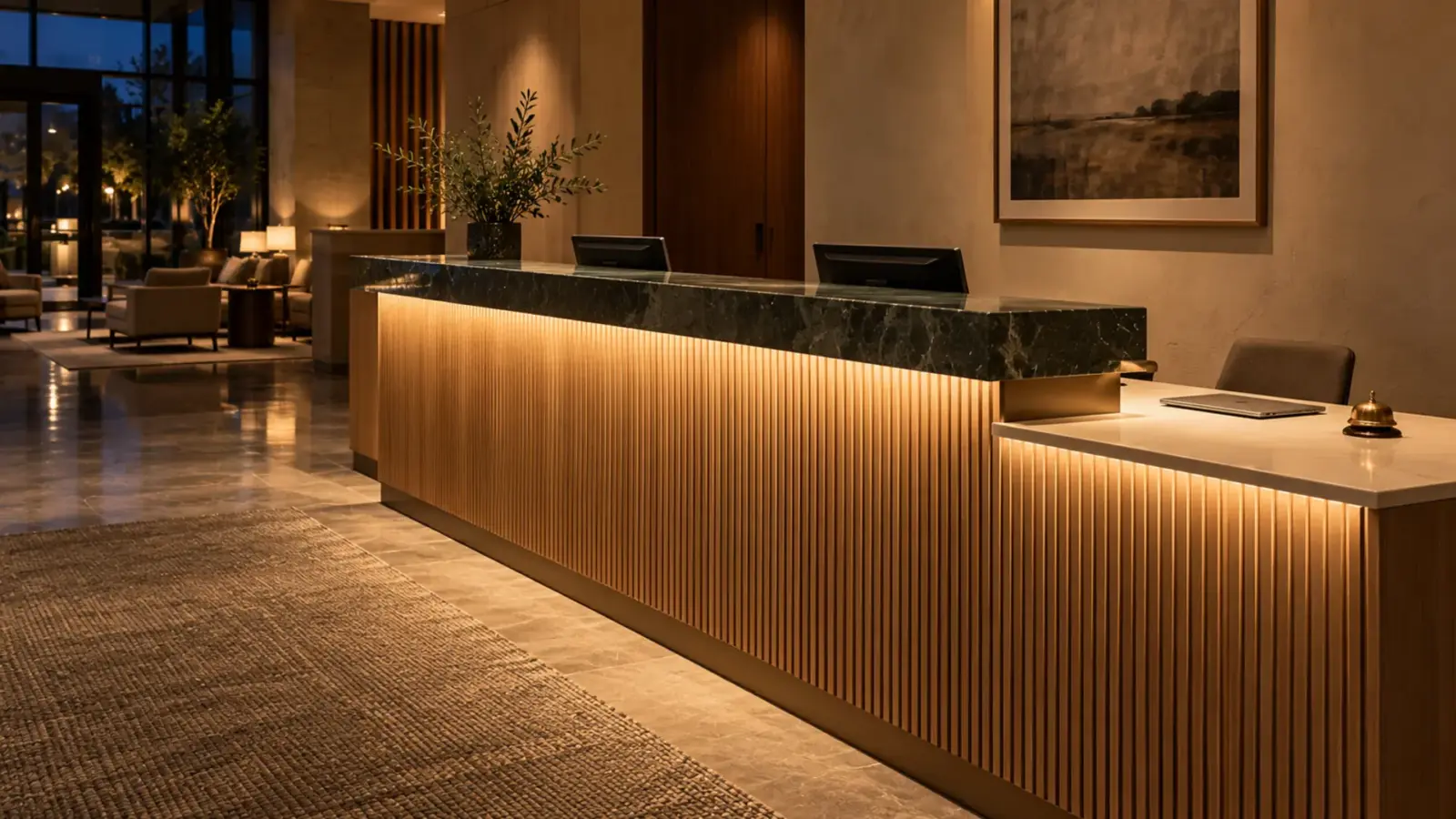
Spec COB strip when appearance is the requirement: a cove without a lens, a stone or glass reflection, a slot where the strip is seen directly. Spec CSP strip when the environment is the requirement: a damp interior, an unheated exterior soffit, a fixture that cycles on and off all day. When both apply, send the environment and the viewing distance with the quote request and we match the build.
COB strip runs 280 to 1,600 LEDs per meter under one continuous phosphor layer. The CSP page runs 160 to 540 LEDs per meter as individual chip-scale emitters. That density gap explains most of what follows.
| COB strip | CSP strip | |
|---|---|---|
| LEDs per meter | 280–1,600 | 160–540 |
| Voltage | 12V, 24V, 48V | 12V, 24V |
| CRI | Ra≥90; Ra≥97 on UT-SC320CRI97-15 | >90, R9 >40 |
| Color binning | ±2 SDCM per reel | ≤3 SDCM (≤5 on Dome Diffused) |
| Shortest cut | Any point on UT-C528-8-FC; 0.25 in (6.25 mm) on side-view UT-C320-6-SV | 0.39 in (10 mm) on UT-CSP-300-MC12 |
| Longest single feed | 65 ft (20 m) on UT-C480-8-48V | On request |
| Ingress options | IP20 to IP68 | IP20 to IP68 (Dome Diffused stays IP20) |
| Environmental type tests | On request | Listed on the CSP page |
Construction: What Actually Differs
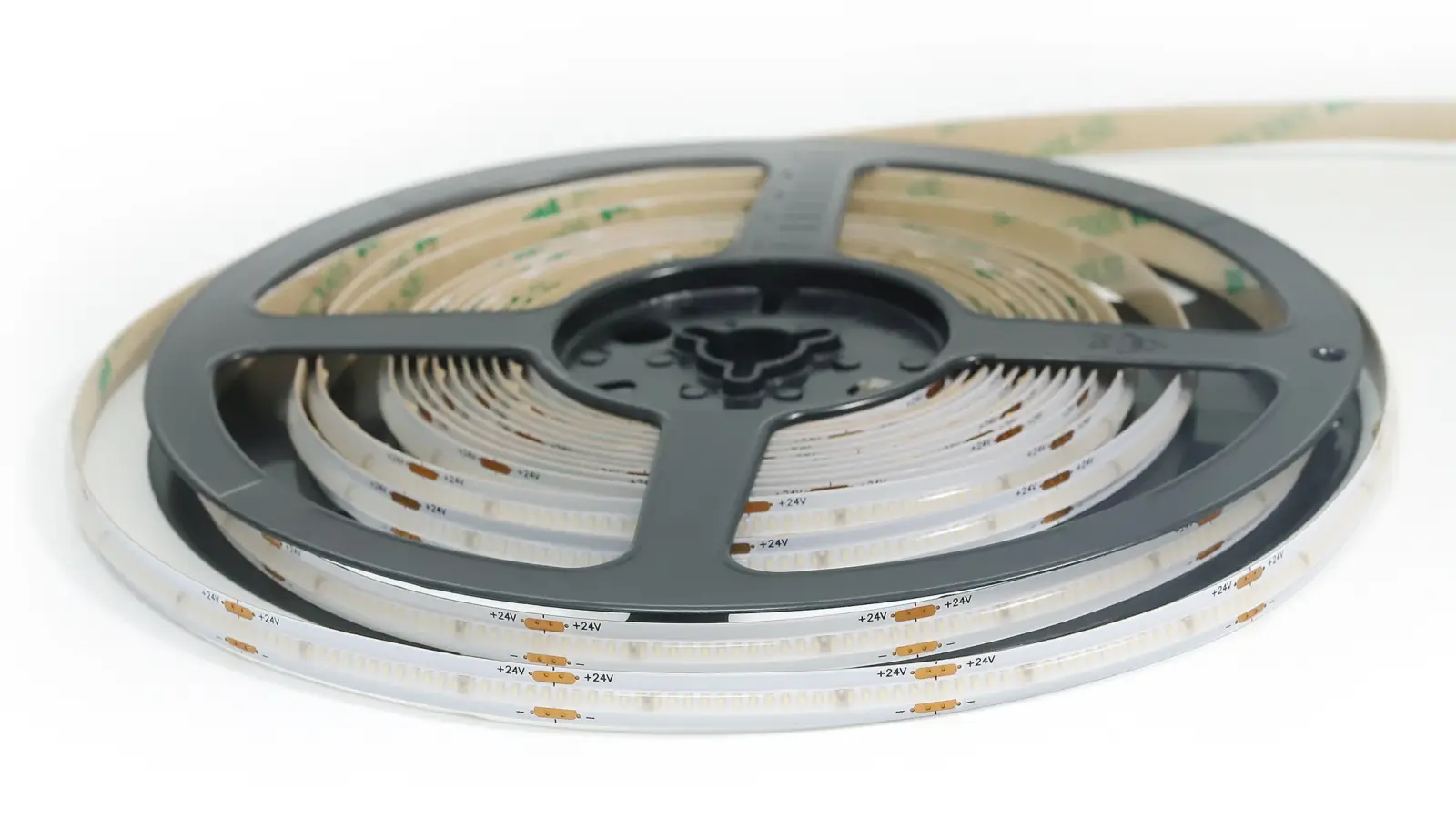
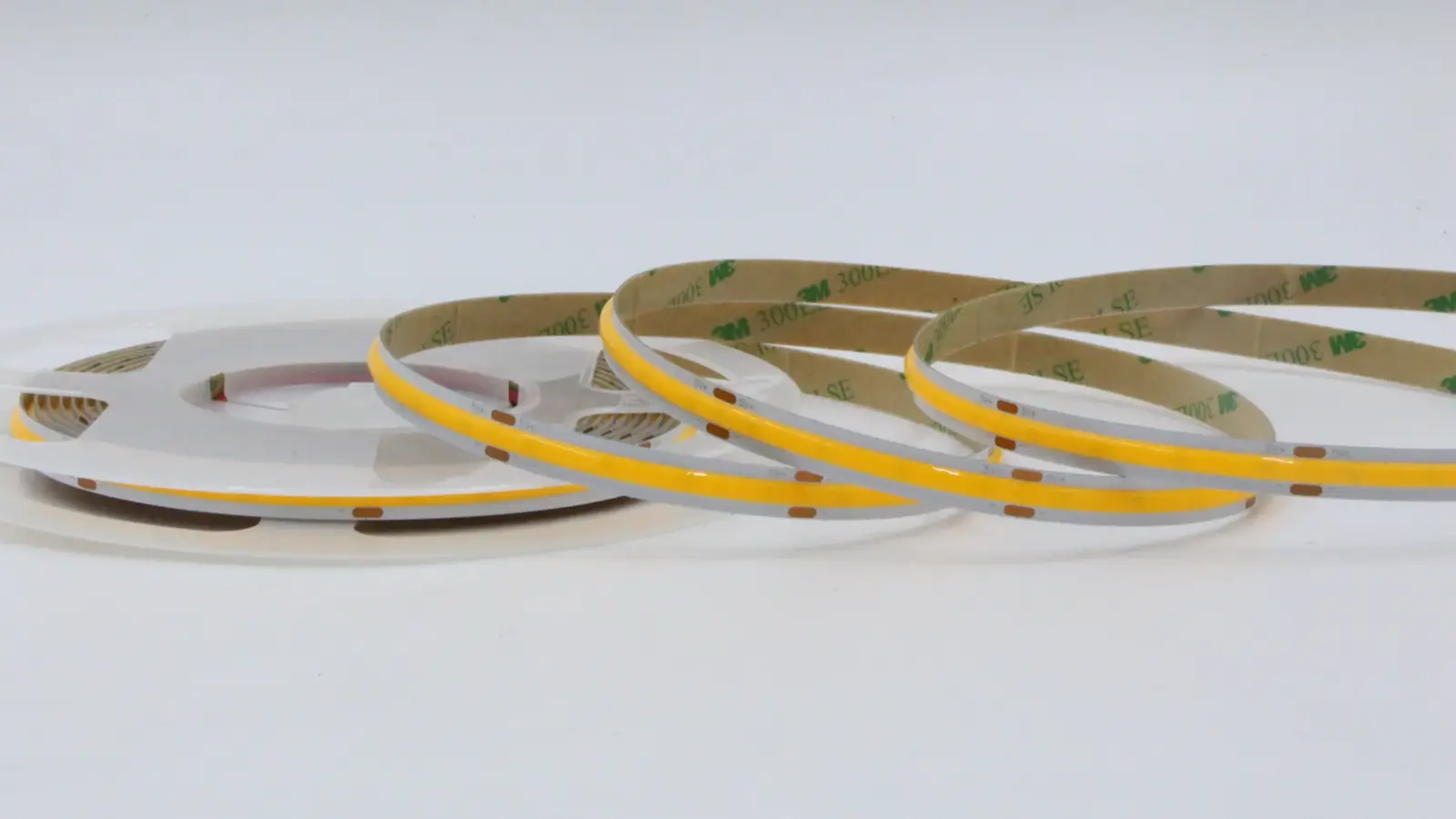
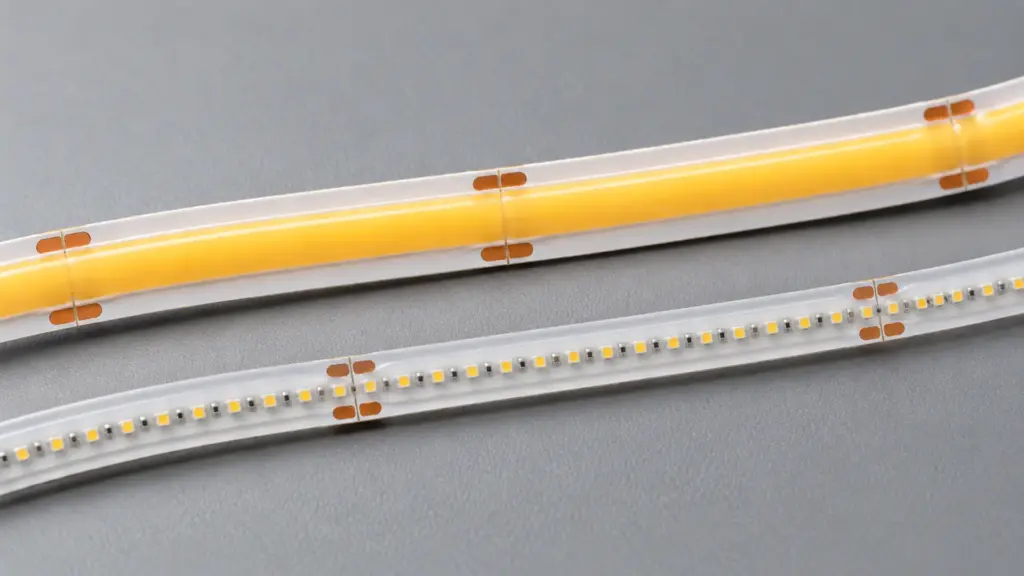
COB strip mounts bare LED chips directly on the flexible PCB and covers them with one continuous phosphor layer. A typical COB strip carries 280 to 800 chips per meter under that layer, which is why the output reads as a band instead of a row of points. The COB range is also called FCOB.
CSP strip is a different build. Each emitter is a chip-scale package: a flip-chip die bonded straight to the PCB, in a package barely larger than the chip. No gold bond wires and no plastic bracket surround each emitter, and a conventional SMD emitter carries both. The strip is produced reel-to-reel with no solder joints along the roll.
Read the claim carefully. Fewer parts is a statement about construction, and our CSP page makes it as a design intent. We do not have field failure data that compares CSP, COB and SMD, and this guide does not claim one. What COB delivers is optics: one layer, no gaps. What CSP delivers is a construction with fewer joints, plus a type-test list.
Line Quality: When Dots Show Up
CSP strip is still a row of emitters. At 320 LEDs per meter, UT-CSP-320-N places a separate emitter about every 0.12 in (3.1 mm). In a glossy reflection or a shallow reveal, the row of points shows. CSP builds above 540 LEDs per meter exist on our RGBW and tunable white pages, such as UT-RW840-12-CSP at 840 LEDs per meter; this section covers the standard 320 LEDs per meter build.
The fix inside the CSP family is UT-CSP-320-DD, the Dome Diffused build. A 3.6 mm domed, hazed extrusion opens the beam to 170.5°, against 151.6° on the standard build, and individual points are harder to see. The cost is output: 78–89 Lumens per watt: how much light the strip gives for the power it draws. Higher means less heat and less driver load per foot. against 97–103 lm/W. Spec Dome Diffused where the strip is seen directly or sits close to the viewing plane. Spec standard CSP where the strip is hidden and output matters more.
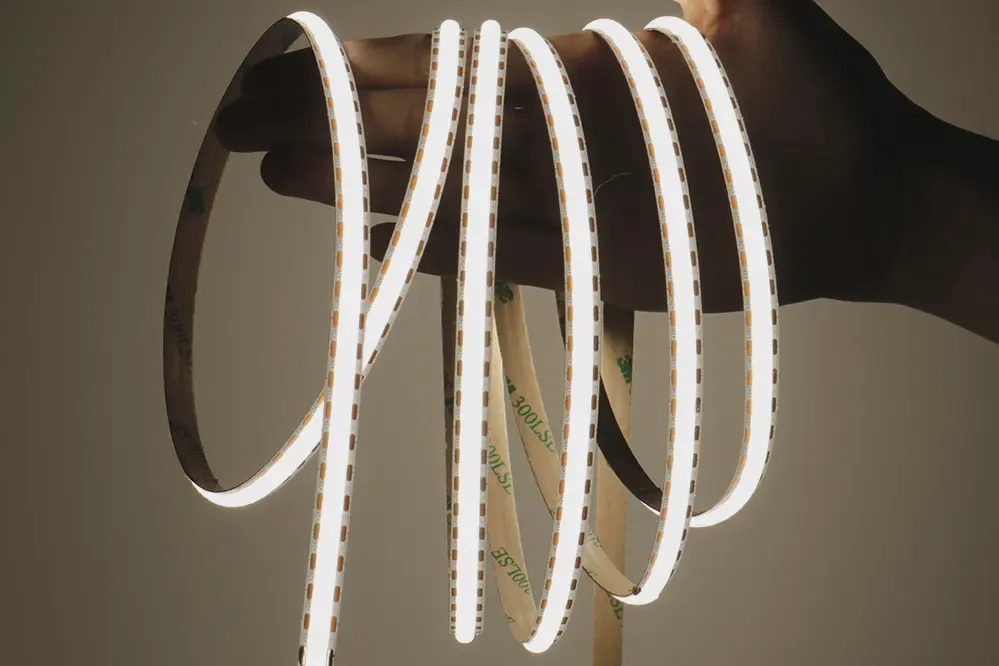
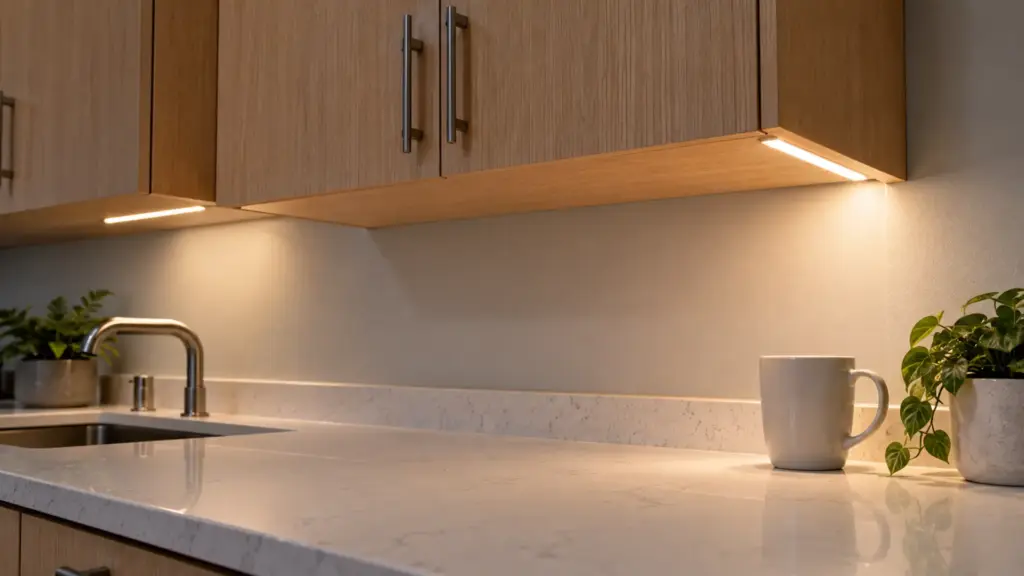
COB strip needs no diffuser to read as one line. That makes COB the default for coves without lenses, stone backlighting and glass display cases, where a dotted reflection would show. A diffuser channel still helps with either strip in a reveal. With CSP, leave room between strip and diffuser: the closer the diffuser sits to a row of emitters, the more points show through it.
Environment: What the CSP Type Tests Show
This is where CSP strip earns its place, and where the evidence is uneven. The CSP page lists type testing on file:
- Thermal shock from -40 °F to 212 °F (-40 °C to 100 °C) for 500 cycles.
- 1,000 hours at 185 °F (85 °C) and 85% relative humidity, with zero measured lumen loss.
- 15,000 on/off cycles.
- 7,000 cycles of 720° torsion, which covers installer handling around tight millwork returns.
- Continuous operation from -4 °F to 185 °F (-20 °C to 85 °C) ambient.
Sealed builds are described on the page as passing roughly 10 ft (3 m) submersion testing at IP67 and IP68. That is a lab result for the strip. It does not turn a sealed strip into an approved product for a wet location, because the location marking comes from the product’s listing and the whole system, not from the IP code. Our wet location guide covers the difference.
COB strip runs warm, not hot, and our COB page says a channel lowers its operating temperature and that any series above 800 LEDs per meter should be channel-mounted. Rated life is L70 ≥ 50,000 hours. We have no published COB environmental test list to set beside the CSP one. For a damp or cold location, request the COB environmental data with the quote before comparing, and do not assume it matches the CSP list.
Output and Color: Efficacy, CRI and Binning
UT-CSP-320-N delivers 296–316 lm/ft at 3.05 W/ft (10 W/m), which is 97–103 lm/W. UT-CSP-480-N raises output to 396–415 lm/ft at 4.39 W/ft (14.4 W/m) and drops to 90–94 lm/W. Density buys lumens and costs efficacy. SMD strip still leads on raw efficacy, and CSP trades a few lumens per watt for its construction.
The COB page lists Ra≥90 with ±2 SDCM binning across every reel, and the high-CRI model UT-SC320CRI97-15 reaches Ra≥97. CSP white families ship at CRI >90 with R9 >40, binned to SDCM ≤3 on flat-coated builds and ≤5 on Dome Diffused. For jobs that call for CRI 95 or higher, such as merchandise under close light, COB is the strip with a published number. COB lumen and efficacy figures are series-specific and ship with the quote.
One more efficacy trap: UT-CSP-320-68BJ, the black-jacket IP68 build, puts out 30–34 lm/W by design. Black silicone absorbs light so the run disappears in dark channels when it is off. The white-jacket UT-CSP-320-68WJ carries 60–66 lm/W.
Cut Length and Runs: Where the Numbers Split
Cut interval decides whether a short return ends in a dark stub. A cabinet return measured at 5.2 in leaves 1.26 in dark on a 1.97 in (50 mm) cut interval, and only 0.13 in dark on a 0.39 in (10 mm) interval. On CSP strip, the 24V Mini Cut builds trim at 0.98 in (25 mm), 0.79 in (20 mm) and 0.56 in (14.3 mm), and the 12V UT-CSP-300-MC12 trims at 0.39 in (10 mm). Standard CSP cuts every 1.97 in (50 mm). On COB strip, UT-C528-8-FC cuts at any point, the side-view UT-C320-6-SV cuts every 0.25 in (6.25 mm), UT-C320-6-SF cuts every 0.49 in (12.5 mm), and UT-C400-3 cuts at 0.39 in (10 mm).
Density on Mini Cut is a cut-interval decision, not a brightness decision. UT-CSP-160-MC, UT-CSP-200-MC and UT-CSP-280-MC each draw 2.93 W/ft (9.6 W/m) and deliver comparable output, listed at 85–100 lm/W. Request current test data with the quote.
Runs split on voltage. CSP strip is sold in 12V and 24V. COB strip adds 48V: UT-C480-8-48V feeds 65 ft (20 m) from one end with one driver and no mid-run injection. At 24V, UT-C384-8 runs 32 ft (10 m) with no voltage drop, and UT-C480-8 is 16 ft (5 m) per feed. A 60 ft corridor is one feed on UT-C480-8-48V, two on UT-C384-8 and four on UT-C480-8. For CSP, send the run length with the request and the configuration is matched to it.
Where Each Wins: Job-by-Job Picks
| Job | Start with | Why |
|---|---|---|
| Cove or reveal, no lens | COB | One continuous band without a diffuser |
| Stone or glass edge lighting | COB | No dotted reflection |
| Retail case at CRI 95+ | COB | Ra≥97 on UT-SC320CRI97-15, ±2 SDCM |
| Unheated exterior soffit or canopy | CSP | 500 thermal-shock cycles, -40 °F to 212 °F |
| Fixture that cycles on and off daily | CSP | 15,000 on/off cycles on file |
| Damp interior | CSP, sealed build | IP54 to IP68 builds; confirm the location marking |
| Cabinet or millwork return | Either | CSP to 0.39 in (12V), COB free-cut; decide on the surface |
| Corridor past 32 ft | COB 48V | 65 ft (20 m) single feed |
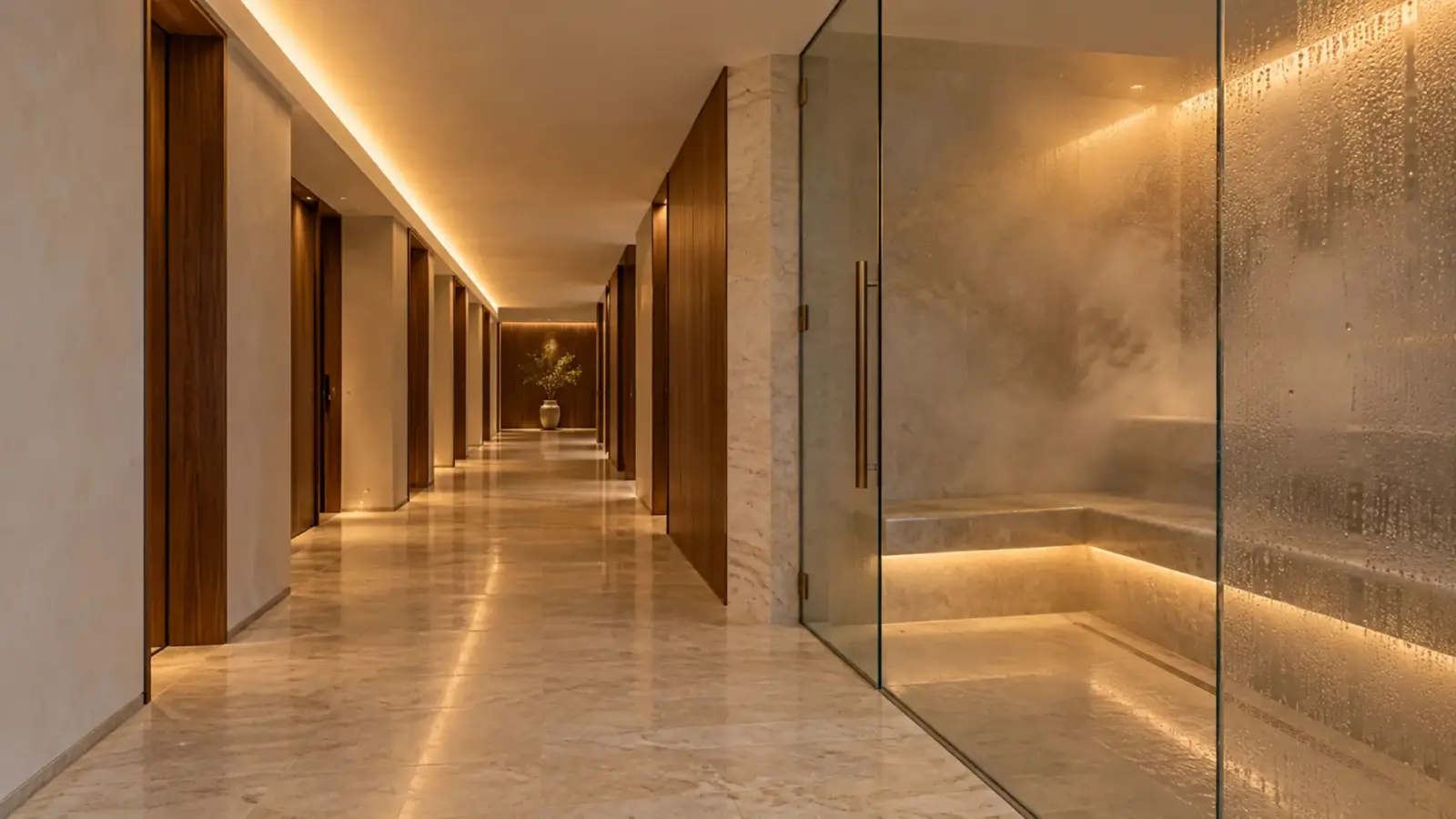
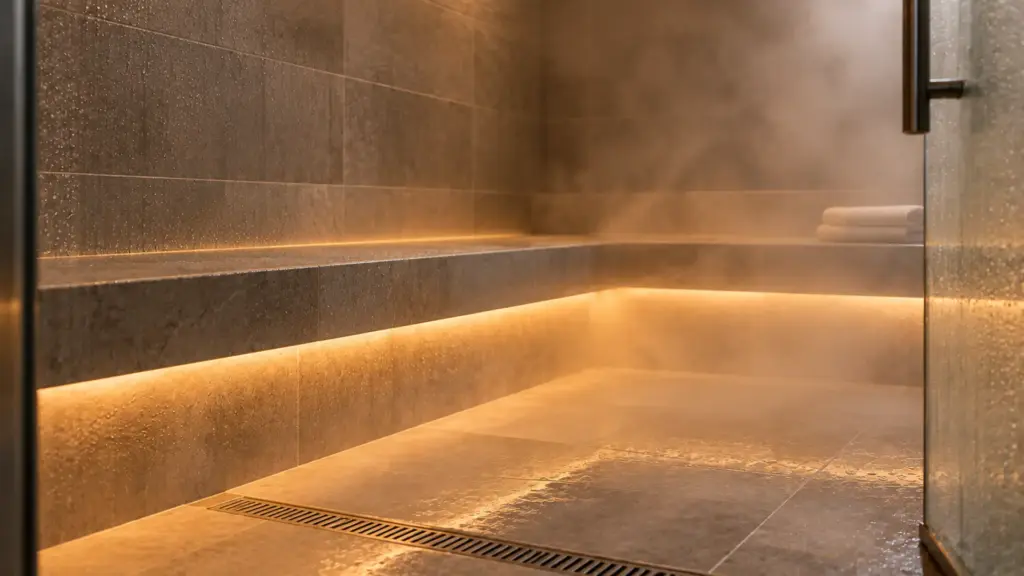
The table often splits inside one project. A hotel spa has a humid treatment area and a corridor cove outside it. The humid area starts from a sealed CSP build, with the listing checked for that location. The corridor cove is COB, because guests see that line every day from a few feet away and a row of dots would read as a defect.
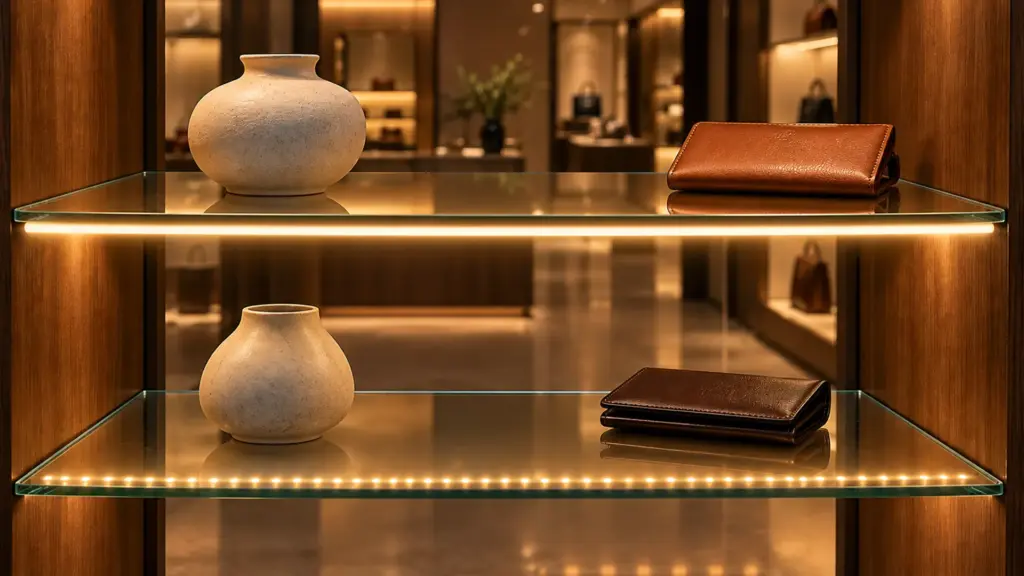
A retail job splits the same way. The display cases and shelf edges take COB at Color Rendering Index, 0–100: how truthfully the light shows colors next to a reference source. Ra≥90 is the usual bar for interiors. 95 or higher, where color and line quality are the spec. The entry canopy in a cold climate takes CSP, because that strip sits below freezing for months and cycles on and off every night. Quote them as two strip types on one drawing set rather than forcing one technology across the job.

Spec Mistakes: Four Ways These Get Misordered
- Using standard CSP as a continuous line. UT-CSP-320-N is a row of emitters, and in a glossy reflection the dots show first. Choose UT-CSP-320-DD for a visible run, or COB.
- Choosing the black jacket by lumens. UT-CSP-320-68BJ is for runs that must vanish when off, not for output.
- Choosing Mini Cut by density. All three 24V builds draw the same 2.93 W/ft, so density only changes the cut interval.
- Reading a CSP test list as a COB comparison. The list belongs to CSP. Ask for COB data separately and compare the same tests.
FAQ
Is CSP better than COB?
Neither is better across the board. COB strip is the better choice when the strip is visible and line quality is the spec. CSP strip is the better choice when heat, humidity, cold or switching cycles are the spec. Ask what the job punishes, then pick.
Does CSP LED strip show visible dots?
Standard CSP strip can. At 320 LEDs per meter, UT-CSP-320-N is a row of separate emitters. UT-CSP-320-DD hazes them with a 3.6 mm domed extrusion and a 170.5° beam, at 78–89 lm/W. COB strip shows no dots without a diffuser.
Which is more efficient, CSP or COB?
On our spec tables, UT-CSP-320-N delivers 97–103 lm/W and UT-CSP-480-N delivers 90–94 lm/W. COB efficacy is series-specific and ships with the quote. Compare datasheet values at the same CCT and CRI rather than comparing technology labels.
Can CSP strip be cut shorter than COB?
COB strip goes shorter. UT-CSP-300-MC12 cuts every 0.39 in (10 mm), the shortest CSP interval. COB UT-C400-3 matches it at 0.39 in (10 mm), side-view UT-C320-6-SV cuts every 0.25 in (6.25 mm), and UT-C528-8-FC cuts at any point.
Which handles heat and humidity better?
CSP strip has the published type-test list: 500 thermal-shock cycles from -40 °F to 212 °F and 1,000 hours at 185 °F (85 °C) and 85% RH with zero lumen loss. We have no published COB list to compare, so request COB data for a wet or cold location. Neither list replaces the location marking on the listing.
One Job, Two Strips
Choose COB strip when the strip or its reflection is seen and the line has to read as one band. Choose CSP strip when the environment does the damage, and use Dome Diffused CSP on a visible run. Where both matter, split the job into two strip types.
Send the run lengths, the viewing distance, the environment, the CCT and the CRI target. We will mark each run COB or CSP on the drawings and return the driver schedule with it: request a quote.