LED strip is made in stages: LEDs are packaged and sorted, printed onto a flexible circuit board with solder paste, placed, reflow-soldered, inspected and lit, joined into reels, aged under power, then coated or sleeved and packed. The stage most buyers never ask about is binning, and it decides whether the second order matches the first.
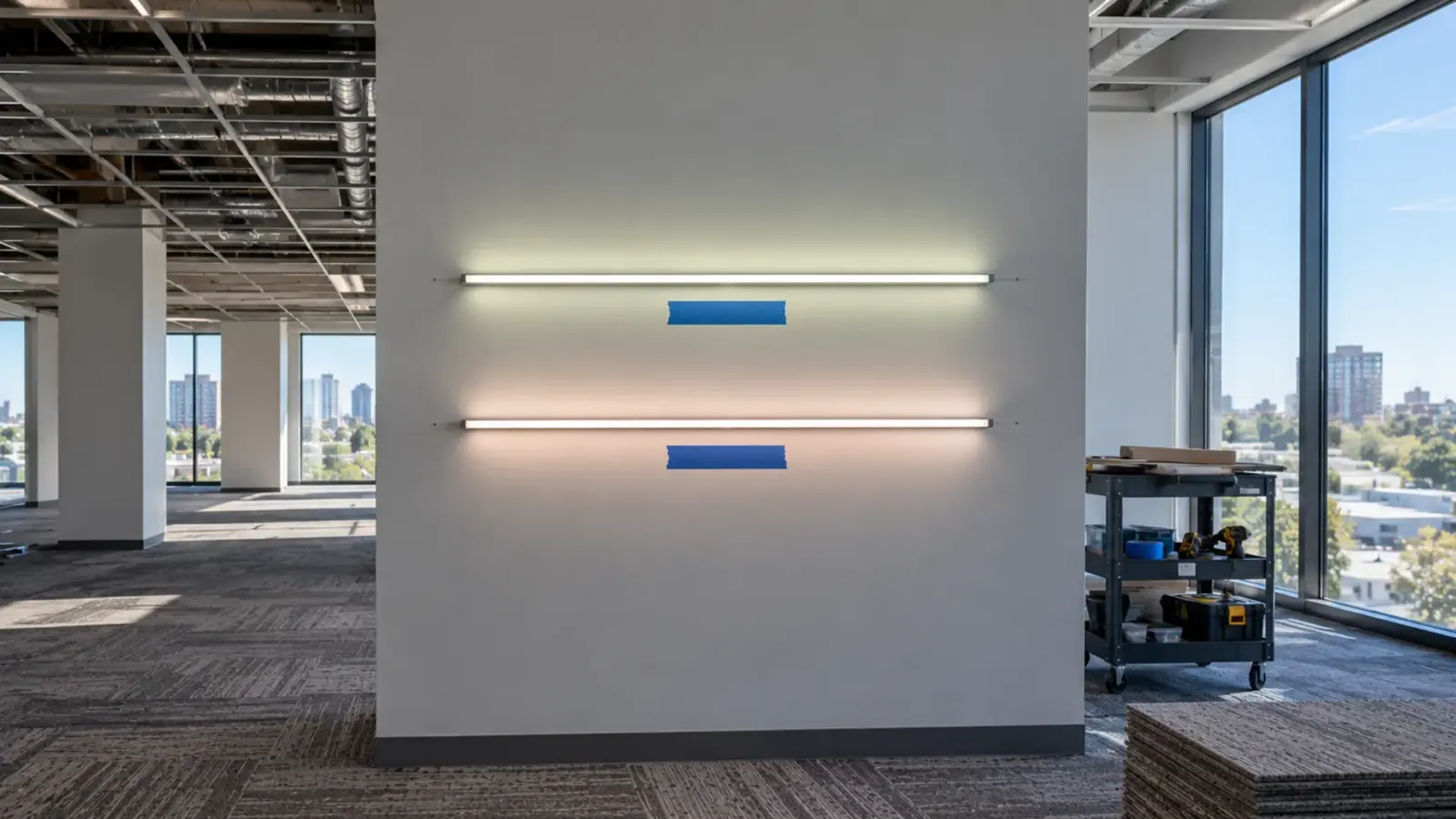
The first order is perfect. The second order, six months later, goes up next to the first and the corridor has two whites. Nothing failed. The LEDs on the second order simply came from a different bin, and nobody asked which bin the first order used. That is the most common production-related problem contractors meet, and it starts at a step that happens before the strip exists. This article walks through how strip is made, what each stage decides about the product on your job, and what to ask a supplier so you get the same strip twice.
The Board: Flexible Circuit and Copper
A strip starts as a flexible printed circuit board, usually called FPCB: a thin film with copper tracks on it, printed in long panels. Two properties of the board follow the strip for its whole life:
- Copper. The copper carries current along the strip and spreads heat away from each LED. Thin copper means more voltage drop along the run and hotter LEDs.
- Width and layout. The width sets which channels the strip fits and how much copper there is. The layout sets where the cut marks fall.
The board is easy to change in a specification and hard to see once the strip is coated, which is why it is one of the first places a cheaper strip saves money. Our guide to high-quality vs cheap LED strip shows where those savings hide.
Placement and Reflow
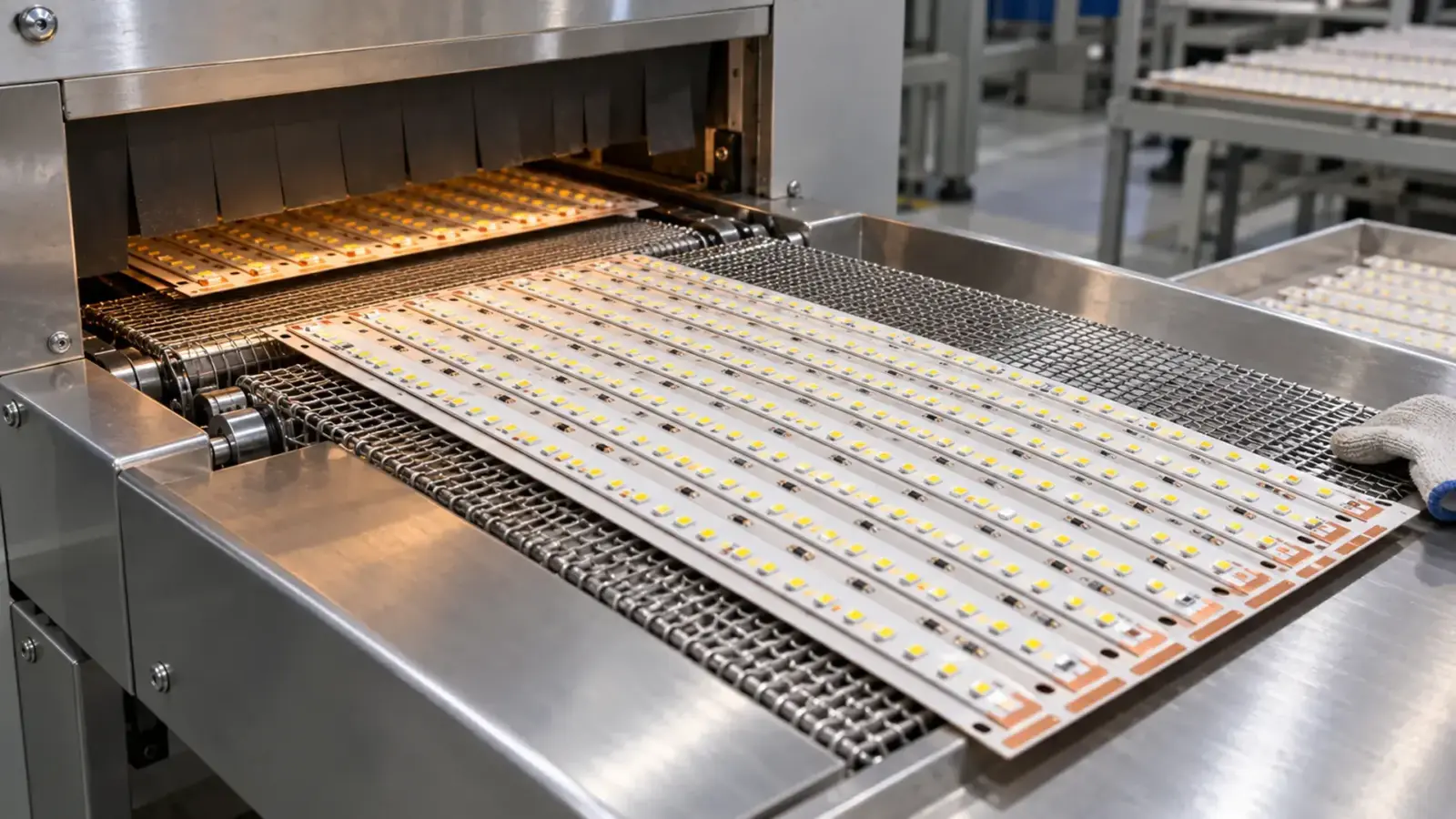
The board then goes through surface-mount assembly. According to LEDYi’s description of the production flow, solder paste is printed onto the pads, the LEDs and resistors are placed by machine, and the board passes through a reflow oven that melts the paste and solders every part at once.
Two details matter to a buyer:
- Moisture. LED packages absorb moisture from the air. According to LEDYi, they are dried before reflow, because moisture trapped in a package can damage it when the oven heats it. A supplier who skips that step produces strip that passes inspection and fails early.
- Heat. Reflow is hard on LED packages. One patent on strip manufacturing describes avoiding reflow altogether because of the high temperature applied to the LED packages. A well-run reflow profile keeps that stress within what the package is rated for.
Neither step is visible on the finished strip. Both show up later as early failures.
Inspection and Electrical Test
After reflow, the boards are checked. According to LEDYi, inspectors look at the board and light the LEDs to confirm that every part is soldered properly. Automated optical inspection catches misplaced or missing parts; lighting each section catches dead LEDs and open joints.
This is where obvious defects stop. What it does not catch is a joint that works today and cracks after a few hundred heat cycles, which is why the aging stage exists.
Binning: The Step Buyers Skip
- 1BoardFPCBCopper, width
- 2Placement and reflowSMTPaste, place, solder
- 3InspectionOptical, light-upObvious defects
- 4BinningColor groupsDecides reorders
- 5Reels and agingBurn-inJoints, weak parts
- 6FinishingCoat, tape, labelBin on the label
LEDs are not all the same, even from one production line. Their color and brightness vary slightly from one to the next. Binning sorts them into groups, or bins, of LEDs that match closely in color, and often in brightness and forward voltage.
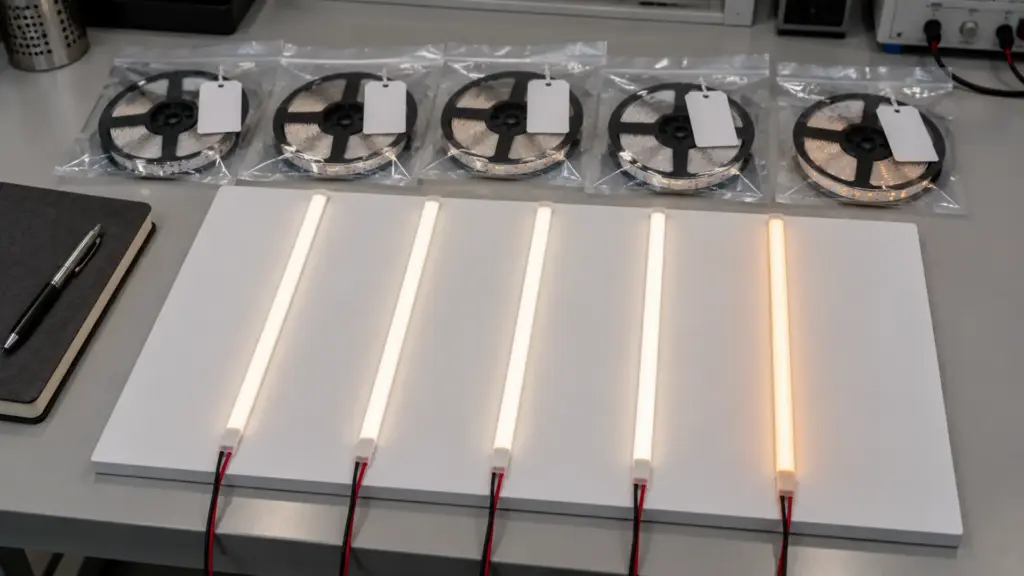
Why it matters on a job:
- Within one strip, LEDs from one bin give an even color along the run.
- Between reels of one order, using one bin keeps runs matching side by side.
- Between orders, matching the bin of the first order is the only way the second order looks the same.
How tight the bins are is expressed as a tolerance. Our CSP LED strip page, for example, states binning to SDCM 3 or tighter on flat-coated builds and SDCM 5 on Dome Diffused. Our guide to SDCM and color consistency explains what those numbers mean, and our article on why white strip looks green or pink covers the tint side.
The color itself is set even earlier. According to a supplier’s description of its process, the phosphor that turns blue LED light into white is weighed and mixed, and that recipe fixes the color temperature and color rendering of everything made from it. Binning then sorts what that recipe produced.
For a buyer, binning is the question to ask before the first order, not after the second: which bin will this order use, can the next order match it, and will the bin be recorded on the shipment?
Reels, Joints and Aging
Boards are made in short panels, not long reels. According to LEDYi, sections are made at about half a meter and then soldered together to make a 5 m reel. Every reel therefore contains joints made at the factory. Good joints are invisible; poor ones are the first place a reel fails.
Then comes aging, also called burn-in. Finished strip is run under power for a period to catch the failures that inspection cannot: weak joints, marginal LEDs, components that fail early. According to LEDYi, its strip runs 48 hours of aging before shipment, with additional testing for waterproof strip. Durations differ between suppliers, and the question is less “how many hours” than “is every reel aged, or a sample?”
Our CSP page describes a related idea at the product level: its sealed builds are verified through 1,000 hours of testing. That is a product validation, not a production burn-in, but both answer the same buyer’s question: what has this strip already survived?
Waterproofing and Finishing
Strip for damp and wet locations is coated or sleeved after aging. The construction decides the rating: a silicone top coat for rain and splash, an extruded sleeve for temporary immersion, a full silicone tube for continuous submersion, as our outdoor range describes them. Each process needs its own care: bubbles in a coating, a poorly sealed end or a sleeve with trapped moisture all let water in later. Our guide to how LED strip is waterproofed shows the constructions.
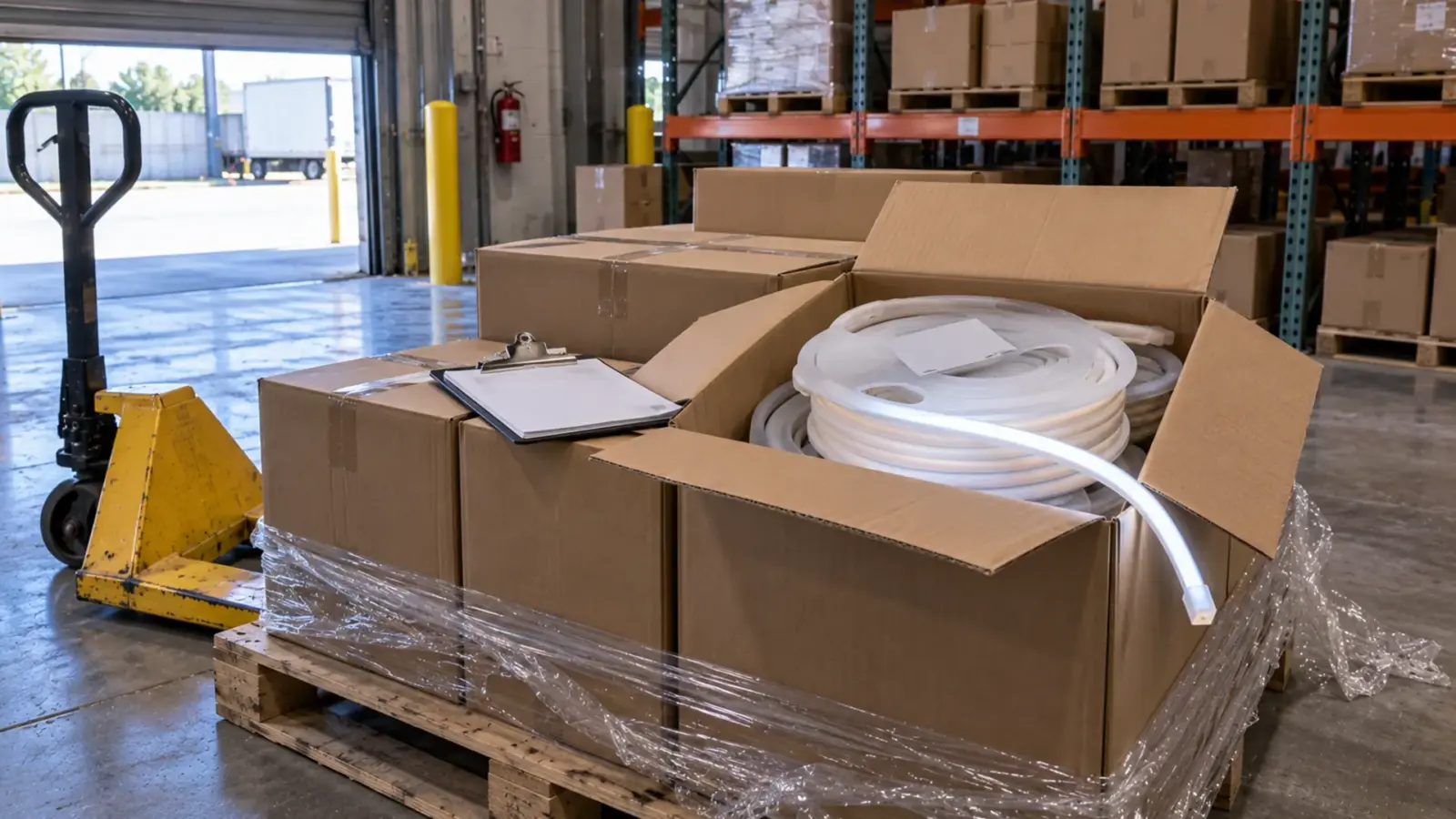
Last, the adhesive tape is applied to the back, the reels are labeled and the strip is packed. Label accuracy matters more than it seems: the label is where the model, the batch and the bin are recorded, and it is what a contractor reads when a repair needs a matching reel.
Where Cheap Production Cuts Corners
Each stage has a cheaper version, and most of them are invisible when the reel arrives:
- Thinner copper on the board, which shows later as voltage drop and heat.
- Wider bins, or no stated bin at all, which shows when runs are compared side by side.
- No moisture control before reflow, which shows as early LED failures.
- Fewer or weaker factory joints checks, which shows as a reel that fails at the same point on several jobs.
- Sample aging instead of full aging, which lets weak reels ship.
- Thin or bubbled coatings on waterproof strip, which let water in after the first season.
None of these is detectable by looking at a new reel on a bench. They are detectable by asking the questions below and by asking for the records. A supplier who can answer with paperwork is usually a supplier who does the steps.
What a Good Shipment Comes With
A shipment from a well-run line arrives with more than reels:
- Labels on every reel with the model, the batch or bin, and the date.
- Binning records for the order, so a later reorder can be matched.
- Test records, at least for the aging and the electrical test.
- The datasheet for the exact model, with the real figures.
- Installation instructions with the cut points, the sealing method and the supply type.
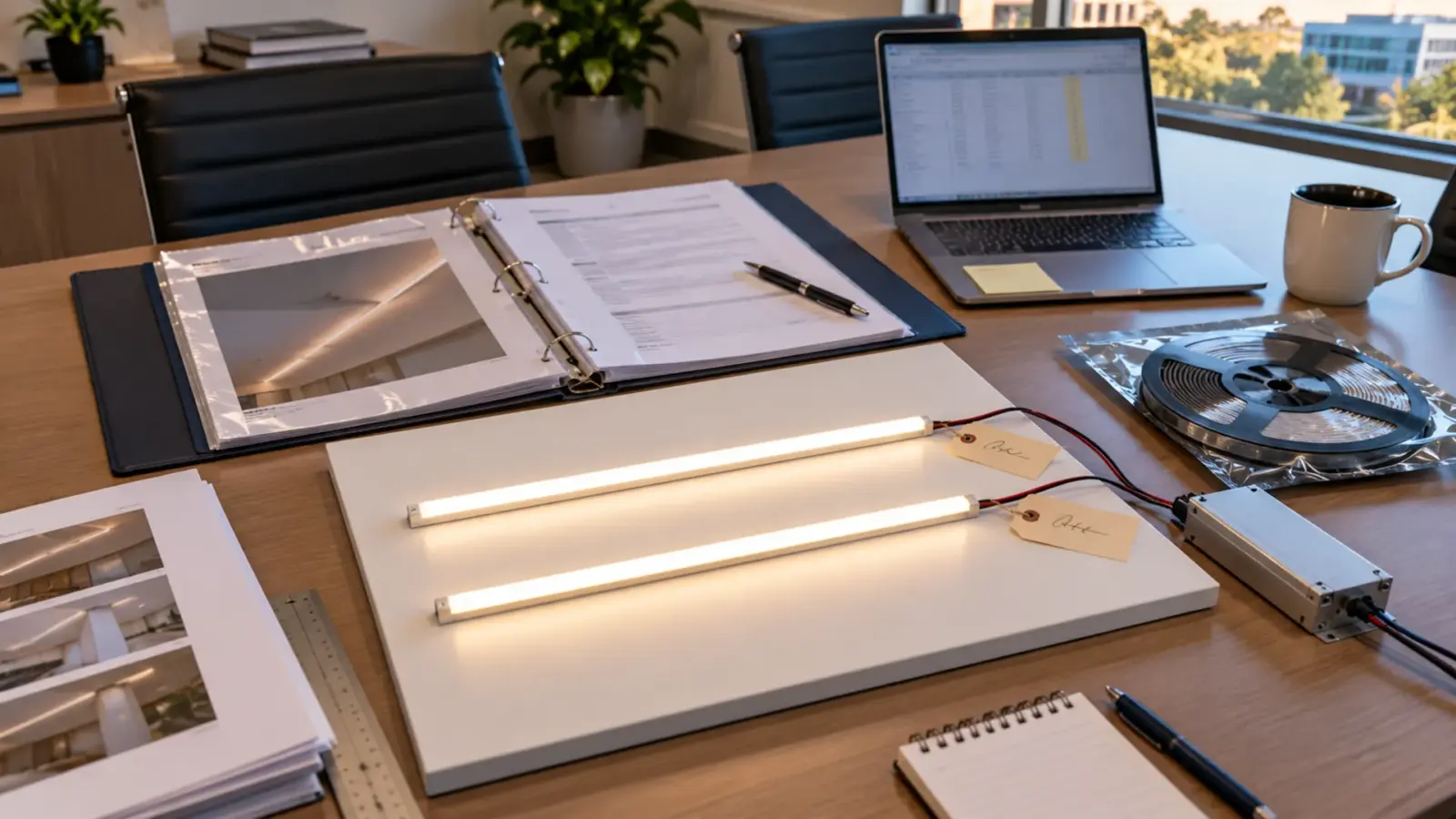
File them with the job. When a run fails years later, or a phase-two order has to match phase one, those papers are what make the answer quick. Our guide to the LED strip submittal package shows which of them a contractor needs before installation.
What to Ask Your Supplier
| Ask | Why |
|---|---|
| Which bin will this order use, and is it on the label? | Matching reorders |
| Can a reorder match the bin of the first order? | Phased jobs and repairs |
| Are binning and test records supplied with the shipment? | Evidence, not promises |
| Is every reel aged, or a sample? | Early failures |
| How are factory joints made and checked? | The first weak point |
| How are changes to parts or materials notified? | A changed build looks different |
| Is the approved sample kept as the reference? | Disputes about color |
For our own supply, the arrangement is the one stated on our OEM and private label page: production runs through our manufacturing partners under our quality checks; binning and test records are shared before anything ships, and the approved sample is the reference for every run.
Our guide to choosing a factory, importer or distributor explains who holds those records on each supply channel.
Reading a Reel Label
The reel label is the one production record every contractor already holds, so it is worth reading. A useful label shows the model, the color temperature and CRI, the voltage, the length, and a batch or bin code. If the label shows only a model and a color temperature, there is nothing to match a reorder against. Photograph the labels of the reels that go into each visible run before they are thrown away; it takes a minute and it is the record that answers “which bin was that?” two years later.
The Short Version
- Strip is made in stages: board, placement and reflow, inspection, binning, reels and joints, aging, finishing.
- The board’s copper and width decide voltage drop and heat for the strip’s whole life.
- Moisture control and the reflow profile are invisible on the strip and visible in its failure rate.
- Binning decides whether the second order matches the first. Ask about it before the first order.
- Aging catches the failures inspection cannot; ask whether every reel is aged.
- Ask for records with every shipment, and keep the approved sample as the reference.