Constant-current LED strip beats 24V constant voltage when a run is long and can only be fed from one end. Our constant-current designs feed up to 65 ft from a single end, where standard 24V strip needs a feed every 16 ft. You give up some output per foot. When feeds are easy to add, constant voltage is simpler.
Five points decide it:
- Run length. Standard 24V strip feeds 16 ft; constant-current and 48V designs feed up to 65 ft from one end.
- Feed access. If you can bring power into the middle of a run, constant voltage with extra feeds is usually fine.
- Output per foot. Our constant-current COB runs at 2.3 W/ft against 3.2 W/ft on the standard 24V COB.
- Control. Check that the dimming method works with the strip and the driver the datasheet calls for.
- Driver type. Constant-voltage and constant-current drivers are not interchangeable. Use exactly what the datasheet names.
What “Constant Current” Means on a Strip
A standard strip is constant voltage: the driver holds a fixed voltage, 24V for example, and every segment along the strip is connected in parallel to that voltage. Each segment has its own small resistor to set its current. The problem is the copper: the further a segment is from the feed, the more copper the current has passed through and the lower the voltage it receives. The far end gets less voltage, less current and less light. That is voltage drop, and it is why standard 24V strip in our range lists 16 ft (5 m) per feed. Our guide to LED strip voltage drop explains the math.
A constant-current strip regulates current instead. Each segment holds its current steady across a range of input voltage, so a segment at the far end, receiving a little less voltage, still draws the same current and gives the same light. The run can be much longer before the voltage falls below what the regulators need.
There are two ways this is done, and the difference matters for the driver:
- Current regulated on the board. According to Aspect LED, many strips sold as constant current for long runs, including “endless” strips, still run from a constant-voltage supply and use current-regulating chips on the board to hold each segment steady.
- Current regulated at the driver. A true constant-current system uses a constant-current driver that sets the current for the whole load.
Our constant-current strips are the second kind: they run on a constant-current driver, not on a standard 24V constant-voltage supply. For any other maker’s strip, the datasheet says which kind it is and which driver it needs; that is the first line to read.
Gate 1: How Long Is the Run?
Start with the longest continuous run on the drawings and compare it with the run per feed of each option. From our spec tables:
| Option | Model example | Run from one feed |
|---|---|---|
| Standard 24V COB | UT-C480-8 | 16 ft (5 m) per feed |
| 24V COB, low drop | UT-C384-8 | 32 ft (10 m), no voltage drop |
| 48V SMD | UT-S2835-160-48V | 49 ft (15 m), single feed |
| 48V COB | UT-C480-8-48V | 65 ft (20 m), single feed |
| 24V constant current SMD | UT-S2835-140-CC | 65 ft (20 m) |
| 24V constant current COB | UT-C480-8-CC | 65 ft (20 m) |
According to Aspect LED, constant-current strips across the market run 32 to 98 ft from one connection, against 16 to 32 ft for most constant-voltage strips. Our COB page puts our 48V and 24V constant-current designs at up to 65 ft (20 m) from a single end: one driver, no mid-run injection, no visible voltage drop.
If the longest run is under 16 ft, standard 24V needs no special treatment. Between 16 and 65 ft, the question becomes the next gate.
Gate 2: Can You Feed It in the Middle?
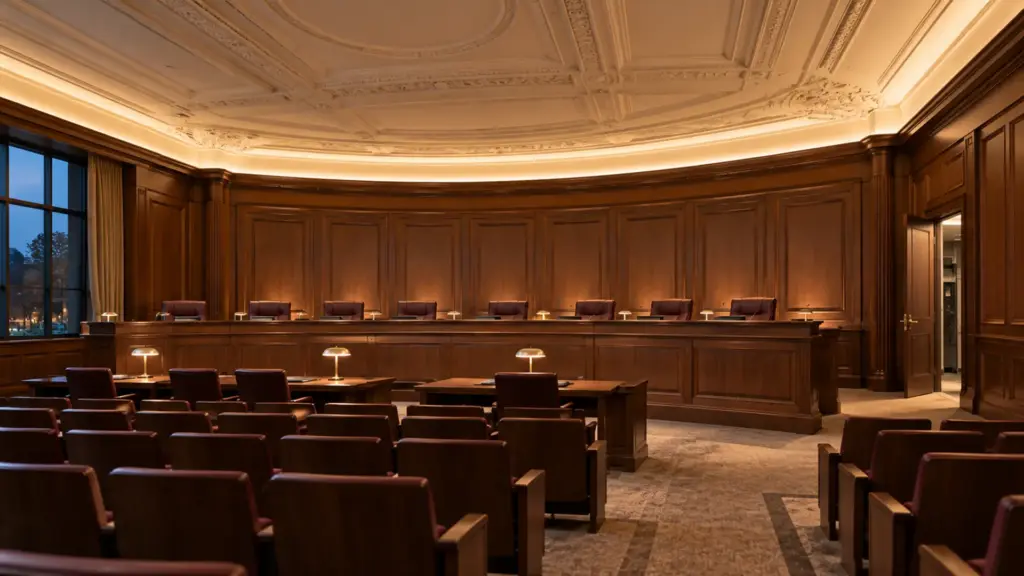
A long run of standard 24V strip is not a problem if power can reach it at several points. A 60 ft cove on 16 ft runs needs four feeds; if the cove sits under an accessible ceiling and the drivers can sit above it, four feeds are four short cables.
The decision changes when the run cannot be fed in the middle:
- A cove under a sealed plaster ceiling with access only at one end.
- A handrail or a stair stringer where cables cannot be hidden along the way.
- A facade line where every feed is a penetration through the building envelope.
- A display case or a long millwork run with one place to hide a driver.
- A heritage interior where new cable routes are not allowed.
In those cases one feed from one end is not a convenience; it is the only option. That is where constant-current and 48V strips earn their place. On a job like the 60 ft corridor described in our guide to where the money goes on a strip job, going from four feeds to one also removes three home runs and three drivers from the labor and material lines.
Gate 3: How Much Light per Foot?
The long run has a cost in output. From our tables:

| Model | Power per foot |
|---|---|
| UT-C480-8 (24V CV) | 3.2 W/ft |
| UT-C480-8-CC (24V CC) | 2.3 W/ft |
| UT-C480-8-48V (48V) | 2.4 W/ft |
| UT-S2835-140-CC (24V CC SMD) | 3.7 W/ft |
The constant-current COB draws less power per foot than the standard 24V COB on the same 480-LED board, so it gives less light per foot. According to Aspect LED, constant-current strips typically give less light per foot than high-output constant-voltage strip and suit accent and ambient lighting best.
That is rarely a problem for a cove or a wall graze, and it can be a problem for task lighting or for a slot that has to light a work surface. If the run is long and the output has to be high, the answer may be a higher-output constant-current SMD build, two parallel lines, or constant voltage with the feeds the job allows. Compare lumens per foot on the datasheets, as our guide to lumens per foot explains.
Gate 4: Dimming and Control
Both kinds of strip dim, but the combination has to be checked.
- Constant-voltage strip dims with almost any constant-voltage dimming driver or decoder: 0-10V, TRIAC, DALI, DMX.
- Constant-current strip dims through its constant-current driver. Our constant-current strips run on a constant-current driver, so the dimming method is set by that driver’s control input; choose a constant-current driver with the input the controls use, such as 0-10V. Some other makers’ long-run strips regulate current on the board and run from a constant-voltage supply; those follow constant-voltage dimming.
In both cases, test the low end on a sample. The on-board regulators can behave differently near the bottom of the range, and long runs are exactly where an uneven low end is most visible. Our driver and dimmer compatibility test gives the steps.
48V: The Third Option
Constant current is not the only way to a long run. Raising the voltage lowers the current for the same power, which lowers the voltage lost in the copper. Our 48V strips use that approach: UT-C480-8-48V runs 65 ft (20 m) from a single feed and UT-S2835-160-48V runs 49 ft (15 m). According to Signlite’s comparison of 12V, 24V and 48V systems, 48V strip typically reaches about 15 to 20 m.
48V and constant current reach similar lengths by different routes. 48V keeps the strip constant voltage, so drivers and dimming work like a standard system at a higher voltage. Constant current keeps 24V and regulates on the board or at the driver. Which is better depends on the drivers and controls the rest of the job uses, and on the Class 2 limits, which our guide to 12V vs 24V vs 48V covers.
Drivers: Do Not Mix the Two
According to Ultra LEDs’ buyer guide, constant-voltage and constant-current drivers are not interchangeable. A constant-current driver on a constant-voltage strip, or the reverse, can leave the strip dark, overdrive it, or damage it.
Three rules prevent it:
- Read the datasheet’s input line, not the product name. “Constant current” in a strip’s name does not say which driver it takes.
- Order the driver with the strip, so the pair is checked once.
- Label the drivers on site with the strip they feed. A replacement driver years later is the moment the mix-up happens; our guide to mixing strip, driver and controller brands covers replacements.
For load sizing on either type, our guide on how to size an LED strip power supply applies.
Worked Example: A 62 ft Gallery Cove
A gallery has a 62 ft cove along one wall, under a plaster ceiling with access only at the room’s service end.
- Standard 24V COB at 16 ft per feed needs four feeds. Three of them would be in the middle of a sealed ceiling: not possible without cutting plaster.
- 24V COB at 32 ft with no voltage drop needs two feeds, one of them in the middle. Still not possible.
- 48V COB or 24V constant-current COB, both at 65 ft from a single end, cover the whole cove from the service end with one feed.
The choice between the last two comes down to output and system. Both draw about 2.3 to 2.4 W/ft, which suits a gallery wall wash. The 48V option uses a constant-voltage driver like the rest of a standard system; the constant-current option needs a constant-current driver, so check that one with the right dimming input, such as 0-10V, fits the gallery’s controls. Either way, the cove goes up with one feed and no plaster cut.
Mistakes on Long Runs
- Reading the reel length as the run length. A 16 ft reel of standard 24V strip and a 65 ft run of constant-current strip are different numbers. The run per feed on the datasheet is the limit, whatever the reel holds.
- Extending a constant-current run past its limit. The regulators hold the current only while the voltage at each segment stays inside their range. Past the rated run, the far end dims just as a standard strip would.
- Feeding long runs with undersized cable. The cable from the driver to the feed end adds its own voltage drop before the strip starts. On a long run fed from a remote driver, size the cable for the whole distance.
- Mixing standard and constant-current strip in one visible run. They give different light per foot at the same setting, and the step shows at the joint.
- Assuming every long-run strip uses the same driver. Two long-run products from two makers can need different driver types. Read each datasheet.
- Forgetting Class 2. One feed for 65 ft at 2.3 W/ft is about 150 W, more than one 60 W Class 2 driver carries. The single feed may need a larger, non-Class 2 driver or a split into Class 2 circuits, which changes the wiring method behind the wall.
Before You Order
- The longest run on the drawings is measured.
- Each run is compared with the run per feed of each option.
- Feed access along each run is known: middle feeds possible or not.
- Output per foot is checked against the design’s needs.
- The datasheet’s driver type is read, and the driver is ordered with the strip.
- Dimming is tested on a sample at the low end.
- Drivers are labeled with the strip they feed.
- The Class 2 status of each long single-feed run is checked against its total load.
We supply standard 24V, 48V and constant-current strip in COB and SMD, with the drivers each one needs. Send the run lengths and where power can reach each run, and we will propose the option that covers every run with the fewest feeds and the right output: request a quote. Run lengths for every model are on our COB LED strip page.