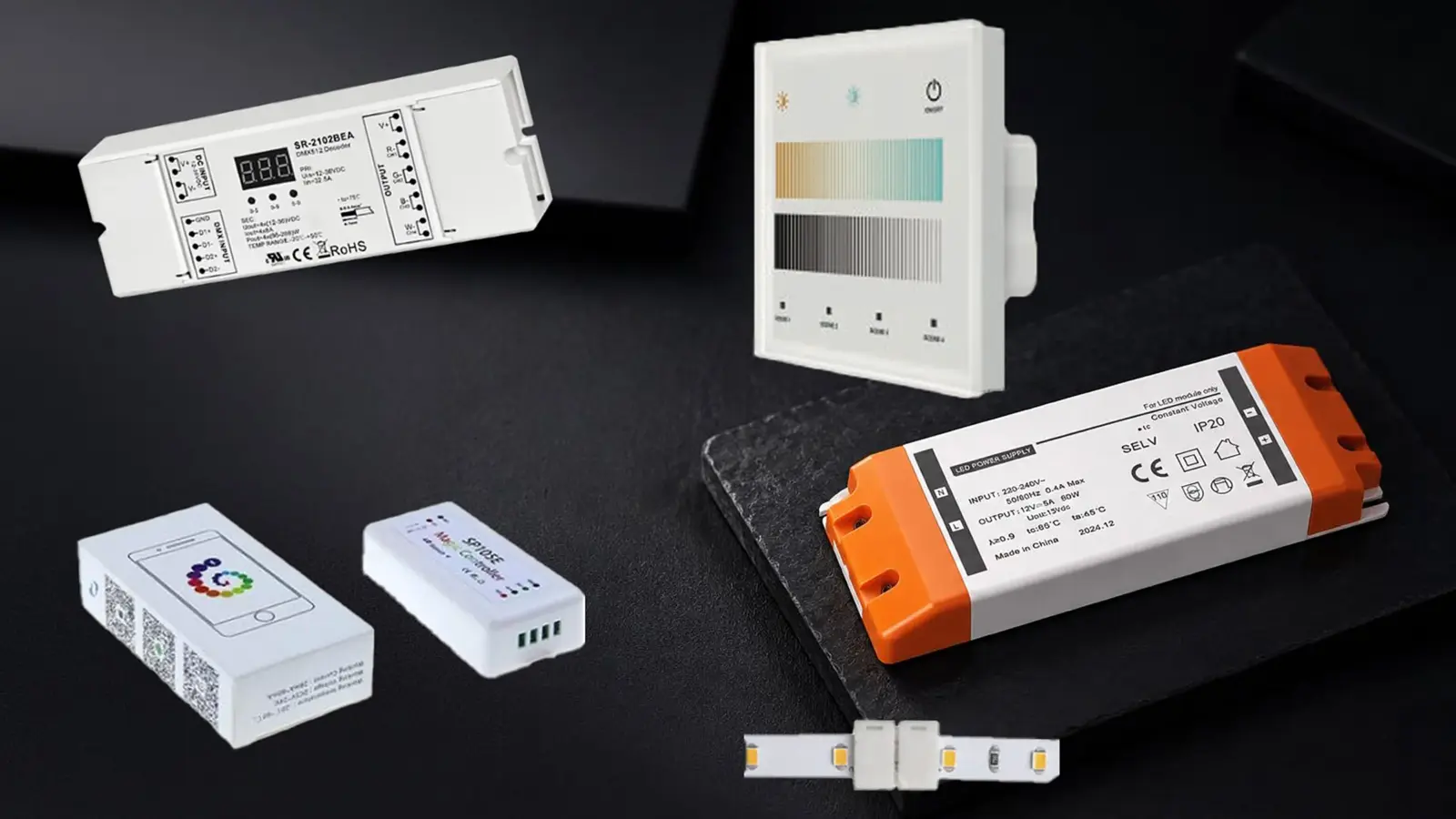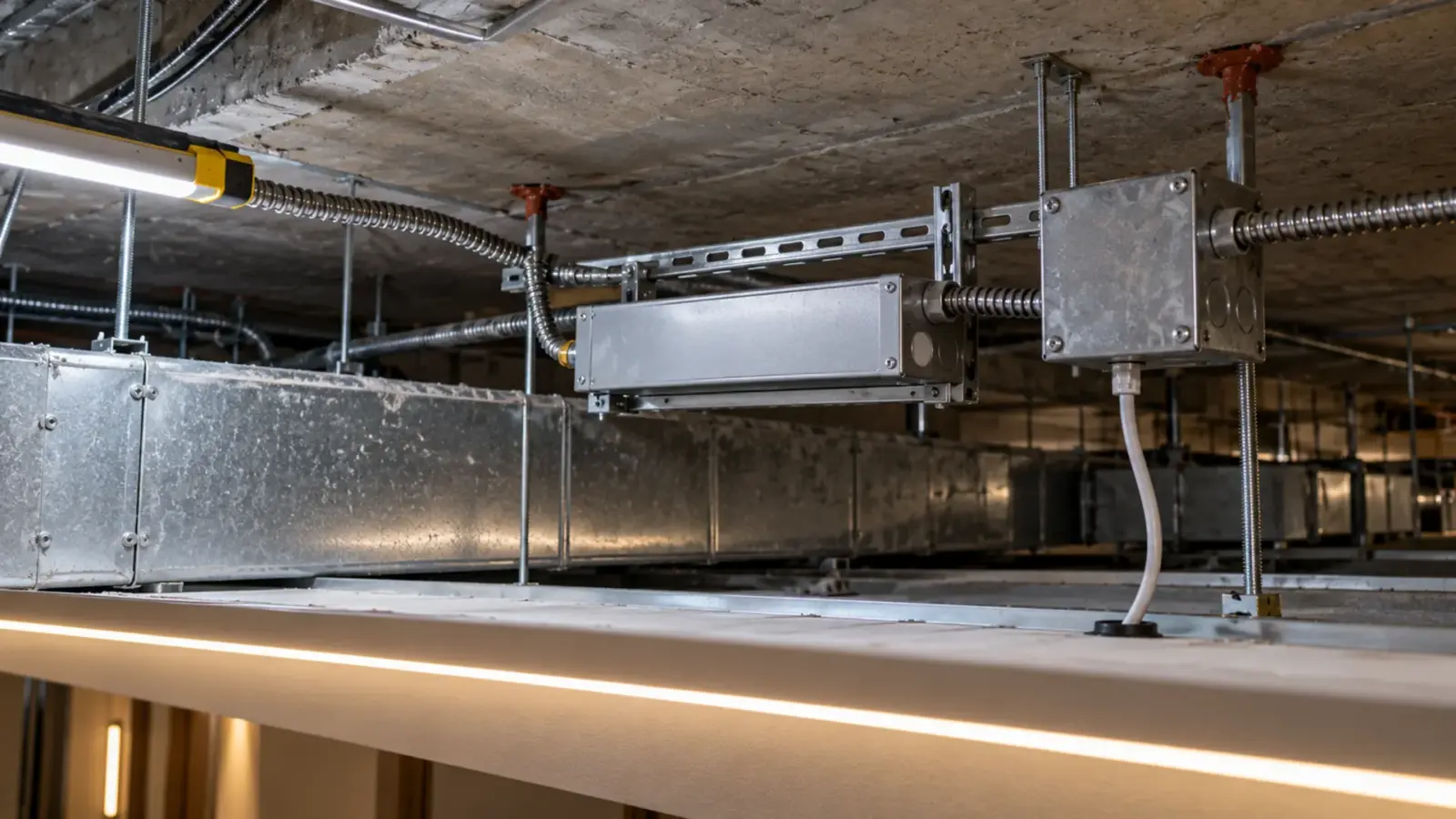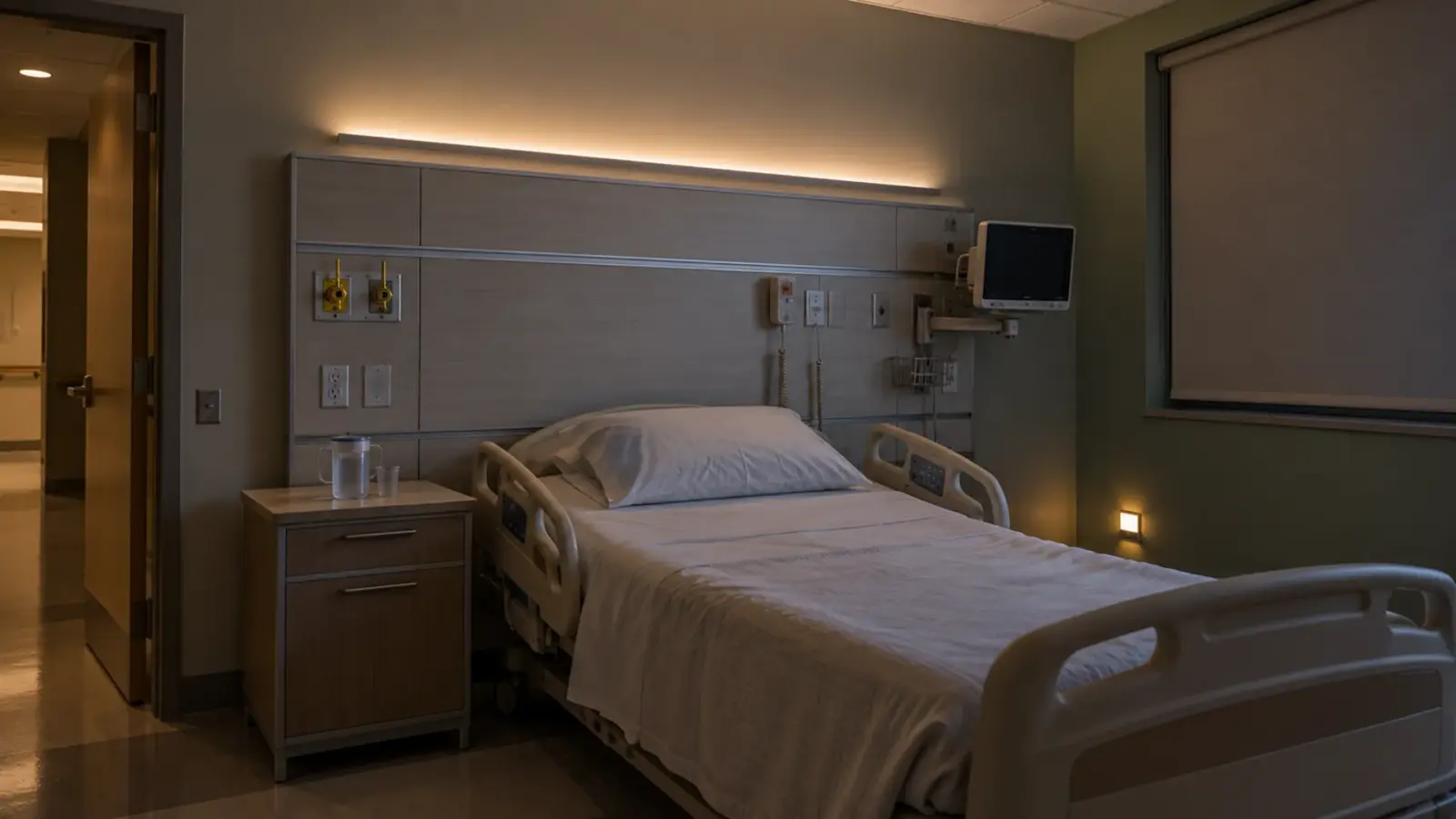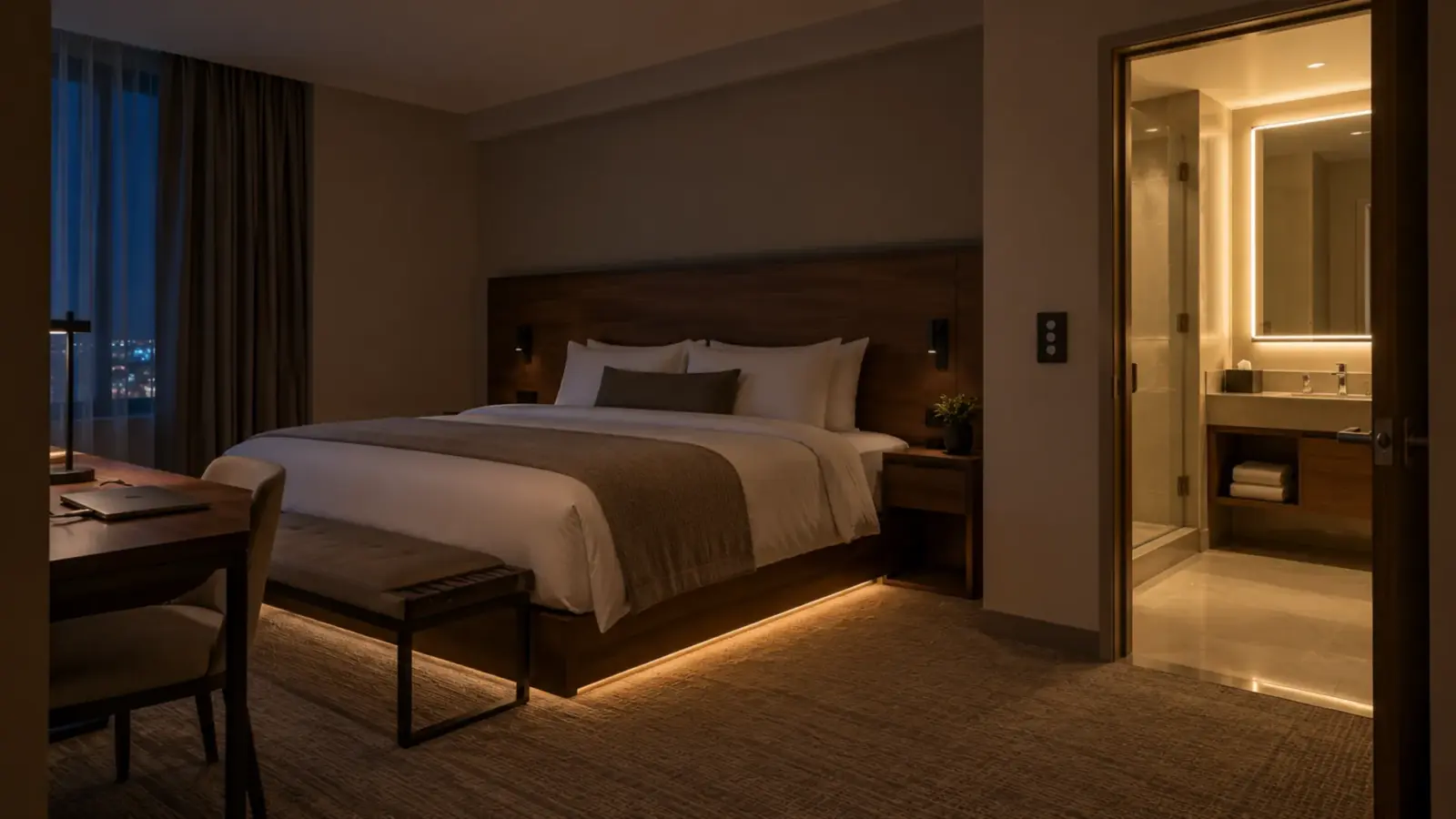
The controls vendor’s submittal shows a room controller with two relays and four 0-10V outputs. The lighting plan shows a headboard cove, a bathroom mirror strip, a toe-kick night path and a closet light. Nobody has said which driver goes on which output, and the drivers are ordered for 120 rooms next week.
A hotel guestroom control system needs three things from the strip drivers: a driver per control zone, a driver that accepts the signal the controller gives it, and a known state when the controller loses power. Plan the room as zones first, then match each zone to a relay or a 0-10V output, and test each one from the controller.
What the Room Signals
A guest room’s lighting gets orders from four places: the vacancy sensors, the keypads, the timers and the controller’s own override buttons. The sensor and the timers are where the energy code comes in. Crestron’s design guide for ASHRAE 90.1-2016 lists a master off, where the lights and switched receptacles turn off 20 minutes after vacancy, and a bathroom off, where guest room bathrooms have separate control devices that turn the lights off 30 minutes after vacancy. The DOE’s training deck for 90.1-2019 describes the same master control and a 30-minute bathroom auto-off. Check the edition your jurisdiction adopted. This article covers what reaches the driver, not the code text.
Here is what each of the four does to a driver. The summaries we read also mention exceptions, including a captive key system for the guest room master off and a small bathroom night light, so check them in the adopted text.
| Source | What it does | What the driver sees |
|---|---|---|
| Vacancy sensor | Starts the master-off timer when the room empties | A relay opening, or the 0-10V level falling, after the timer |
| Keypad | Sets a scene or a level for a zone | A new 0-10V level, or a relay closing |
| Timer | Master off at 20 minutes, bathroom off at 30 | The same as the sensor, per zone |
| Controller override | Local on, off and dim buttons on each load | A level the keypad did not set |
The same guide shows what a room controller package looks like: for a guest room it lists two junction-box zone controllers with 0-10V dimming rated 5 A, a wall-box dimmer, a network bridge, two battery keypads and two vacancy sensors. The number of zones is the number of loads the plan asks the controller to treat separately.
Two Ways to Reach the Driver
A room controller reaches a strip driver in one of two ways, and our occupancy sensor guide covers the trade-off in detail. The first is a relay in the line-voltage feed: the driver loses power when the relay opens. The second is a 0-10V pair: the driver stays powered and the signal sets its level, down to off on a driver that dims to off.
Legrand’s data sheet for the Wattstopper LMRC-112-U shows both in one box. It has two relays that switch a total of 10 amps, and dual 0-10V outputs per relay for compatible LED drivers, with 120/277 VAC input and four connections for 0-10V dimming. A room built on a controller like this uses the relay as the master off and the 0-10V output as the dimmer. That works for a driver with a dimming input. A fourth load, such as a closet light on a short run, can take a non-dim driver on a relay if the plan wants it only on and off, and it costs a relay, not a 0-10V output. It does not work for a driver without one; on our drivers page the 0-10V models include UT-D60-24-C2-010 at 60 W Class 2, and a non-dim driver on a relay can only be on or off.
Three Zones in One Room
A bathroom has its own control in the code, so the room is not one load. Here is a guest room split into three zones, with assumed lengths and our UT-S2835-128-HE at 2.9 W/ft.
| Zone | Strip | Load | Driver | Why it is separate |
|---|---|---|---|---|
| Headboard cove | 12 ft | 34.8 W | One UT-D60-24-C2-010, 48 W usable | The guest’s main scene, dimmed and switched off by the master |
| Bathroom mirror | 4 ft | 11.6 W | One UT-D60-24-C2-010 | A separate control that turns it off on its own 30-minute timer |
| Toe-kick night path | 10 ft | 29.0 W | One UT-D60-24-C2-010 | It is lit at a low level when the cove is off |
The strip totals 75.4 W, about 0.75 A at 120 V once driver efficiency is allowed for, far under the 10 A total on the controller’s data sheet, so the relays are not the constraint. The loads inside each driver are 73%, 24% and 60% of the 48 W our drivers page allows at 80% of a 60 W rating. Each run is inside the 16 ft per feed on the SMD table. The lengths, the strip and the loads are assumed for the arithmetic; a damp mirror zone would take a damp-rated strip, which our guest room guide covers. Three zones means three drivers per room, and in a 120-room hotel it means 360, so the count belongs on the order, not on the walkthrough.
One larger driver with the strips split downstream would save two drivers a room, but it would break the zones: the bathroom could no longer turn off on its own timer and the night path could no longer stay lit when the cove is off. The separate drivers are what make the separate controls possible, and our dimming comparison covers the signal each one can take.
Map the zones to the controller. Two relays and four 0-10V outputs, as on the data sheet, fit three zones if the relays are assigned so the bathroom is on its own: the cove and the night path on one relay, with two 0-10V outputs, and the bathroom on the other relay with one. Which loads share a relay is a design choice with consequences: a relay that serves the cove and the night path turns both off at the master off, and the night path needs the room occupied to be lit. It also assumes the controller can set the two outputs of one relay independently, which the data sheet does not say; confirm it in the manual, or give the night path its own relay.
Low End, Night Path and Power Loss
Two details decide whether the room feels finished. The first is the low end. A night path is useful only at a low level, so the driver has to hold a very low output without flicker or dropout. Our drivers page does not state a minimum dim level, so ask for it for the exact model and test it on the bench; our driver and dimmer compatibility guide covers the bench test. Our occupancy sensor guide explains why a driver that dims to off can stay powered, which is how a relay can stay closed while one zone is dark.
The second is power loss. The Legrand data sheet lists “0-10V signal opens on loss of LMRC power.” So when the room controller loses power, the control pair goes open. If the driver stays powered while the controller does not, what the driver does next is the driver’s own design. Some makers rate a driver for full output when no dimming signal is connected, as our occupancy sensor guide quotes, and others do not; the data sheet of the driver you order says which, and our drivers page does not. Ask for it in writing, and ask the controller’s maker what its relays do on power loss, because a driver fed through the controller’s own relay loses power with it.
The room’s battery keypads and vacancy sensors raise a related question. Crestron’s room list includes battery-powered keypads and sensors, and a flat battery should leave the room in a safe, known state, so ask the controls vendor what the controller does when a sensor stops reporting. Keep the 0-10V pairs away from line-voltage conductors, and label them at both ends; our in-wall wiring guide covers which cable can run where.
Inrush is the third small thing. A 0-10V driver on a relay brings its inrush with it when the relay closes, and three drivers per room multiplied across a floor shares a circuit; our inrush guide covers breaker counts.
Where Guest Room Strip Goes Wrong
Four faults to catch on the plan, each cheaper there than on a floor of finished rooms.
- One driver across two zones. The bathroom and the cove cannot turn off on different timers from one driver.
- A non-dim driver on a zone the guest should dim. The keypad has no effect, and the guest sees it.
- A control pair with no label. Two pairs that look alike get swapped, and the cove dims from the night path button.
- A driver whose open-signal state was never read. It shows only when the control pair opens.
Handover: Test Each Zone From the Controller
A zone test has a fixed order, and it runs from the controller, not from the driver.
- With the room controller powered and the strip off, switch each zone on from its keypad and confirm the right strip lights, at full level.
- Dim each zone from the keypad to its lowest level and look for flicker, steps and dropout.
- Let the vacancy sensor time out, and confirm that the master off turns off the cove and the night path, and that the bathroom follows its own timer.
- Where a driver can stay powered while the controller does not, remove the controller’s power or the control pair and note what the driver does with the pair open; where the driver is fed through the controller’s relay, note instead that it goes dark with the controller.
- Restore power and confirm the scene the room returns to, and that the drivers come back at the level the plan states.
Record each result by room, with the room number, the zone, the driver model and its tag, the minimum level seen and the state with the control pair open. Our guest room guide covers where the strip belongs, and our Lutron, Crestron and Control4 guide covers the interface to brand systems. Our dimming comparison covers the three signals.
Before You Order Drivers for the Floor
- The zones of one room, with strip length and load per zone, and the drivers per room.
- The room controller’s relay count, 0-10V outputs and load limits, from its data sheet.
- Which driver sits on which relay and which output, written on the plan.
- The minimum dim level and the open-signal behavior of each driver model, in writing.
- A test order for one room: keypad, low end, vacancy timeout, power loss, restore.
The drivers named above are on our drivers, controllers and connectors page, with the strip load taken from the SMD spec table.