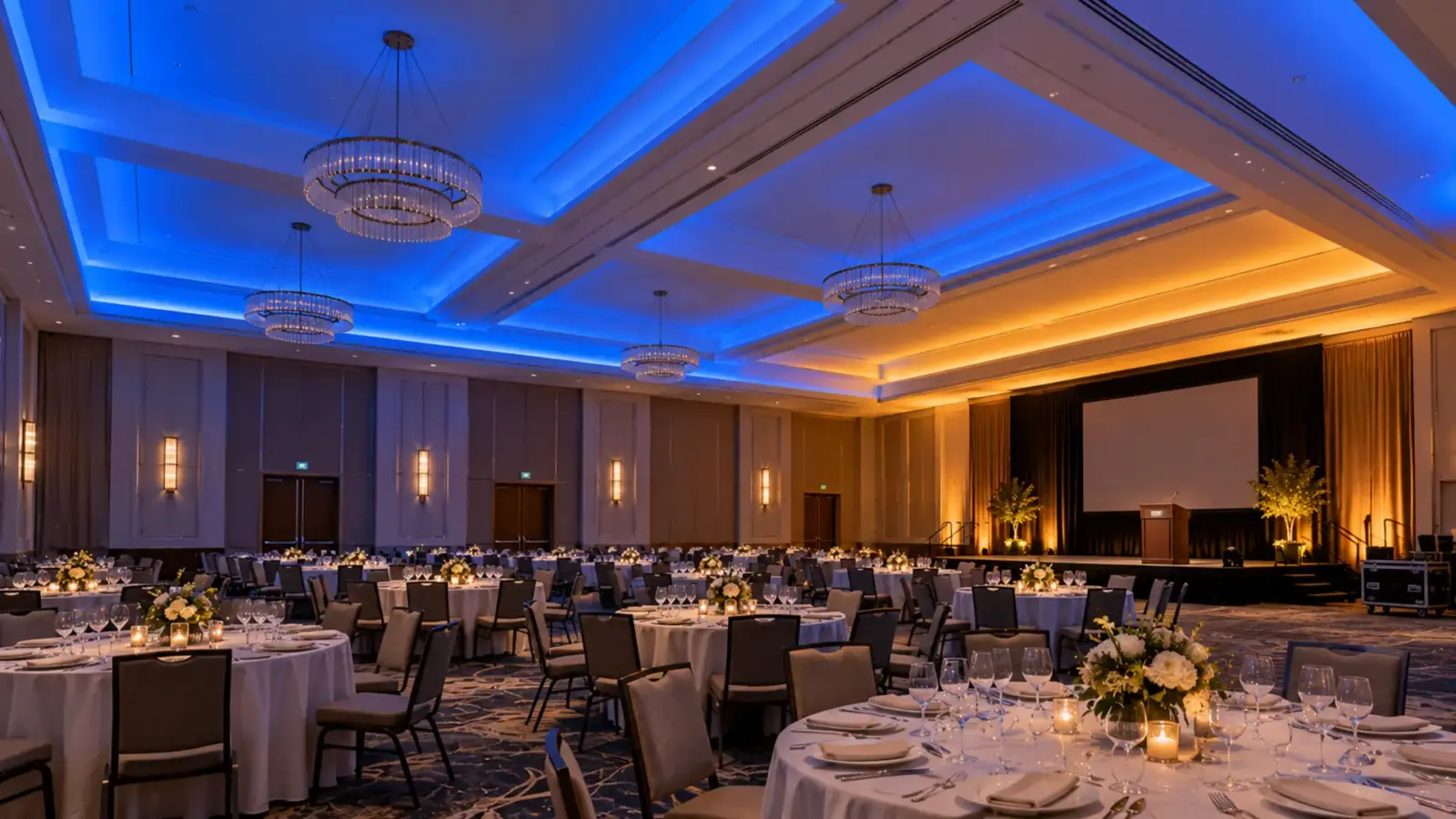
A 240 ft (73 m) ballroom cove on RGBW strip loads 1,392 W, needs four DMX decoders, and answers to two owners. Ballroom cove lighting on RGBW LED strip works when the white is a true white channel, the cove is zoned and powered for the load, and a written rule says whether the panel or the show’s console wins.
The same detail serves a university or corporate conference center, where the harder scene is not the gala but the Monday meeting.
Before: The Night the Panel and the Console Fought
A typical job, as it goes wrong. The hotel’s architectural control sets the cove to amber at 7:40 for dinner. At 7:41 the production company’s console sends blue for the walk-in. The cove flickers between the two through the first speech, and the sales director’s phone rings. Nobody specified which signal has priority, so both do.
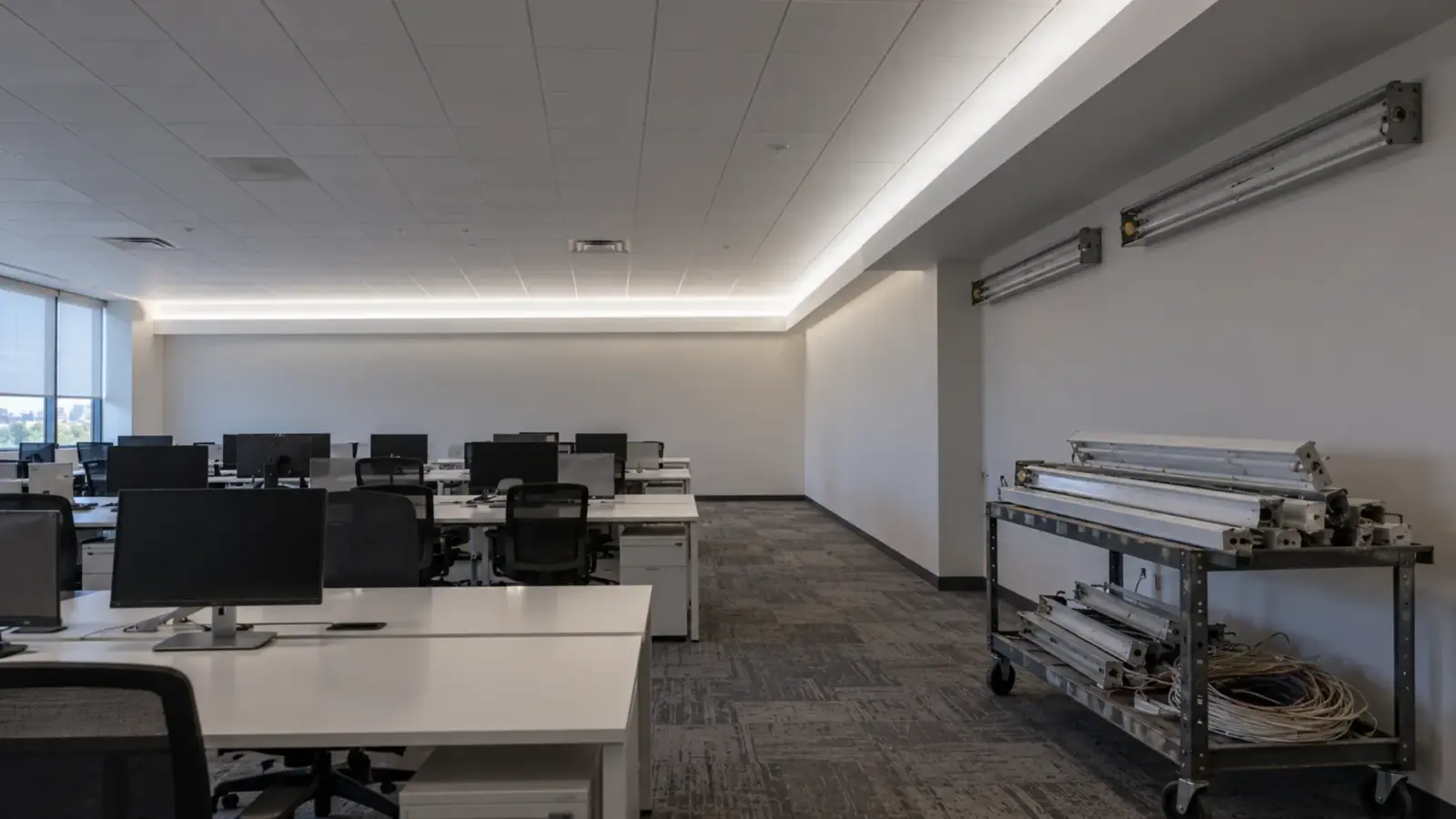
The cove had other faults the room had learned to live with. Its “white” was the RGB mix, a cool tinted blend that made the linen look gray at breakfast meetings. Its runs were fed from one end, so the far corner went pink as the voltage dropped. And the drivers sat above a hard ceiling, reached from a scissor lift between events.
The room you want has a true white for daytime, saturated color for evenings, even color to the last foot, drivers in a closet, and a rule for who drives. The sections below build it.
White First: Why the Cove Is RGBW, Not RGB
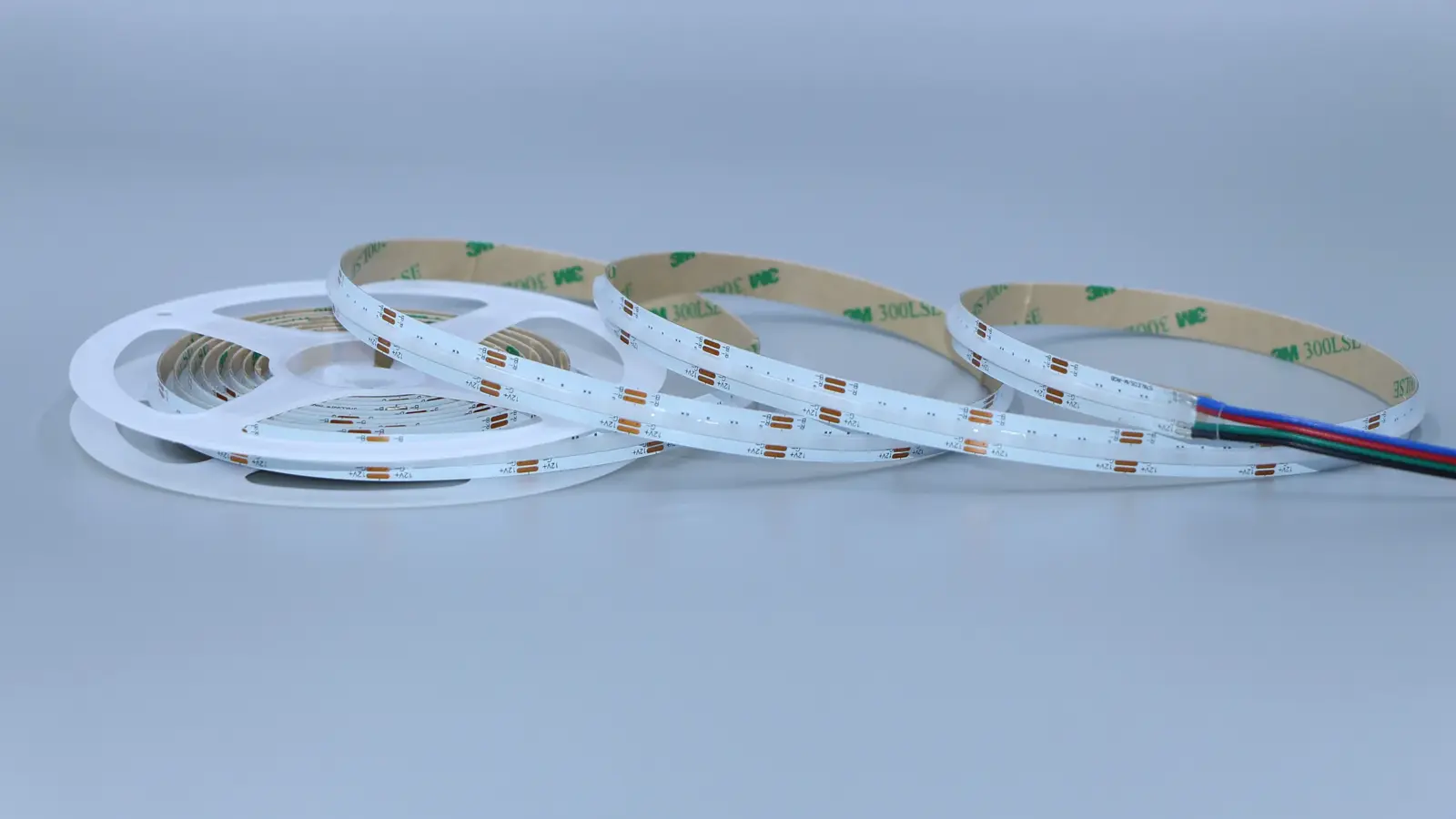
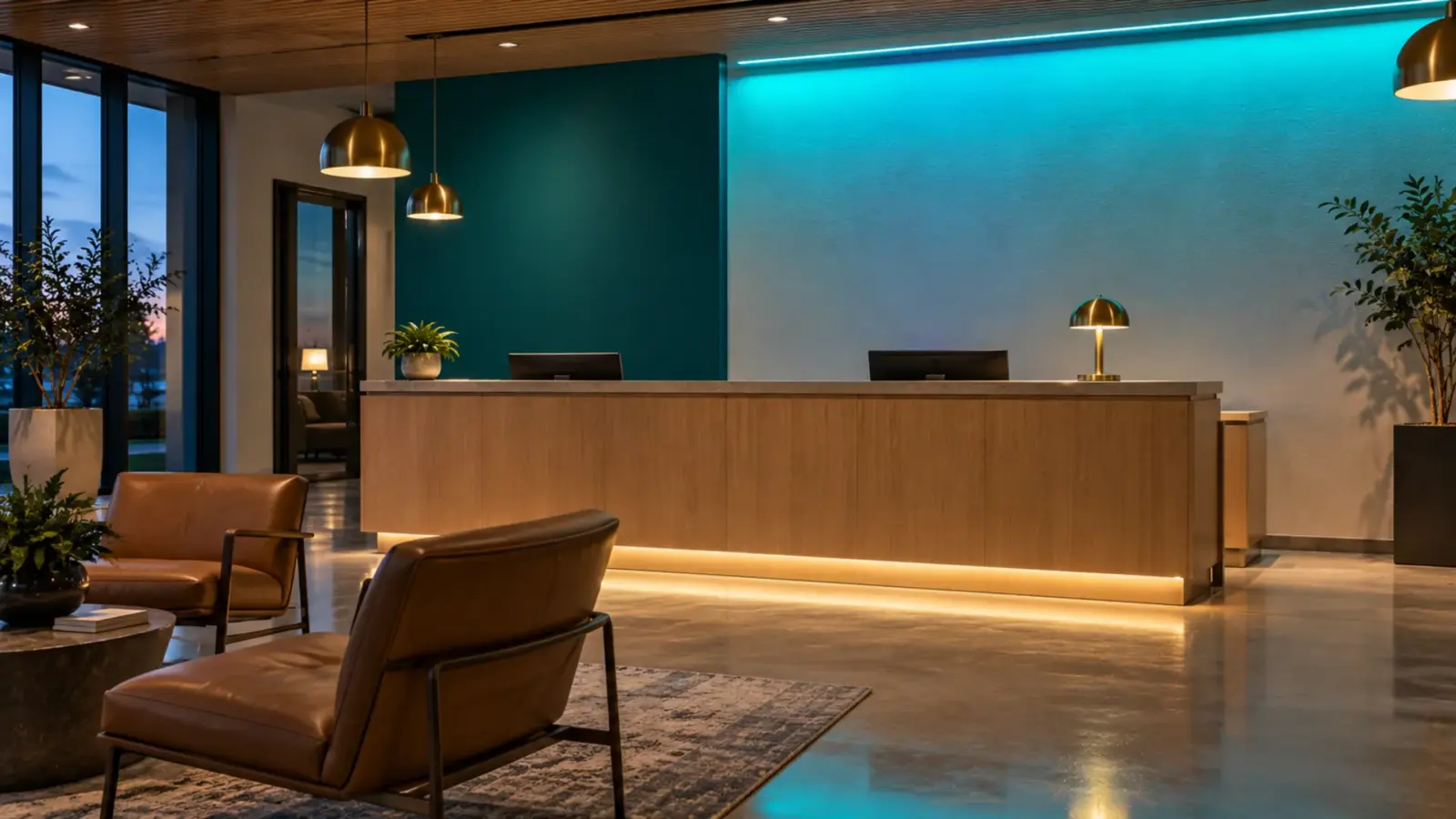
The ballroom spends most of its hours as a meeting room. Our RGB and RGBW page says why RGB alone fails that job: RGB-mixed white is “a cool, tinted blend with poor color rendering”, and installations that alternate between color scenes and everyday white lighting should always spec RGBW. The fourth channel on UT-RW84-12 is a dedicated white at Ra≥90, so the Monday meeting gets real white light and the gala gets the three color channels, from the same strip in the same cove.
Where the room also needs warm-to-cool white for different meetings, the five-channel RGB + tunable white UT-RCCT72-12 covers 2700 to 6500K and full color on one run, at the price of five control channels per zone. And where the cove lip is low enough that the strip is seen, the COB RGBW UT-RW784-12 reads as a continuous band with no pixel dots; our RGB vs RGBW guide walks through the choice. The RGB and RGBW LED strip page lists every row with its channels and cut points.
Cove Geometry at 20 ft
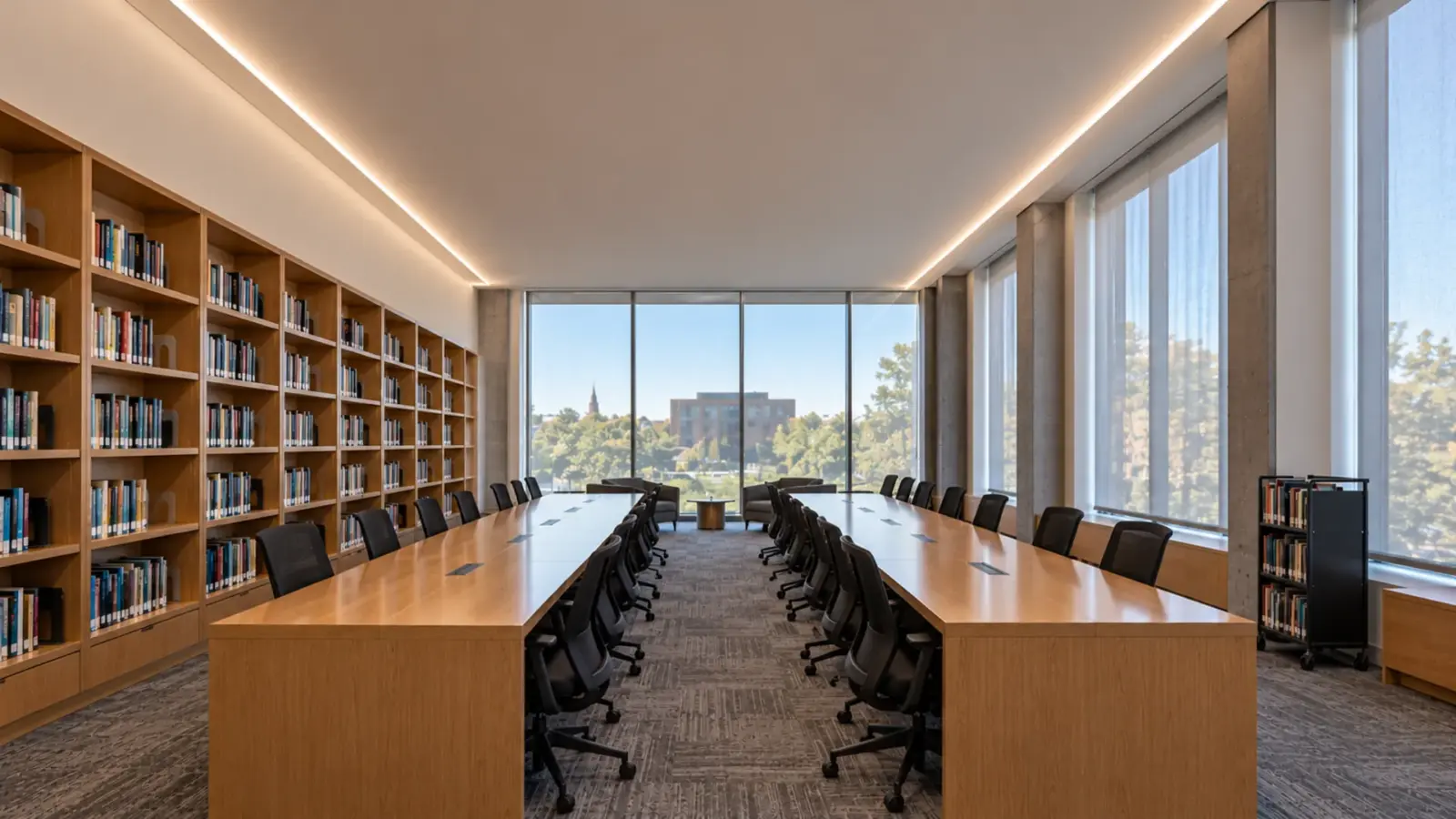
A hotel ballroom ceiling is typically 16 to 24 ft up, higher in convention centers, and the cove is usually a perimeter slot or a stepped soffit. Two consequences. The cove is far from everyone, so the strip’s dots do not show and a 5050 RGBW strip at 84 LEDs/m is fine; what shows is color uniformity along the run. And the ceiling plane is large, so the wash has to be aimed: the strip sits toward the cove’s outer lip and is tilted toward the wall-ceiling joint (45° in the UT-CH1616 corner channel), with the setback proven on the mockup, so the wash spreads instead of making a bright stripe above the cove; our cove lighting page gives the aiming rules.
For the light level in white mode, the lighting designer sets the target from the IES Handbook for the meeting use and proves it on a mockup section, which our mockup guide describes; the number is theirs, not a vendor’s. If the cove has to carry a real share of the room’s white light, the wall washer bar in DMX RGBW, UT-WB27-2030-DMX at 8.2 W/ft with a 20° × 30° optic, carries 8.2 W/ft against the strip’s 5.8 W/ft, with a lens to aim it, and takes the same DMX universe; our LED wall washer page lists the lens options.
Two Masters: House Panel and Show Console
Every ballroom cove has two legitimate controllers. The house needs a wall panel with a few scenes that any banquet captain can press. The show needs a console that an AV technician can program for one night. The question is how both reach the same decoders without fighting, and three answers exist.
| Architecture | How the cove is driven | What the house gets | What the show gets | The rule for who wins |
|---|---|---|---|---|
| House only | 0-10V or RF controller to decoders (UT-C010-350 per channel, or UT-CRF-24G zones) | Scenes on a panel | Nothing; the show brings its own fixtures | None needed |
| A/B switch | Panel and console both wired to the decoders through a DMX A/B switch | Scenes on a panel when A is selected | Full control when B is selected | Whoever flips the switch; a Hyndburn ballroom does exactly this, where “A Chroma-Q Magic Box™ A/B Switch allows staff to manually select between the two control systems” |
| Merged on a network | Both sources on sACN; decoders fed from a node | Scenes on a panel at low priority | Console at higher priority when it is on | Per-source priority in sACN; the Théâtre des Bergeries runs its house lights this way: “When the desk is turned on it takes priority over everybody” |
The merged architecture is the clean one and it has a condition the Bergeries integrator stated: “The sACN protocol simplifies priorities”, and “The notion of priorities is non-existent in Art-Net.” Two sources on Art-Net merge by rule of the node, not by rank. The A/B switch is cheaper and it works, as long as the staff know the switch exists. A hotel’s own dimming panel can also detect which system is talking, as a Lutron case for a resort ballroom describes, with the panel designed to “auto-detect which one is present and operate accordingly”. Whichever is chosen, the rule is written into the control narrative before the decoders are ordered. Our DMX guide sets out universes and chains; the SPI vs DMX guide explains why the cove’s strip is on DMX and not on a pixel protocol.
Zones, Decoders and Drivers
The cove is zoned by the room’s use, not by the strip’s feed limit. A ballroom that divides into two or three salons with air walls needs a zone per salon at least, and usually a zone per wall, so a half-room event lights its half. Then the loads.
| 240 ft (73 m) perimeter cove, four 60 ft (18 m) zones | Figure |
|---|---|
| Strip | UT-RW84-12 RGBW, 5.8 W/ft (19 W/m), 24V |
| Load per zone | 60 ft × 5.8 W/ft = 348 W |
| Total | 1,392 W |
| DMX decoder per zone | UT-CDMX-480, 4 channels (R, G, B, W), 480 W: 348 W is 73% of rating |
| Feeds per zone | 60 ft at 16 ft (5 m) per feed = 4 feed points, fed from the decoder outputs |
| Driver per zone | UT-D400-24-L 400 W linear CV: 348 W is 87%, above the 80% rule, so two drivers per zone (a 400 W and a 150 W UT-D150-24-L, or two 400 W) or a shorter zone |
| DMX channels | 4 per zone, 16 for the room; a single universe with room to spare |
Three notes on the table. The feed count is the color-uniformity count: a color scene fed from one end goes pink at the far end as red holds while green and blue sag, and in white mode the RGBW run simply dims toward the end, which our RGB guide explains, so every 16 ft segment gets its own feed from the decoder’s output wiring. The 80 percent rule applies to the driver; two drivers per 60 ft zone is normal, and a shorter zone is cheaper than a hotter driver. And the decoders and drivers go in an electrical room or a service-corridor closet with the DMX line home-run to them, never above the ballroom ceiling.
The Handoff: What the AV Integrator Gets From You
The cove is usually the electrical contractor’s scope and the console is the AV integrator’s, and the gap between the two is where the fight in the first section starts. Close it with a handoff package, which our commissioning and handover guide treats in general; for a ballroom cove it holds six items.
- A zone plan: every cove zone on the ballroom plan with its channel assignment and start address.
- The DMX topology: the universe, the node or decoder locations, the termination, and the house panel’s position in it.
- The priority rule: A/B switch (where it is, who flips it) or sACN priority values for the panel and the console.
- The house scenes: the panel’s presets with their RGBW values, so the console can match “dinner amber” exactly; the Liechtenstein hall preset “some predefined scenes for recurring events… to simplify the use of the control system to the facility management”, which is the right instinct.
- The white reference: the measured white point and level of the RGBW white channel at the mockup, so the show’s white matches the house white.
- Training: who at the hotel runs the panel, who runs the switch, and the half day the Hyndburn article mentions for the house technician.
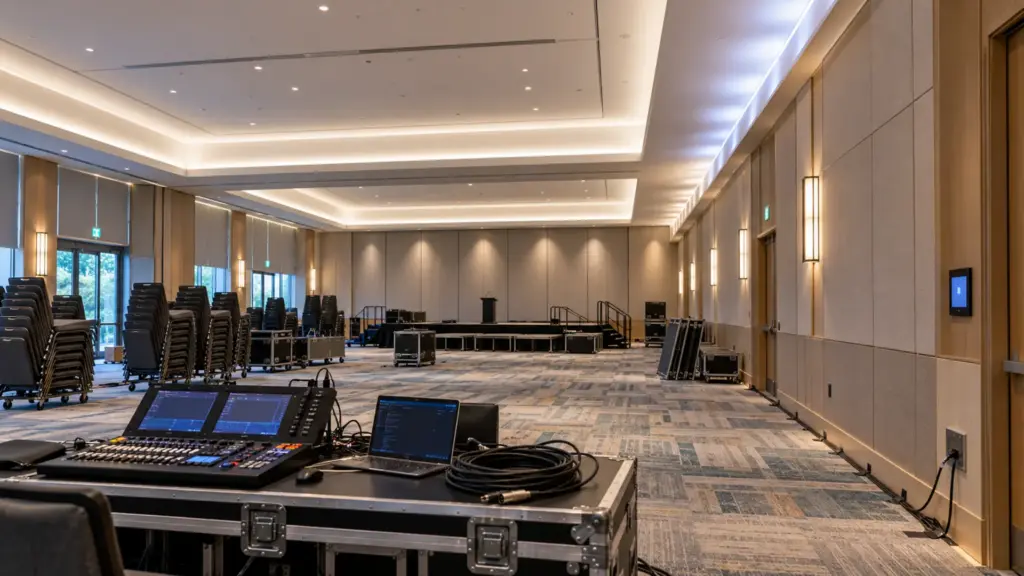
The ETC community thread is the cautionary tale: a venue that wanted its house lights on the console found the scene controller’s DMX input empty and needed a new DMX run. Pull the DMX line to the console position during construction, even if the console is a year away.
Conference Centers: The Monday Meeting Is the Harder Scene
A university or corporate conference center uses its ballroom for lectures, exams, career fairs and banquets in the same week. The color scenes are the easy part. The hard scene is a full day of 4000K white at a level people can read under, with the projector on, and no visible color shift between the zones. That argues for the RGB + tunable white strip or for a separate white cove on COB with the RGBW reserved for accent, and it argues for the house panel to be the primary controller, with the console a visitor.
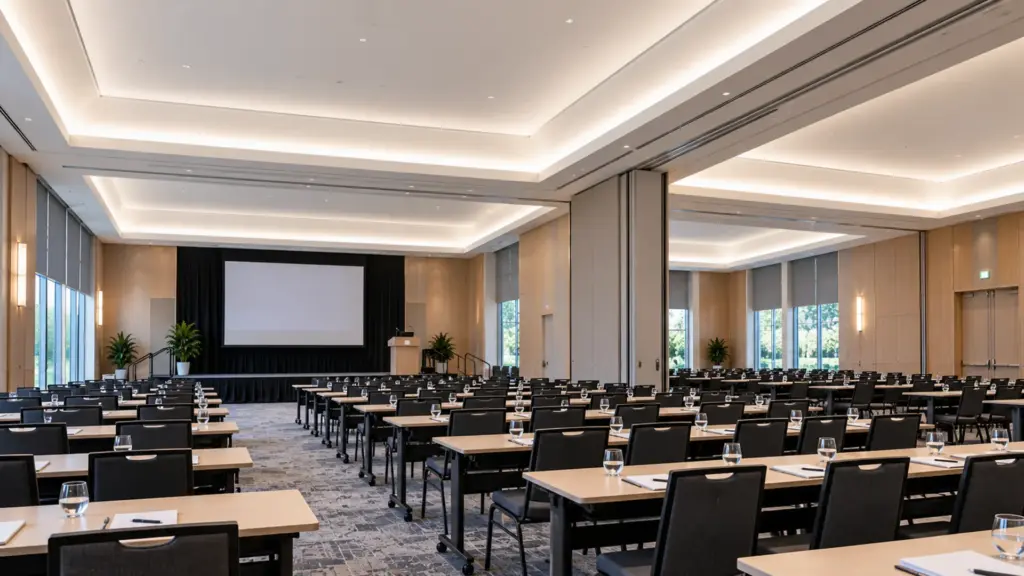
Two conference-center specifics. The air walls: a zone boundary at every air wall, so a divided room lights as three rooms with their own panel scenes. And the scheduler: a conference center runs on a booking system, so the panel’s scenes should be callable from the building’s scheduling or AV control as well, an integration the AV integrator owns; our Lutron, Crestron and Control4 guide covers what sits between. Our hotel and restaurant guide places the ballroom in the property’s plan.
FAQ
Should a ballroom cove use RGB or RGBW strip?
RGBW. The dedicated white channel gives true white at Ra≥90 for meetings and breakfasts; RGB-mixed white is a cool, tinted blend. Use RGB + tunable white where the meetings need warm-to-cool white as well.
DMX or 0-10V for a ballroom cove?
DMX for the color channels, because the show’s console speaks it and a 4-channel decoder per zone handles R, G, B and W. 0-10V suits a house-only room with white dimming and no console. Many rooms run both: the panel for scenes, the console for events, with an A/B switch or sACN priority deciding who wins.
Who controls the lights in a hotel ballroom?
Two parties: the hotel, through a wall panel with preset scenes, and the event’s AV technician, through a console. The spec has to say how the two reach the same decoders and which one has priority, or they fight.
How many zones does a ballroom cove need?
At least one per salon the air walls create, and usually one per wall, so events can light half the room or one side. Each zone gets its own decoder and its own drivers at 80 percent loading.
Spec Notes for This Job
- RGBW strip with a Ra≥90 white channel; RGB + tunable white where meetings need variable white; COB RGBW where the strip is seen.
- Cove strip toward the outer lip, tilted toward the wall-ceiling joint with the setback proven on the mockup; white level set by the designer and proven on a mockup.
- Zones by salon and wall; 4 DMX channels per zone; a feed every 16 ft; decoders and drivers in a closet at 80 percent.
- A written priority rule: A/B switch or sACN priority; DMX line pulled to the console position during construction.
- A six-item handoff package to the AV integrator, with the house scenes’ values and the measured white point.
Unitop Lighting supplies RGBW and RGB + tunable white LED strip, native DMX512 strip and the decoders, amplifiers and linear drivers that run them, for hotel and conference center projects across the US. Send the ballroom plan with the air walls and the cove sections and request a quote; we return the zone plan with loads, decoder and driver counts and feed points marked.