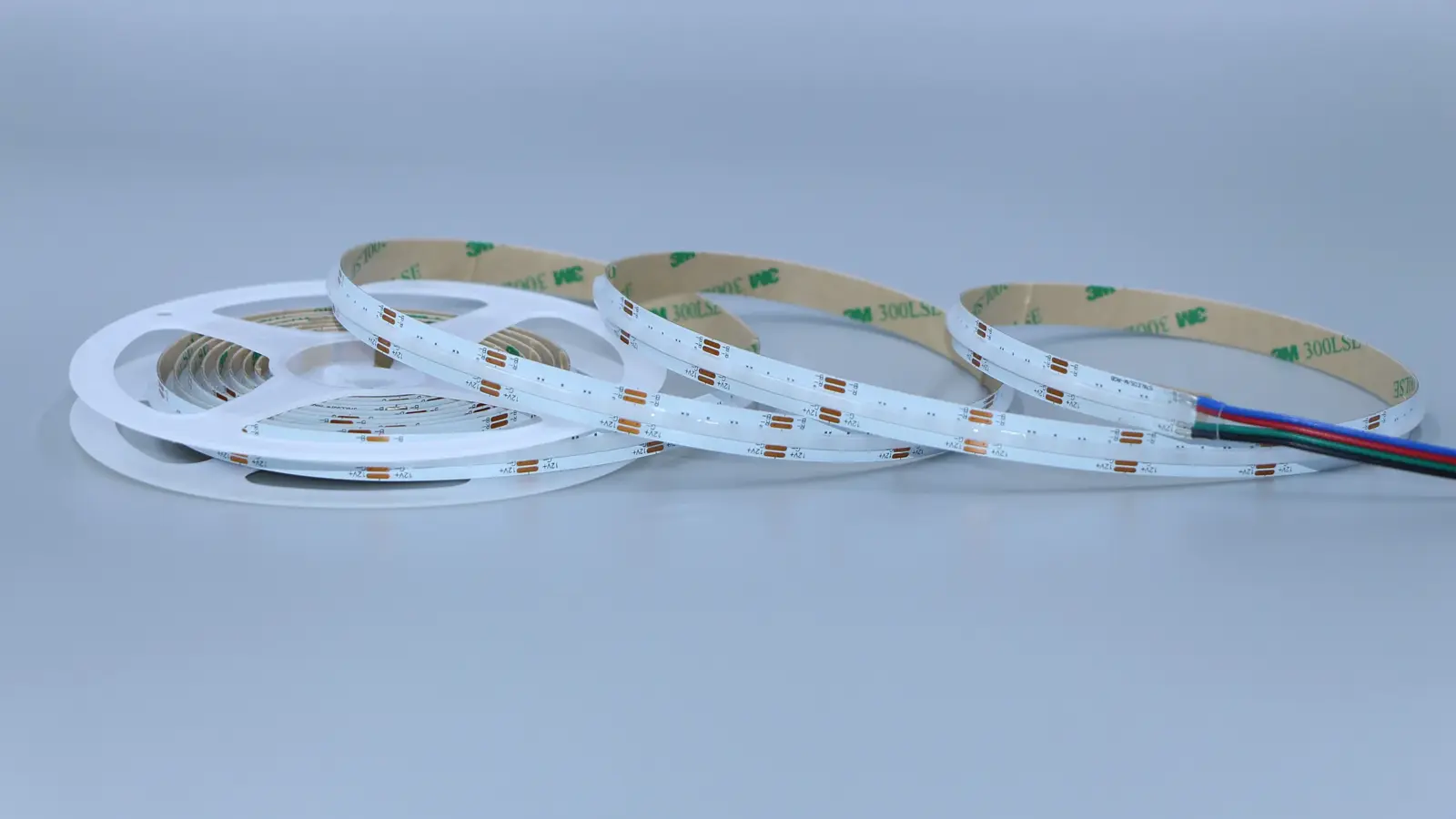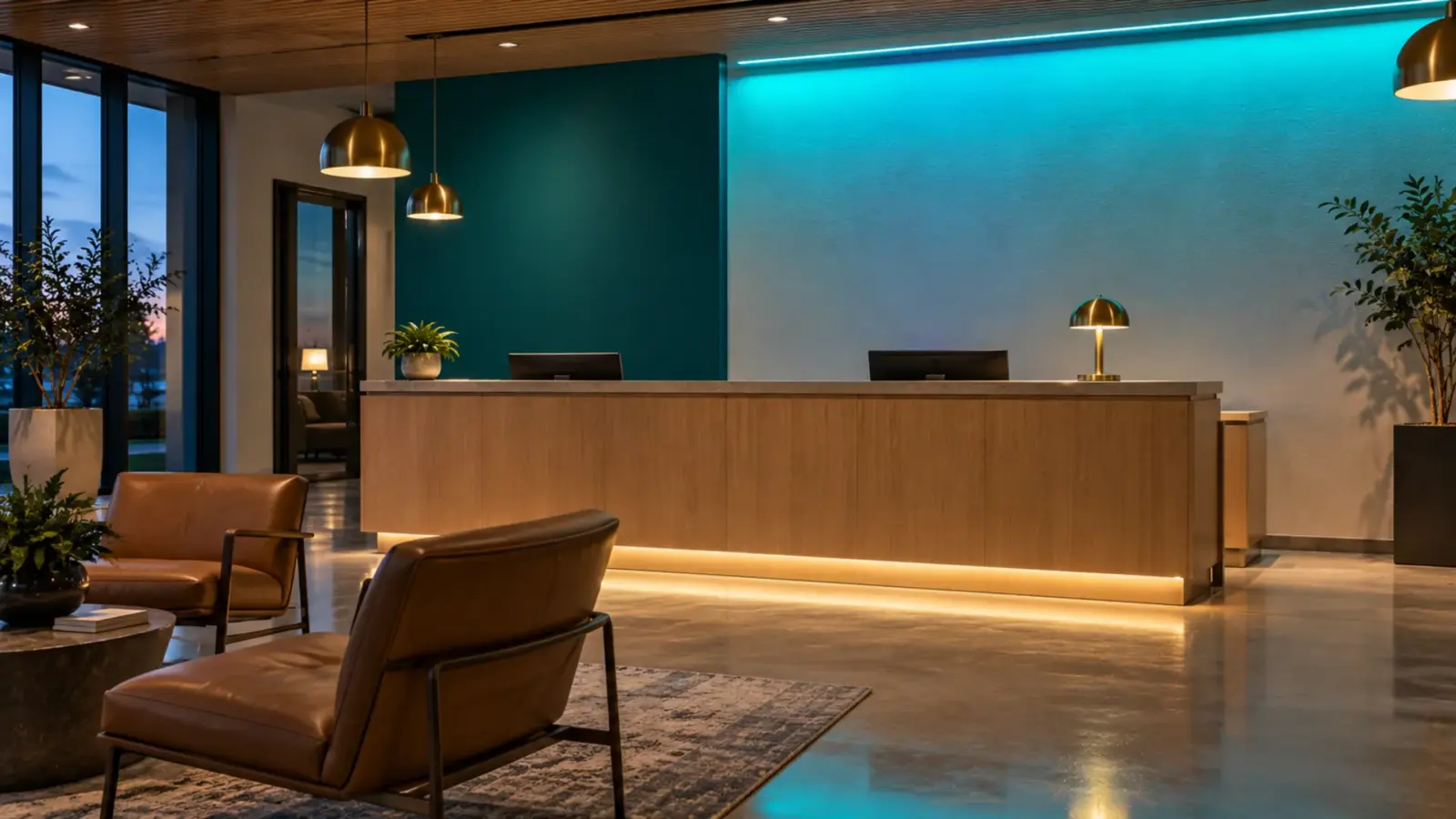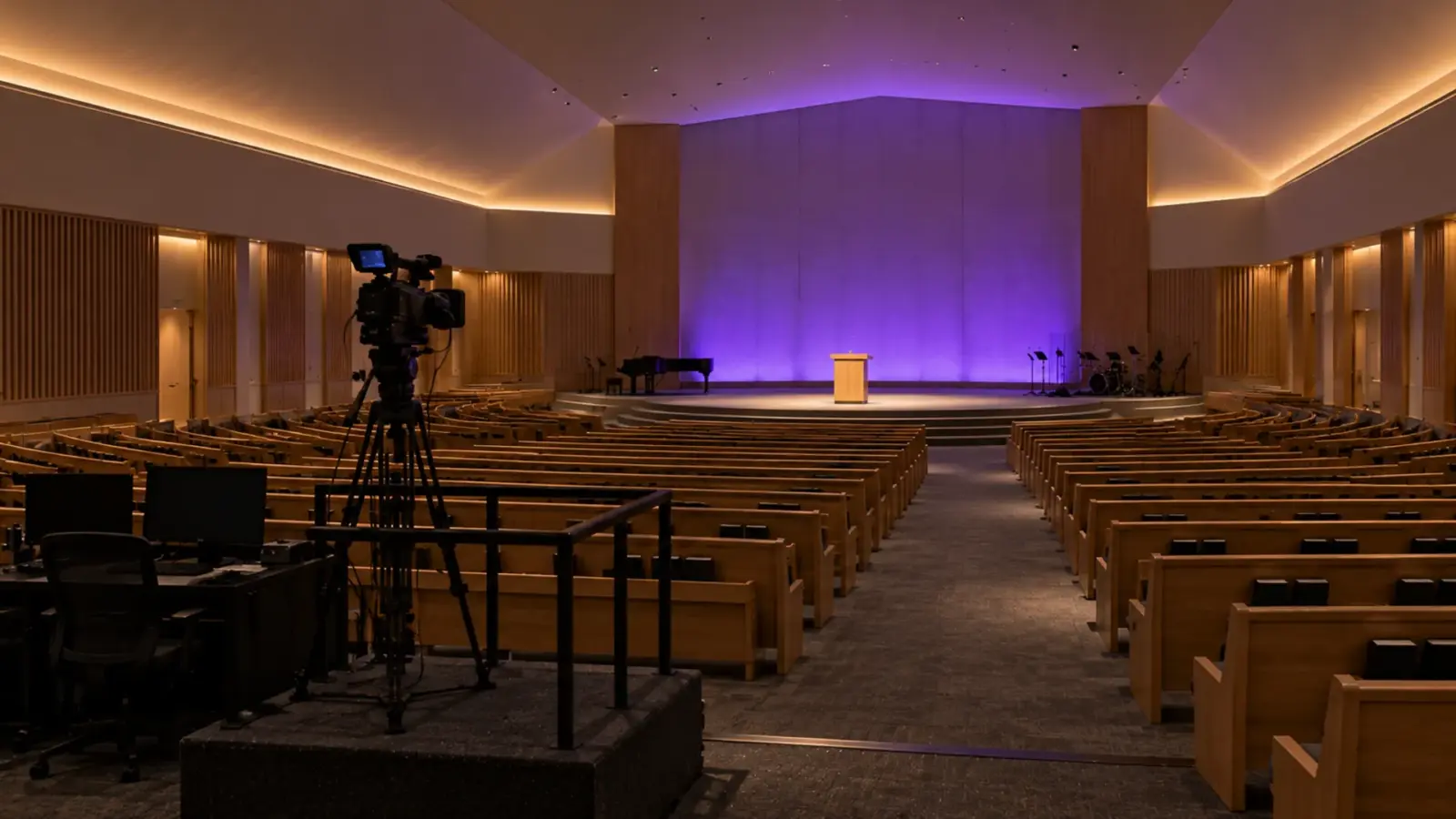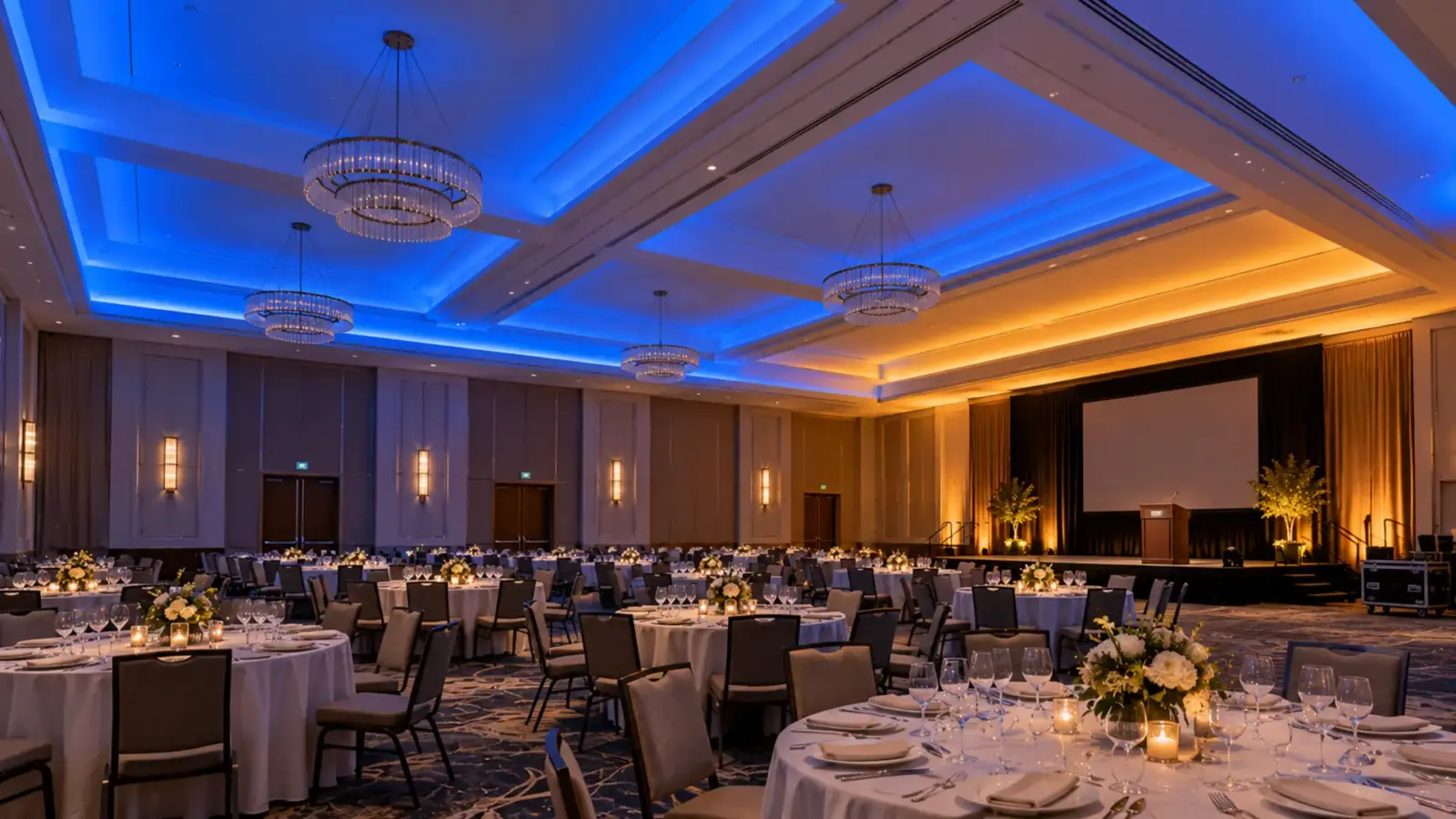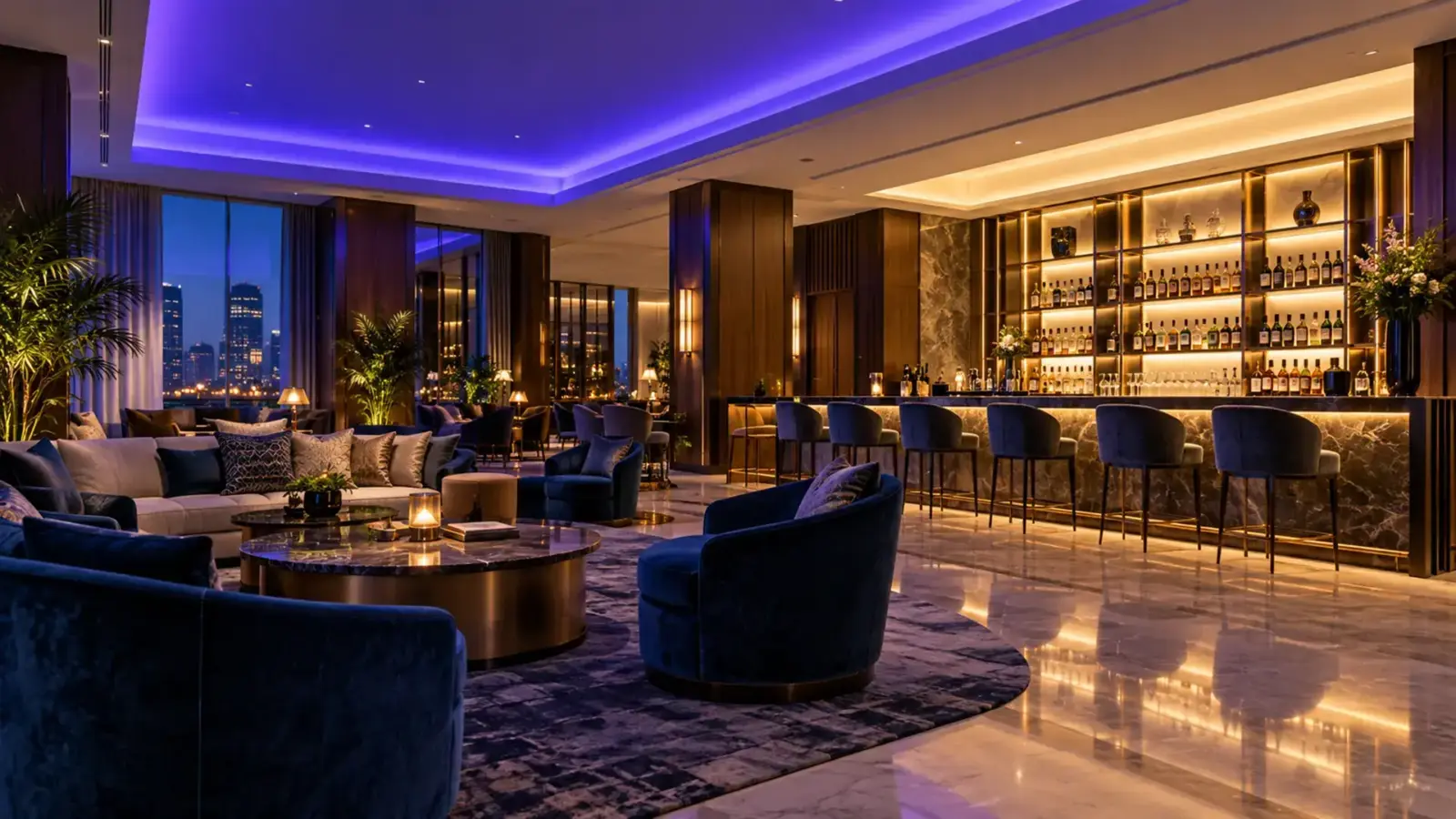
The color scenes look great at the walkthrough. Then the owner asks for “just normal white” for the lunch service, the cove turns a cool, slightly blue white, and the call comes back to you. That is an RGB strip doing the only white it can make.
RGB strip mixes white from red, green, and blue, and that white carries no Color Rendering Index, 0–100: how truthfully the light shows colors next to a reference source. Ra≥90 is the usual bar for interiors. rating. RGBW strip adds one dedicated white chip that renders at Ra≥90 in a single color temperature. RGB+CCT adds two white chips, warm and cool, so the white tunes from 2700 to 6500K. Choose between RGB vs RGBW vs RGB+CCT by how many hours a day the room runs white, not by how good the color scenes look.
The Short Answer: RGB vs RGBW vs RGB+CCT
The difference between the three is the white source. Everything else, including channel count, controller, and wiring, follows from that.
| Type | Channels | Pins | White source | White CRI | White CCT | Our models |
|---|---|---|---|---|---|---|
| RGB | 3 | 4 | Mixed from red, green, blue | Not rated | Fixed, cool and tinted | UT-R60-10, UT-R840-10 (COB) |
| RGBW | 4 | 5 | One dedicated white chip | Ra≥90 | One CCT, specified at order | UT-RW60-12, UT-RW896-12 (COB) |
| RGBCW | 4 | 5 | One dedicated cool white chip | Ra≥90 | Cool white | UT-RCW840-12 (COB) |
| RGB+CCT and RGBWW | 5 | 6 | Warm and cool white chips | Ra≥90 | Tunable, 2700–6500K on RGB+CCT | UT-RCCT72-12, UT-RW96-12 |
A simple rule covers most jobs. If the room is a color show, RGB is enough. If the room needs a clean white some of the time, spec RGBW. If the room runs white most of the day and uses color for events, spec RGB+CCT.
All three types, with full spec tables, are in our RGB and RGBW LED strip range.
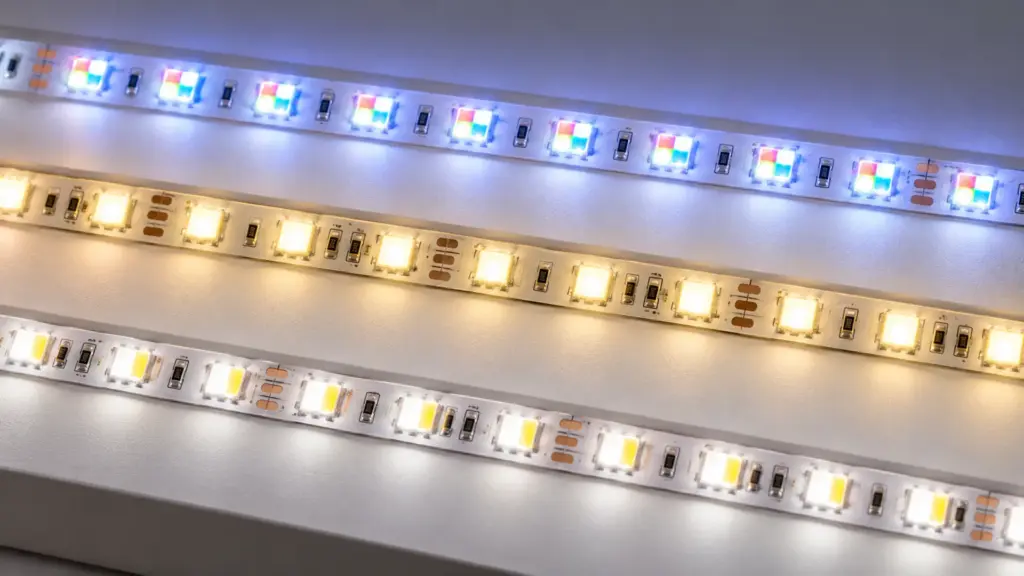
RGB: Color Scenes Only
RGB is the original color-changing strip: red, green, and blue emitters on one PCB, three control channels, four pins including the common positive.
What RGB-Mixed White Looks Like
RGB strip makes white by running all three channels together. The result reads as white from across a room, but it is a cool, tinted blend with poor color rendering. Skin tones and wood finishes lose their warmth under it.
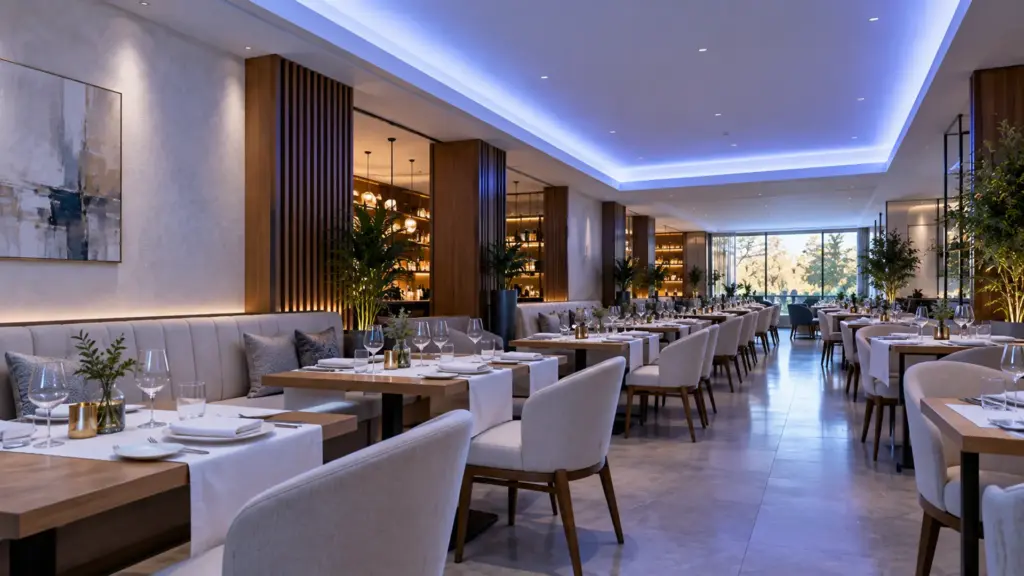
That is why our spec tables list the white CRI of every RGB model as a dash. There is no white chip to rate. If anyone on the project expects RGB strip to double as task or ambient white lighting, correct that during submittals, not at punch list.
Where RGB Is the Right Spec
RGB earns its place where the light is the show and nobody needs to read, eat, or shop under it. Clubs, stage surrounds, facade accents, and signage backgrounds all fit.
Our 5050 RGB line runs from UT-R30-10 (30 LEDs/m, 2.1 W/ft) to UT-R96-12 (96 LEDs/m, 7.0 W/ft). For coves where the strip or its reflection shows, the dot-free COB RGB series reads as a continuous band of color: UT-R840-10 carries 840 LEDs/m at 4.3 W/ft on 12V or 24V. RGB also costs the least in controller channels and wire, which matters on a large color-only job.
RGBW: One Dedicated White
RGBW adds a fourth chip that emits white directly. That fourth channel produces true white at Ra≥90 instead of a tinted RGB blend. It also lets the color scenes use the white chip to lighten colors, which gives RGBW cleaner pastels than RGB strip can mix.
Pick the White CCT at Order
The RGBW white chip has one color temperature. It does not tune. The CCT is specified at order and supplied on request, so settle it with the designer before release: warm for hospitality, neutral for retail, cool only when the design calls for it.
This is the one decision that is hard to undo. If the space needs warm white at night and cooler white for daytime cleaning, a single-CCT RGBW strip cannot do both. That job is RGB+CCT.
RGBW vs RGBCW
RGBCW is RGBW with the white chip fixed at cool white. It is still four channels and five pins, and it runs on the same controllers as RGBW. Our UT-RCW840-12 is a dot-free COB RGBCW strip at 840 LEDs/m and 6.4 W/ft. Spec it where a crisp, cool white fits the design, such as a modern retail fit-out or a white-dominant feature wall.
SMD, COB, or CSP RGBW
The emitter construction decides how the line looks and where you can cut it.
| Model | Construction | LEDs/m | Power | Cut point |
|---|---|---|---|---|
| UT-RW60-12 | 5050 SMD | 60 | 5.8 W/ft | 3.94 in (100 mm) |
| UT-RW84-12 | 5050 SMD | 84 | 5.8 W/ft | 2.81 in (71.4 mm) |
| UT-RW784-12 | COB, dot-free | 784 | 5.8 W/ft | 2.81 in (71.42 mm) |
| UT-RW896-12 | COB, dot-free | 896 | 5.8 W/ft | 2.46 in (62.5 mm) |
| UT-RW840-12-CSP | CSP, high density | 840 | 6.4 W/ft | 1.97 in (50 mm) |
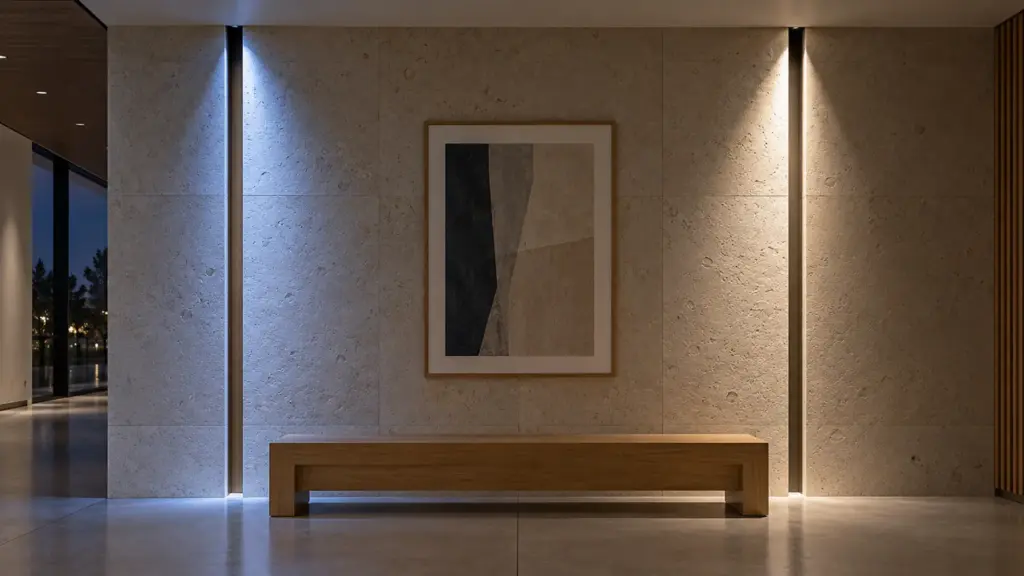
Two things to catch at layout. First, 5050 RGBW cut points are long. On UT-RW60-12 a cut every 3.94 in (100 mm) can leave a gap at the end of a cove or niche, so dimension runs to the cut interval.
Second, 5050 SMD shows individual dots wherever the strip or its reflection is visible. For visible coves and glossy ceilings, the COB and CSP versions give a continuous line. All RGBW models on 24V run 16 ft (5 m) per feed; UT-RW60-12 is also available at 12V.
RGB+CCT: Color Plus Tunable White
RGB+CCT puts full RGB color and a warm plus cool white pair on one strip. That is five channels and six pins. The two whites blend to any color temperature between them, so one run covers the evening color scene and the daytime work light.
We supply two constructions. Our RGB+CCT series pairs 5050 RGB chips with 2835 CCT chips: UT-RCCT72-12 (72 LEDs/m, 5.8 W/ft) and UT-RCCT90-12 (90 LEDs/m, 6.4 W/ft), both tuning 2700 to 6500K, both 24V. Our RGBWW 5-in-1 strip, UT-RW96-12, packs red, green, blue, warm white, and cool white into one 5050 package at 96 LEDs/m and 7.0 W/ft.
Spec RGB+CCT when white is the default and color is the exception. Hotel lobbies, restaurants that change mood by daypart, and multipurpose rooms that host both meetings and events are the typical jobs. Both whites render at Ra≥90, so the daytime light holds up to close inspection.
The trade-off is control. RGB+CCT needs a five-channel controller and six conductors to every run, which raises the cost of controls and wiring compared with RGBW.
RGBIC, RGBWW and Other Names
Product listings use more names than there are strip types, and two of them cause most of the mix-ups on submittals.
RGBIC is not a white option. RGBIC strip puts small control ICs along the strip so different segments can show different colors at once: chases, gradients, moving effects. On a commercial job that is addressable strip, chosen for its effects and controlled by SPI or DMX pixel controllers rather than by the analog RGB and RGBW controllers below. It answers a different question from this article. Our addressable LED strip page and the SPI vs DMX guide cover it.
RGBWW means different things to different makers. Some use it for RGB plus one warm white chip, which is RGBW with a warm white. Others use it for RGB plus warm and cool white, which is RGB+CCT. Our UT-RW96-12 “RGBWW 5-in-1” is the second kind: five channels, six pins. Before a strip goes on the drawings, count the chips and the pins instead of trusting the name. Four channels and five pins is RGBW; five channels and six pins is RGB+CCT.
Controllers and Wiring: Channels, Pins, and Decoders
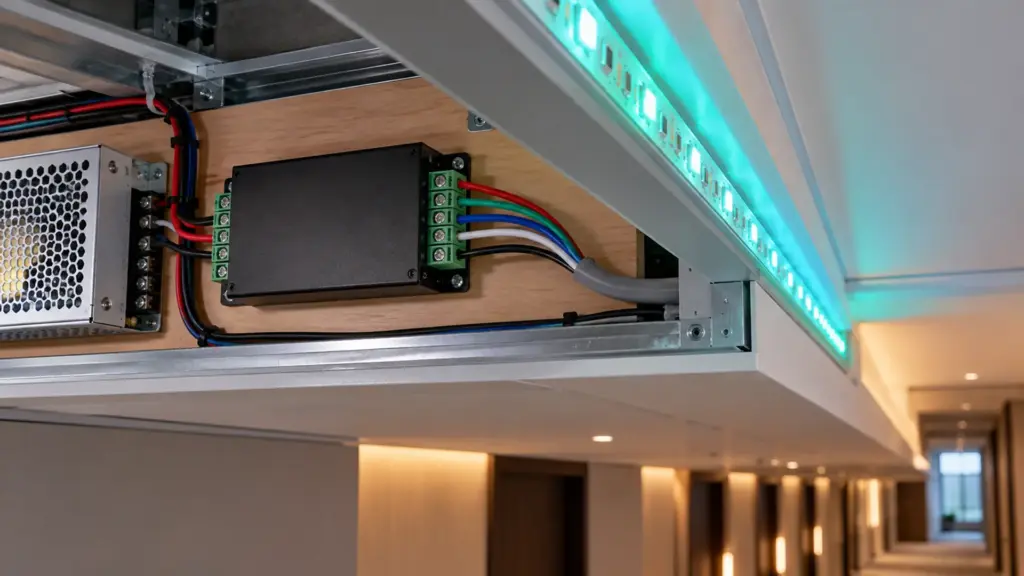
Every color-changing strip needs a controller matched to its channel count. Get this wrong and the fault is easy to miss at rough-in: an RGB controller on an RGBW strip simply leaves the white chip dark.
Channel and Pin Count by Strip Type
A channel is one controllable color. A pin is one conductor. Every constant-voltage color strip has one more pin than channels, because all channels share a common positive.
| Strip type | Channels | Pins | Controller needed |
|---|---|---|---|
| RGB | 3 | 4 | 3-channel RGB |
| RGBW, RGBCW | 4 | 5 | 4-channel RGBW |
| RGB+CCT, RGBWW 5-in-1 | 5 | 6 | 5-channel |
Match the connectors and the wire to the pin count as well. A five-pin RGBW run needs five-conductor cable from the controller to every section, and every joint needs a five-pin connector.
DMX, RF, and DALI: What Each Covers
DMX512 is the standard for console-driven and architectural color control. Our UT-CDMX-480 is a four-channel DMX512 decoder rated to 480W on 12–24V DC. One decoder drives an RGBW or RGBCW zone. An RGB+CCT zone needs a fifth channel, so it takes more than one of these decoders.
For smaller jobs without a lighting console, UT-CRF-24G is a 2.4G RF controller rated to 360W, with remote and wall panel control across four zones. For long runs where one controller output is not enough, UT-CAMP-4 repeats the four-channel PWM signal downstream, up to 384W.
DALI needs a closer look. DALI is common in hotels and offices, but our UT-CDALI-DT8 is a two-channel CCT controller. It covers tunable white, not RGBW or RGB+CCT color. If the building runs DALI and the design needs color, raise it at quote so the control path is settled before the ceiling closes.
See our drivers, controllers, and connectors for the full range.
Sizing Drivers for Color Strip
Size the driver from the listed W/ft and the run length, then keep the load at or below 80% of the driver rating.
A worked example: a 16 ft (5 m) RGBW cove on UT-RW60-12 at 5.8 W/ft draws about 93W. At 80% load, that needs a driver of at least 116W. A 60W Class 2 driver such as UT-D60-24-C2 is too small for the whole run, but split the cove into two 8 ft sections of about 46W each and each section fits a 60W Class 2 driver. The alternative is one larger driver, such as the 150W UT-D150-24-L linear driver, with the wiring method confirmed for a supply that is not Class 2.
Voltage Drop: Why Long Runs Turn Pink
On a long color run, the far end often shifts pink or red, most visibly when the strip is set to white. This is voltage drop. Red LEDs need less voltage than green and blue, so as voltage falls along the strip, green and blue dim first and red holds on. The mixed color at the far end drifts warm and pink.
Three habits prevent it. Use 24V for anything longer than a short accent, because lower current means less drop. Keep each feed to 16 ft (5 m), the run limit on our RGB and RGBW series. On longer coves, feed the run from both ends or add feed points, and size the feed wires so every feed point sees about the same voltage.
In white mode, RGBW and RGB+CCT light from white chips instead of a red, green, and blue balance, so a long run dims toward the end rather than turning pink. The same feed rules still apply.
Choosing by Space: Hotels, Retail, and Venues
Hotel Lobbies and Restaurants
These spaces run white for most of the day and switch to color for evenings or events. RGB+CCT lets the white warm up after dark and cool down for daytime, with color on top. If the white can stay at one color temperature, RGBW does the job with one fewer channel. If the room needs no color at all, dim-to-warm LED strip warms the white as it dims on a single dimmer.
Retail and Brand Color
Displays and storefronts tuned to exact brand color benefit from RGBW. The white chip gives clean pastels and a true white for merchandise. Choose the white CCT to match the rest of the store lighting.

Bars, Clubs, and Venues
Where dynamic color is the whole point and nobody needs task light, RGB is enough. Use dot-free COB RGB where the strip or its reflection is in view.
Coves and Feature Walls
For a continuous line that moves through the spectrum and also delivers a real white, dot-free COB RGBW such as UT-RW896-12 is the default. For exterior or wet areas, waterproof versions are available through our outdoor line; confirm the location rating for the exact model at quote.
FAQ
Can RGB LED strip make white light?
RGB LED strip can mix a white by running red, green, and blue together, but that white is a cool, tinted blend with poor color rendering. For functional white lighting, specify RGBW or RGB+CCT strip. The dedicated white chip delivers true white at Ra≥90.
Is RGBW worth it over RGB?
RGBW is worth it whenever the space needs usable white light, not only color. RGBW adds a dedicated white chip at Ra≥90 and one more control channel. For a color-only space such as a club or facade accent, RGB is enough.
Can RGBW make warm white?
Yes. RGBW strip makes warm white if the white chip is specified as warm white at order. The RGBW white chip has one fixed color temperature. If the space needs both warm and cool white, specify RGB+CCT, which tunes from 2700 to 6500K.
Do I need a special controller for RGBW?
Yes. RGBW strip needs a four-channel controller, because it has four color channels and five pins. A three-channel RGB controller leaves the white chip dark. Our UT-CDMX-480 four-channel DMX512 decoder drives one RGBW zone.
Is RGBIC the same as RGBW?
No. RGBIC strip has control ICs that let segments show different colors at once, which makes it addressable strip for effects. RGBW strip has a dedicated white chip for functional white and changes color along the whole run together. Choose RGBIC for moving effects and RGBW for usable white.
What is the difference between RGBW and RGB+CCT?
RGBW has one white chip at a fixed color temperature, with four channels. RGB+CCT has warm and cool white chips that tune between 2700 and 6500K, with five channels. Spec RGB+CCT when the room runs white for most of the day and the color temperature should change.
Before You Release the Order
Choose color strip by its white, not by its color. RGB is for color-only spaces. RGBW adds a Ra≥90 white at one color temperature. RGB+CCT adds tunable white for rooms that run white most of the day. Then confirm three things with the designer: the white CCT for RGBW, the control system (DMX, RF or DALI), and where each 16 ft (5 m) feed lands. Match controller channels, pin count and connectors to the strip you chose.
Send the zones, run lengths and the control system, and we will return a strip, controller and driver schedule for each zone, from our RGB and RGBW LED strip and matched controllers: request a quote.