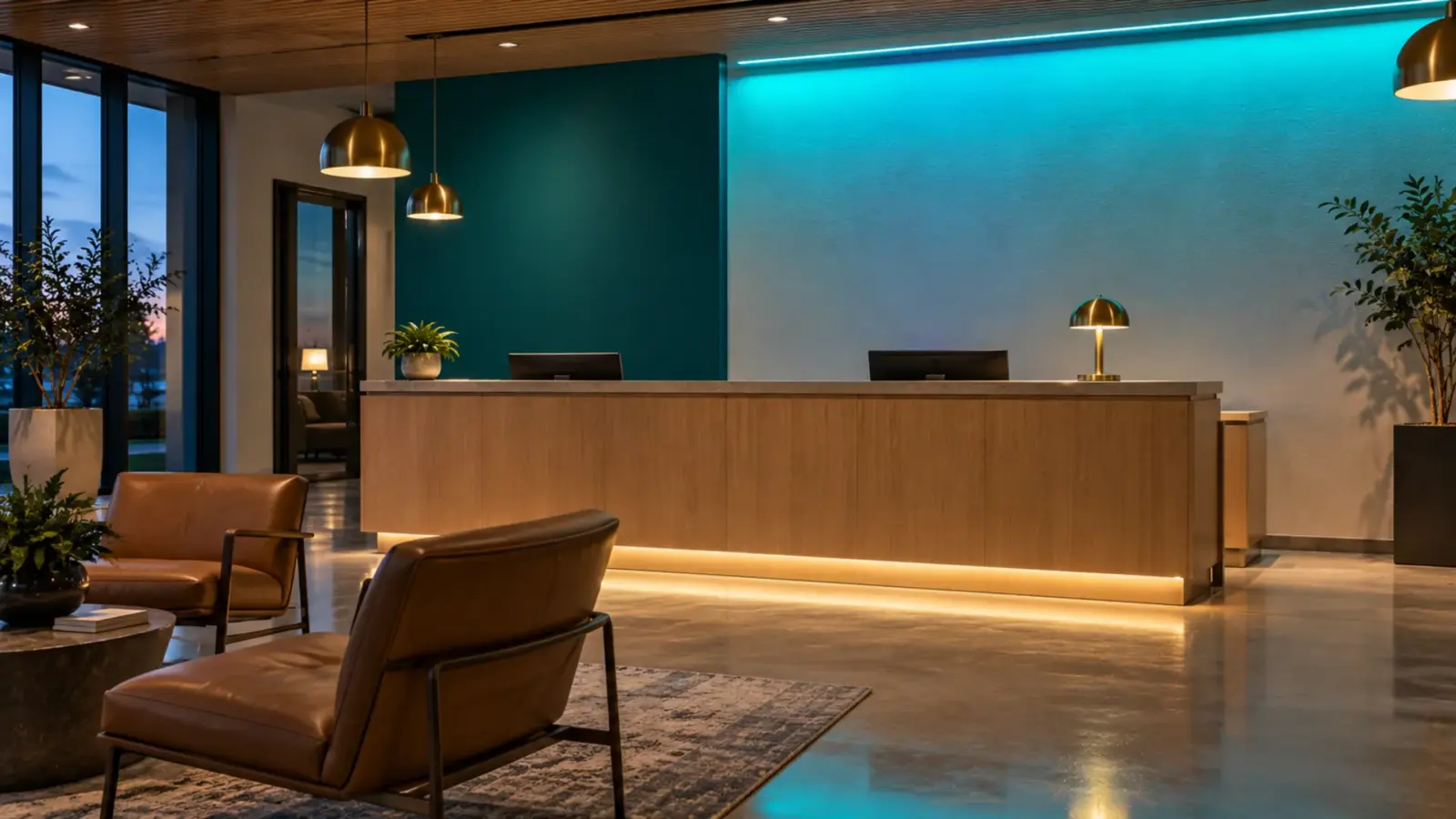
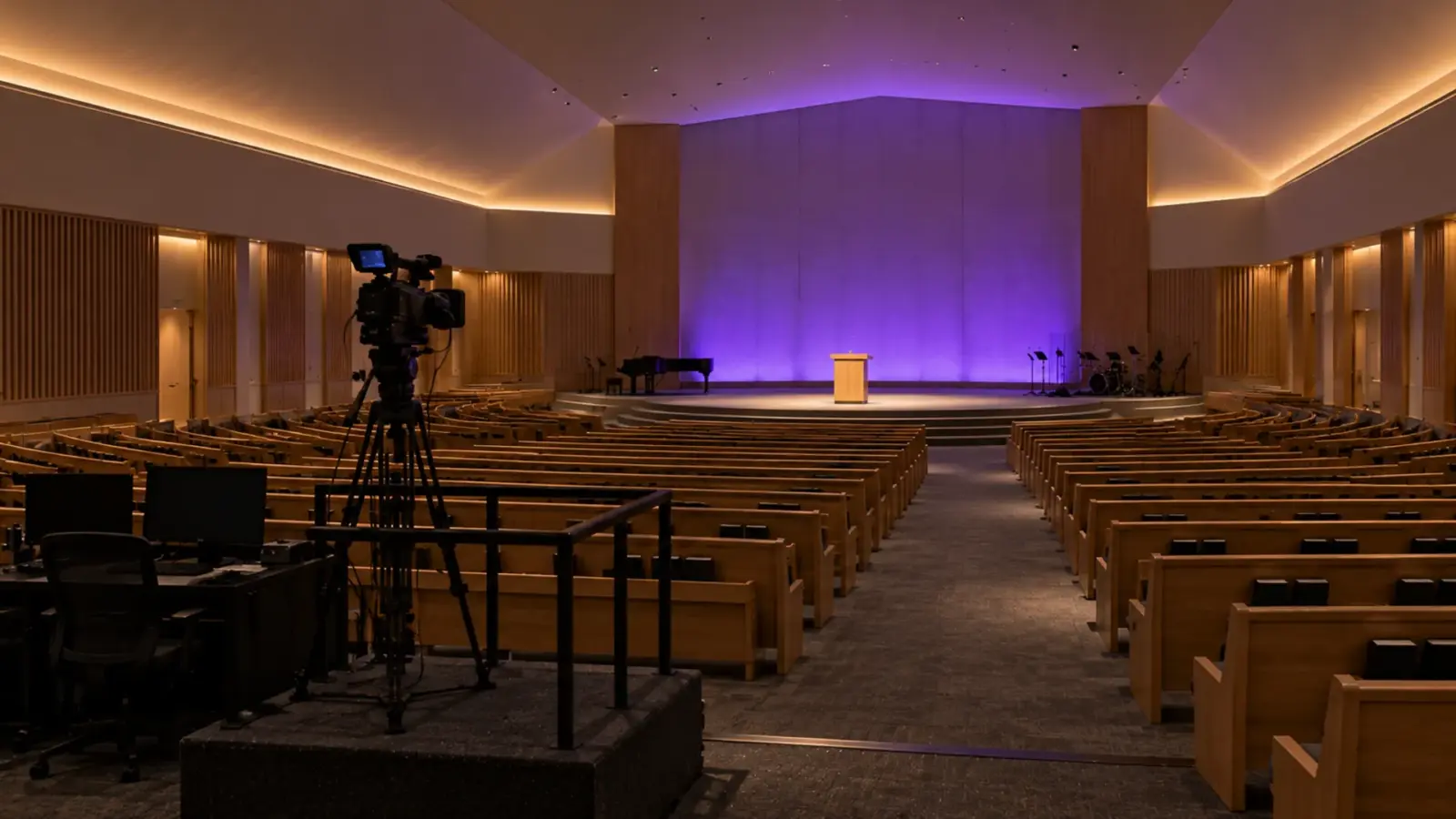
In a church or auditorium, LED strip does five jobs: perimeter coves for house light, chancel or stage backlight, color on the stage edge and set, aisle and step marking, and balcony lines. Each has to dim low without banding on camera, match its color from run to run, and disappear when off, because the livestream sees all three.
A few minutes into the sermon, the house lights drop to a low glow. In the room it looks calm. On the stream, the cove behind the pastor crawls with faint bands, the left wall is a shade warmer than the right, and the unlit strip on the stage edge reads as a silver line. None of that showed at the walkthrough, because nobody looked through the camera at the levels the service actually uses.
Two Audiences: The Room and the Camera
Every strip run in these rooms serves two audiences. The people in the seats judge it by mood and comfort. The camera judges it by flicker, color consistency and what it looks like when switched off.
| Strip job | What the room needs | What the camera needs |
|---|---|---|
| Perimeter house cove | Even wash, smooth dimming down to a glow | No banding at the dim level used during the service; walls that match |
| Chancel or stage backlight | Color for seasons and moments | Dot-free line in close shots; no banding at low levels |
| Stage edge, risers, set | A crisp line, color cues from the console | Strip and profile invisible when off; no banding |
| Aisles and steps | Safe footing in a dark house | Low enough not to flare into wide shots |
| Balcony fascia | A line that shapes the room | Same white as the cove, or deliberately different |
Strip usually does not light the faces on camera. Stage fixtures key the speaker; strip is the background and the house. That decides what to ask of it: steady output at low levels, consistent color, and a clean look when off.
House Coves at the Perimeter
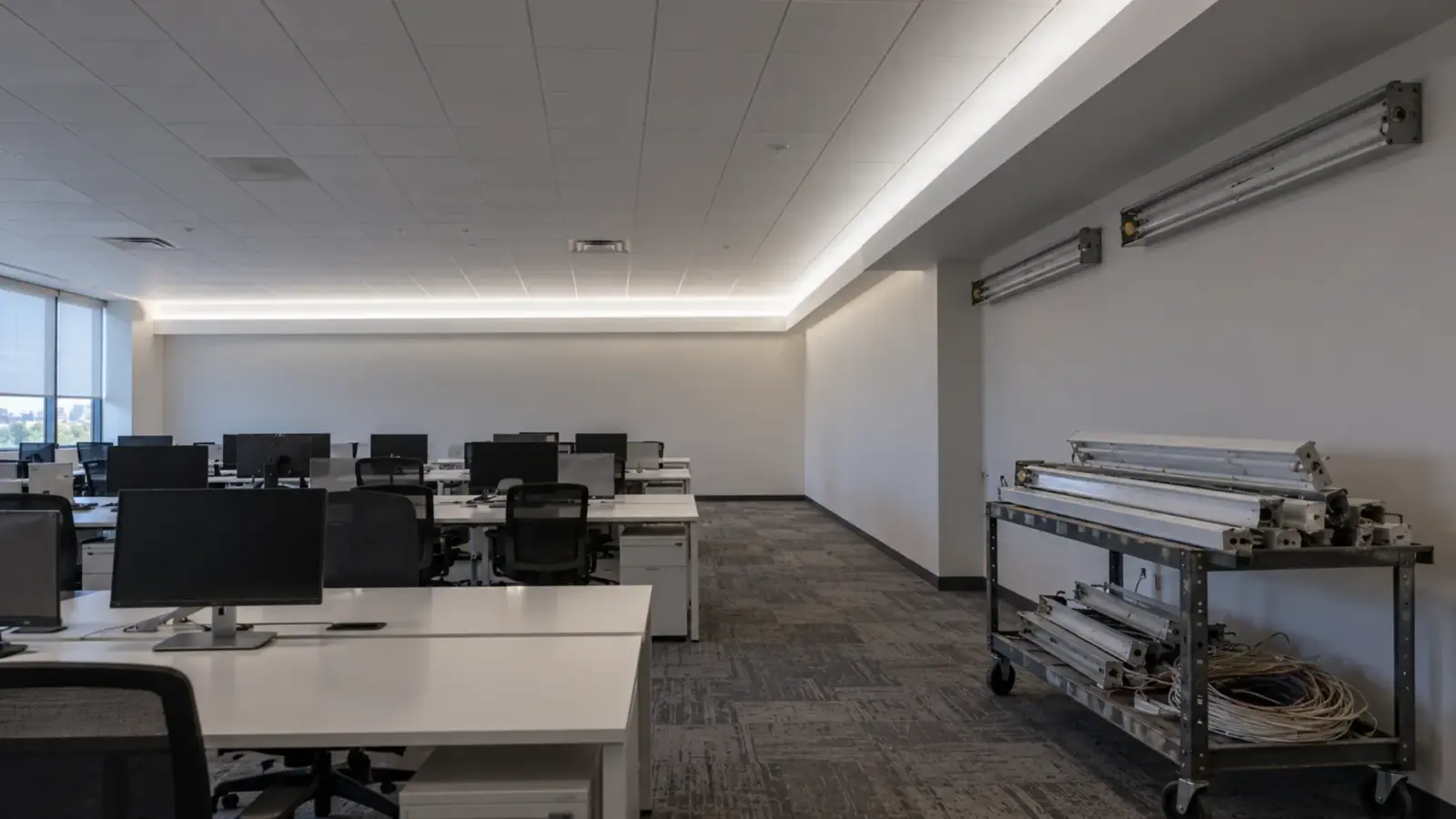
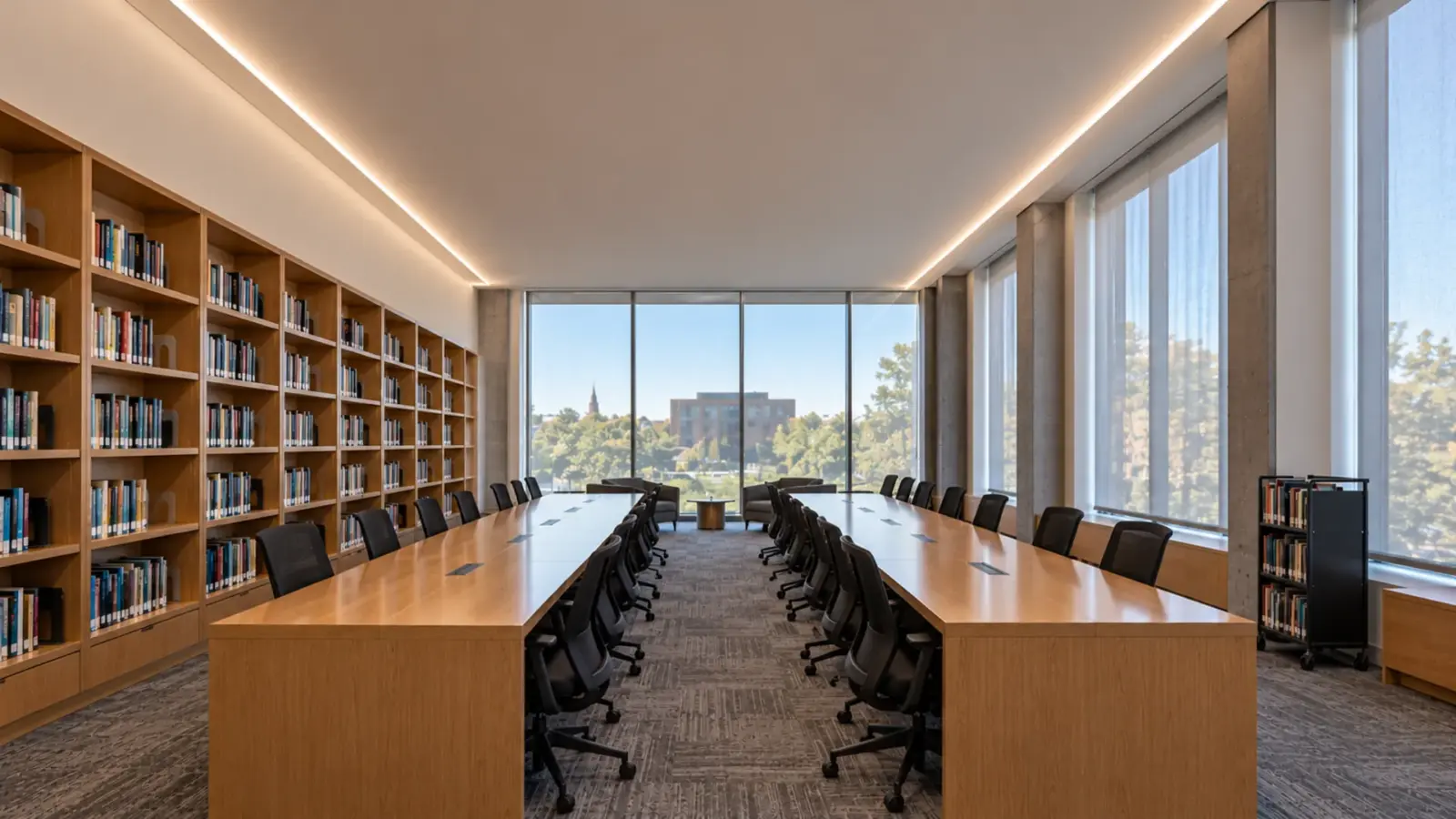
Sanctuaries and auditoriums often have high ceilings, and the house light comes from coves along the perimeter, at the wall-ceiling edge, never across the middle of the ceiling. RGBW strip such as UT-RW84-12 gives one run both jobs: the white channel (Ra≥90 on our page) for house light, the color channels for seasons and events. Where the house only ever needs white, tunable white strip does it with two white channels, 2700K to 6500K, and a 3-wire version, such as UT-T624-8, takes a dedicated CCT channel for DMX or DALI.
Dimming is the hard part. Services hold the house at low levels for long stretches, and a cove that steps or shimmers near the bottom of its range shows in the room before it shows on camera. Our white COB series dims smoothly to below 1 percent with a compatible driver; on RGBW runs the decoder sets the floor, and 8-bit channels can step at low levels, as our DMX guide explains. Ask for the driver and decoder pairing by name and test it at the level the service will use.
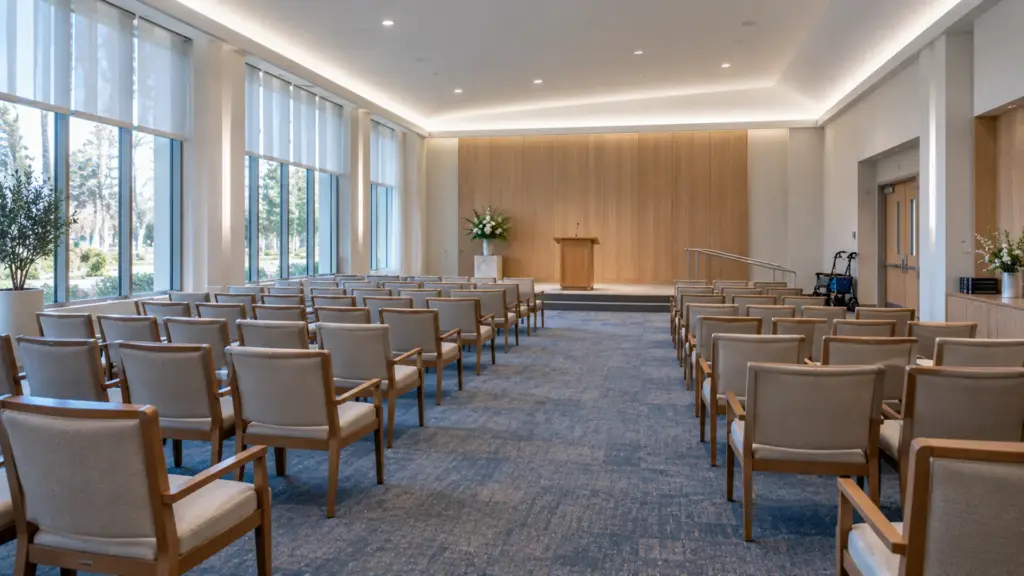
Then the drivers. A cove 30 ft up is not where anyone wants to change a driver. Put drivers in an accessible room or a catwalk and run the low-voltage feed up, sized so the far end does not dim, as our voltage drop guide explains. Each 24V RGBW run takes 16 ft (5 m) per feed, so a long cove has many feeds; mark each one on the drawings.
Chancel and Stage Backlight
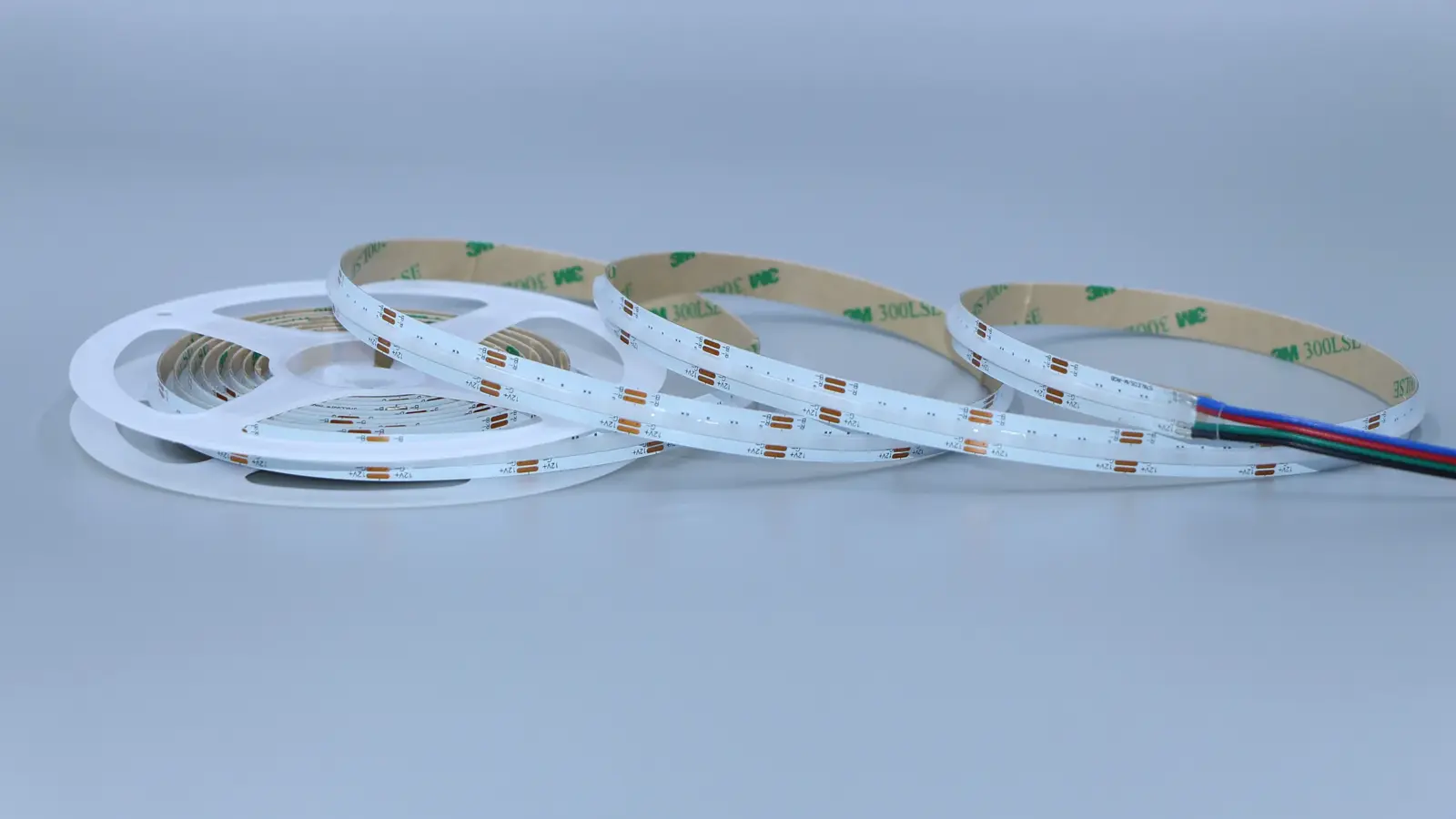
Behind the altar or the stage, strip washes the back wall, outlines a feature or backlights a cross or panel. This is where the camera looks most, so two things matter. First, dots: in a close shot, a strip of separate LEDs behind a shallow diffuser reads as a row of points. A dot-free COB RGBW strip such as UT-RW784-12, at the same 5.8 W/ft as the SMD version, avoids that when the diffusion depth is short. Second, low levels are where banding shows first, so test the backlight dimmed, not only at full.
A backlit cross, panel or glass feature needs even light across its whole face, and that is a question of depth. Strips spaced too far apart for the cavity show as stripes, in the room and on camera. According to a stretch-ceiling maker cited in our backlighting guide, the gap between rows of 120-degree strip should be about equal to the cavity depth. Build a small mockup of the panel and look at it through the camera before the millwork is made.
Stage Edge, Risers and Set Pieces
On a stage edge or riser, the strip is in the shot even when it is off. A white PCB and a silver profile read as a bright line on camera against a dark stage. Black PCB strip in a black profile with black leads disappears, which is the point of our black PCB guide; black PCB is a made-to-order build on our standard series, and our addressable range lists UT-A576-10-BK as a black-PCB COB pixel strip.
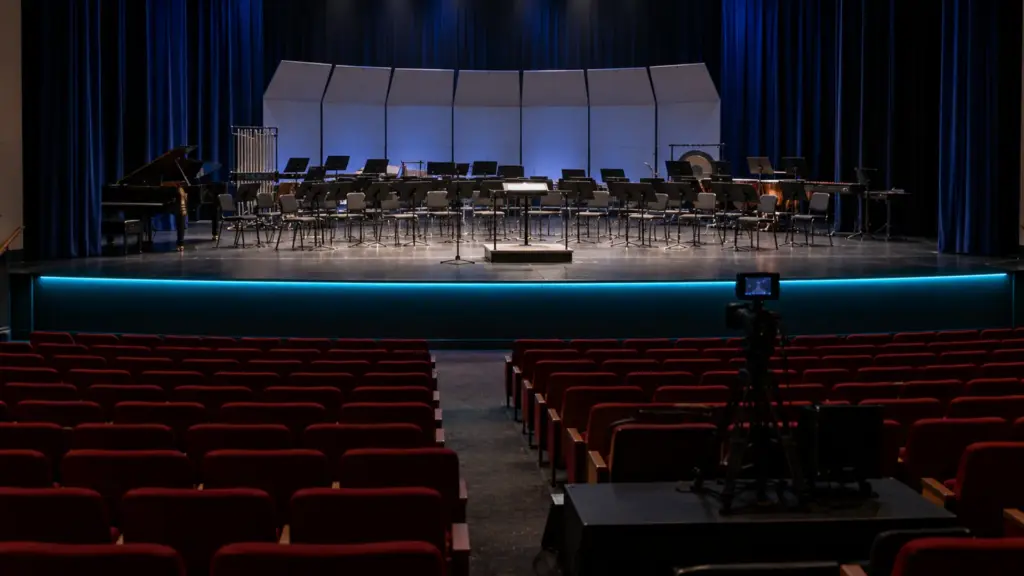
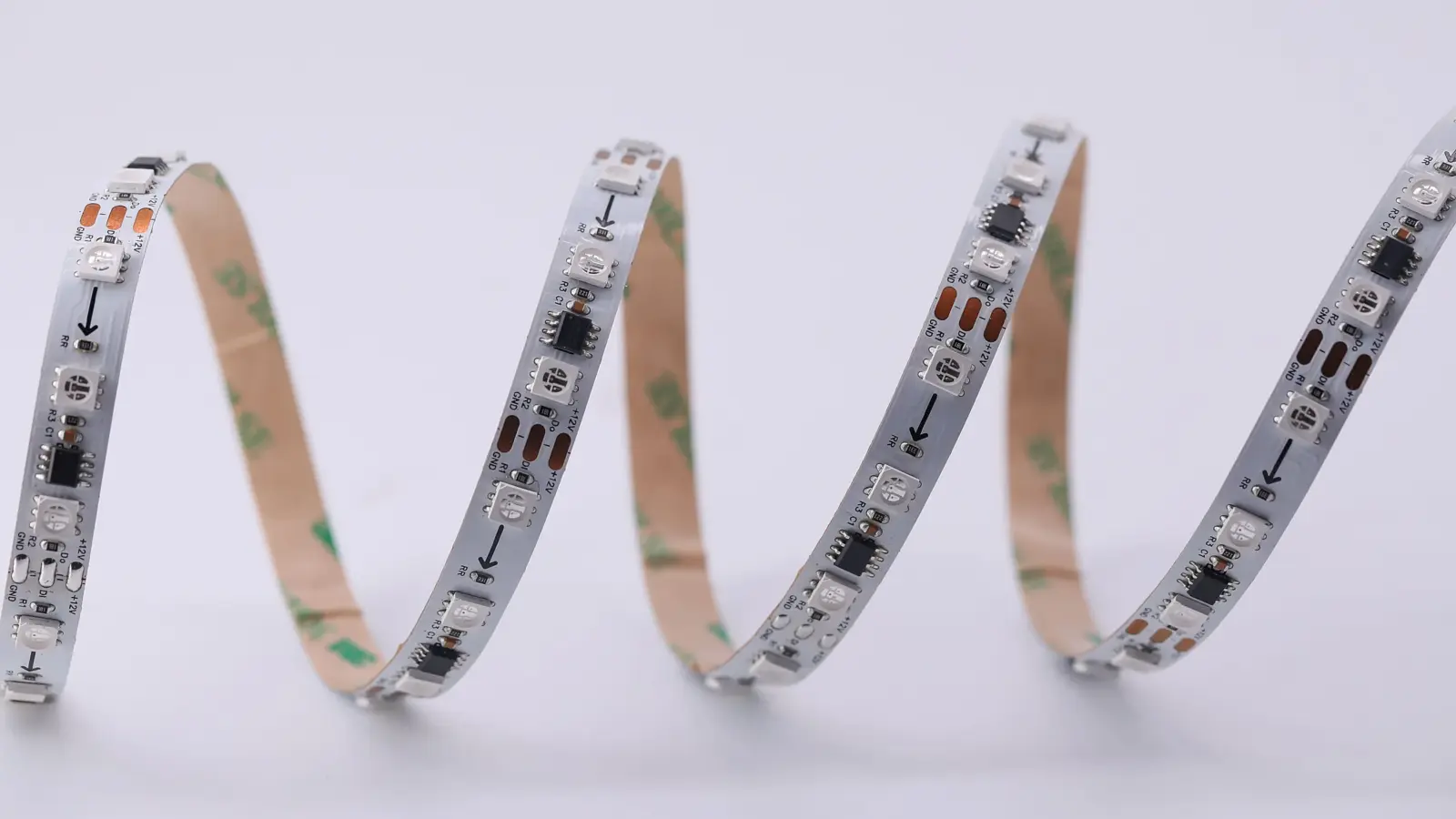
Set pieces and stage features that need chases or pixel effects run on addressable strip; a DMX512 version such as UT-AW80-12-DMX patches straight into the lighting console. Plain RGBW runs go through a decoder: UT-CDMX-480 takes 4 DMX channels and up to 480 W. The DMX guide counts universes, chains and decoders for a whole job.
Balcony and Fascia Lines
A balcony front or a fascia line shapes the room and shows up in reverse shots from the stage camera. Decide early whether it should match the house cove or contrast with it. If it matches, specify the same strip, the same CCT and the same production as the cove; mixed sources are a known camera problem, and the EBU publishes a separate matching factor, TLMF, for exactly that case. If it contrasts, make the difference deliberate, a clearly warmer line or a color, so it reads as design rather than a mismatch. Keep the strip out of direct view from the seats below, and give the fascia its own zone so it can follow the house down for the service.
Aisles and Steps
Step and aisle strip in a dark house is courtesy light and, often, part of the egress plan, and the two pull in different directions. One seating maker, Irwin Seating, notes that its aisle lights are often switched off during performances and are not designed to give code coverage across the whole aisle width.
The code allows a dark house, with conditions. As our stair lighting code guide explains, the 2024 IBC exception for performances lets the illumination on externally illuminated walking surfaces drop to not less than 0.2 footcandle, or permits steps marked with self-luminous materials listed to UL 1994, provided the required level comes back automatically when the fire alarm activates. The exception names auditoriums, theaters, concert or opera halls and similar assembly occupancies; whether a worship service counts is the AHJ’s call, so settle that first.
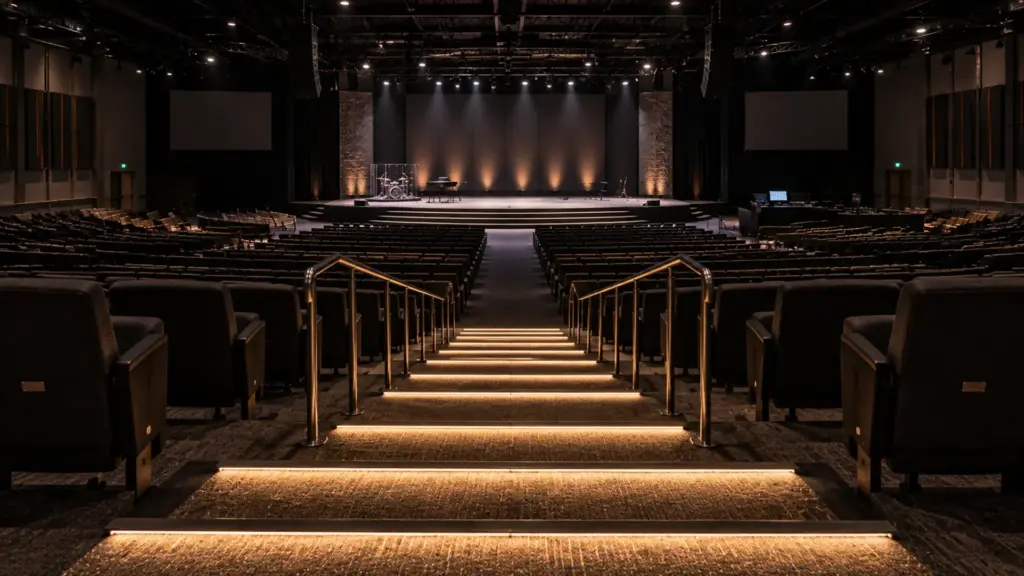
The design then has three states: a show level for the service, a full level for arrival and leaving, and a fire-alarm tie that restores full level without anyone touching the console. Keep the show level low and the strip shielded so it does not flare into wide shots of the room.
Flicker on the Livestream
According to ENTTEC, almost all LED fixtures and pixel products dim by pulse-width modulation, switching the LEDs on and off rapidly; DMX decoders do the same. The eye averages it; a camera can catch it as rolling bands, as our flicker guide explains in detail.
According to ENTTEC, flicker at 24 to 60 frames per second with sensible shutter settings is rare at PWM rates of 2 kHz and above, may appear below about 1 kHz, and is worst when content sits at 5 to 20 percent brightness. A house cove held low for a sermon can sit in that range. ENTTEC also notes that many datasheets do not state the PWM rate at all.
So treat camera flicker as a specification item:
- Ask for the PWM frequency of every driver and decoder on the job. Our drivers page gives about 1 kHz as the typical figure for our dimmable drivers and decoders, the range where banding can appear, so get the exact figure from each model’s datasheet with the quote.
- Set the camera shutter to a whole number of PWM cycles where the rate is known.
- Test with the actual cameras and settings, at the dim levels the service uses, and watch the result on a large screen.
Our pages state that white COB driver pairings are verified flicker-free before shipment. That is not a camera test, so the camera test still has to happen in the room.
Color on Camera: TLCI, Not Just Ra
Ra describes how colors look to the eye. The European Broadcasting Union’s Television Lighting Consistency Index, TLCI, models a camera and display instead, and scores a light from 0 to 100. The EBU scales were built from tests with colourists and television professionals; on its live multi-camera scale, scores around 90 are labeled very good and around 65 good, with considerable overlap. A score of 50 marks roughly the line between light a colourist can correct and light they cannot.
For strip, TLCI matters most where strip lights people or a white backdrop the camera holds on. For a colored wash, the bigger issue is that every run matches. A replacement run from a later production can show a step in white next to the original, as our color mismatch guide explains; order the whole cove from one production and keep spares. Our white channels state Ra≥90, and our SMD full-spectrum tier lists TM-30 data; TLCI is not on our pages, so ask for it where strip will light faces.
Control: Volunteers and the Console
Many churches run services with volunteer teams. The house cove needs a simple wall control for weekday use, such as a 0-10V touch panel like UT-CTP-010 (one zone per panel) on white runs, and the stage strip needs the console. When both can command the same zones, they fight. Decide which system owns each zone, and how control passes to the console for a service and back afterward, before the decoders are addressed. Our ballroom cove guide sets out that handoff for an integrator.
A 60 by 90 ft Sanctuary, Worked
A sanctuary 60 ft wide and 90 ft long gets an RGBW perimeter cove of UT-RW84-12 on all four walls, each wall its own zone:
| Item | Long wall (90 ft) | Short wall (60 ft) | Whole cove |
|---|---|---|---|
| Strip length | 90 ft | 60 ft | 300 ft |
| Load at 5.8 W/ft | 522 W | 348 W | 1,740 W |
| Feeds at 16 ft (5 m) each | 6 | 4 | 20 |
| UT-CDMX-480 decoders (480 W each, kept under 80 percent, 384 W) | 2 | 1 | 6 |
| DMX channels (one RGBW zone per wall) | 4 | 4 | 16 |
Driver capacity at 80 percent loading is 1,740 W ÷ 0.8 = 2,175 W, split among drivers placed in reach and fed up to the cove. The two decoders on each long wall share one DMX address so the wall acts as one zone; four zones use 16 of the 512 channels in a universe, leaving the rest for the stage.
Spec Notes for This Job
- Each strip job assigned on the drawings: house cove, backlight, stage edge, aisles, fascia.
- PWM frequency stated for every driver and decoder, and a camera test at service levels before handover.
- Dot-free strip wherever the camera holds a close shot.
- Black PCB, black profile and black leads on anything in the shot when off.
- One production for each cove, with spares from the same production.
- Aisle and step strip with a show level, a full level and a fire-alarm tie, agreed with the AHJ.
- Drivers in reach, feeds marked, zones owned by one control system at a time.
Our RGB and RGBW LED strip and addressable LED strip pages list the runs above. Send the room drawings and the camera positions with the quote request, and we will return the strip, feed and decoder plan, with the PWM frequency for each device where its maker publishes it.