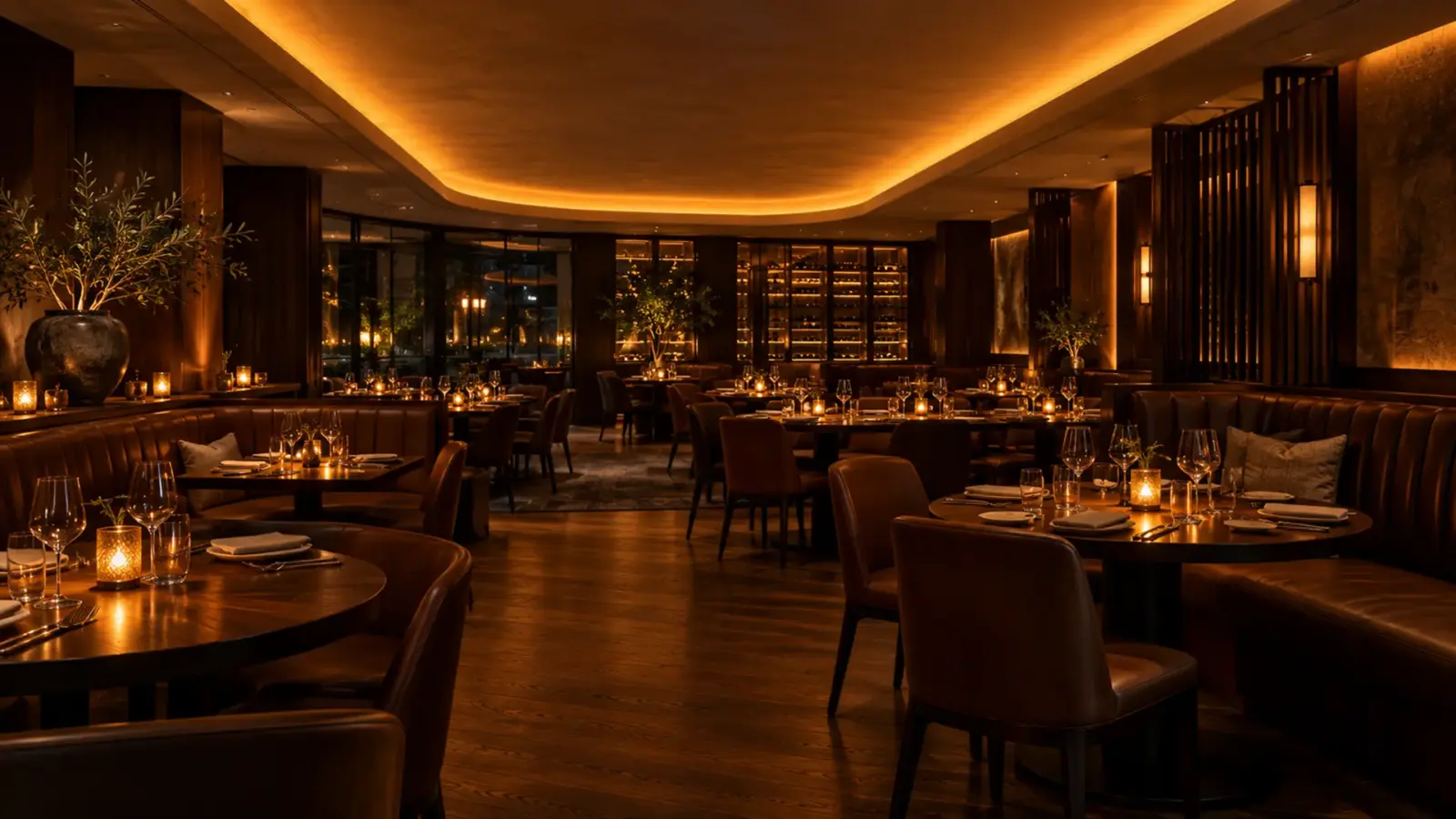
It is 8 pm in a restaurant that replaced its incandescent coves with LED strip. The owner dims the room to set the evening mood, and instead of getting warmer, the light just gets dimmer and grayer. The room looks like it is running out of power, not settling in for dinner.
Dim-to-warm LED strip fixes that. Dim-to-warm LED strip shifts from 3000K at full output to near 1800K as it dims, the way an incandescent lamp does, and it does it automatically on a single dimming channel. Spec dim-to-warm where one dimmer sets the mood, and spec tunable white when the color temperature has to move independently of brightness.
The Short Answer: What Dim-to-Warm Does
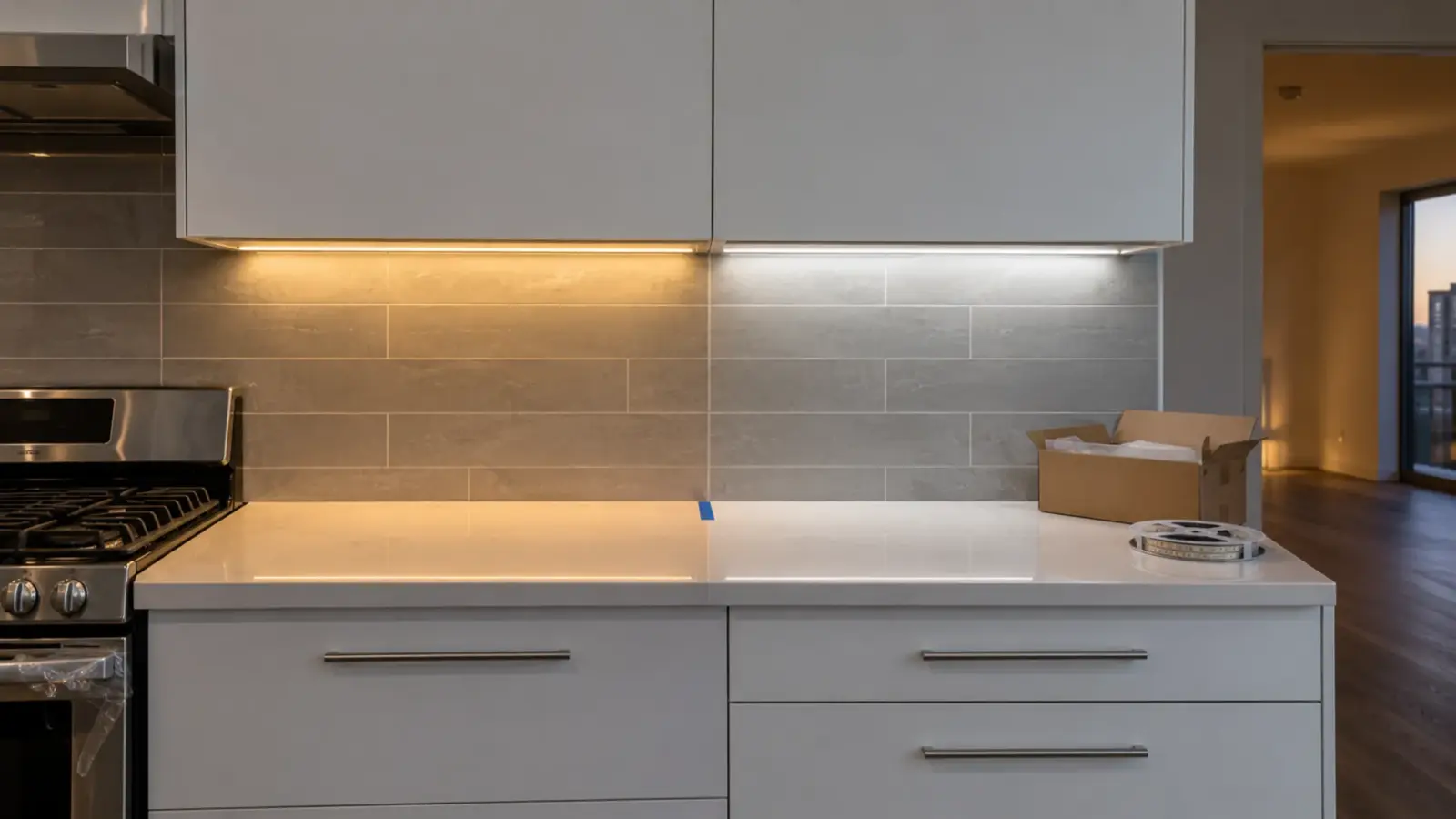
Dim-to-warm LED strip ties color temperature to brightness. At full output it reads as a standard 3000K warm white. As you dim it, the light gets warmer as well as dimmer, ending near 1800K, a candlelight amber, at the bottom of the range.
There is no programming and no scene setup. The strip does the incandescent curve on its own, from any compatible single-channel dimmer. The owner or the staff turn one knob, and the room behaves the way it did under incandescent.
How Dim-to-Warm Works: Two Whites, One Channel
3000K at Full, Near 1800K at the Bottom
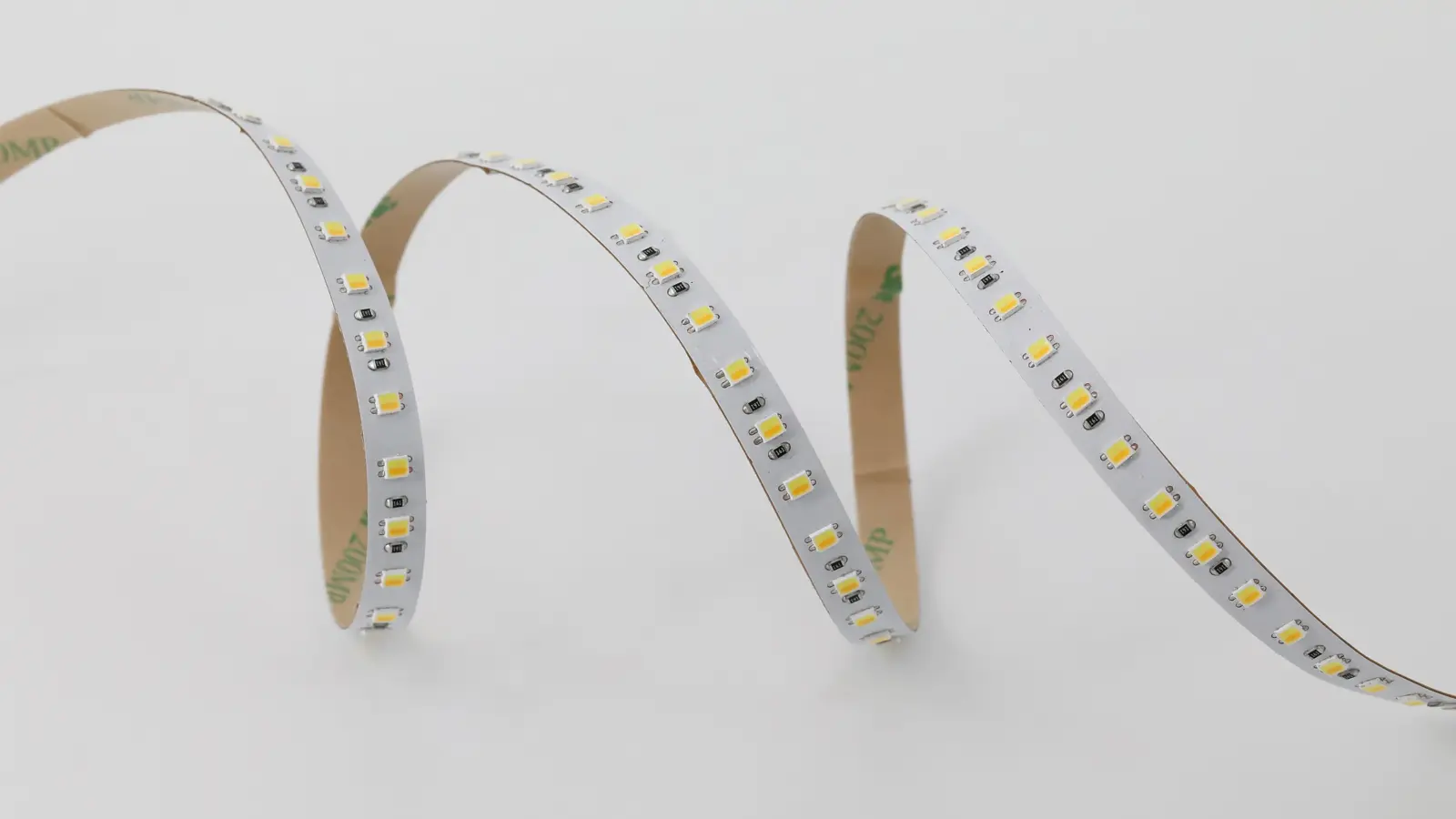
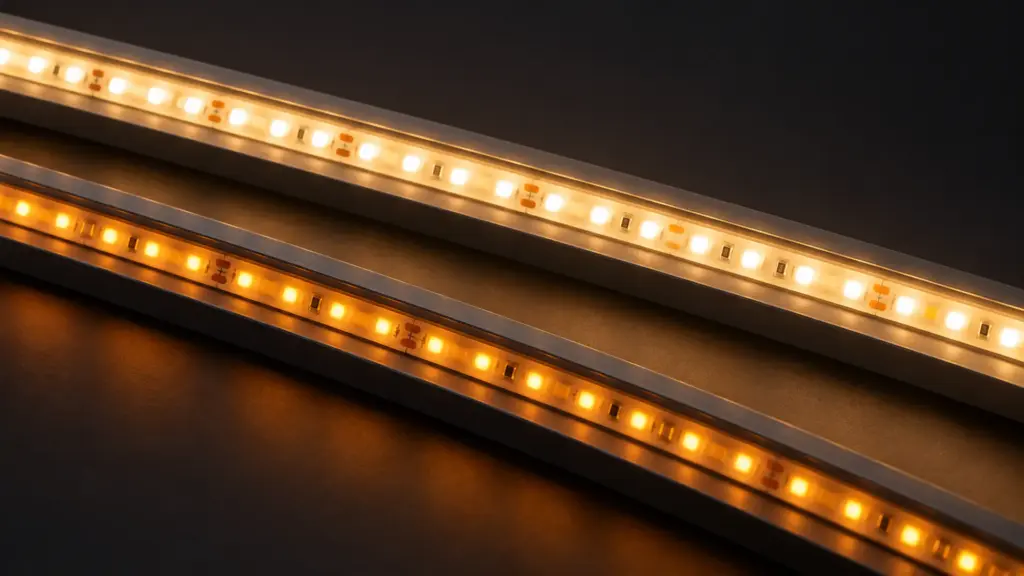
Our page lists the behavior of a dim-to-warm strip: it dims from 3000K down to 1800K. According to vendor explainers, the strip mixes two white LED sets, a warm white and an amber white, and the share between them follows the dimming level, so the mix slides warmer as the room gets dimmer. The datasheet for the exact model is the place to check the curve, because each product maps level to color its own way.
Why It Only Needs Two Wires
Because the color shift happens on the strip, the strip only needs power and a dimming signal carried on the same pair of wires. That is what 2-wire means. There is no separate color channel to run, no second driver output, and no CCT controller.
This is the practical difference from tunable white. A tunable white strip needs a controller that sets color temperature on its own channel or over the power line. A dim-to-warm strip needs only a dimmer.
Dim-to-Warm vs Tunable White: Which to Spec
Both products change color temperature, but they are built for different jobs.
| Dim-to-warm | Tunable white | |
|---|---|---|
| Color range | 3000K to near 1800K | 2700K to 6500K |
| CCT follows brightness? | Yes, automatically | No, set independently |
| Control | One dimming channel, 2-wire | CCT-capable controller, 2-wire or 3-wire |
| Programming | None | Scenes or schedules to use it well |
| Best for | Evening ambiance, incandescent feel | Daytime to evening shifts, task and circadian |
| Our models | UT-T672-10-DTW, UT-T120-8-DTW | UT-T576-8 (2-wire), UT-T640-10 (3-wire) |
Spec dim-to-warm when the space should behave like incandescent and staff should never think about color temperature. Spec tunable white when the space needs cool white during the day and warm white at night, at full brightness either way. If the room also needs color scenes, RGB+CCT strip adds tunable white to full RGB color.
Tunable white can approximate the dim-to-warm curve with a programmed controller, but only down to its 2700K floor, and only if the controller is set up for it and stays set up. Dim-to-warm does it natively, which is one less thing to commission.
If It Has to Be Tunable: 2-Wire, 3-Wire or Step
The tunable half of the decision has its own choices, and they follow the control system, not the strip.
- 2-wire dim + CCT. Dimming and color commands travel over the power line, so the strip drops into a retrofit without new control wiring. UT-T576-8 is a 24V COB model on this architecture.
- 3-wire CCT. A separate CCT channel for 0-10V, DALI and DMX systems, the usual choice for new commercial work. UT-T640-10 is a 24V COB model on this architecture.
- Step tuning. UT-T240-10-OF cycles its white points from a standard wall switch, with no controller. It suits a retrofit where nobody will schedule scenes.
Whichever you pick, a tunable strip needs the controller matched to its architecture, and we pair it at quote. Both families are on our tunable white LED strip page.
Our Dim-to-Warm Strip: COB or SMD
We supply dim-to-warm in two constructions. Both are 2-wire, 24V, and render at Ra≥90.
| Model | Construction | LEDs/m | Power | Cut point | Run per feed |
|---|---|---|---|---|---|
| UT-T672-10-DTW | COB, dot-free | 672 | 3.4 W/ft | 2.81 in (71.42 mm) | 16 ft (5 m) |
| UT-T120-8-DTW | SMD | 120 | 2.9 W/ft | 1.97 in (50 mm) | 16 ft (5 m) |
The choice follows the same rule as any white strip. Where the strip or its reflection can be seen, such as a shallow cove, a bar die, or a glossy ceiling, use the COB version for a continuous line. Where the strip is fully hidden behind a lip with enough setback, the SMD version does the job. Note the longer cut point on the COB strip, and dimension coves to it.
Controls: Dimmers and Drivers That Work
Single-Channel Dimming Is the Requirement
A dim-to-warm strip wants one dimming channel. Any compatible single-channel dimmer drives the warm shift, because the strip handles the color itself. A two-channel CCT controller is the wrong tool: it expects two separate white channels that this strip does not have.
0-10V and TRIAC: UT-C010-350 and UT-CTRC-240
Two of our controllers are the usual pairings; we confirm the pairing and the dimmer compatibility list at quote.
For 0-10V control, UT-C010-350 is a one-channel 0-10V decoder rated to 350W on 12–24V DC. It sits between the 24V driver and the strip and takes its signal from a 0-10V wall control or the building’s lighting controls. This is the usual choice for new commercial work.
For phase-cut dimming, UT-CTRC-240 is a TRIAC dimming controller on 120 VAC, rated to 240W, and it works with both forward-phase and reverse-phase dimmers. This suits retrofits where the owner wants to keep a standard wall dimmer.
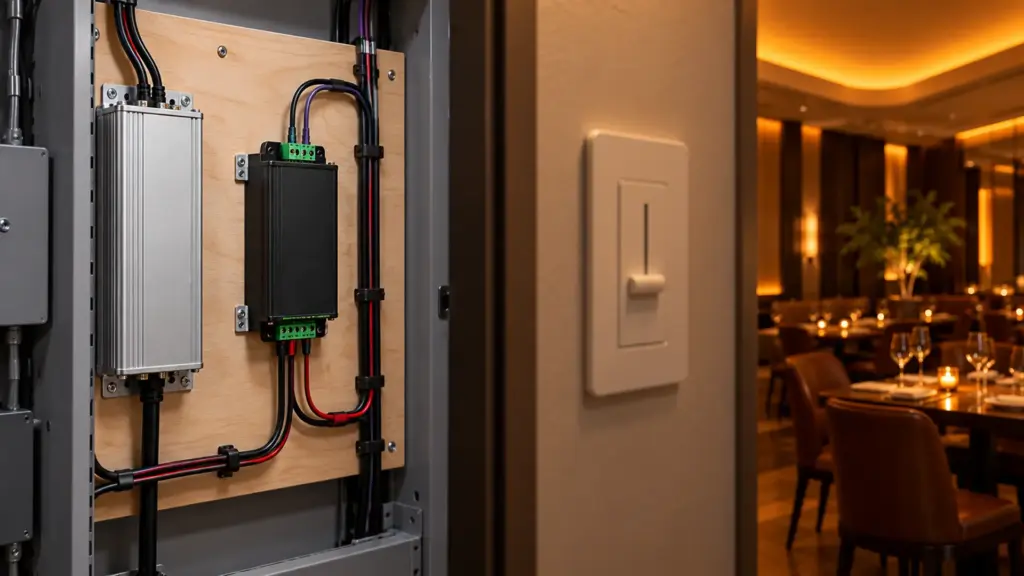
Size the controls to the load. A 16 ft (5 m) run of UT-T672-10-DTW at 3.4 W/ft draws about 54W. Keep each driver and controller at or below 80% of its rating, so that run needs at least 68W of driver capacity. At the same 80% limit, one UT-C010-350 carries up to five of those runs.
Split long coves into zones rather than loading one controller to the limit. See our drivers, controllers, and connectors for the full range.
DALI: Confirm at Quote
Many hotels and newer commercial buildings run DALI. If the project controls lighting over DALI, confirm the dim-to-warm control path at quote, before the ceiling closes. Our DALI controller in the current range is a two-channel CCT unit built for tunable white, so a DALI dim-to-warm job needs to be settled with us up front.
Low-End Flicker and Dimmer Matching
The bottom of the dimming range is where dim-to-warm does its best work, and it is also where dimmer problems show up. Flicker, buzz, or a sudden drop to off at low levels usually means the dimmer and the driver do not speak the same dimming language.
With phase dimming, match the dimmer type to the controller and check its minimum load. With 0-10V, confirm the wall control and the decoder share the same low-end range. Either way, test the full range down to the lowest setting during commissioning, not after the owner moves in.
Matching Downlights and Other Fixtures
Why Two Dim-to-Warm Products Drift Apart
Dim-to-warm strip and dim-to-warm downlights both get warmer as they dim, but not along the same curve. Every product maps dimming level to color temperature in its own way. At the same dimmer setting, one can already look amber while the other still reads as warm white.
In a restaurant, that mismatch is easy to see. The cove and the downlights over the tables sit in the same view, and the eye catches the difference immediately.
Mock Up, Then Zone
Mock up the strip and the downlights on the actual dimmer before the order is released. Run them together from full to the lowest setting and look for the point where they part ways.
If they drift, put them on separate zones so each can be trimmed to match at the scene the owner uses most. Keep every dim-to-warm product in the same view on the same product family where possible, and on the same dimming protocol. Record the dimmer settings where the strip and the downlights match best, and write them into the scene notes the owner receives.
Where Dim-to-Warm Earns Its Keep
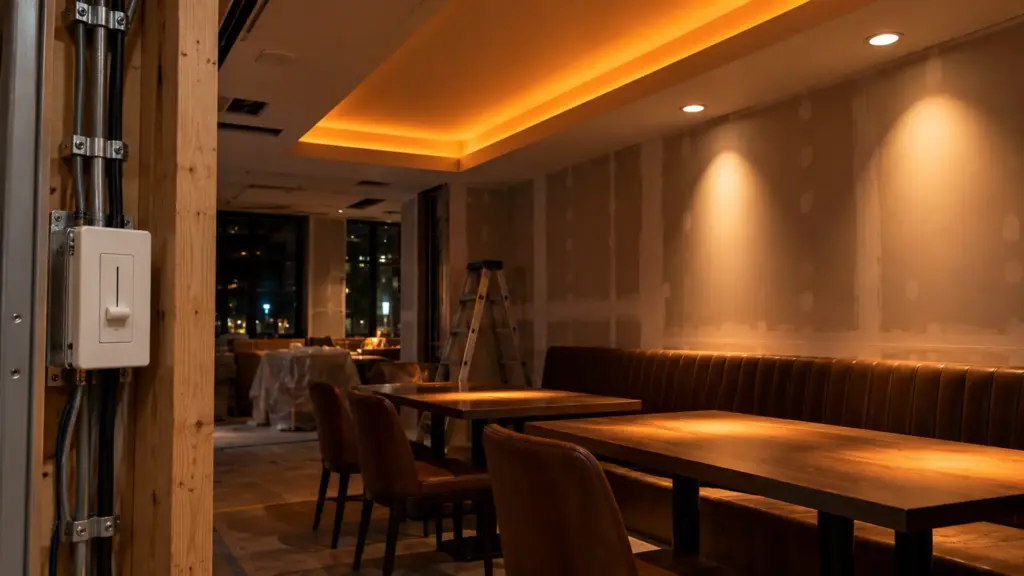
Dim-to-warm fits spaces that get dimmer and more relaxed as the evening goes on.
Restaurants and Bars
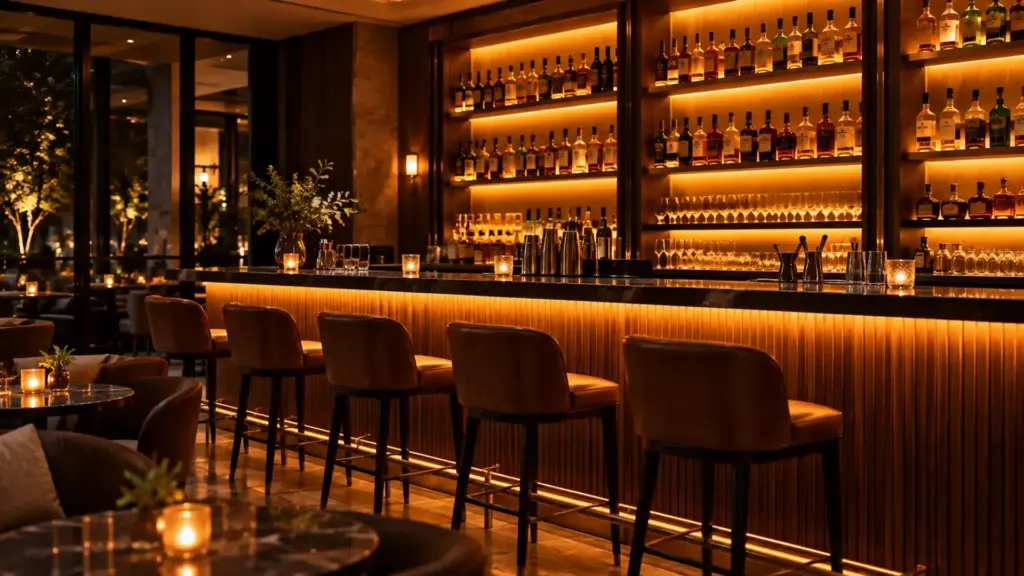
Service moves from bright setup to low dinner light on one control. Coves, back bars, and banquette uplight all benefit.
Hotel Corridors, Lobbies, and Guestrooms
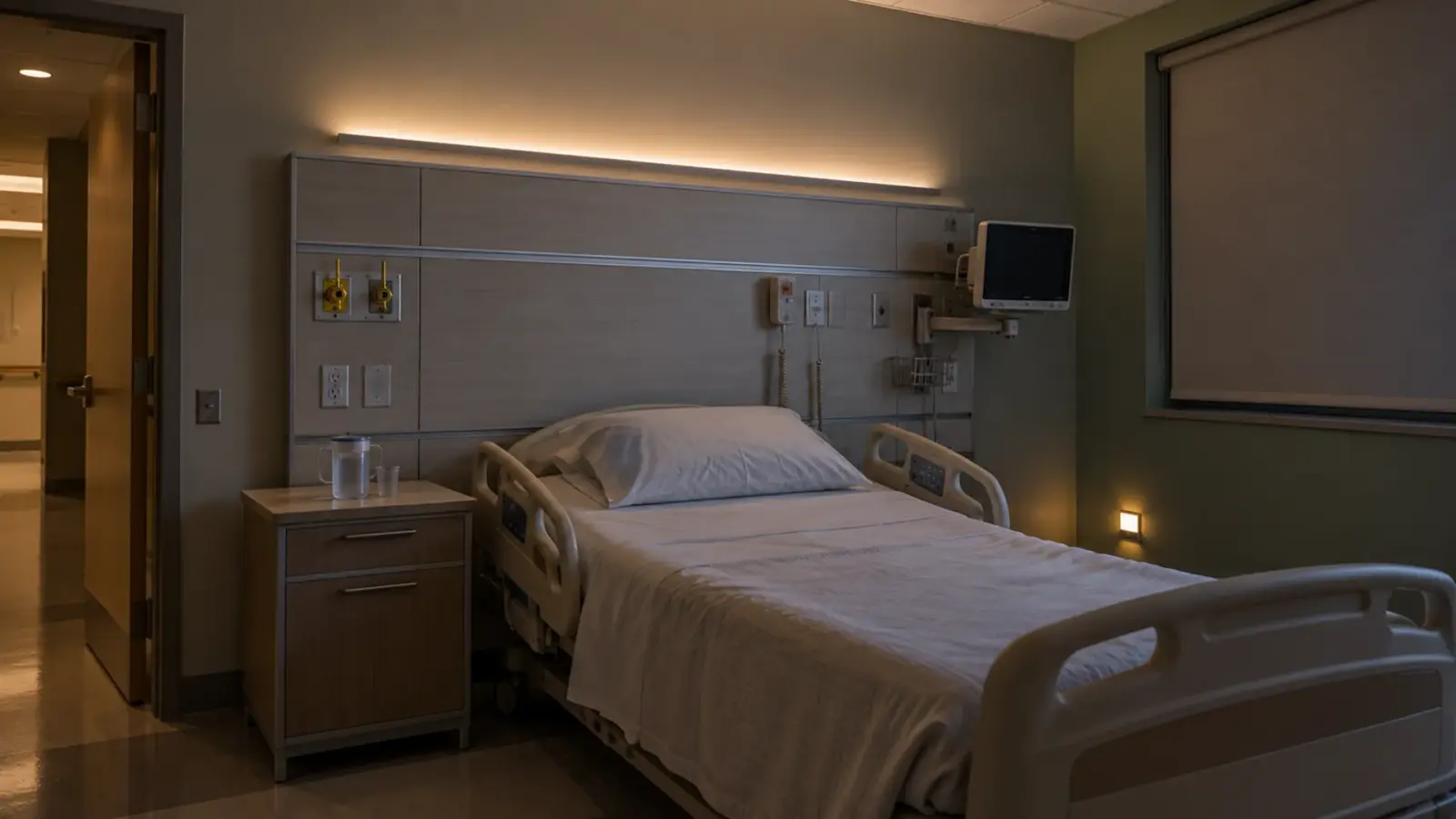
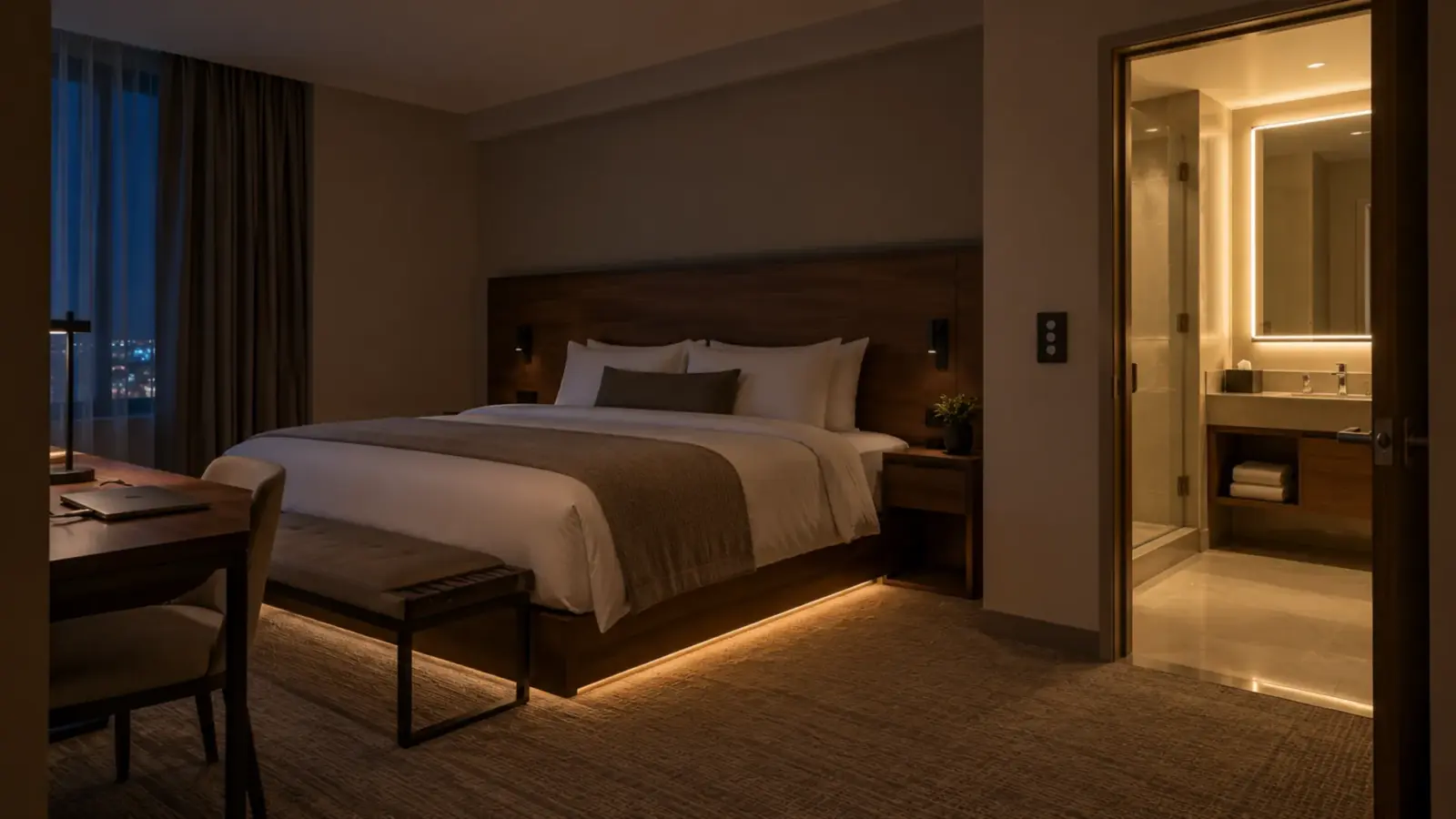
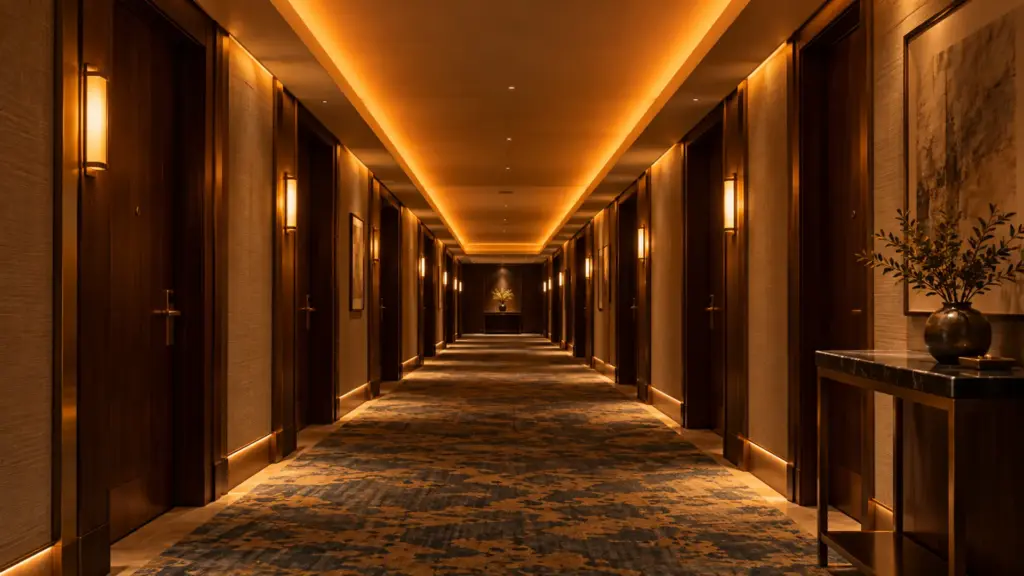
Corridors and lobbies can dim down after hours and stay warm and inviting instead of gray. In guestrooms, a single dimmer gives guests an incandescent feel without a scene controller.
Lounges and Waiting Areas
Any space where people stay a while in the evening benefits from light that warms as it dims.
Where Not to Use It
Dim-to-warm is the wrong spec where color temperature should stay put. Offices, task areas, and retail sales floors need consistent white at every level, or cool white during the day. Those jobs are tunable white or a fixed CCT.
Installation Notes: Feeds, Cuts, and Commissioning
Both of our dim-to-warm strips run on 24V with 16 ft (5 m) per feed. On longer coves, add feed points so the far end sees the same voltage as the near end. A dim-to-warm strip that drops voltage along the run can look uneven from one end to the other, which defeats the point.
Cut only at the marked points: every 2.81 in (71.42 mm) on UT-T672-10-DTW and every 1.97 in (50 mm) on UT-T120-8-DTW. UL Listed options are available for both, with documentation for your submittal package.
Commission the whole system at night, with the room’s other lighting on. Walk the dimmer from full to the lowest setting, check for flicker, and confirm the strip and the downlights hold together at the levels the owner will use.
FAQ
What is dim-to-warm LED strip?
Dim-to-warm LED strip is white LED strip that gets warmer as it dims. Dim-to-warm LED strip runs at 3000K at full output and shifts to near 1800K at the bottom of the dimming range, the way an incandescent lamp behaves on a dimmer.
What is the difference between dim-to-warm and tunable white?
Dim-to-warm links color temperature to brightness, automatically, on one dimming channel. Tunable white sets color temperature from 2700K to 6500K independently of brightness and needs a CCT-capable controller. Spec dim-to-warm for incandescent-style ambiance and tunable white for scene or daytime control.
What dimmer do I need for dim-to-warm LED strip?
Dim-to-warm LED strip needs a compatible single-channel dimmer. Our dim-to-warm strips dim on UT-C010-350, a one-channel 0-10V decoder, and UT-CTRC-240, a TRIAC controller for forward-phase and reverse-phase dimmers. For DALI projects, confirm the control path at quote.
Can I mix dim-to-warm strip with dim-to-warm downlights?
Yes, but mock them up together first. Dim-to-warm strip and dim-to-warm downlights follow different curves, so at the same dimmer level they can show different color temperatures. If they drift apart, put them on separate zones and trim each to match.
Does dim-to-warm LED strip lose brightness as it warms?
Yes. Dim-to-warm LED strip gets warmer because it is being dimmed, so the warmest color always comes with the lowest light level. If a space needs warm color at high output, spec a fixed warm CCT or tunable white instead.
What to Confirm Before Release
- The control path: 0-10V, TRIAC or DALI, and the dimmer on the wall.
- A mock-up of the strip beside the downlights, on the real dimmer, from full to the lowest level.
- A feed point every 16 ft (5 m) on long coves.
- Whether the room needs color temperature to move on its own. If it does, the answer is tunable white, not dim-to-warm.
Send the drawings, the dimmer type and the other fixtures that share the view. We will confirm the control pairing for each zone and return a schedule with the dim-to-warm strip and its dimming controls: request a quote.