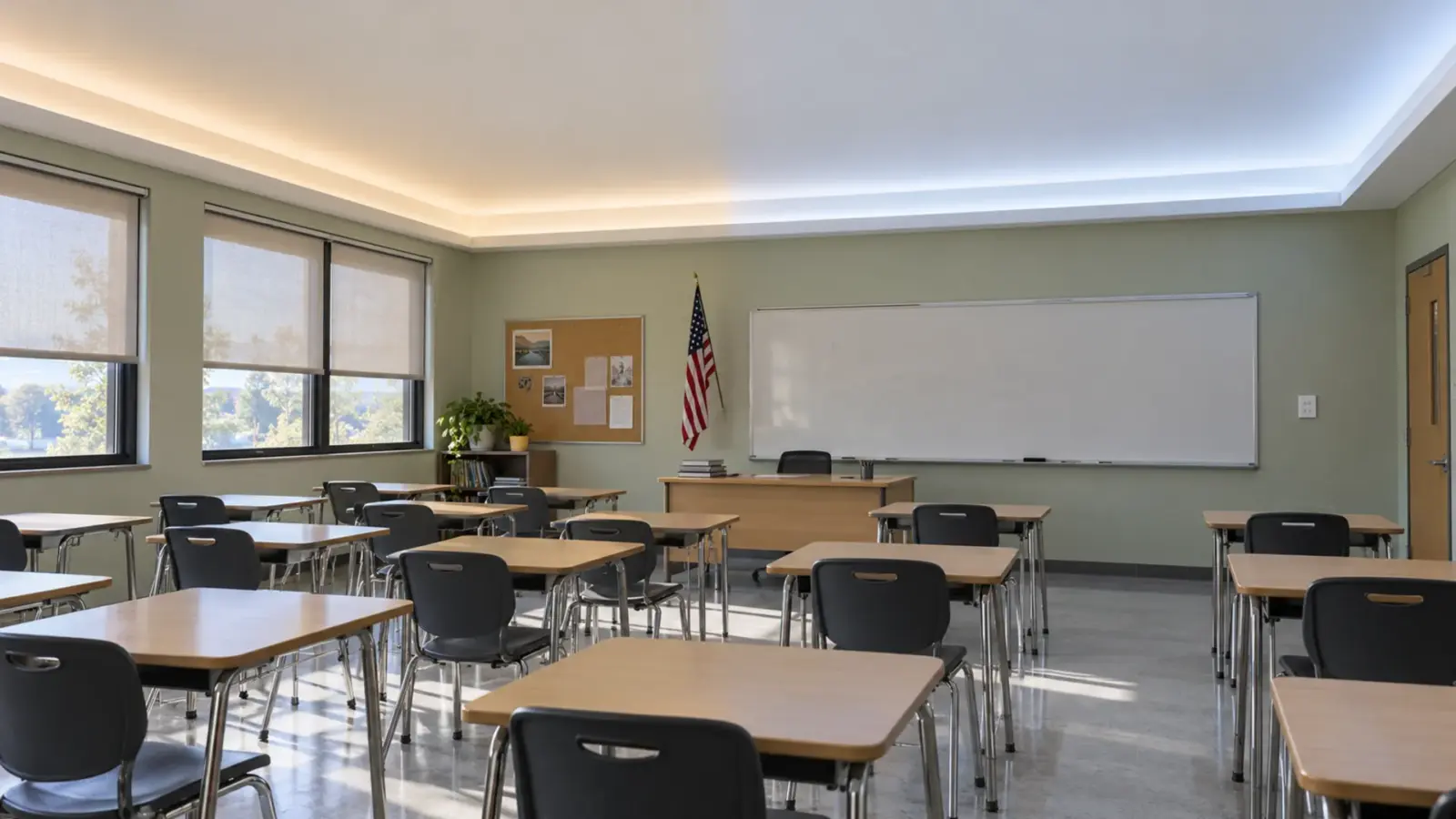
Tunable white LED strip in schools and healthcare succeeds or fails on one decision made before the wiring: who sets the schedule. The strip is two loads on one PCB, the controls are two channels, and the owner of those channels is a person or a clock. Four gates settle it.
Takeaways
- Decide the owner first: a teacher’s wall panel, a nurse station, a building clock, or a bedside control, and write it into the sequence of operations.
- Two channels mean two control paths; pick 2-channel 0-10V, 2-wire, 3-wire, DALI DT8 or RF by the control system the building already has.
- Spec the strip family by what is seen: SMD 2835 WW+W for coves, dot-free COB tunable where the line is visible, step tuning where there is only a wall switch.
- Size drivers per channel, not per strip: a 90 ft classroom cove is 130 W on each channel.
- Make no promise about sleep or test scores; the DOE evaluations measured energy and photometrics.
Gate 1: Who Sets the Schedule
A tunable system changes color temperature and level over the day. Something has to tell it when. In the schools the US Department of Energy evaluated, that something was a teacher: a wall controller with “five preset scenes that could be altered with dimming (0%-100%) and color-tuning (2700 K to 6500K) slider bars”, and teachers used the presets “to get students’ attention or cue them to transition between certain activities”. Lauren MacLeod’s article in Health Facilities Management calls the ideal a “hands-off system from the point of activation”, notes that “Often, extensive programming is required or presets require manual activation”, and still wants “Manual overrides and additional dimming controls… provided to staff where appropriate”.
| Owner | Where | What it changes | Override | What the sources saw |
|---|---|---|---|---|
| Teacher’s wall panel | Classroom | Preset scene (level + CCT), dimming | The teacher is the override | Scenes used daily; color controls used rarely (DOE Texas presets, Folsom sliders) |
| Nurse station panel | Patient floor | Daytime and night scenes for rooms and corridor | Per-room staff override | The HFM article’s “hands-off” with staff override |
| Building clock (BMS or lighting control schedule) | Corridors, lobbies, lounges | Astronomical or time-of-day CCT and level curve | Panel override with timeout | The hands-off ideal; needs programming at commissioning |
| Bedside or resident control | Patient and resident rooms | Level, sometimes warm/cool | Staff can lock | In our project experience usual in senior living, rare in acute care |
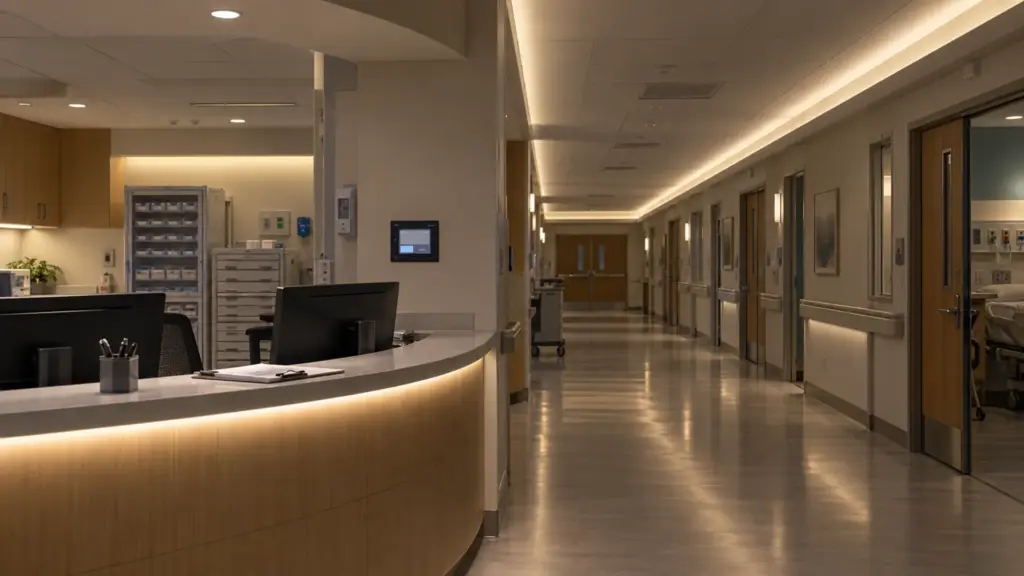
The owner decides the rest. A teacher-owned classroom needs a panel with few, well-named presets and no clock. A nurse-owned floor needs a panel at the station and a clock behind it. A clock-owned corridor needs a controls contractor who programs the curve and a facility engineer who can change it next year. Name the owner in the sequence of operations before the strip is chosen.
Classrooms: Presets Teachers Will Use
The DOE’s Texas classrooms are the field guide. Four presets at nominal 3000, 3500, 4200 and 5000 K; the three teachers “used the scene controls regularly during the school day, but used the SPD controls infrequently”; dimming was changed more often where the control was easier to reach; and the preset labels “Reading”, “Testing” and “Energy” were read too narrowly, so “General” became the default. The Folsom classrooms saw the same pattern with five presets and daily energy savings that “ranged from 48% to 69%, depending on how the teacher used the controls”.
For a strip cove in a classroom that means: a wall panel next to the whiteboard controls, within reach of where the teacher stands; three or four presets named for the moment, not the metric (“Lesson”, “Screen”, “Quiet”, “Off”); a level slider teachers will use and a color slider most will not; and a CCT range the room can live with. Our schools and universities guide places the cove and the whiteboard zone. For the owner’s meeting: the DOE wrote that “documenting these circadian and behavioral effects was beyond the scope of this project”, and the saving came from the LED and the dimming.
Patient Rooms: Hands-Off With a Staff Override
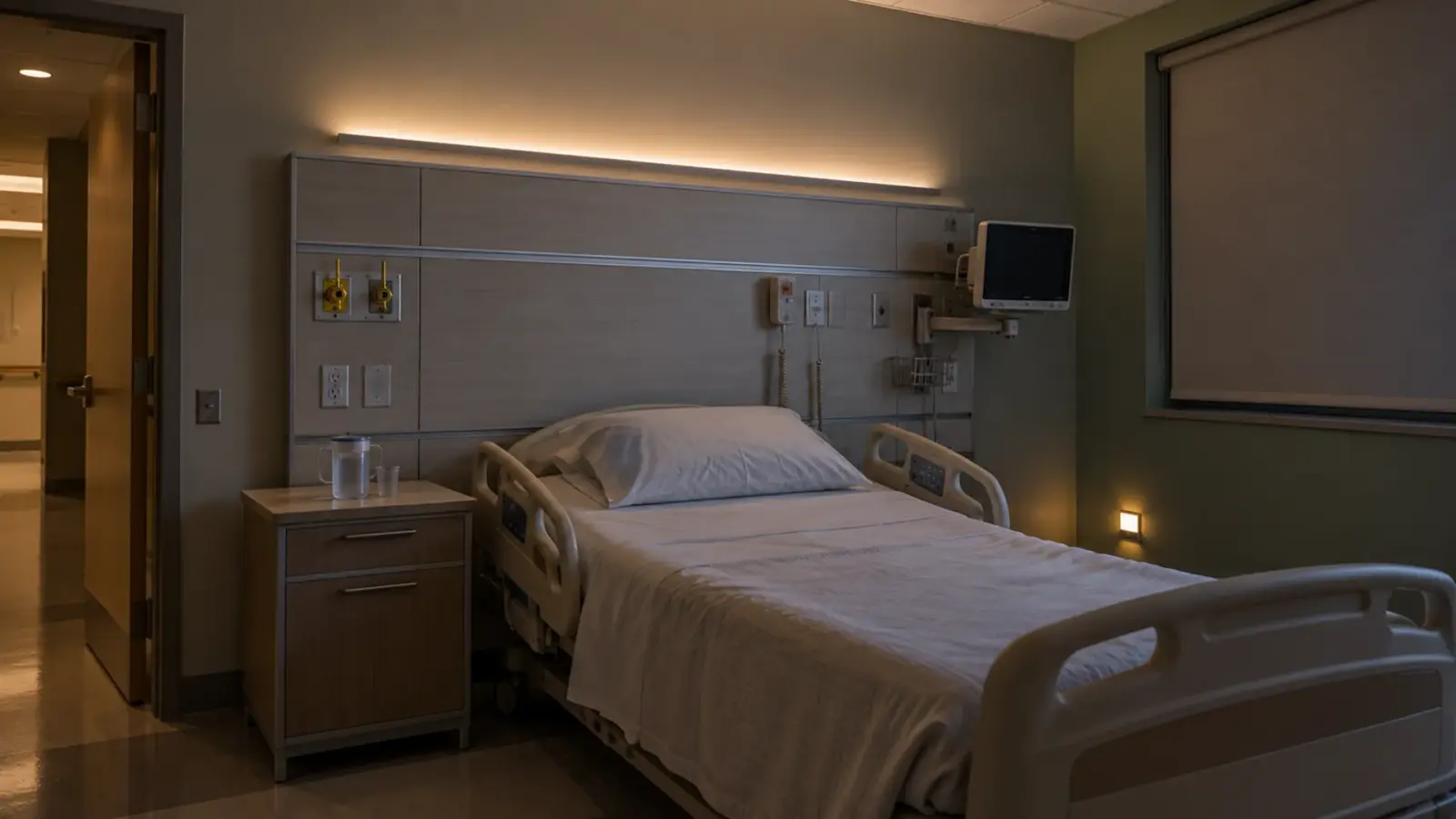
A patient room runs on the floor’s day. The strip cove over the headwall or along the ceiling edge follows a schedule set at the nurse station or by the building clock: a cooler daytime scene, a warm evening scene and a night level staff can work under. Our hospital guide covers the room geometry; this page covers the ownership. MacLeod’s rules fit it: hands-off from activation, staff override where appropriate, and “work under the premise of doing no harm in the interim”, which for a contractor means a schedule the facility can read and change, not a vendor’s locked curve.
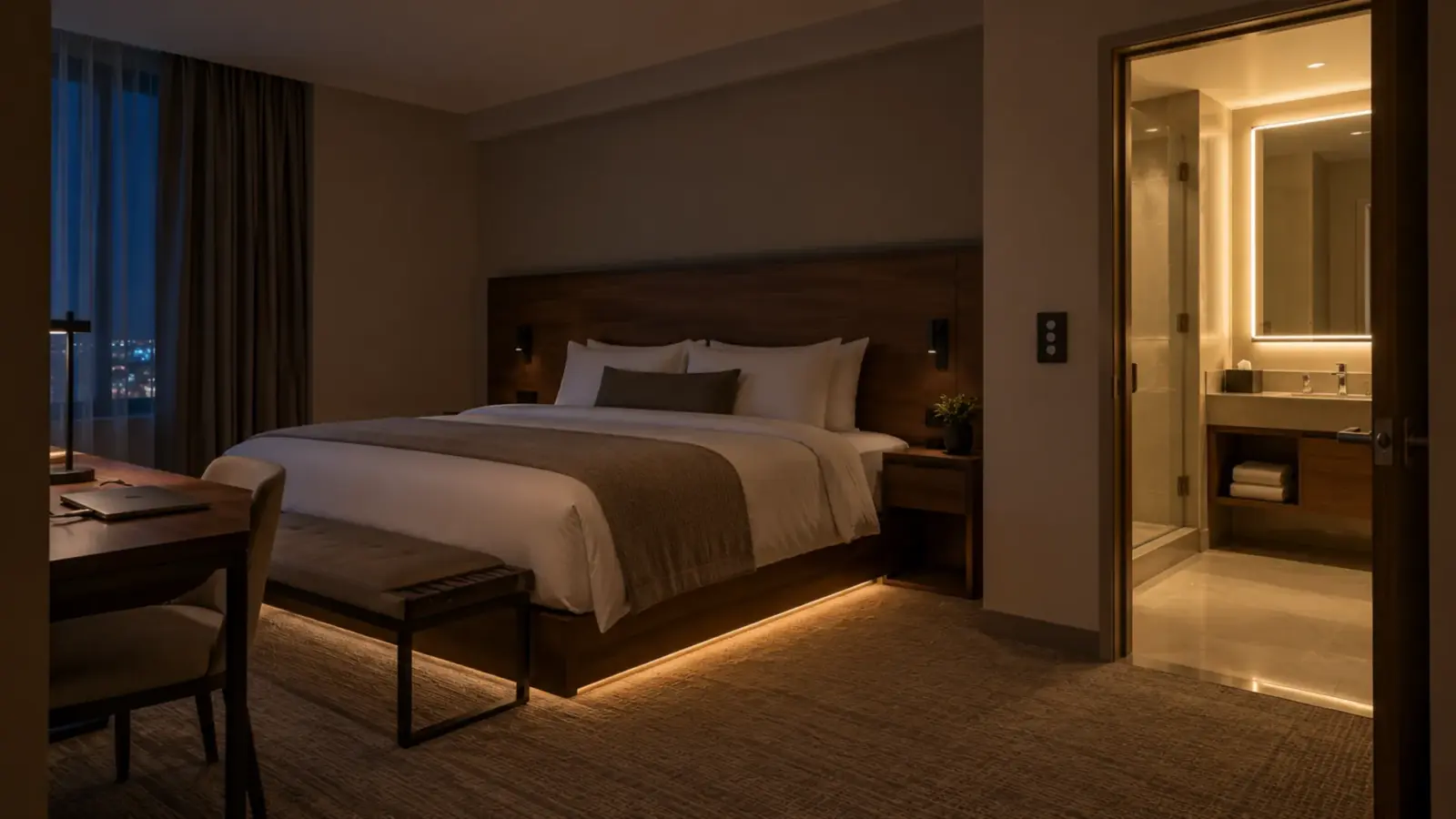
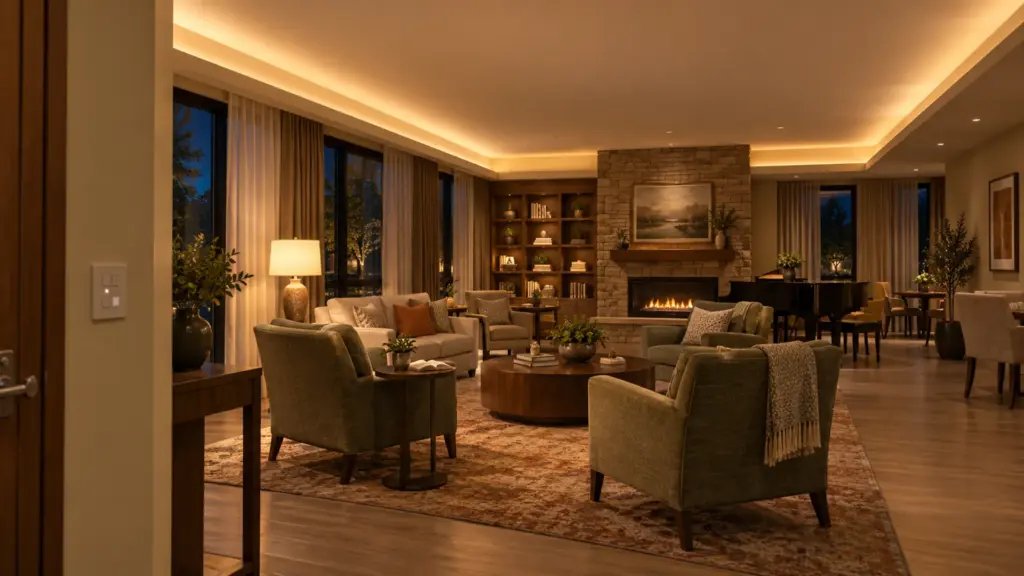
Senior living is the gentler version: a resident lounge whose cove warms through the evening on the building clock, a resident room with a bedside level control and a staff lock, and the night path on a separate circuit, as our senior living guide lays out. In every case the clock is set at commissioning and the override is a button, not a reprogram.
Gate 2: Two Channels, Three Ways to Wire Them
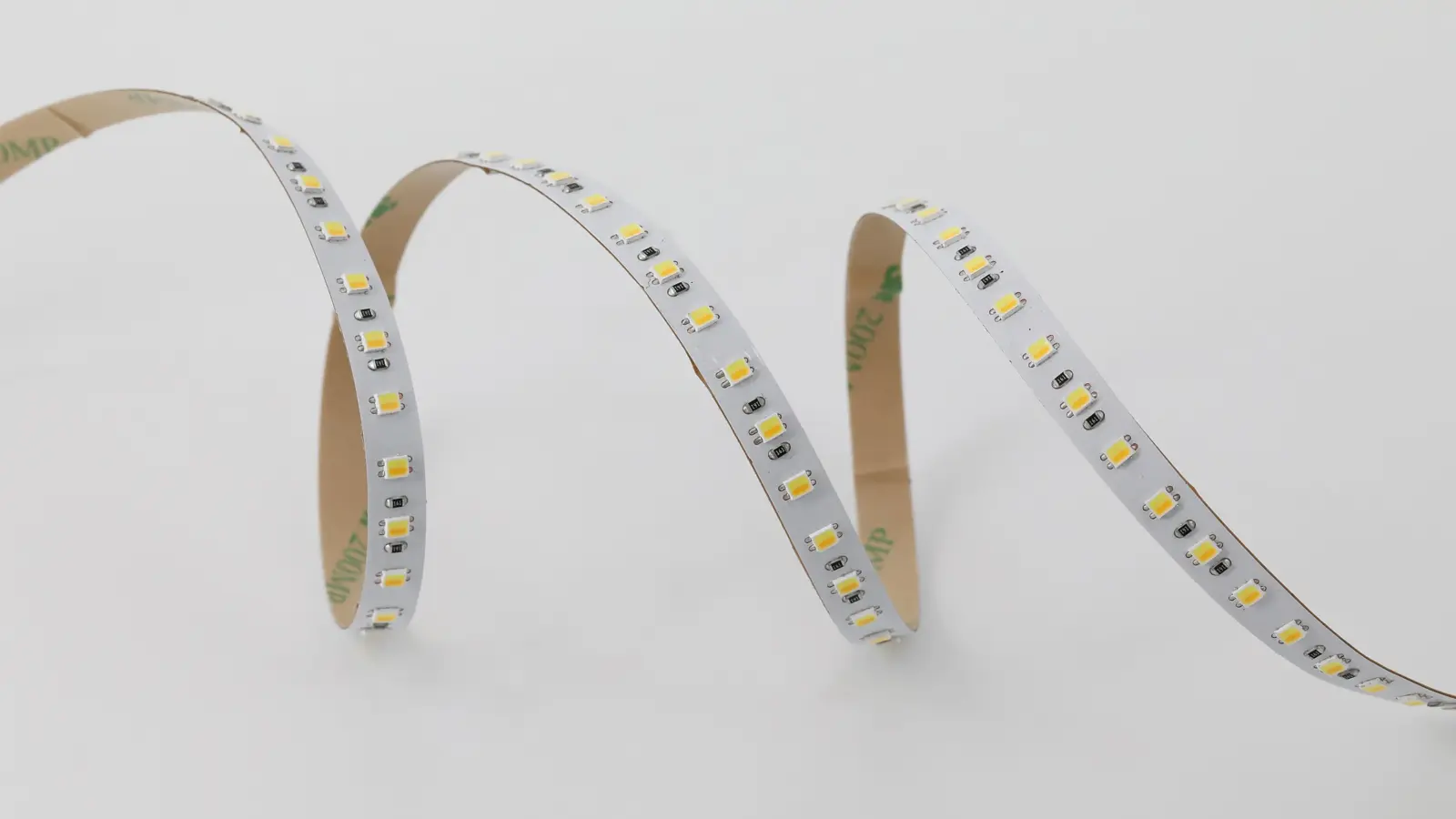
A tunable white strip carries a warm set of emitters and a cool set. Mixing them is the control’s job, and there are three wiring architectures for it, plus two shortcuts.
| Architecture | Strip | Control input | Conductors to the strip (typical) | Notes |
|---|---|---|---|---|
| Two 0-10V channels | UT-T120-8 / UT-T168-10 / UT-T240-10 (WW+W) | Two 0-10V signals, one per channel (two UT-C010-350 decoders, or two dimmable drivers) | 3 (common + WW + W) | Common case; two identical pairs, label both |
| 2-wire dim + CCT | UT-T576-8 COB | A 2-wire dim+CCT controller | 2 | Fewest conductors |
| 3-wire CCT | UT-T608-8 / UT-T624-8 / UT-T640-10 COB | A 3-wire CCT controller or RF receiver (UT-CRF-24G, 4 zones) | 3 | Dot-free line; RF or wired panel |
| DALI DT8 | Any 2-channel strip through UT-CDALI-DT8 (2 channels, 360 W) | DALI bus, DT8 color control | 3 | Buildings already on DALI |
| Step tuning from a switch | UT-T240-10-OF | A standard wall switch; flicking power steps the CCT | 2 | No controller; retrofits |
On the strip side both families are wired the same way: three connection points, a common positive and one negative per white, as the peer wiring guides describe it (LEDYi: “the brown wire” positive, “the white and yellow” negatives; Superlighting: cold white line, warm white line “and a positive line”). The difference is upstream: two 0-10V signals into two single-channel decoders, or one 3-wire CCT controller or DT8 decoder that drives both negatives itself. The 2-wire family carries dimming and CCT over the power conductors and, as LEDYi notes, “requires the unique tunable white LED controller”.
The two-channel 0-10V path is where jobs go wrong, and the warning comes from a control maker: “two pairs of identical 0-10V control wires means contractors must correctly wire them to achieve the specified intensity and CCT control”. Label the warm and cool pairs at both ends, and never connect a 0-10V control with power applied; dual-channel 0-10V dimmer datasheets warn that miswiring the low-voltage control can permanently damage the dimmer. Our dimming protocols guide sets out how each control reaches a driver, and our tunable white LED strip page lists every family with its control architecture in the table.
Gate 3: Strip Family and CCT Range
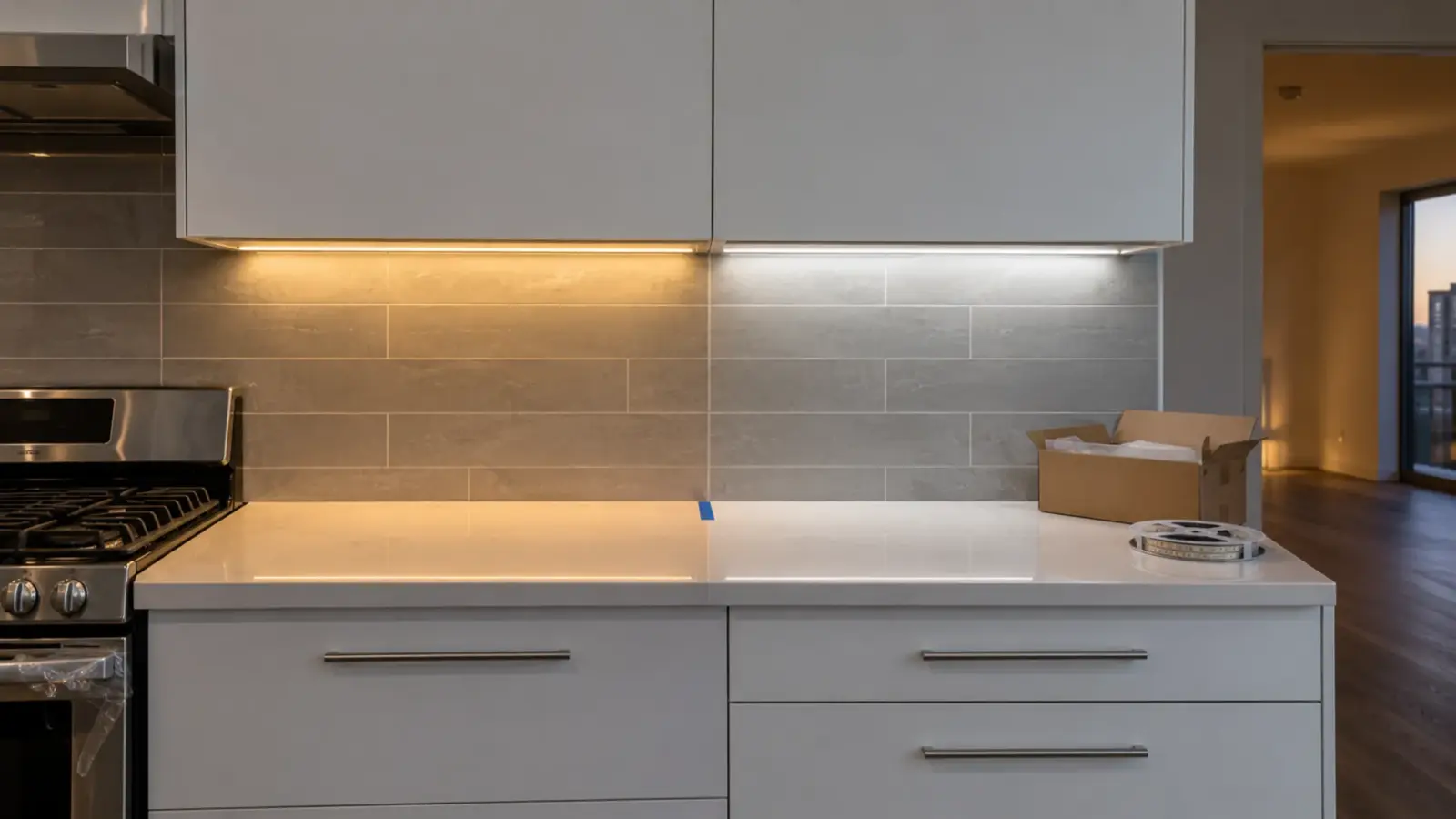
Choose the strip for what is seen and for the range the room needs. In a cove the strip is hidden and the 2835 WW+W families, UT-T120-8 at 2.9 W/ft up to UT-T240-10 at 5.8 W/ft, give an even ceiling wash at Ra≥90. Where the line is visible, under a headwall ledge or along an exposed channel, the COB tunable families read as one dot-free line at any mix; the CSP UT-CSP-512-CCT is the thin-profile version and the SCOB UT-SC308TW-18 the dot-free alternative. For a bedside or a resident room that only needs to warm as it dims, dim-to-warm on a 2-wire dimmer, UT-T672-10-DTW from 3000 K down to 1800 K, needs no CCT control at all.
The range is a decision, not a feature. Our strips tune 2700 to 6500 K, and the DOE’s Texas classrooms were set up at 3000 to 5000 K; a control maker recommends specifying narrower ranges, 2700 to 4000 K, so the mixed white stays closer to the black body line. For a classroom or a patient room the working range is 3000 to 5000 K, with 2700 K reserved for the evening scene in senior living and hospitality; the presets are set inside the range at commissioning and the sliders, where they exist, are limited to it.
Gate 4: Loads and Drivers per Channel
A tunable strip’s rated watts per foot is both channels at full output, which our tunable white page says occurs at mid mix; a pure 2700 K or pure 6500 K scene draws about half. Size each channel’s driver for that channel’s full load, and the feeder and the decoder for the sum.
A typical job: a 90 ft (27 m) classroom perimeter cove on UT-T120-8, rated 2.9 W/ft as 4.8 + 4.8 W/m. Full on both channels would be 261 W; each channel at full is 130 W. On the two-0-10V-channel architecture each channel gets its own driver, so each driver carries 130 W: three 60 W Class 2 drivers per channel at the 80 percent rule, or one 150 W linear CV (UT-D150-24-L) per channel at 87 percent, which is over the rule, so a 400 W UT-D400-24-L per channel, or two zones of 45 ft; the linear drivers are non-dim, so on that path the 0-10V signal reaches the strip through a UT-C010-350 decoder per channel. Feeds every 16 ft (5 m) per channel; the 350 to 360 W decoders take one channel each. Our power supply sizing guide carries the method; the pairing of strip, decoder and driver is confirmed at quote.
Two consequences for the budget. Tunable white is two of everything on the control side, and the DOE’s Texas report noted that color-tunable systems were “at present more costly” and that varying the color “does not necessarily provide additional energy savings”. And where a designer sets a circadian metric such as WELL’s melanopic target, the cove may have to run far brighter than a visual target asks: a DOE-funded study found that meeting circadian recommendations “required an average illuminance that was more than double the IES recommendations” and could raise lighting energy “between 10% and 100%”. Size the cove for the designer’s number.
Commissioning: The Preset That Sticks
Every tunable system becomes one preset within a month unless commissioning makes the others worth pressing. The DOE classrooms defaulted to “General”; MacLeod’s hospitals needed “extensive programming” or a manual preset activation. The fix is the handover: presets named and demonstrated to their owners, the schedule posted at the panel, the override shown to the night staff, and the two extreme scenes mocked up and signed before the floor is wired, per our mockup guide and handover guide. Run the dimmer and driver pairing on the bench first, on both channels, as the compatibility test describes.
FAQ
Who controls tunable white lighting in a classroom?
In the DOE field studies, the teacher, through a wall controller with four or five presets. Teachers used the scene buttons daily and the color controls rarely, so three or four well-named presets within reach carry the design.
Does tunable white LED strip need two drivers?
On the two-channel 0-10V architecture, yes: one dimmable driver or decoder per channel, sized for that channel’s full load. The 2-wire, 3-wire and DALI DT8 paths use one controller that mixes the channels; step-tuning strip needs none.
Is tunable white lighting worth it in schools and hospitals?
As a tool for teachers and a scheduled scene for patient floors, with energy savings from the LED and the dimming. The DOE evaluations reported no measured learning or health outcomes, so make the case on control and energy and keep health claims off the submittal.
Before You Order
- The owner of the schedule is named in the sequence of operations: teacher panel, nurse station, building clock, bedside.
- The control architecture matches the building: two 0-10V channels, 2-wire, 3-wire, DALI DT8 or RF; warm and cool pairs labeled at both ends.
- Strip family chosen for visibility; CCT range set and the presets defined inside it.
- Drivers sized per channel at 80 percent; feeds every 16 ft per channel; decoders rated for the load.
- Presets named, schedule printed, override demonstrated, both extreme scenes mocked up and signed.
Unitop Lighting supplies tunable white and dim-to-warm LED strip in SMD and dot-free COB families, with the decoders, panels and drivers matched to the control architecture at quote. Send the sequence of operations and the cove lengths and request a quote; we return the per-channel loads and the control schedule.