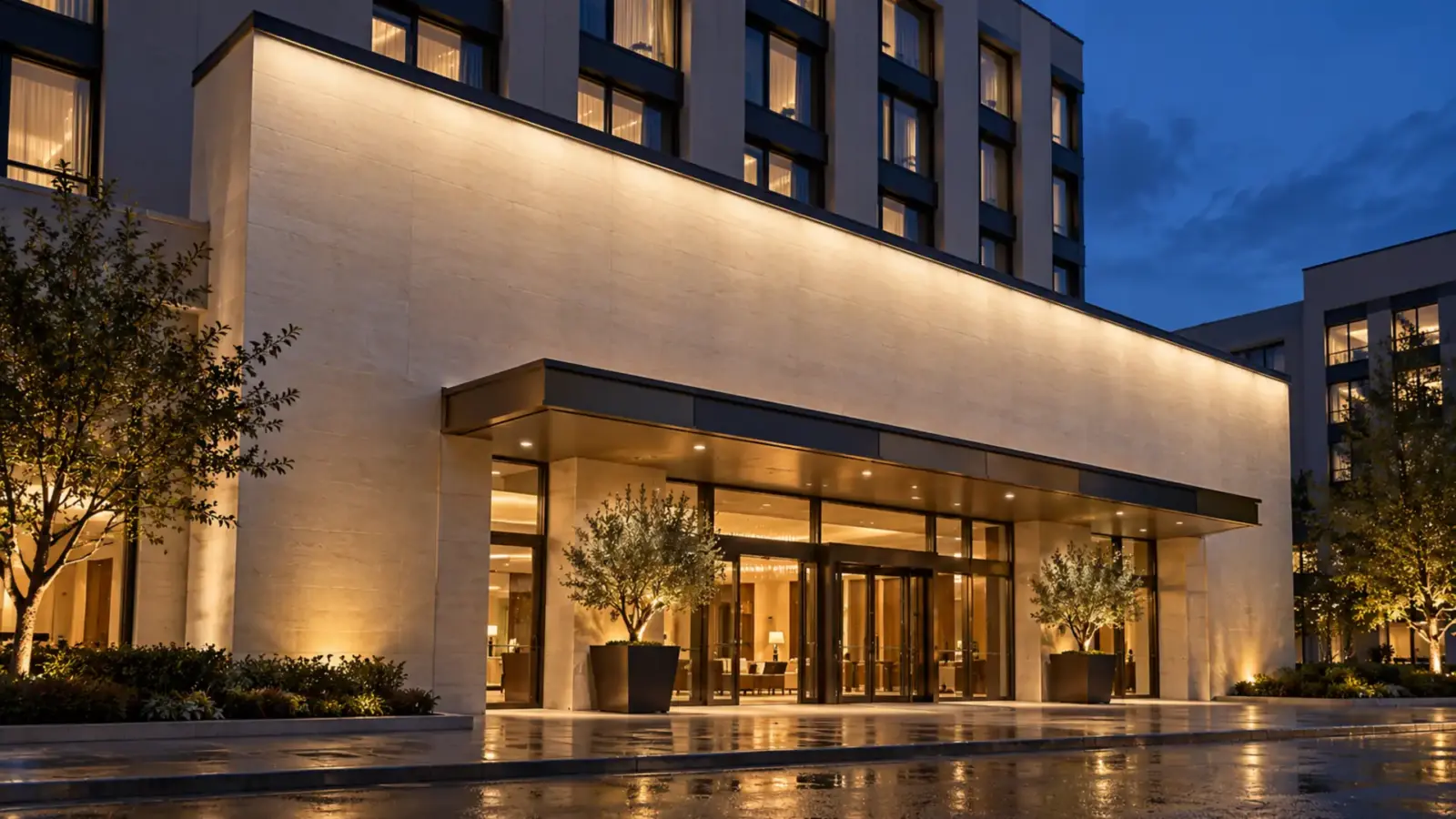
On most facade jobs the optic gets the attention and the mount gets a line on the drawing. With outdoor LED wall washer lights the mount matters more: it decides how much water reaches the fixture and its lead, whether the aim holds, whether the light is uplight, and who can service it.
Pick the mount first. The beam angle, the IP rating and the driver plan follow from it.
Four Mounts at a Glance
Four positions cover almost every commercial facade: at grade washing up, on a wall bracket, on the parapet washing down, and under a canopy edge washing down a storefront.
| Mount | Water it sees | IP we would start from | Aim | Uplight | Service access |
|---|---|---|---|---|---|
| At grade, in a planter or on a curb | Standing water, irrigation, snowmelt, salt | IP67 | Up the wall, set back from the base | Yes: check the local ordinance | Easy from the ground; lens gets dirty |
| Wall bracket at a band or ledge | Rain and runoff from the ledge above | IP67 | Up or down from mid-height | Partly | Lift or ladder |
| Parapet or coping, washing down | Rain under the coping drip | IP67 | Down the wall | No | From the roof |
| Canopy or soffit edge, washing down | Wind-driven rain, little direct water | IP65 can work | Down a pier or storefront | No | Ladder from the sidewalk |
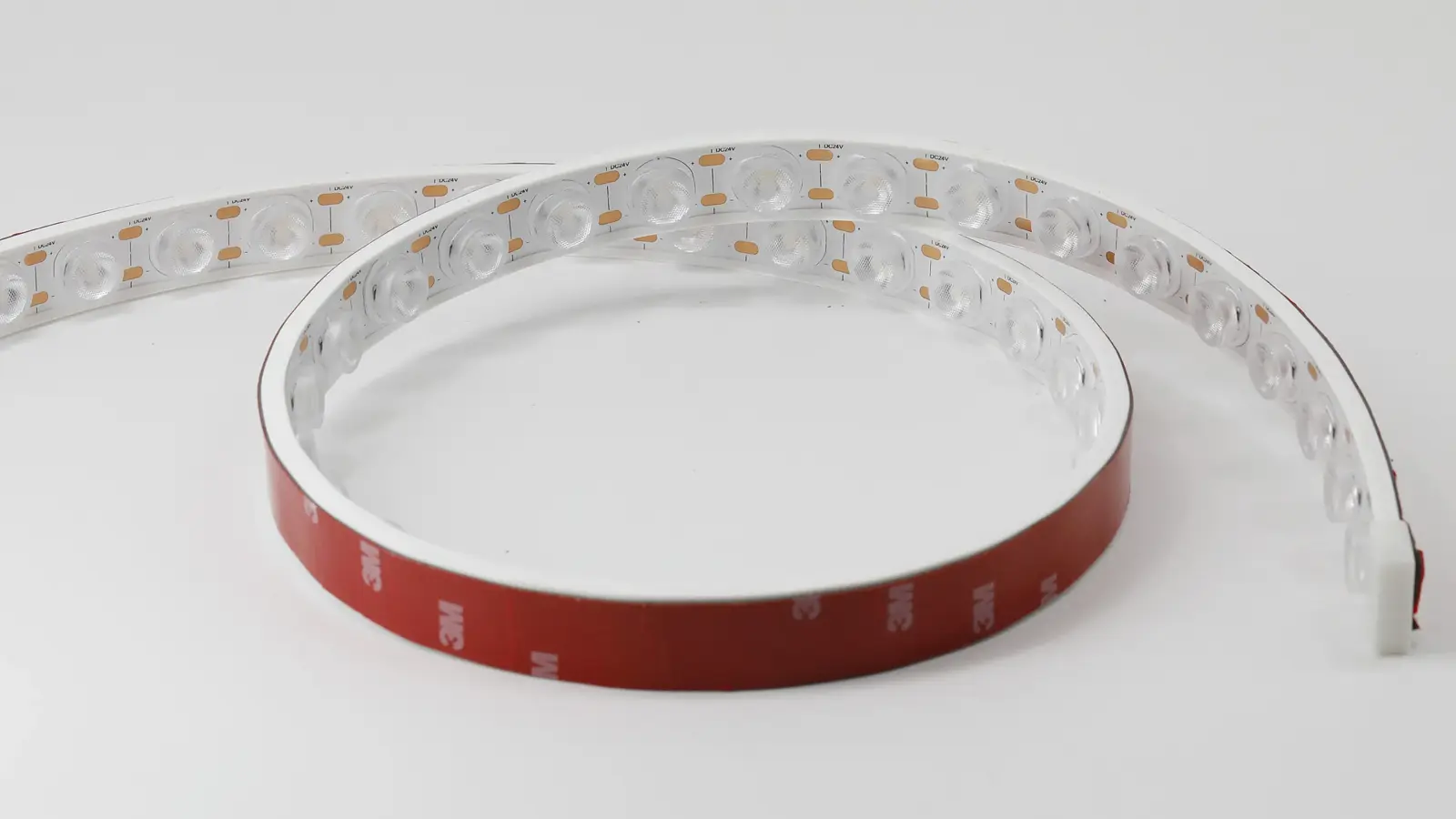
Our LED wall washer range covers both ratings: the UT-WB27 lens bars and the UT-WS20-30 strip are IP67, and the UT-WP24 series is IP65. Our facade page lists UT-WB27, UT-WS20-30 and UT-WP24-RGBW configurations for facade work, and our wall washer setback guide sets the distance from the wall: our wall washer page puts washers 6 to 12 in off the wall and grazers within 6 in.
At Grade: Standing Water and Uplight
A wall washer at grade is the easiest to install and the hardest to keep dry. It sits where water collects: in a planter that gets irrigated, on a curb that gets plowed, at the base of a wall that sheds rain onto it. The body needs Dust-tight, and protected against temporary immersion in water. The usual rating for wet or outdoor runs that are not submerged all the time. at least, and the fixture should sit on a raised curb or in gravel that drains, never in a low spot where water stands.
Three rules for grade-mounted fixtures:
- Keep the lead and its joint above the water line. The joint, not the body, is where most grade fixtures fail; the next section covers the water path.
- Check impact. Our UT-WB27 bar is rated IK07. Where the public can kick or a mower can hit the fixture, read the impact rating as carefully as the IP rating; our flexible vs rigid wall washer guide covers IK ratings and the facade cases where a sturdier product fits better.
- Confirm uplight is allowed. A grade-mounted washer lights the wall from below, and some of that light continues past the top of the wall. Under a dark-sky ordinance that can be the deciding fact; our facade light trespass guide explains the zones, caps and curfews.
Checkpoint: on the site plan, show the fixture on a drained base, the junction box above grade, and a note on whether the ordinance allows uplight.
On a Wall Bracket: Aim That Has to Hold
A bracket at a string course, a band or a ledge puts the washer at mid-height, usually aimed up the wall above or down the wall below. The water problem is runoff: the ledge above sheds rain straight onto the fixture and its lead. Mount the fixture under a drip edge where one exists, and route the lead so water runs away from the entry rather than along it.
The other problem is aim. A tilting bracket that holds on the bench can creep after a season of wind and thermal cycles. Lock the tilt with the fixing the maker provides, mark the final angle on the bracket after the night mockup, and use stainless or coated hardware on a coastal job; our marine-grade strip guide covers what salt air does to fixings.
Checkpoint: record the tilt angle per fixture at the mockup, and photograph the locked bracket.
On the Parapet: Washing Down From the Coping
Mounting at the parapet and washing down is the position we would choose first on many facades. The coping shelters the fixture, the light goes down the wall instead of into the sky, and the electrician services it from the roof without a lift. The feed comes from the roof side, where a driver enclosure is easier to place than at grade.
The detail needs care at the coping. The fixture sits under the coping’s drip edge or on a bracket below it, with the lens aimed down and the body clear of the roofing membrane. Coordinate the bracket fixings with the roofer, because a fixing through the coping or the membrane is a leak path the lighting contractor will be asked about. Long aluminum mounting profiles on a sunlit parapet also move with temperature; the flexible vs rigid guide linked above shows the fixed-and-sliding-end detail.
Checkpoint: a section through the coping on the lighting drawing: fixture, bracket, fixing points, lead route and the driver location on the roof.
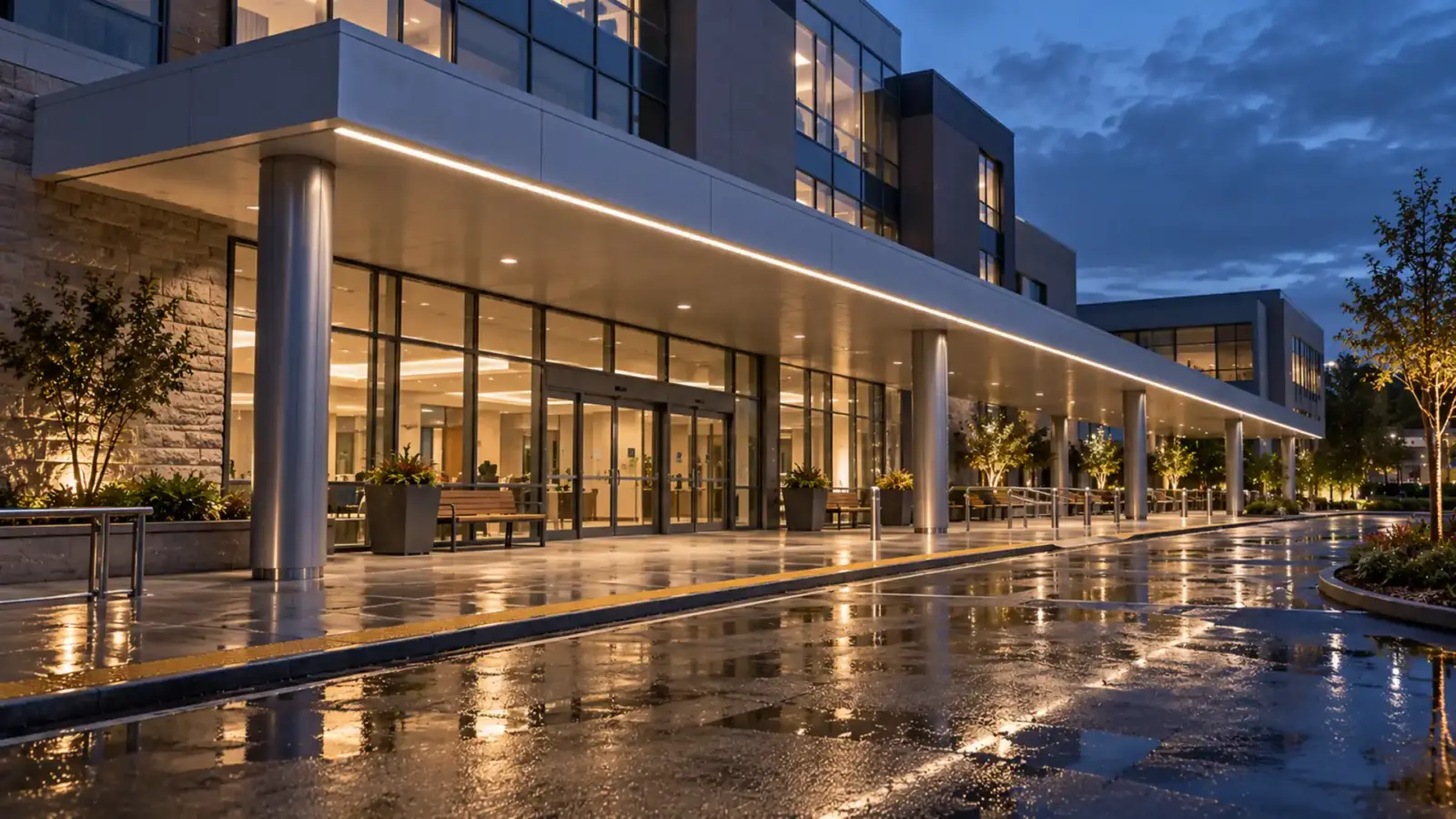
Under a Canopy Edge: Sheltered, Not Dry
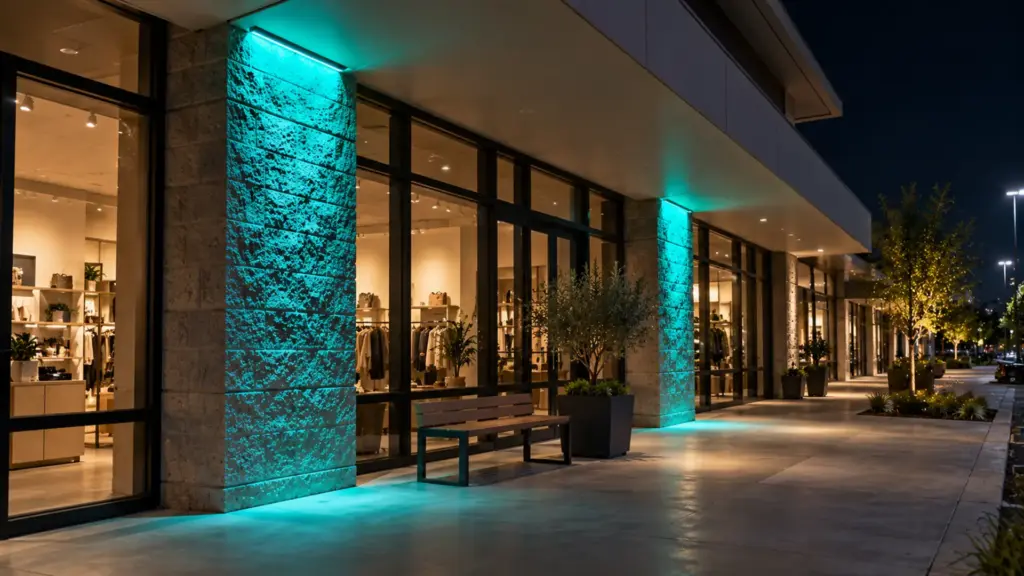
A canopy or soffit edge washing down a storefront pier sees much less water than the other three mounts. That is where an IP65 product, such as our UT-WP24 bar, can work, provided wind-driven rain cannot reach it. The canopy is also where a color accent often lives: the UT-WP24-RGBW gives white and color from one body.
Two cautions keep this position honest. A canopy edge that faces the prevailing weather is not sheltered, so treat it like an exposed mount. And a washer aimed down a storefront is close to pedestrians, so aim it at the wall, not at eye level across the sidewalk.
Checkpoint: note the canopy’s exposure on the plan (protected side or weather side) before choosing IP65 over IP67.
Water Gets In at the Lead
The body’s IP rating covers the body. IP67 means dust-tight and protected against temporary immersion, and IP65 means dust-tight and protected against water jets, but neither number says anything about the joint where the fixture lead meets the feed cable. One fixture maker’s installation note puts it plainly: the fitting’s IP rating does not make the driver or the cable joints weatherproof.
Water reaches a fixture three ways, and the detail blocks each one:
- Along the cable. A lead that runs downhill into the fixture carries water to the entry. Form a drip loop so water drops off before the entry.
- Through the cable fitting as the fixture breathes. A fixture warms when it is on and cools when it is off, and the air inside follows. In one vent maker’s luminaire test, the pressure inside the luminaires followed the on/off cycle and the leak path was in the wire fitting. Keep the joint above grade and seal the entry to the same level as the fixture.
- Through a field cut. A flexible washer cut on site has an open end that has to be sealed to the product’s rating; our guide to sealing a cut end of IP67 strip shows the method.
The driver is its own question. A potted IP67 driver can sit outdoors; an IP20 driver goes indoors or in a rated enclosure. Our wet location guide checks the strip, the connectors and the driver as one system.
Drivers and Feeds: A 48 ft Parapet, Worked
The mount sets where the drivers go, and the wall washer’s watt density sets how many. Here is a typical 48 ft parapet washing down a hotel entrance wall, with two of our IP67 products and our UT-D100-24-67 potted driver (100 W, IP67, rated −13 to 140°F / −25 to 60°C), loaded to 80% at most, which is our rule.
| UT-WB27-2030 lens bar | UT-WS20-30 strip | |
|---|---|---|
| Power | 8.2 W/ft | 4.9 W/ft |
| Output | 675 lm/ft | 527 lm/ft |
| How it comes | 1040 mm (3.41 ft) sections, cut in 9.84 in (250 mm) steps | cut every 1.97 in |
| Most one 100 W driver carries at 80% | about 9.3 ft (76 W) | about 15.9 ft (78 W), one full run |
| Layout for 48 ft | 6 feeds of about 8 ft, about 66 W each | 3 runs of about 15.9 ft ≈ 47.8 ft |
| Drivers | 6 × UT-D100-24-67 | 3 × UT-D100-24-67 |
Both stay inside their 16.4 ft (5 m) run limit per feed. The lens bar puts about 28% more light on the wall per foot and needs twice the drivers, because a full 16 ft bar run draws about 131 W, more than one 100 W driver carries. That is a decision for the mockup: if the wall needs the extra output, plan six driver locations and six feeds; if it does not, the strip saves three drivers and their enclosures.
On a facade, the drivers also need surge protection planned with them, and a winter install changes the order of work; our driver surge guide and cold-weather install guide cover both. For a dimmed facade, the UT-D100-24-010-67 is the 0-10V version of the same potted driver.
Mock Up the Mount, Not Just the Optic
A facade mockup usually tests the beam: one bay of fixtures at night, a look at the scallops, a decision on the optic. Use the same night to test the mount, because the faults that cost a second visit show up there.
- Light past the top of the wall. From across the street, look above the parapet or the top of the lit surface. Light in the sky over a grade-mounted washer is the uplight a dark-sky ordinance counts.
- Glare from the walkway. Walk the sidewalk and the entrance path. A grade fixture or a canopy washer that shows its lens to a person walking toward it needs a shield or a new aim.
- Aim after the fixings are tight. Tighten the bracket, then check the wash again; a bracket that moves when the bolt is torqued moves again in the first storm.
- Water at the joint. Before the joint is closed for good, run a hose over the fixture, the lead and the box for a few minutes the way rain would hit them, and open the box to look.
- Service from where the electrician will stand. Reach the driver and the nearest joint from the roof, the sidewalk or the lift position the drawing assumes.
Record the optic, the tilt, the IP of every part in the water path, and the driver location for each fixture type. That record is what the next twenty bays are built from.
Final Checks
Before the facade details are issued, each wall washer should have a mount on the drawing, an IP rating that matches the mount’s exposure, a lead route with a drip loop and a joint above grade, a locked aim recorded at the mockup, a driver count from the watt density, and a note on uplight where the fixture sits at grade.
If you are pricing a facade now, send the elevations and the mounting details. We will match the wall washer, the optic and the potted drivers to the runs before anything is quoted: request a quote. See the facade and outdoor application page for the rest of what we supply for exterior work.