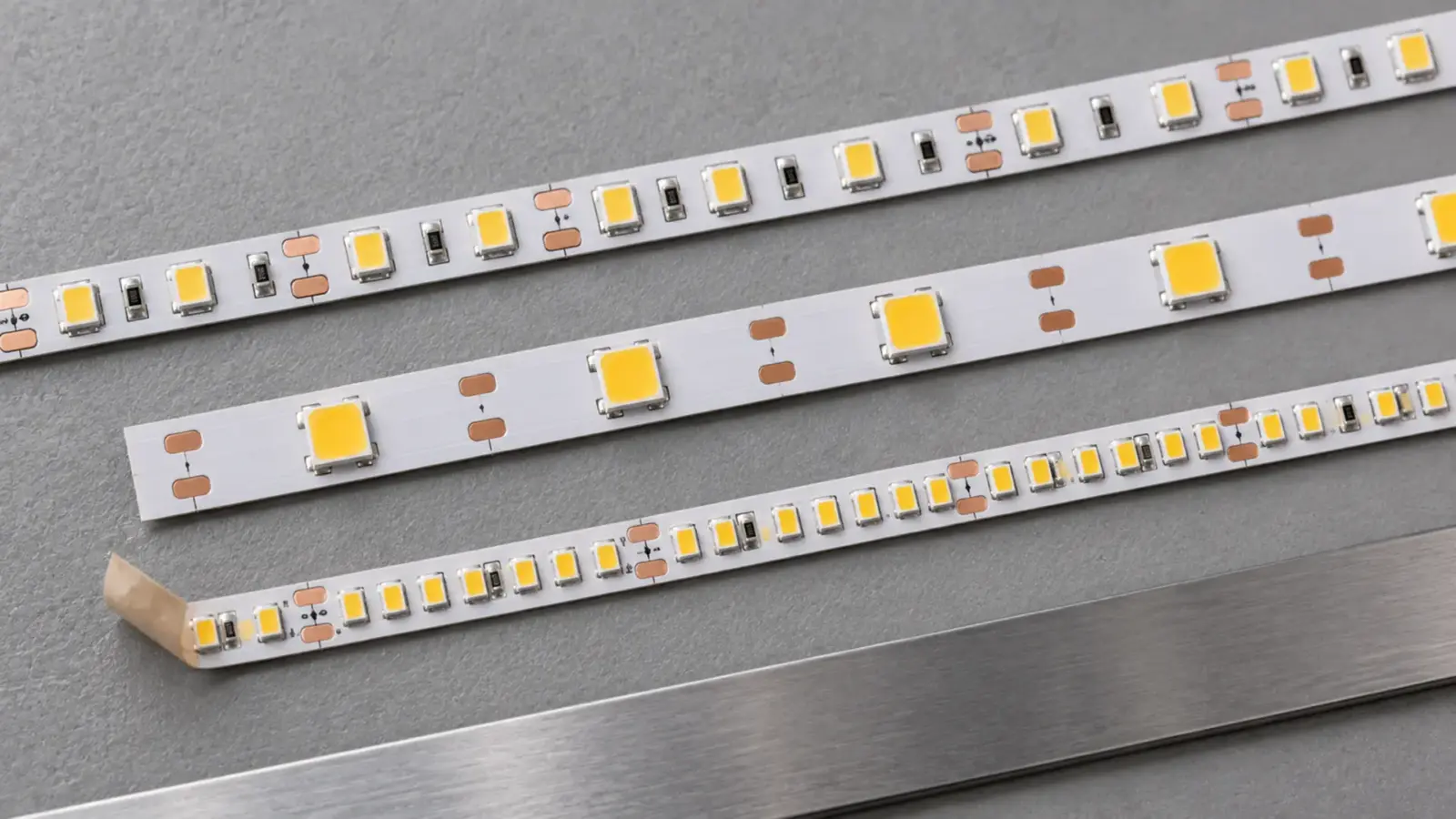
Choose 2835 for white light in most commercial work, 5050 for color, and 2216 when you need a dense, even line on a narrow board. The numbers are the size of the LED package, not a quality grade. What matters on the strip is white or color, how many LEDs per foot, and how much light per watt.
| If the job needs | Choose | Our models |
|---|---|---|
| White light, efficient, general or task | 2835 | UT-S2835-60, UT-S2835-120, UT-S2835-128-HE |
| Color mixing: RGB, RGBW, RGB+CCT | 5050 | UT-R60-10, UT-RW60-12, UT-RCCT72-12 |
| A dense, smooth line on a narrow board | 2216 | UT-S2216-300 |
| White from a large package at low density | 5050 white | UT-S5050-30, UT-S5050-60 |
| No visible dots at all | COB | See the COB range |
The rest of this guide explains each choice, what the packages do and do not change, and where each belongs.
What the Numbers Mean
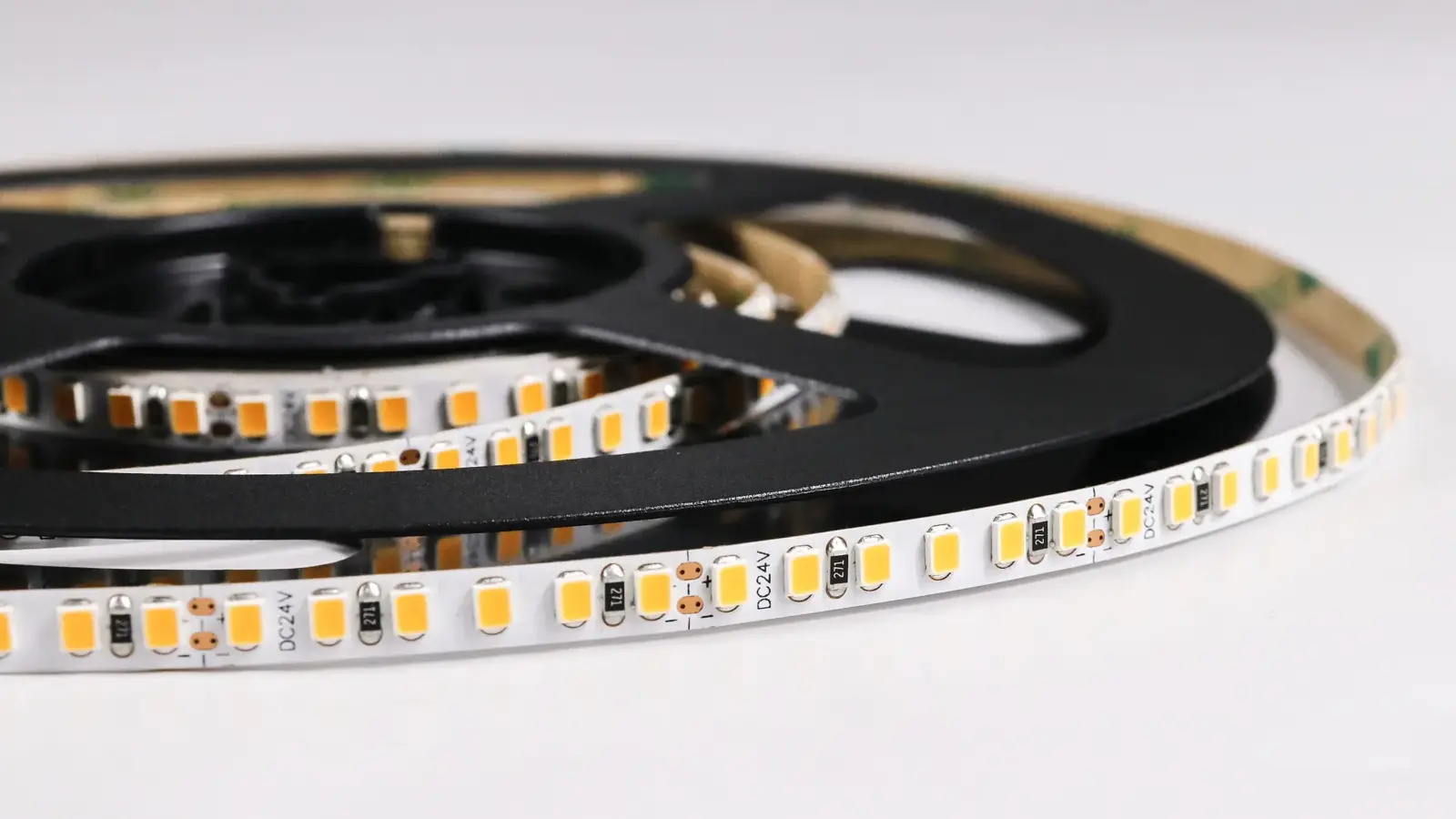
The four digits on an SMD strip name the size of the LED package in tenths of a millimeter. According to HitLights’ explanation, and as our SMD page puts it, a 2835 package measures 2.8 by 3.5 mm and a 5050 measures 5.0 by 5.0 mm. A 2216 is 2.2 by 1.6 mm.
The size is not a grade. A bigger package is not automatically brighter, and a smaller one is not automatically worse. What the size changes is how many dies fit inside, how much heat the package can shed, and how closely the packages can be packed on a board. Those three things decide what each package is good for.
Two consequences matter right away:
- Light per package is not light per foot. A strip with 60 large packages per meter and a strip with 240 small ones can give the same light per foot at different efficiency and different evenness.
- The board matters as much as the package. Density, PCB width, copper and drive current change output and heat more than the package number does. Our guide to lumens per foot shows how to compare strips by the light that reaches the surface.
2835: The White-Light Default
The 2835 is a single-die white package with a large thermal pad on its underside, which lets it shed heat into the board. That is why it became the workhorse of white strip: it is efficient, it runs cool for its output, and it is made in enormous volume in every color temperature and CRI tier.
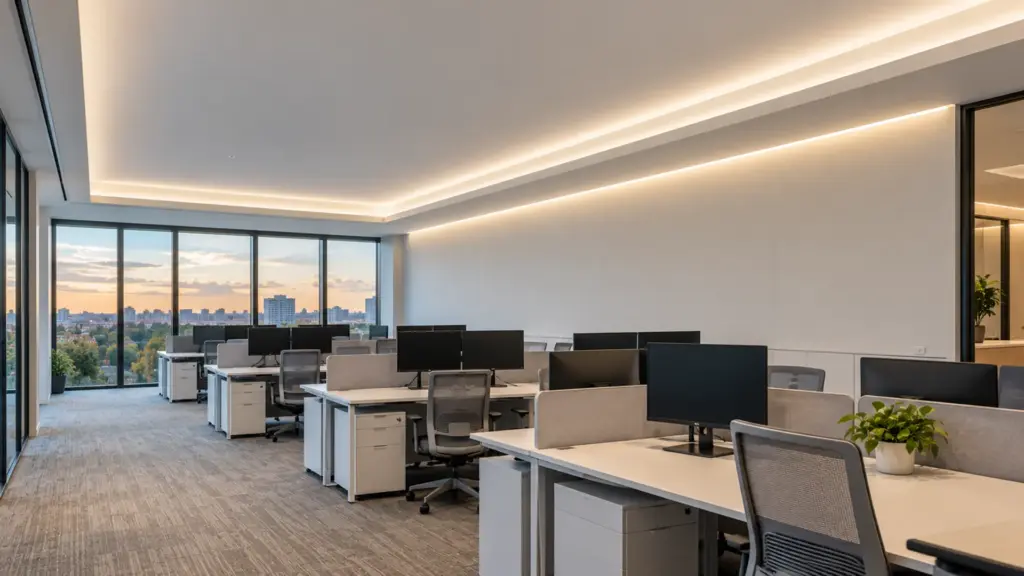
Our SMD LED strip range uses 2835 across most of its white models. Density sets the job:
- UT-S2835-60, 60 LEDs per meter at 1.5 W/ft, for low-level accent and night lighting.
- UT-S2835-120, 120 per meter at 4.4 W/ft, the general cove and under-cabinet strip.
- UT-S2835-240, 240 per meter at 6.7 W/ft, for high output, which needs an aluminum channel for heat.
- UT-S2835-128-HE, a high-efficacy build at 2.9 W/ft for jobs where the energy code drives the specification; our SMD page states high-efficacy tape reaching 190 lm/W.
- UT-S2835-480-FS, a full-spectrum build at Ra≥98 for color-critical display.
If the job is white light and nothing else decides it, start with 2835. Our guide to lumens per watt explains why efficacy, not the package, is the number to compare.
5050: Three Dies, Built for Color
The 5050 is a much larger package, and its size is the point: it holds three dies. According to Luxalight, a 5050 has three LED chips in one housing. In a color strip those three dies are red, green and blue, so one package mixes any color at one point instead of three separate points along the strip.
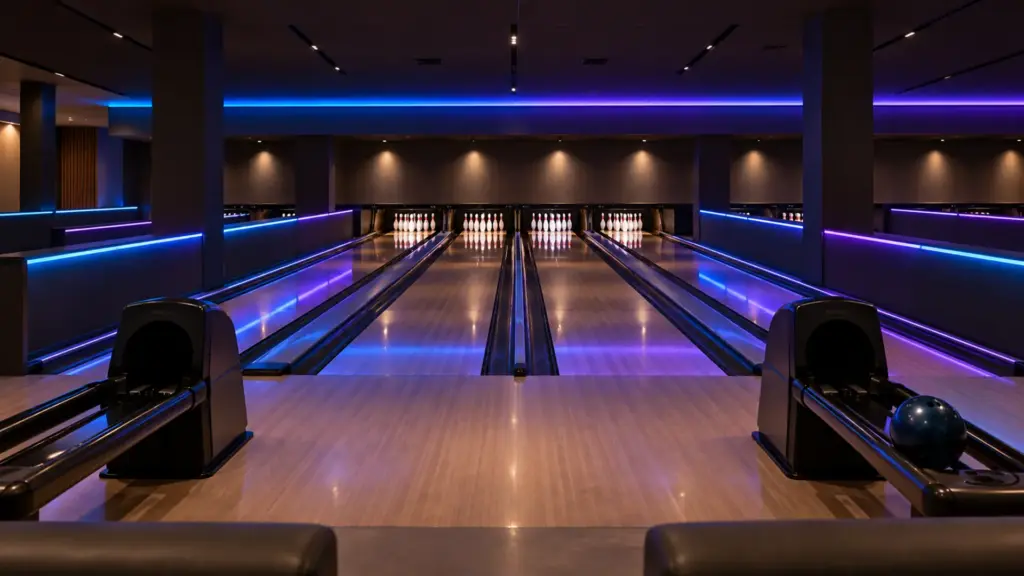
That makes 5050 the natural package for color. Our RGB and RGBW strip range uses 5050 for its SMD color models: UT-R60-10 for RGB at 60 per meter and 4.3 W/ft, UT-RW60-12 for RGBW with a white channel at Ra≥90, and UT-RCCT72-12, which pairs 5050 RGB packages with 2835 tunable white packages on one board.
The 5050 also exists as a white package, with three white dies. Our UT-S5050-30 and UT-S5050-60 are white 5050 strips at 2.2 and 4.4 W/ft. They give a lot of light per package at low density, which suits jobs where the strip is hidden deep and the cut interval can be long. The trade is that fewer, larger light points are harder to diffuse into a smooth line.
For the differences between RGB, RGBW and RGB+CCT whites, see RGB vs RGBW vs RGB+CCT.
2216: Small Chips at High Density
The 2216 is the small one. It is not chosen for light per package; it is chosen because many of them fit close together. According to Signlite’s chip guide, 2216 packages make very dense strips that give a smooth, linear line, and they come on narrow boards.

Our UT-S2216-300 puts 300 LEDs per meter on a 10 mm board at 5.8 W/ft and Ra≥95. At that density the light points are close enough that a shallow diffuser blends them into a line, which matters in shallow channels and visible details. It is also a high-CRI build, suited to retail and display work.
According to Superlightingled’s comparison, the 2216’s light per package is lower than a 2835’s, so a 2216 strip reaches its output by density rather than by package size. That means more packages, more solder joints, and output per watt that depends on the specific build. Compare it on the datasheet, not by assumption.
When the line has to be perfectly even with no diffuser at all, the next step is not a smaller SMD package but COB. Our guide to COB vs SMD for cove lighting covers that choice.
Output, Efficacy and Heat Side by Side
| 2835 | 5050 | 2216 | |
|---|---|---|---|
| Dies per package | One, white | Three: RGB or white | One |
| Typical use | White, general and task | Color; low-density white | Dense white lines |
| Our densities | 60 to 480 per meter | 30 to 120 per meter (white) | 300 per meter |
| Light per package | Medium | High | Low |
| Evenness at the same depth | Good at 120 and above | Points far apart at low density | Very good |
| Heat | Good thermal pad; channel at high output | More heat per package | Spread over many small packages |
| Our efficacy statement | High-efficacy builds up to 190 lm/W | Model datasheet | Model datasheet |
Read the table as tendencies, not rules. A dense 2835 can be as even as a 2216, and a white 5050 at low density can be as efficient as a mid-density 2835, depending on the build. The datasheet’s lumens per foot and watts per foot for the exact model are what decide it.
Color Quality by Package
Color rendering is set by the phosphor and the build, not by the package size, but some packages are made in more CRI tiers than others. In our range, 2835 covers the widest spread: Ra≥90 as standard, Ra≥95, and a full-spectrum Ra≥98 build in UT-S2835-480-FS for color-critical display. The 2216 build we list, UT-S2216-300, is Ra≥95. White 5050 strips are Ra≥90.
On color strips the white matters too. A 5050 RGB strip makes white by mixing three colors, which looks tinted and renders poorly. An RGBW 5050 adds a true white die, and our RGB+CCT build pairs 5050 color with 2835 white packages so the white is a proper white at Ra≥90. Our guide to high-CRI LED strip explains which tier each space needs.
Reading the Package on a Datasheet
A datasheet that names the package is useful, but four numbers next to it tell you more: LEDs per meter, watts per foot, lumens per foot and the cut interval. Two strips with the same package can differ in all four. When two quotes name the same package at different densities, compare them on those four numbers, at the same color temperature and CRI, and the package name stops being a guess.
Dots, Diffusers and Channels
Package size changes how hard the dots are to hide.
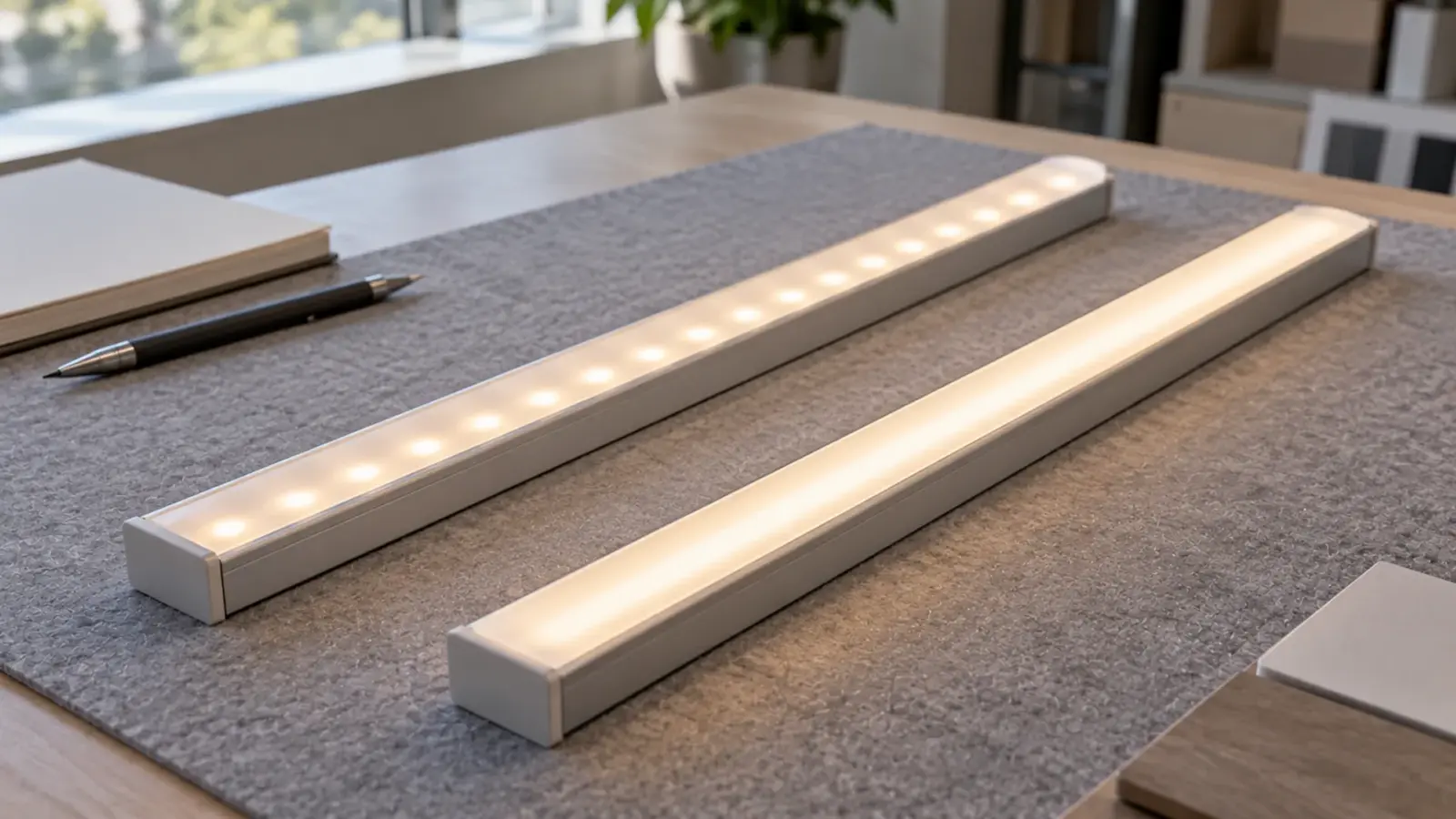
- Large packages far apart, such as 5050 at 30 per meter, put bright points far apart. A diffuser needs more depth to blend them.
- Small packages close together, such as 2216 at 300 per meter, blend at shallow depth.
- 2835 at 120 per meter sits in between and blends in most standard channels with an opal cover.
The rule of thumb is that the diffuser has to sit further from the LEDs than the LEDs sit from each other. Our article on LED dots showing through a diffuser explains the depth-to-pitch rule and the fixes. Board width matters for the channel too: a 10 mm 2216 or 2835 board needs a channel rated for 10 mm, as our guide to strip width and channel fit lists.
Cut Interval and Run Length by Package
The package also changes how often the strip can be cut, because larger, sparser packages mean longer groups between cut marks. On a job with fixed lengths, that can matter more than output.
| Model | Package and density | Cut interval | Run per feed |
|---|---|---|---|
| UT-S2835-60 | 2835, 60 per meter | 1.97 or 3.94 in (50 or 100 mm) | 16 ft (5 m) |
| UT-S2835-120 | 2835, 120 per meter | 0.98 or 1.97 in (25 or 50 mm) | 16 ft (5 m) |
| UT-S5050-30 | 5050 white, 30 per meter | 3.94 in (100 mm) | 16 ft (5 m) |
| UT-R60-10 | 5050 RGB, 60 per meter | 1.97 or 3.94 in (50 or 100 mm) | 16 ft (5 m) |
| UT-S2216-300 | 2216, 300 per meter | 0.98 in (25 mm) | 16 ft (5 m) |
A short cabinet return or a shelf of fixed width shows the difference. On a 3.94 in cut interval the strip can end up to almost 4 in short of the edge; on a 0.98 in interval it ends within an inch. Where the ends are visible, the denser packages give tidier ends. Our guide on how to cut and connect LED strip shows how to plan runs around the marks.
Mistakes When Choosing by Package
- Choosing 5050 because it sounds brighter. A 5050 package gives more light than a 2835 package, but a strip is many packages. A 2835 strip at higher density can give as much light per foot more efficiently. Compare lumens per foot.
- Using white 5050 at low density in a visible detail. Large points far apart need a deep diffuser. In a shallow channel they show as a row of spots.
- Assuming a dense strip is a dot-free strip. 2216 at 300 per meter blends at shallow depth, but it is still a row of points. If the line is seen directly and close, specify COB.
- Mixing packages in one visible run. A 2835 strip and a 2216 strip at the same CCT can still differ in tint and in the texture of the light. Keep one product per visible run.
- Forgetting the board width. A 10 mm board does not fit an 8 mm channel, whatever the package.
- Ignoring heat at high density. A 2835 strip at 240 per meter runs 6.7 W/ft and needs an aluminum channel; the package does not change that.
By Application
| Application | Usual choice | Why |
|---|---|---|
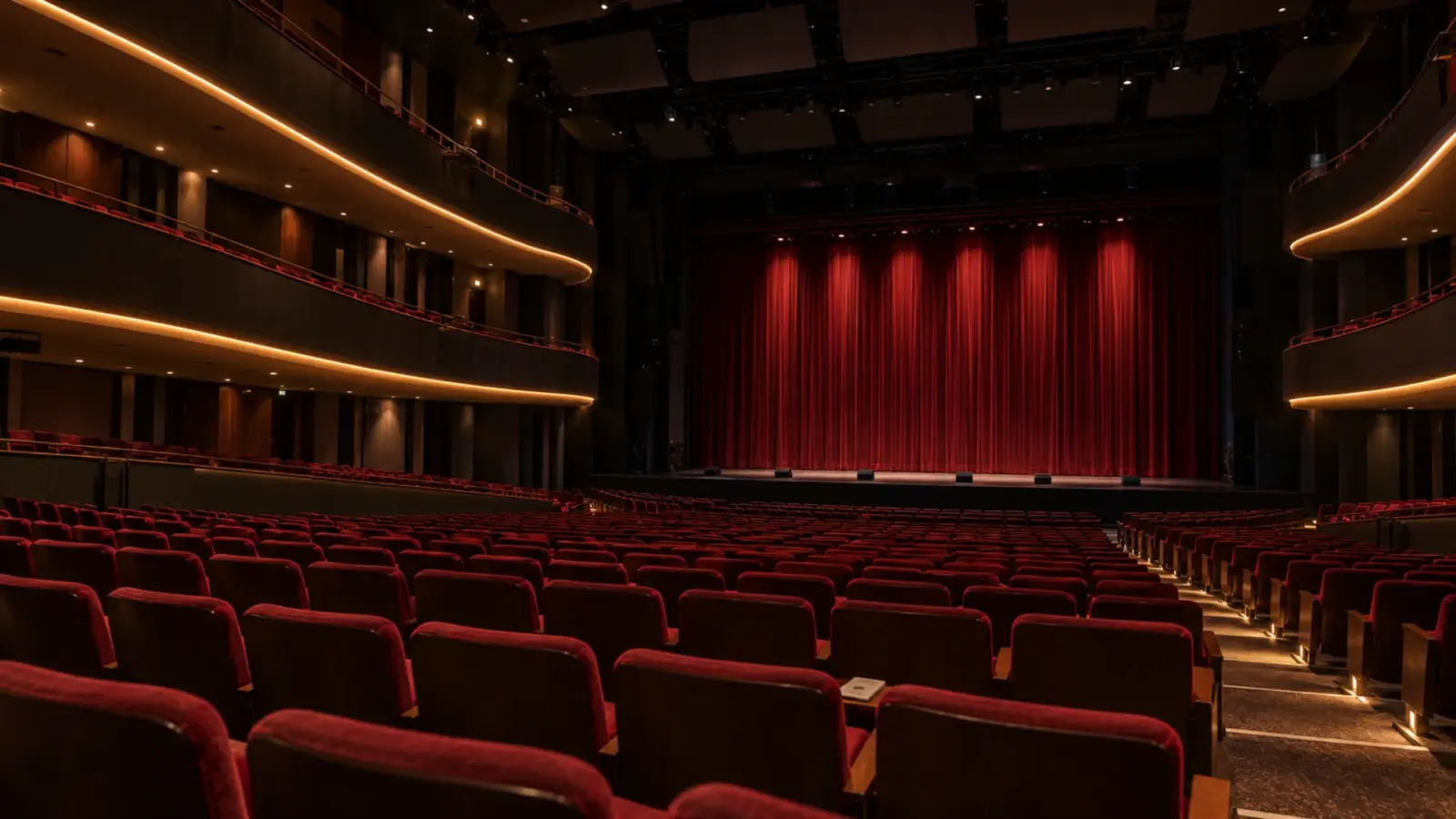
| Ceiling coves, general white | 2835 at 120 per meter | Efficient, blends behind a cove lip |
| Under-cabinet and task | 2835 at 120 per meter | Output and efficiency where people work |
| Energy-code-driven offices | High-efficacy 2835 | Light per watt counts against the allowance |
| Color scenes, hospitality and venues | 5050 RGB or RGBW | One package mixes the color |
| Color plus tunable white | 5050 RGB + 2835 CCT | Color and quality white on one board |
| Shallow channels, visible lines | 2216 or COB | Dense points blend at shallow depth |
| Display cases, color-critical retail | High-CRI 2835 or 2216 | Ra≥95 to Ra≥98 builds |
| Deep hidden coves, low density | White 5050 | Light per package at a long cut interval |

FAQ
What is the difference between 2835 and 5050 LED strip?
The package size and the number of dies. A 2835 is a 2.8 by 3.5 mm single-die package used mostly for white light; a 5050 is a 5.0 by 5.0 mm package with three dies, used mostly for color mixing and sometimes for white at low density.
Which is brighter, 2835 or 5050?
Per package, a 5050 usually gives more light because it has three dies. Per foot, it depends on the density and the drive: a 2835 strip at 120 per meter can match or exceed a 5050 strip at 60 per meter. Compare the lumens per foot on the datasheets.
What is 2216 LED strip used for?
For dense, even white lines on narrow boards, where many small packages close together blend into a smooth line at a shallow diffuser depth. Our UT-S2216-300 runs 300 LEDs per meter at Ra≥95.
What do the numbers on LED strip mean?
The package size in tenths of a millimeter: 2835 is 2.8 by 3.5 mm, 5050 is 5.0 by 5.0 mm. They describe the LED package, not the quality or the output of the strip.
Is 2216 better than 2835 for high-CRI work?
Not by itself. Color rendering comes from the phosphor and the build, and both packages are made in high-CRI versions. Choose 2216 when you need density for a smooth line at shallow depth; choose a high-CRI 2835, up to the full-spectrum Ra≥98 build, when output and color quality matter most.
Which One to Spec
- White light on a commercial job: start with 2835 at the density the output needs.
- Energy code pressure: a high-efficacy 2835 build.
- Color: 5050 RGB or RGBW; RGB+CCT where quality white and color share a run.
- A smooth line in a shallow channel: 2216, or COB if no dots can show at all.
- Compare lumens per foot and watts per foot on the datasheet, not the package number.
We supply 2835, 5050 and 2216 strip in white, color and high-CRI builds, with channels and drivers to match. Send the application, the channel depth and the output you need, and we will match the package, the density and the channel before you order: request a quote. The full range is on our SMD LED strip page.