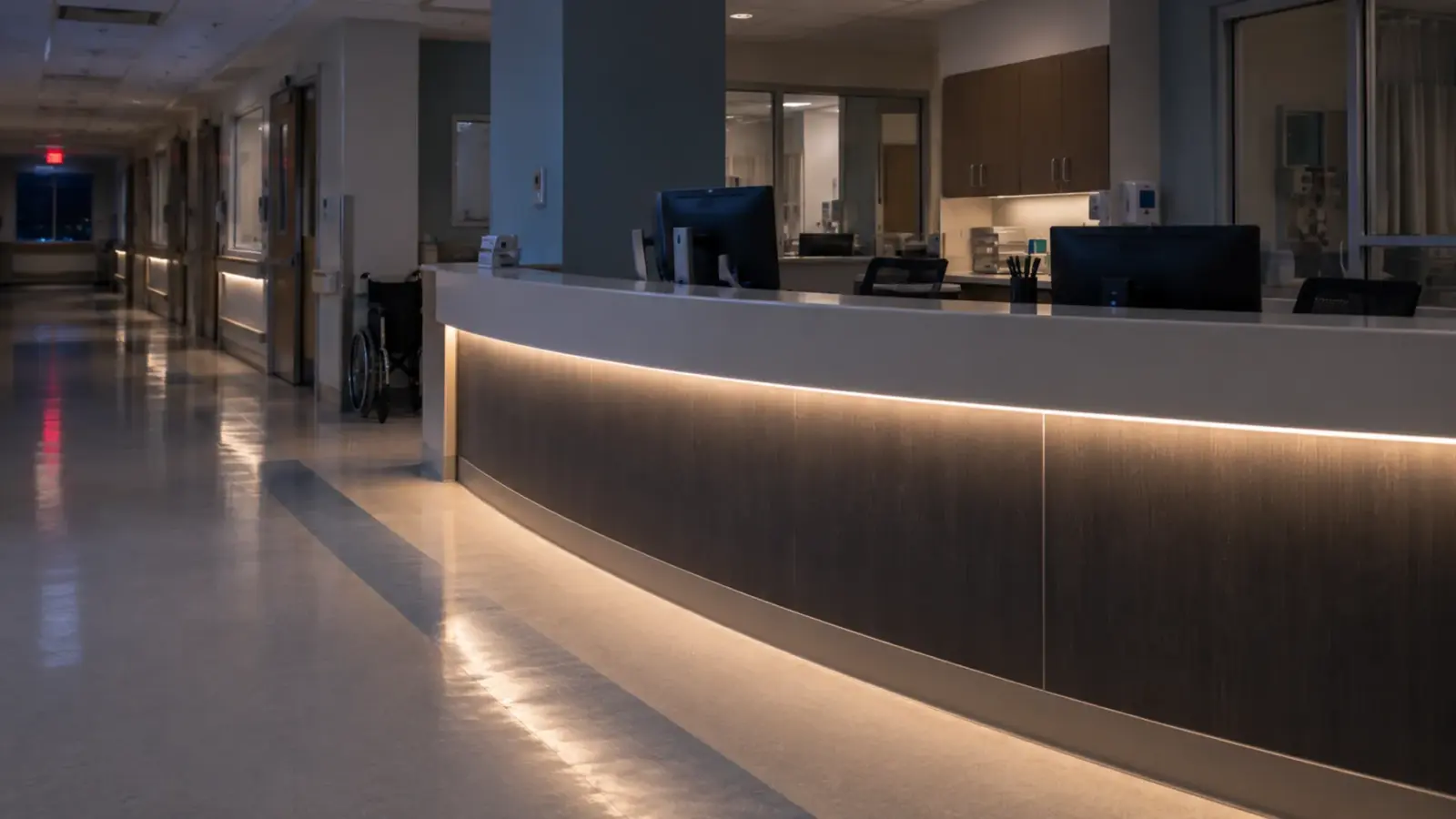
Yes. LED strip can run 24 hours a day; what changes is the calendar, the driver and the warranty arithmetic. A strip rated L70 at 50,000 hours reaches that point in 5.7 years of continuous operation, a five-year warranty period covers 43,800 hours, and the driver’s own calendar depends on how hot it runs.
Yes, and the Calendar Shrinks
A rated life is a number of hours, and a space that never turns off uses 8,760 of them a year. Our COB and outdoor strip pages state a rated life of L70 at 50,000 hours or more, which the COB page puts at more than 17 years at 8 hours a day. The same hours on a different schedule give a very different calendar:
| Schedule | Hours per year | Years to 25,000 h | Years to 50,000 h | Hours in 5 years |
|---|---|---|---|---|
| 24 hours a day | 8,760 | 2.9 | 5.7 | 43,800 |
| 18 hours a day | 6,570 | 3.8 | 7.6 | 32,850 |
| 12 hours a day | 4,380 | 5.7 | 11.4 | 21,900 |
| 8 hours a day | 2,920 | 8.6 | 17.1 | 14,600 |
| 6 hours a day | 2,190 | 11.4 | 22.8 | 10,950 |
The 25,000-hour column is there because Philips Hue rates its strips that way: up to 25,000 hours, about 11 years at 6 hours a day and, powered all day, “around 2.8 years before noticeable dimming occurs.” The table’s 2.9 is the same arithmetic rounded. L70 is not a failure point either: the strip gives 70 percent of its original light and is still lit, as our lifespan guide explains. Whether 70 percent is enough is a design decision.
Which Spaces Really Run Around the Clock
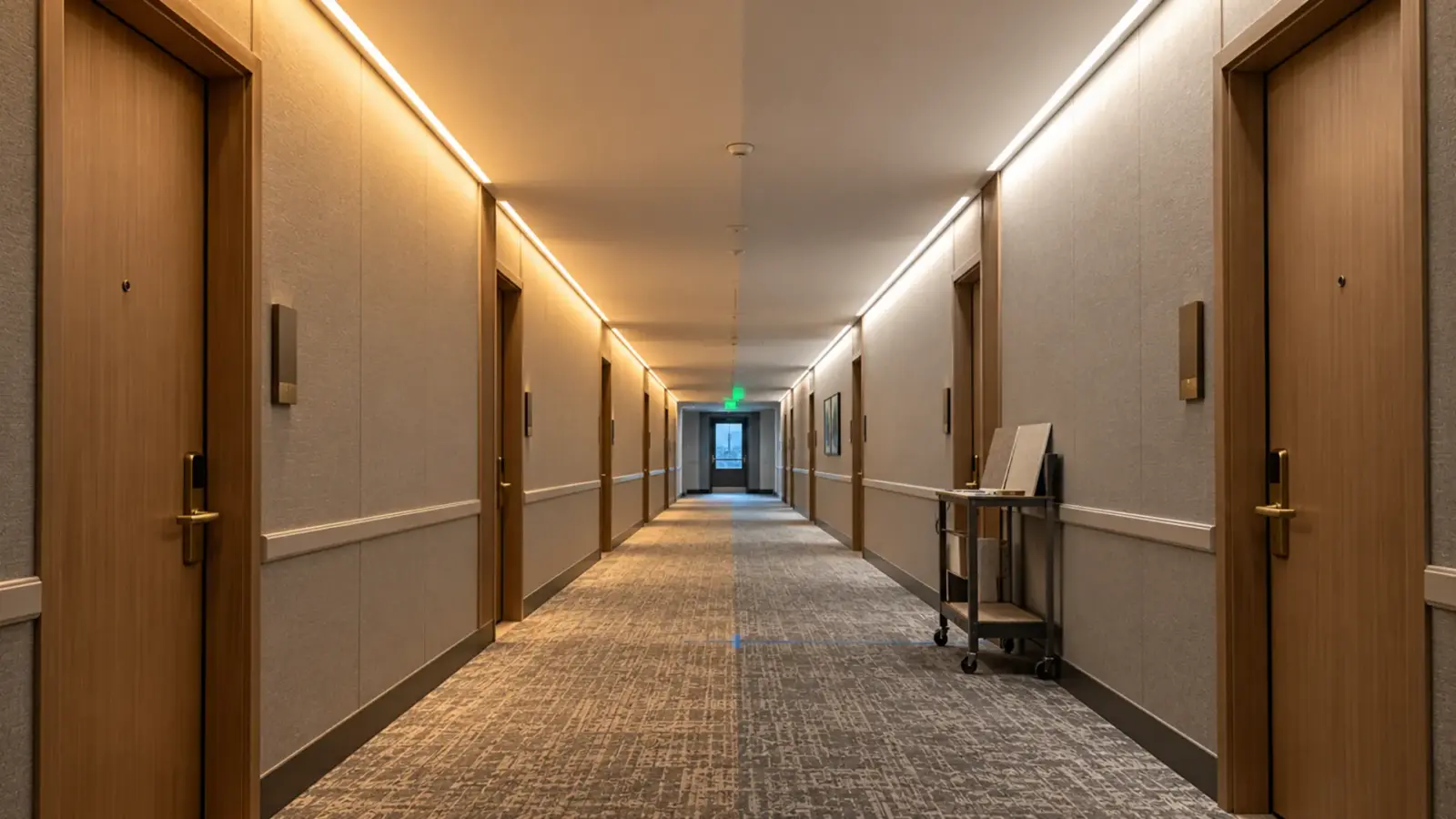
Not every always-on space runs the same hours, and the table above is the tool for sorting them. A zone that stays lit at a reduced level overnight still logs 8,760 hours a year even if the output is low. Our hospital guide covers night mode in corridors and our hotel guide covers strip that dims low at the front desk; stair halls, parking levels and 24-hour retail follow the same arithmetic when they are on all night. Signs and exterior strip are different. A dusk-to-dawn schedule is about 12 hours a day before any code shut-off period, which is the 4,380-hour row of the table, and our photocell and timer guide covers how those schedules are switched. Count the hours for each zone on the drawing, because a building has several answers.
What 24/7 Does to the Strip
Continuous duty gives the strip no off period, so every hour of the day counts toward the rated hours, and heat decides how fast they pass. Our COB page calls proper heat sinking in an aluminum channel “the single biggest factor in reaching rated life,” and nothing about continuous duty changes that. Our thermal guide works through watts per foot, copper, channel and air, and puts above about 6 W/ft on aluminum.
Two habits help around-the-clock spaces. The first is to design for more output than the space needs and run it dimmed, which keeps the strip below its rated power most of the day; our thermal guide calls dimming a heat control, and Philips Hue’s consumer FAQ says dimming slightly reduces stress and extends lifespan. The second is a night schedule. A hospital corridor or a hotel lobby rarely needs full output at 3 a.m., so a 0-10V or DALI schedule that drops the level for the night cuts the load. We found no source that quantifies how much life that buys, so we do not put a number on it; the benefit is lower heat and lower power for the same hours.
The strip’s ratings were measured under defined conditions. Ask for the case temperature that goes with the L70 figure, because a cove that runs hotter than the test may not match it.
The Driver’s Calendar Depends on Heat
L70 is a dimming point, not a failure. A driver that stops is an outage, so for service planning the driver’s calendar matters as much as the strip’s. Its life depends on its electrolytic capacitors, and those depend on temperature. Mean Well, a driver maker, says the lifetime of an LED driver “depends on the product level and temperature of the electrolytic capacitors” and that, as a design practice, it should not be lower than the lifetime of the LED. Its example is the HLG-150H-24, which uses a top-grade 10,000-hour capacitor rated at 105 °C: at 60 °C ambient the capacitor temperature rise is below 80 °C and the product life is “as high as 70,000 hours.” At 24 hours a day, 70,000 hours is 8.0 years, longer than the strip’s 5.7. That is Mean Well’s driver, not ours, so it illustrates the method and not our drivers’ life.
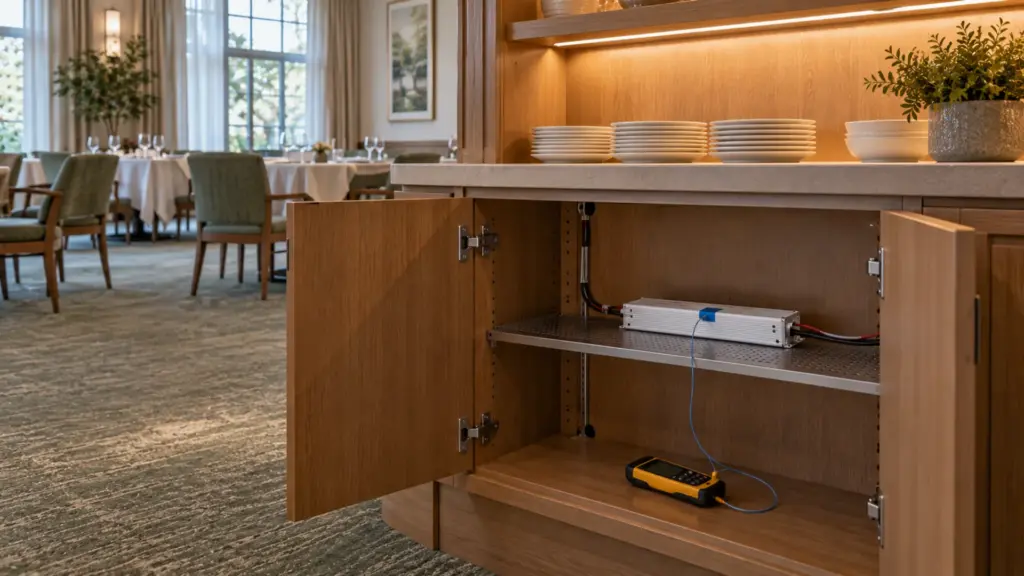
The temperature is what moves the number. An SL Power Electronics article in LED professional puts it as “every 10°C reduction increases the life by a factor of 2,” a statement about capacitor life, and notes that the capacitor temperature is the ambient plus the driver’s own rise. Applied as a rule of thumb, the same Mean Well driver in a 70 °C space would have about half the 70,000 hours, 35,000 hours or 4.0 years at 24/7, which is before the strip reaches L70. Our drivers page lists ambient ranges by model, for example -4 to 122°F (-20 to 50°C) for the Class 2 group, as typical values with the exact figure confirmed at quote, and it publishes no capacitor grade or life. A driver above a summer ceiling is running with less margin than the same driver in a closet. Our derating guide covers how to measure the space and size for the hot case, and the lifespan guide lists the driver’s own life as something to ask for.
Warranty Arithmetic
Our warranty policy is a limited warranty of up to five years, with the period stated on the quotation and order confirmation and varying by product series; drivers, controllers and accessories carry the period stated on the quotation. It does not state a number of hours per day. Put five years on the schedule table above and, if the period runs from energizing, the warranty covers 43,800 hours at 24 hours a day, 14,600 at 8.
That puts a 24/7 job in a particular place. A strip rated for 50,000 hours to L70 has run about 88 percent of those hours when a five-year period ends, so it is close to its L70 point at the end of the warranty. The policy covers lumen maintenance or color consistency that falls materially below the published specification under rated operating conditions, and it does not cover lumen depreciation within the published specification or temperatures outside the datasheet range. Where an around-the-clock strip stands against those lines at the end of the period is a question for the maker, and the policy does not spell out driver coverage beyond the period on the quotation. Say on the request for quote that the space runs around the clock, and ask for the period and the conditions in writing.
A Cove Opened in January 2027
Take a corridor cove that opens on January 1, 2027 and runs around the clock. This is a typical case, not a project.
| Date | Hours run | What happens |
|---|---|---|
| About January 2031 | 35,000 | Mean Well’s example driver (not ours) at 70 °C ambient, by the 10 °C rule of thumb |
| About January 2032 | 43,800 | A five-year warranty period ends, if it runs from energizing |
| About September 2032 | 50,000 | A strip rated L70 at 50,000 h reaches 70 percent of its light |
| Late 2034 | 70,000 | Mean Well’s example driver (not ours) at 60 °C ambient |
The same cove on 8 hours a day reaches 50,000 hours in about 2044, which is why the same product can be a 17-year fixture in one room and a five-year fixture in the next. Plan the maintenance calendar from the hours and the driver’s temperature, not from the install year. Our maintenance plan guide shows how to keep a run register, and our warranty claim guide lists the records to keep.
What to Watch as the Hours Add Up
The early signs on a strip that has run for years are in the materials. Our thermal guide lists adhesive, coating and color as the early warnings and says to check them at the first service visit, and our guide to strip turning black or yellow covers the causes. A dim far end usually points to voltage drop, and dimming near the feed to heat, not age alone. On the driver side, hum, flicker and a case too hot to hold are the cues; our driver troubleshooting guide walks through them. Write the first-visit checks into the maintenance plan, with the date the hours reach the first milestone, so the visit happens before a section goes dark in front of a guest or a patient.
Planning the Replacement
A calendar is only useful if someone acts on it. When the hours reach the first milestone, the cove can often be turned up instead of replaced, if the design left headroom, as our lifespan guide suggests. The driver is the part to schedule: record each driver’s model and location now, so a replacement is a service call and not an investigation. When a section does fail, replace the visible run whole, from a spare reel of the same batch, so the light stays even. And budget the labor. Our warranty policy states that removal, reinstallation, scaffolding, electrician labor and site costs are not covered, and our maintenance guide notes that the cost of a failed run is mostly access. The cheapest ceiling access is the one designed in at the start.
Spec Notes for Around-the-Clock Spaces
- Say “24 hours a day” on the drawing and the quote request; the rated life, the warranty and the driver choice all turn on it.
- Ask for the L70 hours with the case temperature and the drive current they were measured at.
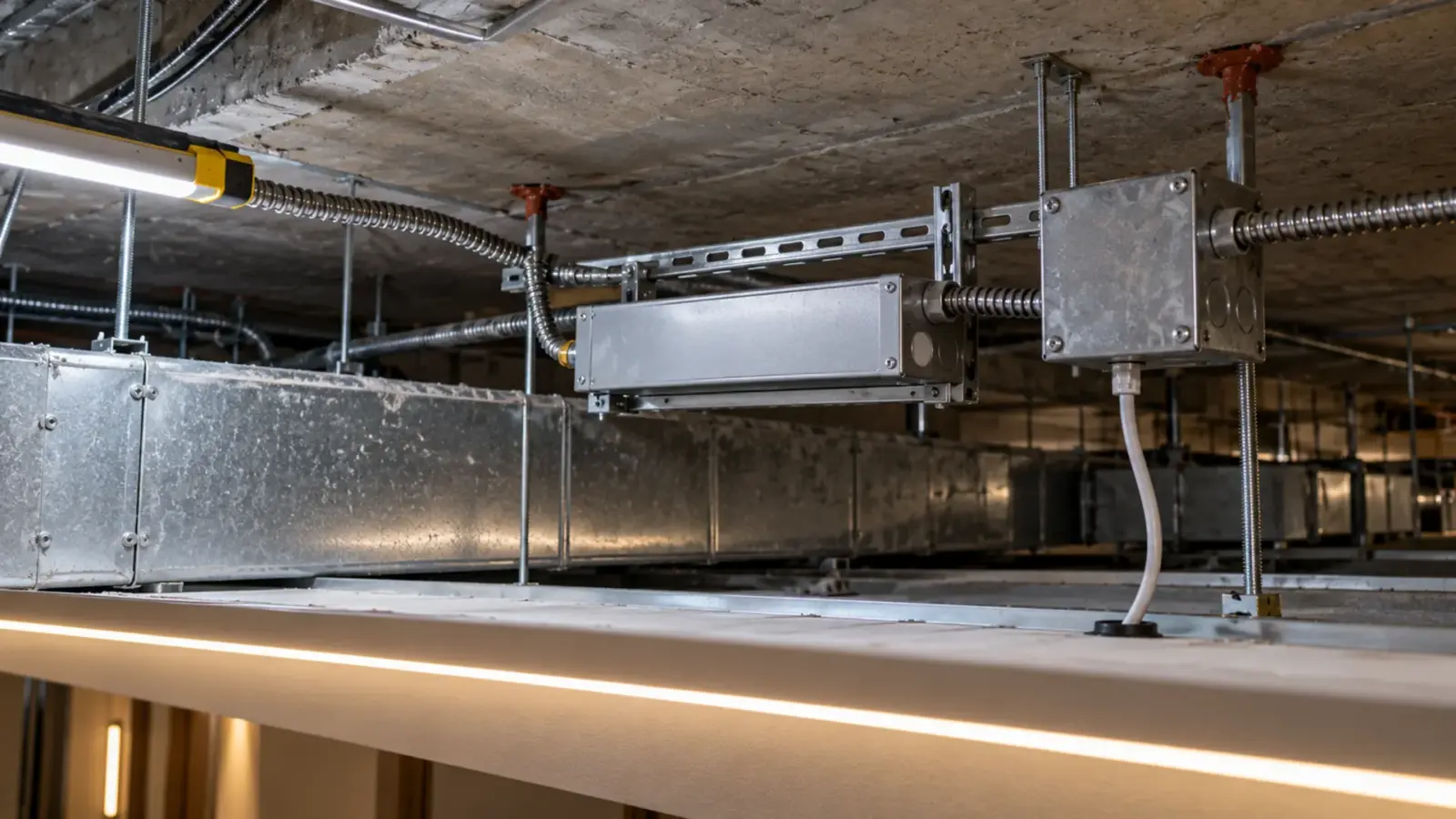
- Put high-output strip in aluminum channel with air around it, and keep coves ventilated.
- Choose drivers with temperature headroom, in an accessible closet or hatch; our hospital guide covers corridors that run at night.
- Specify a dimming level and a night schedule, and record the normal level at commissioning.
- Keep spare reels from the job’s batch and put the hours in the run register.
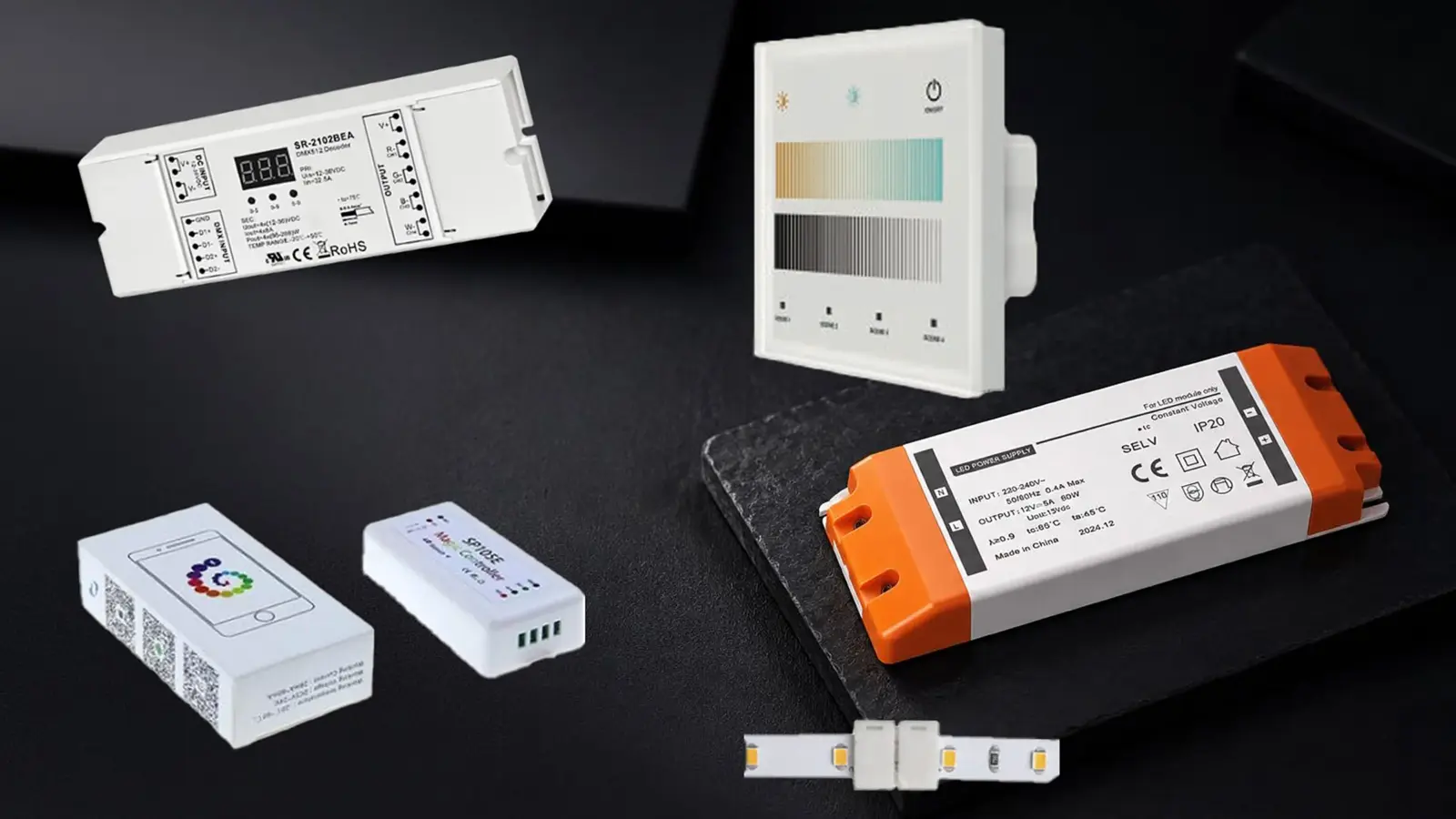
The strips and drivers named above are on our COB LED strip and drivers, controllers and connectors pages.