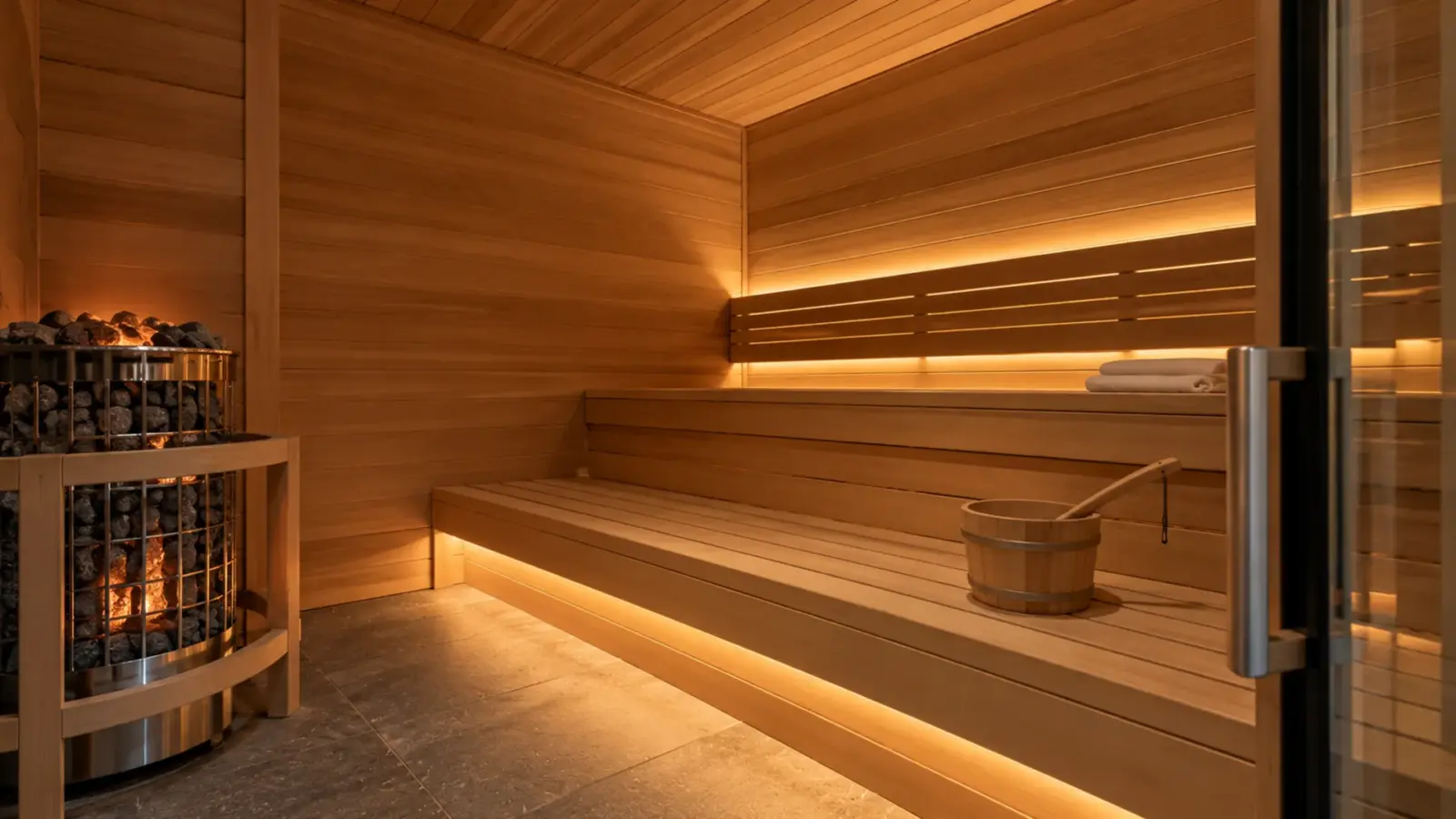
LED strip survives a sauna only if every part is rated for the temperature at its position: chips, silicone, adhesive and cable. Use a high-temperature series, mount it low in aluminum, keep joints and the driver out of the hot room, and read the datasheet for the lowest-rated part.
The usual fix for a sauna is to buy waterproof strip, and that fix is wrong. Waterproof is a rating for water, and a sauna is a heat problem first. This article sets out the ratings that matter, where the heat is in the room and which parts of the system fail first.
Heat Is Not Water: Two Ratings
An IP code says how much water and dust get past a seal. A temperature rating says how hot the air and the surfaces may be. They are separate numbers, and a strip can have one without the other. According to LEDsupply’s sauna guide, waterproof ratings do not automatically mean a product is sauna-rated, so both the IP rating and the temperature range have to be confirmed.
The vendors we reviewed do not agree on the water side. Cutter argues that IP65 is enough for a vapor-dominated sauna, and LEDsupply offers IP68 encapsulation. Neither number says anything about heat. Treat the IP rating as a minimum and the temperature rating as the decision.
The Chain of Ratings
A strip is not one part. It is a chain, and the weakest link sets the limit. According to Finnmark, a ready-made sauna strip can carry a cable tested to 180 °C while the LED strip itself is tested to 80 °C, so the system limit is 80 °C and not 180 °C. Check each link.
| Part | What to check | Examples from vendor data |
|---|---|---|
| LED chips and board | Rated operating temperature | A strip tested to 80 °C; a range of -30 °C to 90 °C; a strip rated to 100 °C |
| Silicone or coating | Rated for the same temperature, not just waterproof | High-temperature silicone, not a PU coating |
| Adhesive tape | Often the first to fail; rated separately | Many strips need a clip or a channel as well as tape |
| Cable and lead | Heat-rated insulation | A cable tested to 180 °C |
| Connectors and joints | Rated for the temperature and the moisture | Often not rated; keep them out of the room |
| Driver | Rated for its location | Outside the room unless rated |
- 1LED chips and boardOften the lowest numberOne vendor kit: strip 80 °C, cable 180 °C
- 2Silicone coatingHeat-rated, not just waterproofAsk in writing
- 3AdhesiveRated separatelyFix with a channel or clips
- 4Cable and leadHeat-rated insulationRoute away from the heater
- 5Connector or jointNot heat-rated hereKeep outside the room
- 6DriverRated for its locationOutside the hot room
According to Cutter, one sauna strip withstands 100 °C with short spikes to 148 °C. That is a vendor figure. The point of the table is the habit: write down the lowest number in the chain, and compare it to the temperature where the strip will hang.
Where the Heat Is
A sauna is not one temperature. Hot air rises, so the ceiling and the upper bench are the hottest, and the floor and the space under the bench are cooler. The heater radiates heat on whatever is in front of it. Ask the sauna maker for the design temperature at the height and position of each strip, and compare it to the lowest rating in the chain.
The practical rule follows from that. Mount strip low and away from the heater: behind a backrest, under a bench lip, in a toe-kick or at the floor line. Avoid the ceiling and the wall above the upper bench unless the rating covers it. Place it where the light is wanted and the heat is least, and let it graze the wood, not look at the guest. For a bench line, a slim line about 3/8 in (10 mm) wide under a lip gives a warm glow on the timber without glare.
Which Part to Doubt First
We do not have a measured order of failure, and we do not invent one. The vendor figures above give a better guide: rank the parts by their stated limits and doubt the lowest first.
Take the figures we reviewed. One sauna kit pairs a cable tested to 180 °C with strip tested to 80 °C; one strip is rated to 100 °C; another to a 90 °C operating range. In all three the strip is the lowest number, and a spec that quotes only the cable rating hides the real limit. The adhesive and the coating are not always rated in the vendor pages we reviewed, so ask for both in writing, and treat the answer “not rated” as the answer.
That gives a working order for a project file:
- The strip and its coating, because they carry the lowest published numbers.
- The adhesive, if the vendor has not stated a rating; fix the strip in a channel or with clips so the tape is not the support.
- The joint, which has no heat rating on our connectors; keep it out of the room.
- The lead, which must be heat-rated and routed away from the heater.
- The driver, which belongs outside.
Four of the five are avoided by the plan: a channel, a rated series, no joints in the room and the driver outside. The fifth, the lead, is avoided by specifying a heat-rated one.
Our High-Temperature Series
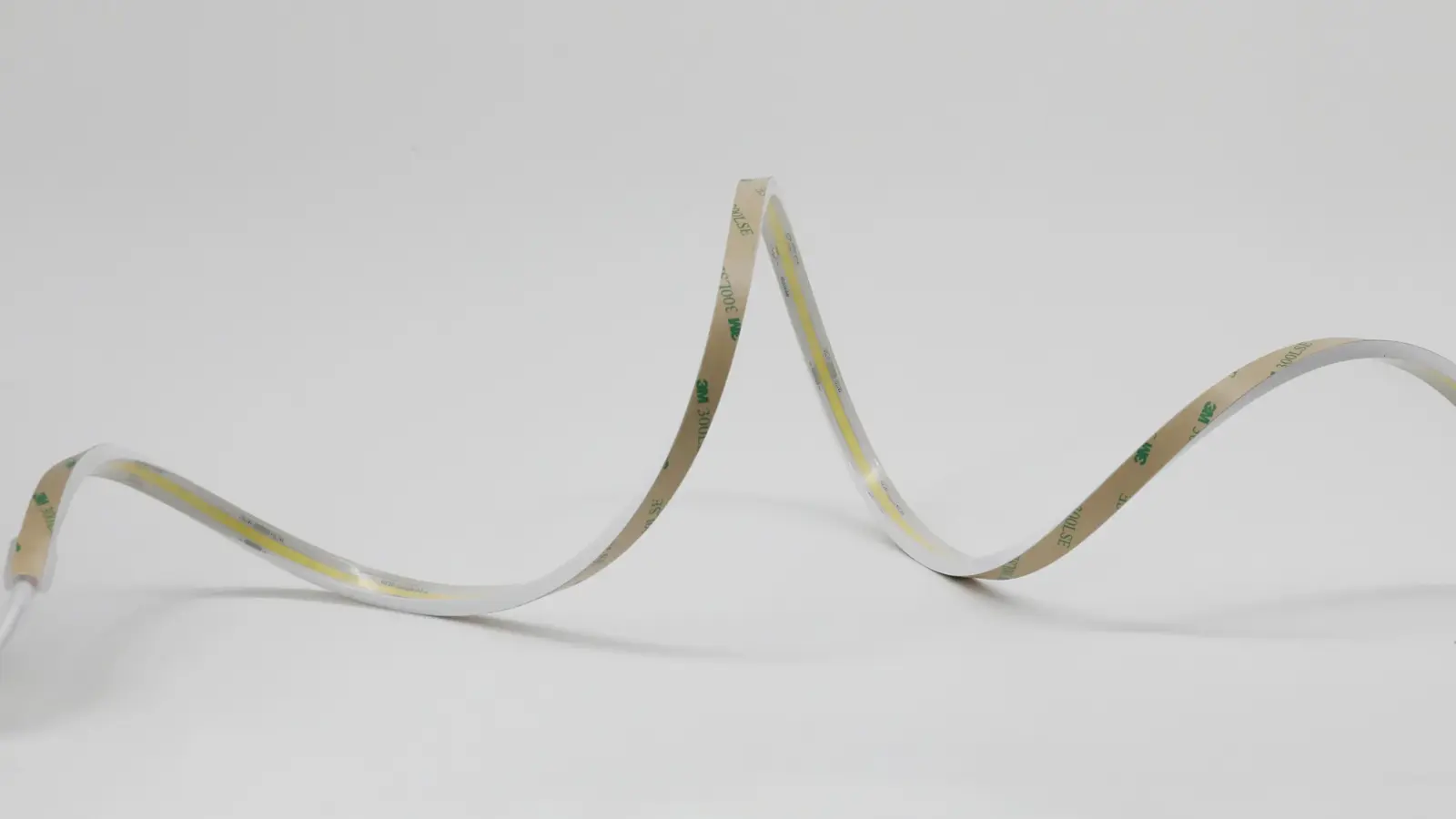
Our outdoor and waterproof range has a sauna and high-temperature series in high-temperature silicone, listed as IP68 and rated to +221 °F (+105 °C), in 2700K to 3000K.
| Model | Power | CCT | Voltage | Cut interval | Per feed |
|---|---|---|---|---|---|
| UT-O320-8-SA | 2.4 W/ft | 2700K to 3000K | 24V | 1.97 in (50 mm) | 16 ft |
| UT-O640-10-SA | 4.3 W/ft | 2700K to 3000K | 24V | 1.97 in (50 mm) | 16 ft |
For loads, a typical bench line of 8 ft on UT-O320-8-SA draws about 19 W, and a 16 ft run draws about 38 W. The listing and marking for a given model are confirmed at quote, and the rating applies to the strip as listed. It does not extend to a connector, an adhesive or a cable that was not part of the series.
Joints, Cable and Connectors
Failures in a sauna are usually at the joint. Our BB, XB and BXB connectors come in IP20, IP62 and IP65 versions, and none of them is a high-temperature connector. A joint in the hot room is the weakest link in the chain, so there should not be one. Cut the strip to length, seal the cut end, bring a heat-rated lead out of the room through a sealed hole, and make the joint in a dry space. Our guides on connector types and sealing the cut end show the details.
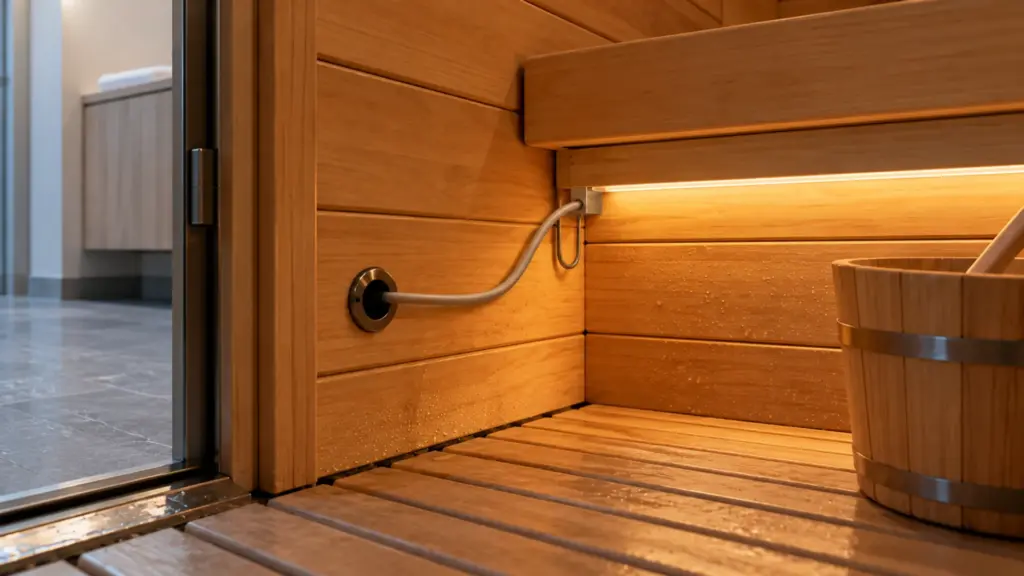
Choose the lead for the temperature at its path. According to Finnmark, heat-tolerant cable runs are sold separately from the strip in its range, which is a reminder to specify them. Keep the lead short inside the room, run it in the coolest path and keep it off the heater side.
Driver and Wiring
Put the driver outside the hot room. LEDsupply advises keeping power supplies and controllers outside the heated room unless they are rated for it, and Finnmark allows a driver in a watertight housing if it is mounted under 1 m high inside, as a vendor’s recommendation. We would place it in the dry room next to the sauna, in a cabinet with access, because a driver that fails in a hot room cannot be reached.
Size the driver at 80% of its rating, as in how to size a power supply, and check the load against the Class 2 limits in what the inspector checks on a Class 2 driver. Wiring through a sauna wall is the electrician’s job and the sauna maker’s, and local code decides the details. We do not give code conclusions here.
What the Light Should Do
A sauna wants low, warm, indirect light. Put the strip where it washes the timber and not where it faces the guest: behind the backrest, under the bench lip or in a groove along the wall base. Use 2700K to 3000K, which is what our sauna series lists, and keep brightness low; the room is a place to rest, and a bright line at eye level ruins it. A dimmer is usual, and the dimming should be tested on a bench with the real driver before the sauna is built, as in test driver and dimmer compatibility before the tape goes up.
Avoid wood treatments that contain oils or solvents close to the strip. Heat drives the volatiles out, and they can stain a coating over time. Ask the sauna maker which finishes are used and keep strip away from untreated sap pockets in the timber.
Inspection and Replacement
A sauna lives in heat cycles, and strip should be inspected on a schedule. Look at the adhesive, the coating color and the lead insulation at each service, and replace any section that has shifted color or lifted. Keep a length of the same model and production run on a shelf, because a replacement from a later run may not match the old glow. Label the driver with the strip it feeds, and keep the warm-up test photo in the file for comparison.
Steam Rooms Are Different
A steam room is wet and hot, but usually less hot than a dry sauna, and the air is saturated. The ratings change: the IP code matters more, and the temperature range still has to cover the room. According to one vendor guide, IP65 strip is not meant for steam rooms. Our spa and wet areas guide sets the zones for spas and commercial wet areas, and the wet location guide explains why an IP code is not a listing. For a steam room, confirm the temperature rating, the IP rating and the marking for the exact model at quote, and keep joints and drivers outside.
Install and Warm-Up Test
Test the system before the room is closed. Switch it on and run it at room temperature, then bring the sauna to its working temperature with the strip on and watch for four things: a color shift, a soft or discolored coating, a lifting adhesive and any odor from the lead. A strip that yellows or turns brown has been overheated, as our guide to black or yellow LED strip explains. Photograph the strip before and after, and write the result into the handover file with the model and the temperature of the test.