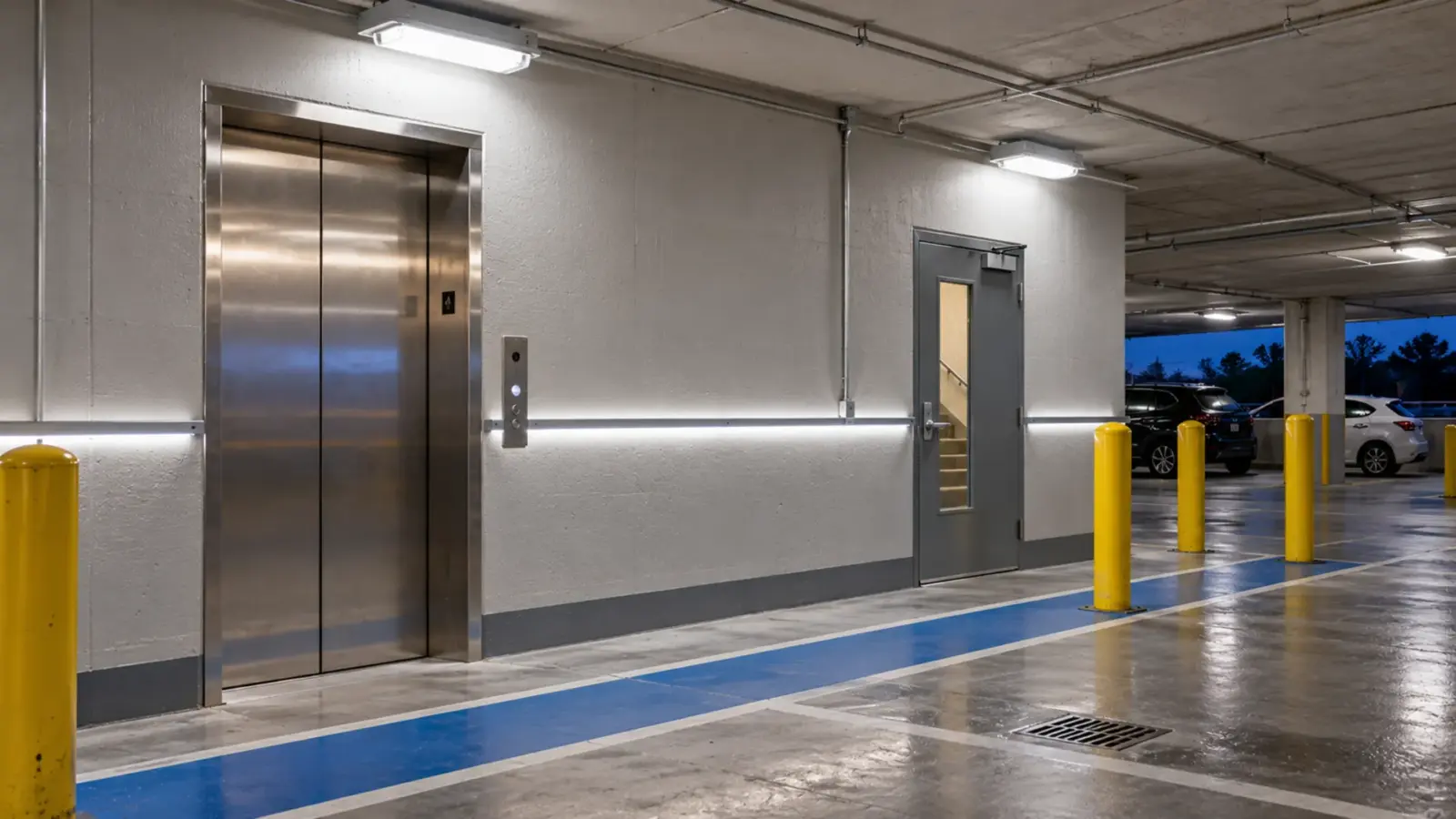
One Bonneville Power Administration layout guide for a garage retrofit quotes the IES values as 5 footcandles on average and 1 at the minimum, with a 10 to 1 uniformity ratio, and luminaires do that work. LED strip does a different one, and the garage tests it harder than a lobby does.
LED strip belongs in a garage as a wayfinding and accent line at stair cores, elevator lobbies and pedestrian paths, not as the main light. It has to survive three stresses: damp, exhaust-laden air; impact from vehicles and people; and running 24 hours a day. Each one sets a different part of the specification.
Where Strip Belongs in a Garage
Luminaires carry the horizontal light in a garage. The BPA guide cites IES levels of 5 fc average and 1 fc minimum, and the Facility Solutions Group blog summarizes IES guidance that stairwells, elevator lobbies and pedestrian gathering areas should be 10 fc within a radius of 30 feet. We have not read IES RP-20, and other sources quote different figures (the same blog gives 6 fc on average for general parking), so treat the numbers as the reason strip is not the light source and not as design values.
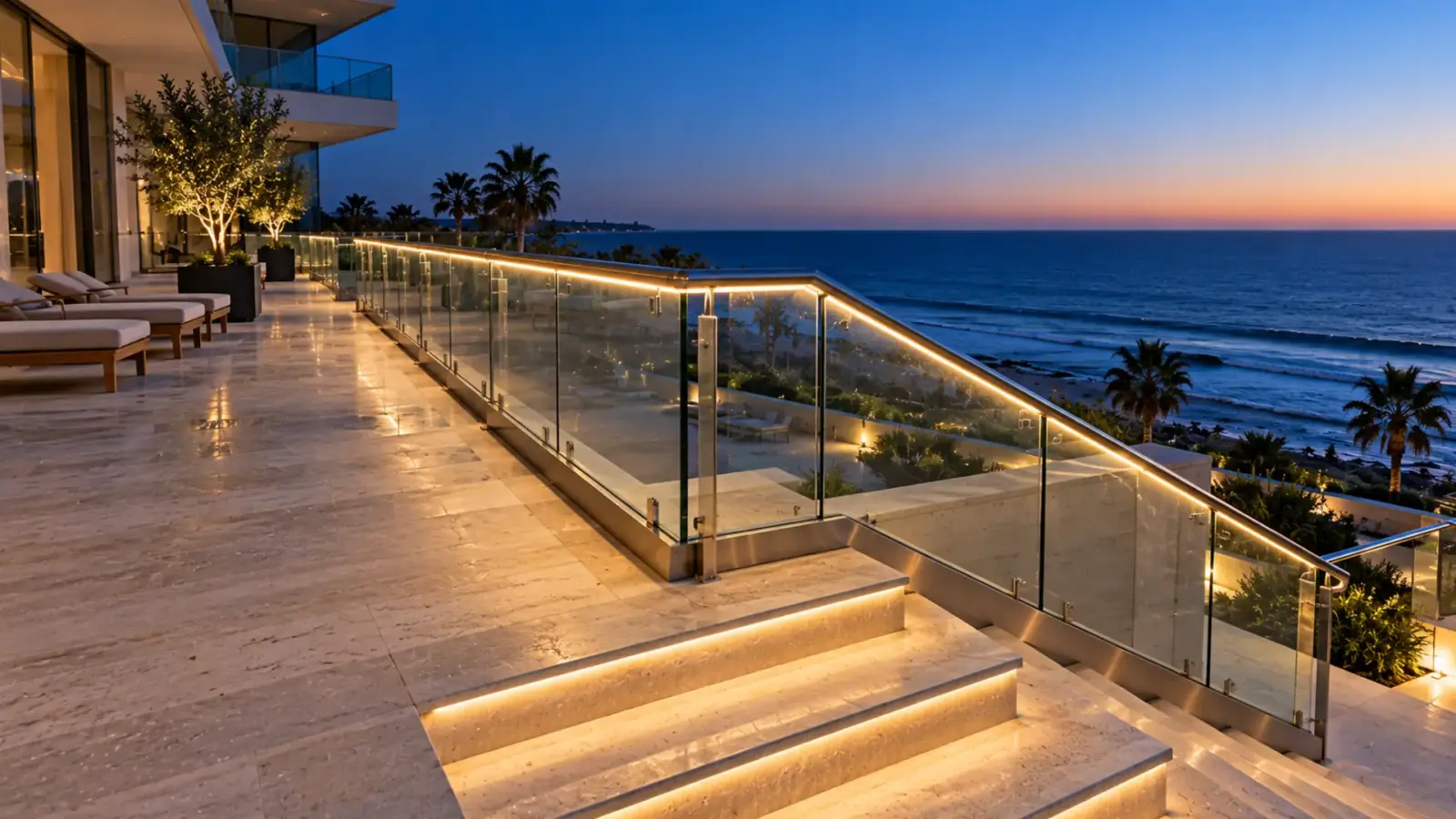
Strip earns its place where a person decides where to go. Good places for it are the walls of a stair core, the landing edge, the elevator lobby, a pedestrian route marked along a drive aisle wall and the edge of a ramp on the pedestrian side. In a hotel, multifamily or hospital garage, our view is that these are the points where a guest or a patient first meets the building, so the garage is part of the arrival sequence and not only a utility space. Our stair lighting guide covers when stair strip counts toward egress lighting, and our hospital strip guide covers the cleaning side of a healthcare building.
Take the route a visitor walks. They park, cross the drive aisle and look for a door. In our suggestion, a continuous line from the elevator lobby toward the stair door gives that route a spine without adding glare, and it keeps working when a luminaire is out. Keep the line low enough to read as a path and high enough to stay above bumper reach, and end it at the door it leads to rather than letting it fade into the wall. Whether any of this counts as egress lighting is a code question for the stair guide above and the AHJ, not for the strip.
Damp Air Sets the Construction
A garage is not a dry room and it is rarely a pool. The Shine Lighting vendor page says garage fixtures face “high levels of exhaust fumes and humidity”, that above-ground garages “expose light fixtures to an outdoor environment” because they are partly open for ventilation, and that LED garage lights “should be gasketed to seal out moisture, dust, and other contaminants.” Underground garages are a different case, and the same page says only that they need full day and night lighting.
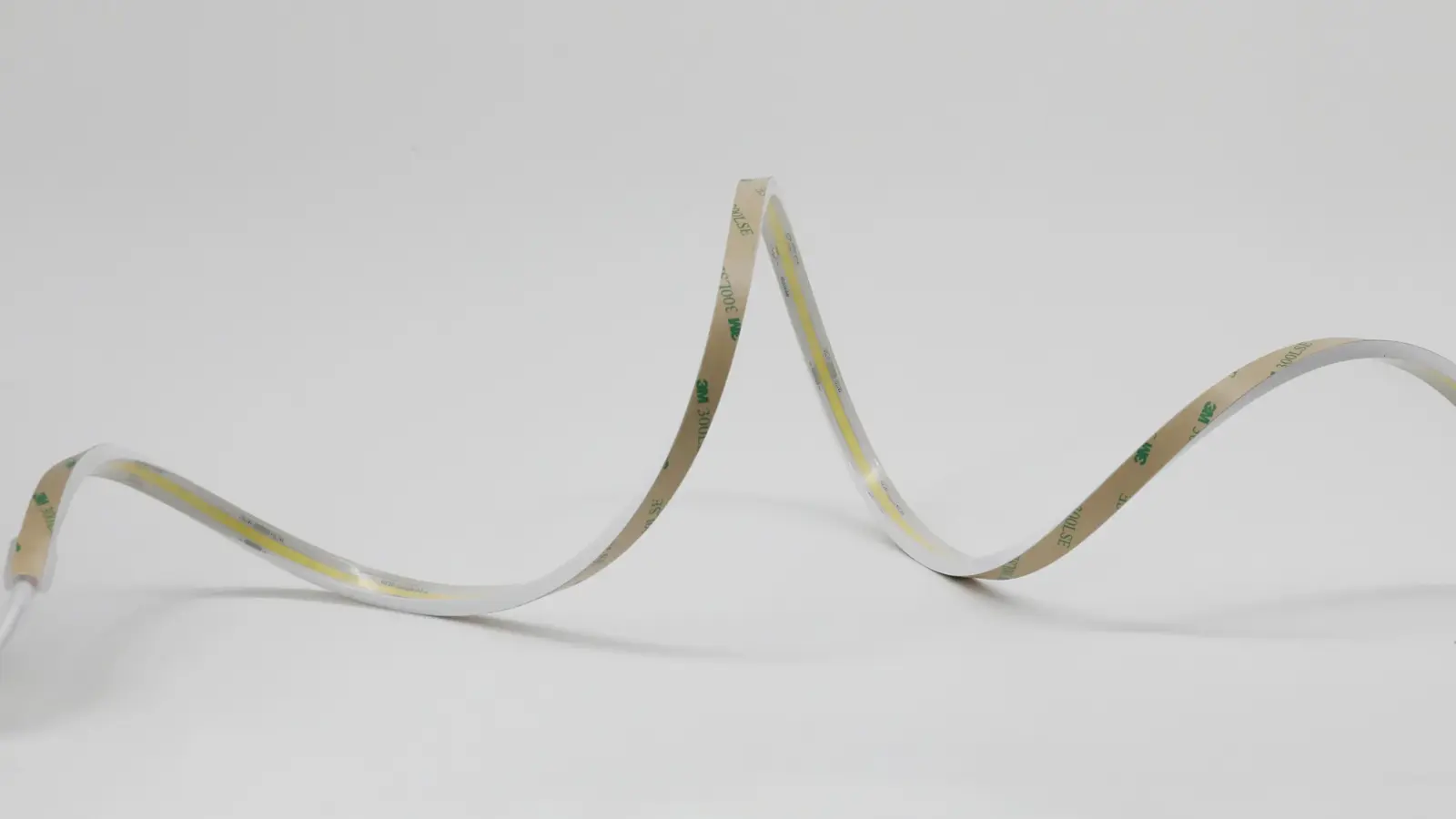
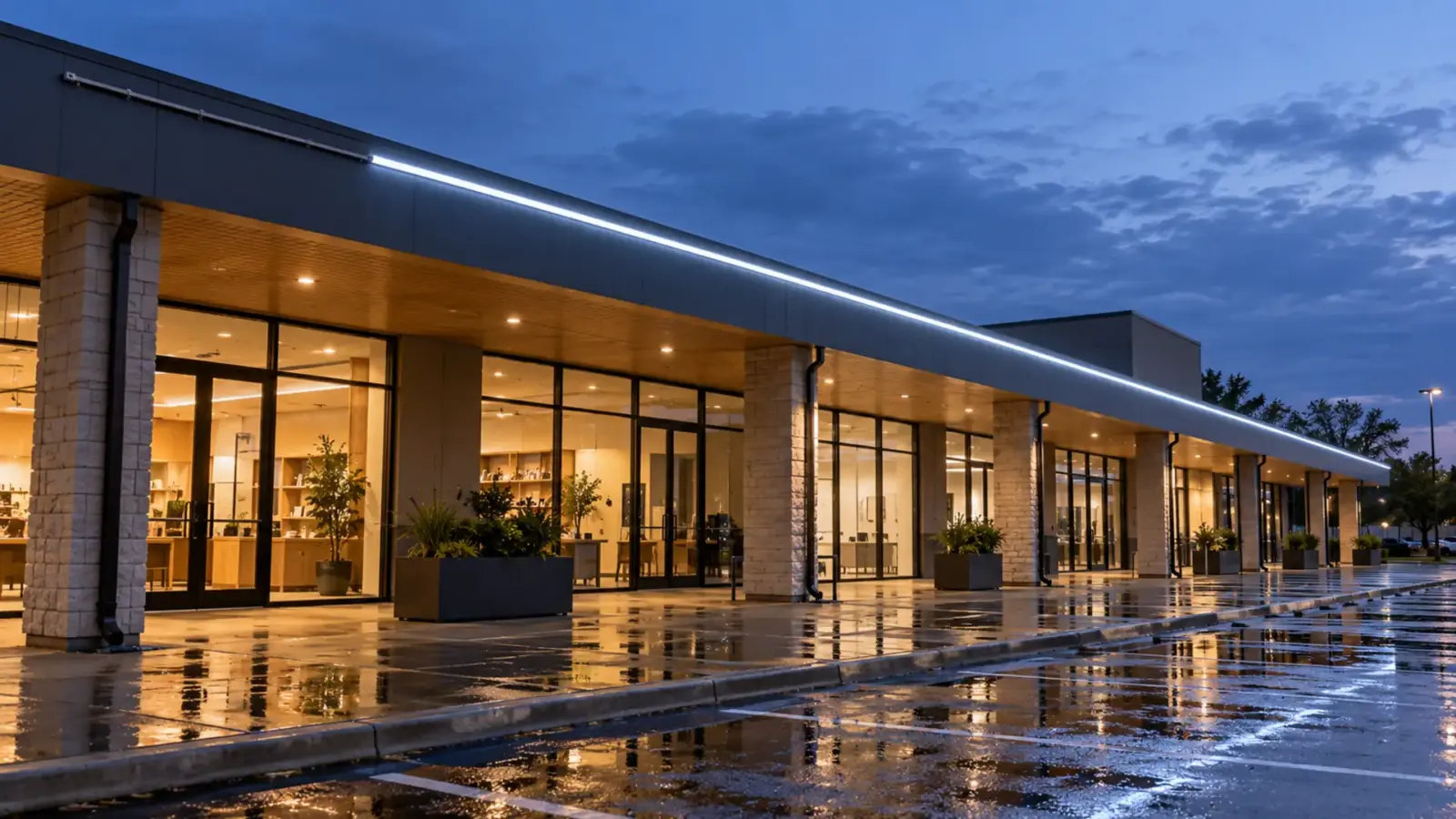
Our outdoor strip comes in three constructions: a silicone top coat at IP65 for rain and splash, an extruded sleeve at IP67 for temporary immersion, and a full silicone tube at IP68 for continuous submersion. For a garage wall, our planning suggestion is to start at the sealed IP65 construction for splash and humidity, step to IP67 where the strip is near a drain, a washdown point or an open bay, and keep IP68 for places where water can stand. Connectors count too: our drivers page lists strip connectors in IP20, IP62 and IP65 variants, and our outdoor strip page says to match connectors and power supplies to the same rating because the system is only as protected as its weakest part. In our reading, an IP65 strip with an IP20 connector is an IP20 joint. Our page adds a caution that matters here: an IP code is a lab test, and the wet location marking comes from the product’s listing, so confirm the marking for the model at quote. Our wet location guide covers what IP68 does and does not mean.
The strip is the smaller part of the problem. Our marine page makes the point that salt air reaches strip that never gets wet, and that the risk moves to profiles, clips, screws and cable glands. Where a garage sees winter road salt, which no source we found measures for strip, our suggestion follows the same rule: ask for the profile finish and the fixings on the submittal, keep dissimilar metals apart, and seal every cut end, as our guide to sealing a cut end shows. Our marine-grade guide describes the tests worth asking for.
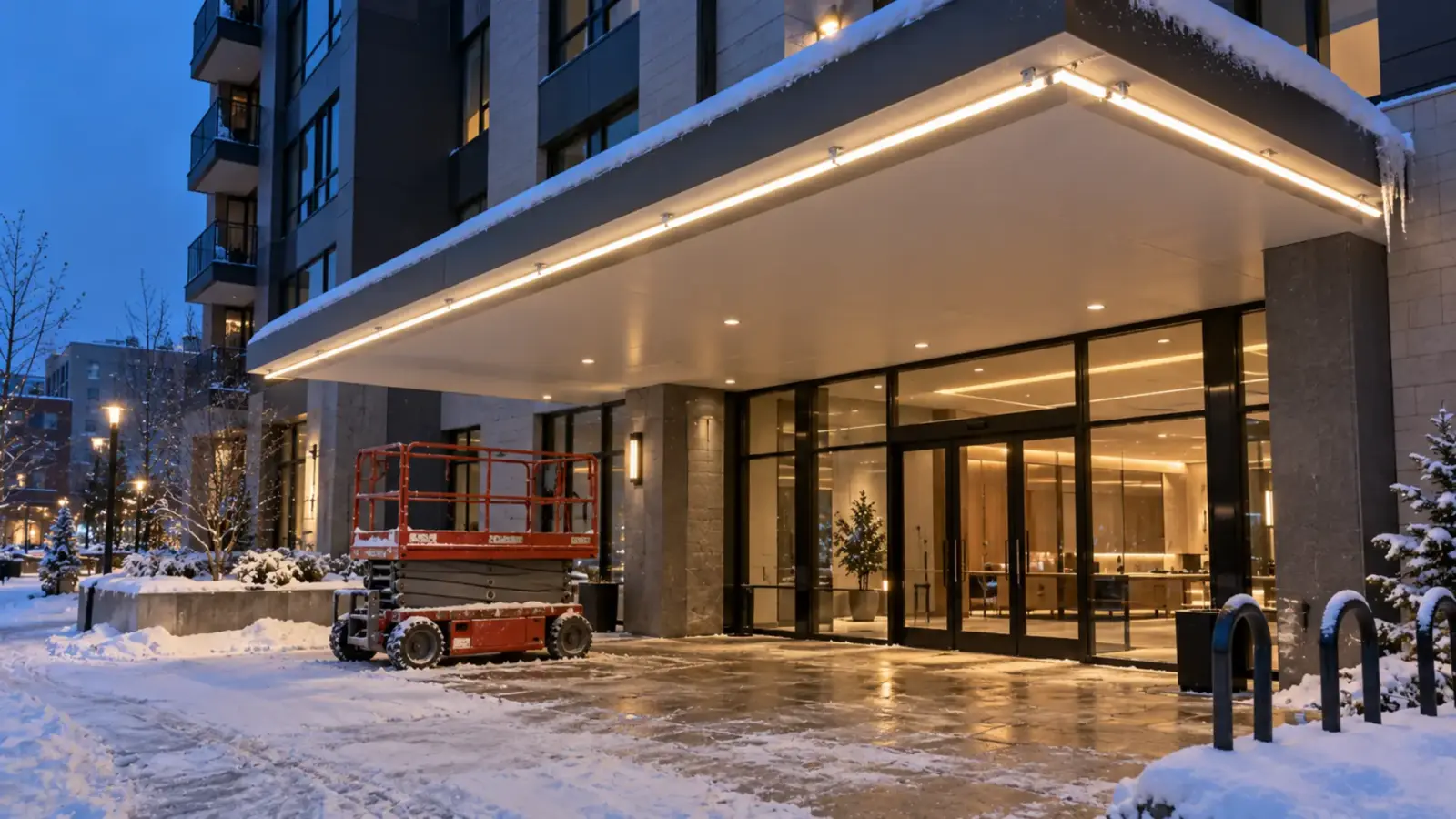
In our reading, cold is the other surprise in an unheated structure. Our outdoor strip program covers −4 °F to +221 °F (−20 °C to +105 °C), the high end belonging to the high-temperature silicone series, the BPA guide says LEDs are less sensitive to temperature fluctuations than fluorescent in unconditioned spaces (it is writing about luminaires), and our cold-weather guide covers installing below freezing.
Impact Sets the Mounting
In our reading, impact in a garage comes from people, carts, mirrors and vehicle corners. No source we found gives a bumper clearance, so how high and how far out to set a strip is a project decision based on the vehicles and the wall. Our planning rule is to keep the strip on the pedestrian side, above the reach of a bumper, and away from the swing of a door or a cart, and to let the designer set the height.
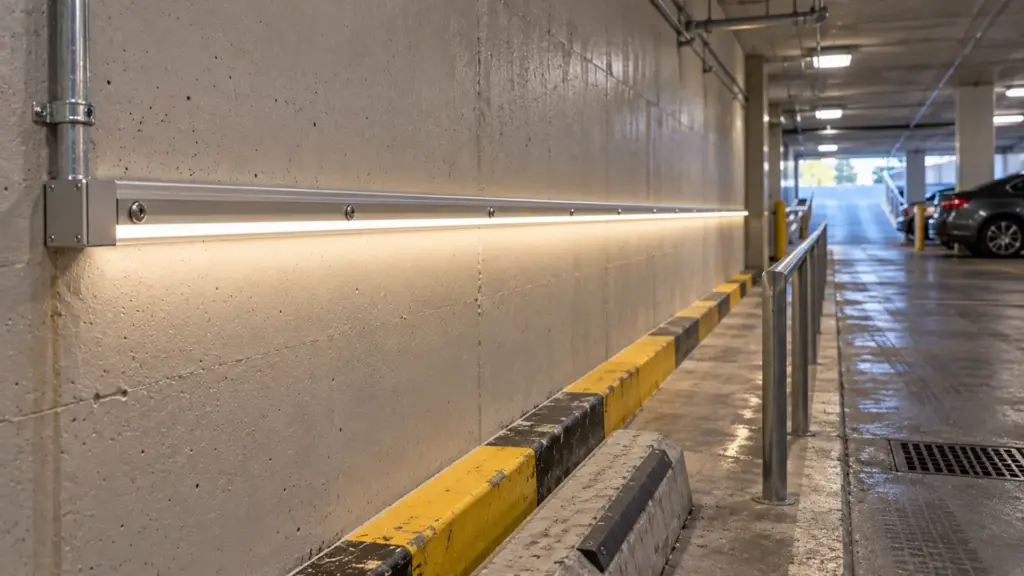
Where it cannot be out of reach, specify for impact. Our UT-N1616-68 neon is rated IP68 and IK10, and our marine page says that where people can step on or kick a line you choose an impact-rated profile and mount it in a protected position. Our channels are anodized AL6063 aluminum with polycarbonate covers that shield the strip from dust and contact, but our page lists no IK rating for the channel or the cover, so if the line is reachable, ask for the rating at quote. Our walk-over guide covers impact when the strip is at foot level, and our channel selection guide covers the profile.
Twenty-Four Hours Sets the Driver and the Dimming
Some garages never go dark. The Facility Solutions Group blog says “a hospital garage has maximum occupancy 24/7”, and Shine’s page says underground garages require full day and night lighting. A year has 8,760 hours, so a strip that runs 24 hours a day logs 43,800 hours in the five years that our warranty page gives as the longest term, “up to 5 years”, which is stated on the quotation and varies by series. Read the strip’s datasheet rated life against that number, and read the quotation for the term.
Dimming is the lever. The BPA guide suggests occupancy control that reduces lighting power in a zone by at least 50% within 30 minutes of occupants leaving, and the FSG blog says sensors typically dim to 20 to 30% in empty areas. We have not read the energy code, so check what the edition the AHJ has adopted requires for garage controls. For a strip circuit, our suggestion is a dimming driver on the same zone control, so the line can follow the luminaires, and our occupancy sensor guide covers whether the sensor should switch the driver or dim it.
A strip that never switches off never gets a cool-down. In our reading, that makes the heat path into the channel matter more than it does on a line that cycles with the room, so choose the strip’s watts per foot with the profile in mind; our thermal performance guide explains why there is no per-millimeter rule and how to test a combination. Lower power per foot is also the quiet benefit of the dimming above.
The driver needs the same attention as the strip. Our Class 2 drivers are IP20 and stay in a dry space, and damp or wet locations take a potted IP67 driver such as UT-D100-24-67. Our marine page puts drivers in dry, ventilated spaces where possible; for a garage, our suggestion is a dry, reachable closet or a rated enclosure, not the open wall beside the strip. Our remote driver guide covers the cable length.
Reading a Failed Run in a Garage
If a garage line fails, the symptom usually points at the stress. This is our reading, not a standard, and it is meant as a checklist for the first visit.
| Symptom | Likely stress | First check |
|---|---|---|
| A section goes dark from a cut end | Damp | Whether the cut end was sealed and capped, as our sealing guide describes |
| Green or white deposits at a joint | Damp, salt | The connector’s IP variant against the strip’s, and the fixings’ finish |
| A cracked cover or a line pulled from its clip | Impact | The mounting height and side, and whether the cover is rated for impact |
| Strip fine, driver dead | Damp | The driver’s IP rating and where it sits |
| Light output slowly lower after years of continuous running | Hours | The rated life on the datasheet against hours run, and whether the zone dims |
Keep the date, the zone and a photograph of each failure. Our warranty page lists impact and moisture exposure beyond the IP rating among what is not covered, so the record matters. Our warranty documentation guide lists what to capture if a claim is likely.
Garage Strip at a Glance
| Stress | What it does to strip | What to ask for (planning suggestion) |
|---|---|---|
| Damp, exhaust, humidity | Moisture reaches cut ends, connectors and fixings | IP65 or IP67 construction by location, the wet location marking confirmed at quote, sealed ends |
| Salt or a washdown | Attacks profiles, clips, screws and glands | Finish and fixings on the submittal, dissimilar metals apart |
| Impact | Cracks a cover or tears a line from its channel | Pedestrian side, out of bumper reach, an impact-rated profile where reachable |
| 24-hour running | Logs 8,760 hours a year | Datasheet life against 43,800 hours in five years, dimming on the zone control |
| Driver in the garage | IP20 fails in damp air | Potted IP67 driver, or a dry reachable closet |
Checks Before the Strip Goes on the Garage Wall
- The role: strip on stair cores, lobbies and paths, luminaires on the horizontal light.
- The construction and the wet or damp marking for each location, from the listing.
- Fixings, finish and sealed ends, on the submittal.
- The mounting height and side, set by the project and out of reach where possible.
- Rated life against 24-hour running, the warranty term on the quote, and dimming on the zone control.
- The driver in a dry place, or a potted IP67 unit.
Strip for these locations is in our outdoor LED strip range, with channels in our LED channels and diffusers range and drivers in our drivers, controllers and connectors range.