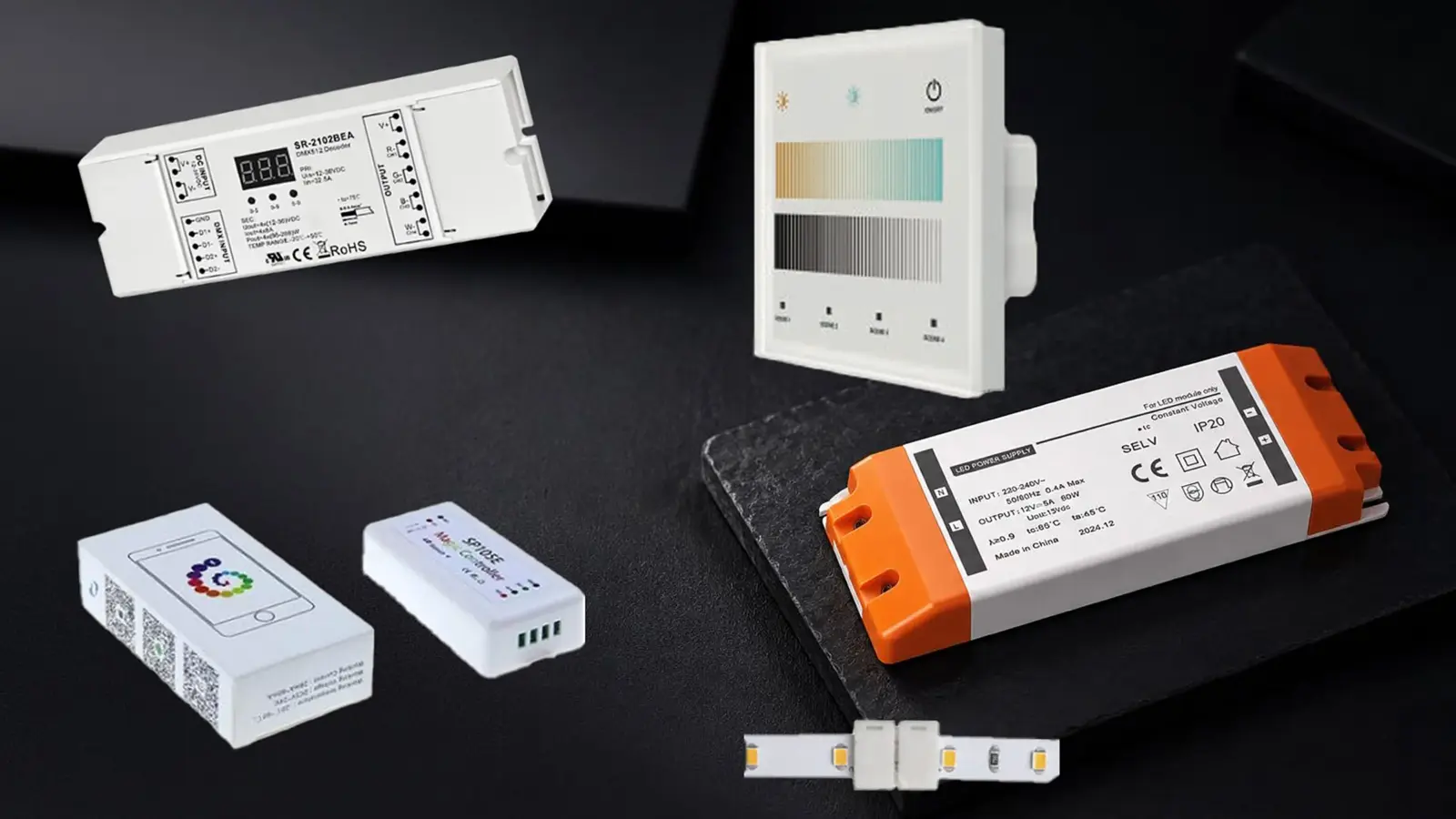
A 24V Class 2 source is limited to about 100 VA, and our Class 2 drivers stop at 60 W per output. On a 400 W supply, a loose joint has several times more power behind it. LED strip lights are rarely a fire hazard by themselves; the risk sits in the driver, the joints, and the enclosure.
That is the useful answer for a contractor: the tape is the least likely part to start a fire, and the parts around it are where jobs go wrong. This article ranks those parts. Our Class 2 driver guide covers what the inspector checks on the same parts.
Where the Heat and Fault Energy Come From
A fire needs heat and something to burn. On a strip job, heat comes from two places: normal operating heat in the strip and driver, and fault heat at a bad connection, a damaged cable, or an overloaded supply. The second kind is the one to design out.
| Part | What goes wrong | What limits the risk |
|---|---|---|
| Driver | Overloaded, no air around it, wrong location, non-Class 2 output on a large load | Load at or below 80% of rating, Class 2 output where possible, access and ventilation |
| Joints and connectors | Loose clip, cold solder, wrong-width connector, current above the connector rating | Rated parts, current checked against the rating, tested before closing up |
| Feed cable | Undersized, pinched by a staple or a cabinet back, wrong cable type | CL2 or CL3 cable sized for the current, protected where it passes millwork |
| Strip | High-density strip mounted on wood or drywall with no heat path; adhesive lets go and the strip sags onto materials | Channel for high-output strip, mechanical clips where adhesive will not hold |
| Location | Water reaching IP20 parts; strip or driver buried in insulation | Parts rated for the location, drivers kept in open, reachable space |
Most of the rows are about the system, not the tape. That matches what electricians report in forums and what vendor safety pages say in their own words: mismatched or overloaded supplies, poor ventilation, and damaged wiring come up again and again.
What the Class 2 Limit Does
Class 2 is a fire-safety rule at heart. According to a TIA overview of DC power in buildings, Class 2 systems are held to about 60 V and 100 VA, a level treated as low enough to be safe from a fire-starting standpoint. The driver enforces the limit, so a fault on the output cannot pull more than a small amount of power.
That changes what a bad joint can do. On a 60 W Class 2 output, the energy available to a loose clip is capped by the driver. On a 400 W non-Class 2 supply such as UT-D400-24-L, the same loose clip sits on a source that can deliver much more before the supply’s own protection reacts. The strip is identical in both cases. The fault energy is not.
This is why “the strip is Class 2” is not the whole answer. A Class 2 rated strip fed from a large supply is no longer on a Class 2 circuit. If the load needs more than one Class 2 output, split it into several Class 2 circuits, or use a larger supply and wire its output the way the listing and the AHJ require. Our power supply sizing guide shows both layouts.
The Driver: Load, Air and Access
A driver turns a small share of its input into heat, and that share grows when it runs near its full rating in a warm, closed space. Three numbers keep it comfortable.
- Load. Add the watts of every run on the output and keep the total at or below 80% of the rating. Two runs of UT-C320-8 at 16 ft (5 m) each load about 77 W, which is more than one 60 W Class 2 output can carry and needs two.
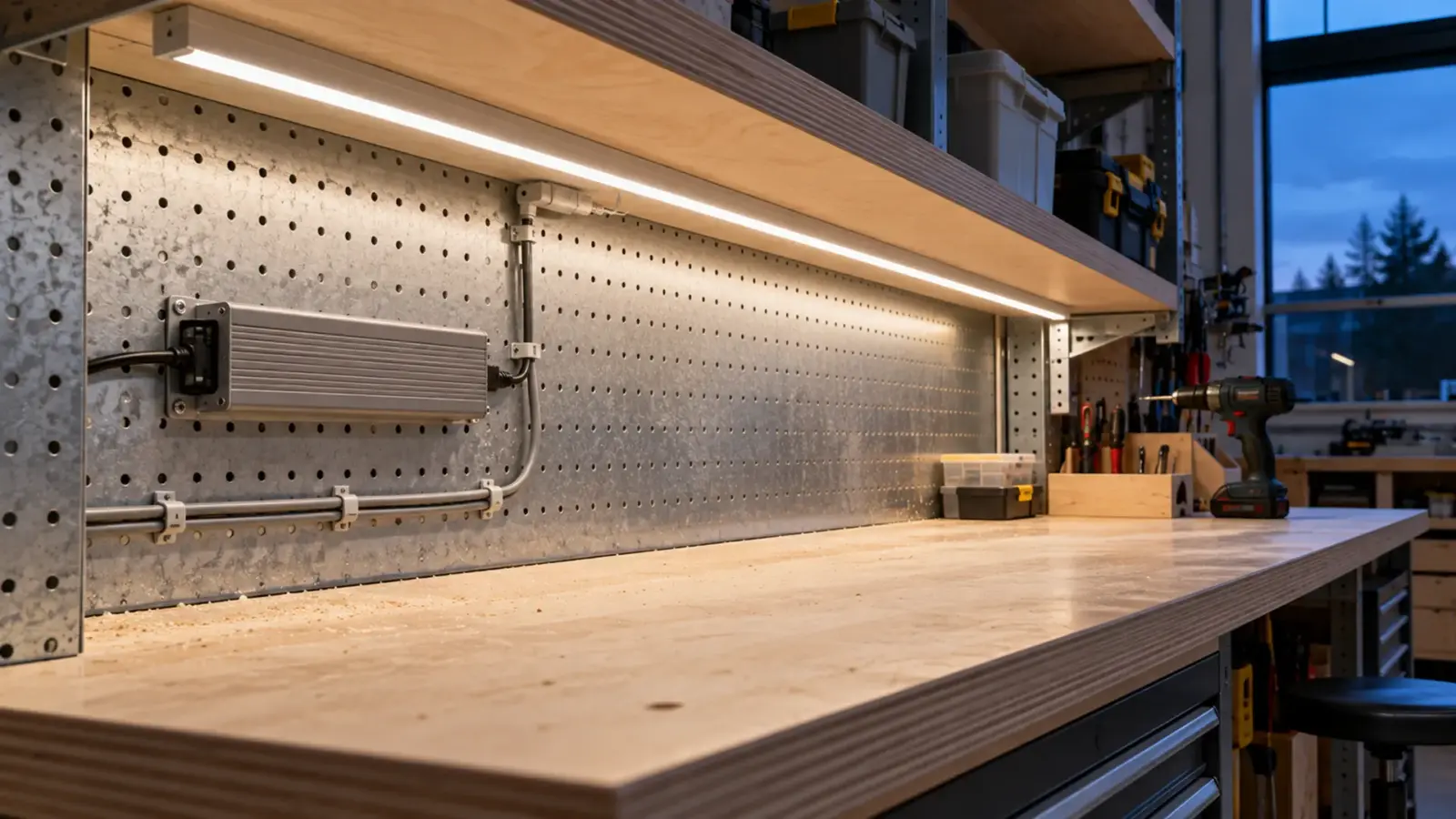
- Air. Leave open space around the case. A driver in a tight millwork cavity or wrapped in insulation runs hotter than the same driver on an open backboard.
- Access. Put the driver where it can be reached, read, and replaced without opening a finished surface. A driver nobody can see is a driver nobody notices running hot.
Mixed voltages are a related trap. A 12V strip on a 24V driver draws far more current than it was built for, and it overheats quickly. Match the strip voltage, the driver output, and the controller before anything is powered.
Joints and Connectors: The Usual Hot Spot
A joint is a small resistance carrying the full current of everything downstream. A good one barely warms. A loose one turns the lost voltage into heat at one point, and that point is often hidden in a channel or behind a valance.
Check the current, not just the fit. Our BB, XB and BXB connectors are rated at 5 A, and our connector guide shows where that rating sits in the five checks. At 24V that is 120 W through one clip. One 10 ft (3 m) feed of UT-C1600-30, our 30 mm high-output COB at 12.2 W/ft, draws about 5.1 A, already past that rating. A strip like that is fed by soldered leads or a wire rated for the current, not through a clip.
Three habits keep joints cool:
- Use connectors made for the strip’s width and circuit, seated fully, with the strip cut on its marked line.
- Power each run on the bench before it goes into the channel. A connector that is warm to the touch on the bench will be worse in a closed cove. Our installation guide builds this into the bench test.
- Measure the voltage across a suspect joint with the strip lit. A visible drop across a single connector means resistance, and resistance means heat. Our voltage drop guide shows where to put the meter.
Heat in the Strip: Density, Channel and Adhesive
Normal strip heat is low, and it should stay that way. Our COB page puts it plainly: COB strip runs warm, not hot, and mounting in an aluminum channel lowers the operating temperature. The same page says series above 800 LEDs per meter should always be channel-mounted.
That rule separates two kinds of strip. UT-C320-8 at 2.4 W/ft is a standard cove strip. UT-C960-15 at 7.6 W/ft and UT-C1600-30 at 12.2 W/ft carry three to five times the power per foot, and on bare wood or drywall that heat has nowhere to go. In an aluminum channel it spreads into the metal and out into the room.
Heat also undoes adhesive. Tape that peels and sags can end up resting on insulation, fabric, or the back of a valance. On ceilings, verticals, and anywhere the strip runs warm, back the adhesive with clips or a channel.
A note on what the Code says (the longer version is does LED tape need a channel). In a 2025 Mike Holt forum thread, an inspector failed LED tape for not being in a metal channel, and neither the forum members nor the inspector could find a Code section requiring one. The reasons to use channel on high-output strip are heat and adhesive life. Follow the strip’s installation instructions, and let the AHJ settle the rest.

- 1DriverClass 2, 60 WLoad at or below 80%, air and access
- 2Feed cableCL2 / CL3Sized for the current, protected at pass-throughs
- 3Joints5 A clip ratingRated current, seated, tested lit
- 4Strip in channelAluminumHeat path for high-output strip
- 5End capCut lineCut on the line, capped
Enclosed Spaces: Millwork, Ceilings and Insulation
Most commercial strip lives inside something: a cove, a cabinet, a valance, a soffit. Enclosure is fine for the strip when its heat has a path out. It is a problem for the driver.
- Drivers need air and access. Our Class 2 drivers are IP20 and belong in a dry, reachable space, not sealed behind a cabinet back or buried in ceiling insulation. Our driver placement guide ranks the locations.
- Keep insulation off strip and drivers. Loose-fill or batt insulation packed around a driver traps its heat.
- Protect feed cable at every pass-through. A cable pinched by a staple or a cabinet back is a future fault.
- Match the location. Damp and wet areas need parts rated for them; our wet location guide treats strip, connectors, and driver as one system.
120V Strip Is a Line-Voltage Product
120V strip skips the driver and connects to line voltage through a listed rectifier plug. That changes the fire picture: there is no Class 2 limit on the circuit, so the protection comes from the listing, the listed end caps and connectors, and line-voltage wiring methods. Our 120V page says hardwired installations should be completed by a licensed electrician.
Treat 120V strip like any other line-voltage luminaire. Cut only at the marked points, cap every cut end, and join only with the parts its instructions name.
What a Listing Covers, and What It Does Not
A listing tests a product as it is built and installed per its instructions. For low-voltage strip systems the usual standard is UL 2108, which according to Intertek covers low-voltage lighting systems installed under NEC Article 411. A UL news item on its revision adds two points that matter for strip: field-cuttable Class 2 luminaires must repeat their markings along the roll so a cut piece still carries them, and exposed bare conductors on a Class 2 unit get an added fire test with a metal object laid across them.
What a listing does not cover is the installation that ignores the instructions: a substituted connector, an extra 20 ft on a run, a driver moved into a sealed cavity. Ask for listing information for the exact models, and install them the way they were tested. Our UL listing guide explains which standard covers which part.
FAQ
Can LED strip lights be left on all night?
Yes, when the system is sized and installed correctly. Commercial strip runs for long hours in coves, signage, and corridors. The conditions that matter are a driver loaded at or below 80% of its rating, sound joints, and a heat path for high-output strip. A strip that runs on continuously is a reason to check those three, not a risk in itself.
Can LED strip go behind drywall or in insulation?
Strip in a channel inside a cove or soffit is normal. Burying strip or a driver in insulation is not: it traps heat, and a driver needs air and access. Keep drivers in a reachable space and follow the wiring method your AHJ accepts for concealed cable.
Does LED strip need an aluminum channel to be safe?
Not every strip. Low-output strip on a sound surface runs warm, not hot. High-output strip needs a heat path, and our COB page says series above 800 LEDs per meter should always be channel-mounted. Use channel or clips wherever adhesive alone will not hold.
Is 120V LED strip more of a fire risk than 24V?
120V strip has no Class 2 power limit, so its safety rests on the listing, the listed parts, and line-voltage wiring by an electrician. 24V strip on a Class 2 output limits the fault energy at the driver. Both are safe when installed to their instructions.
The Short Version
The tape is rarely the problem. Size the driver with headroom and keep it in open, reachable space; use Class 2 outputs where the load allows; check every joint’s current and test it before closing up; give high-output strip a channel. The driver models above are on our drivers, controllers and connectors page.