

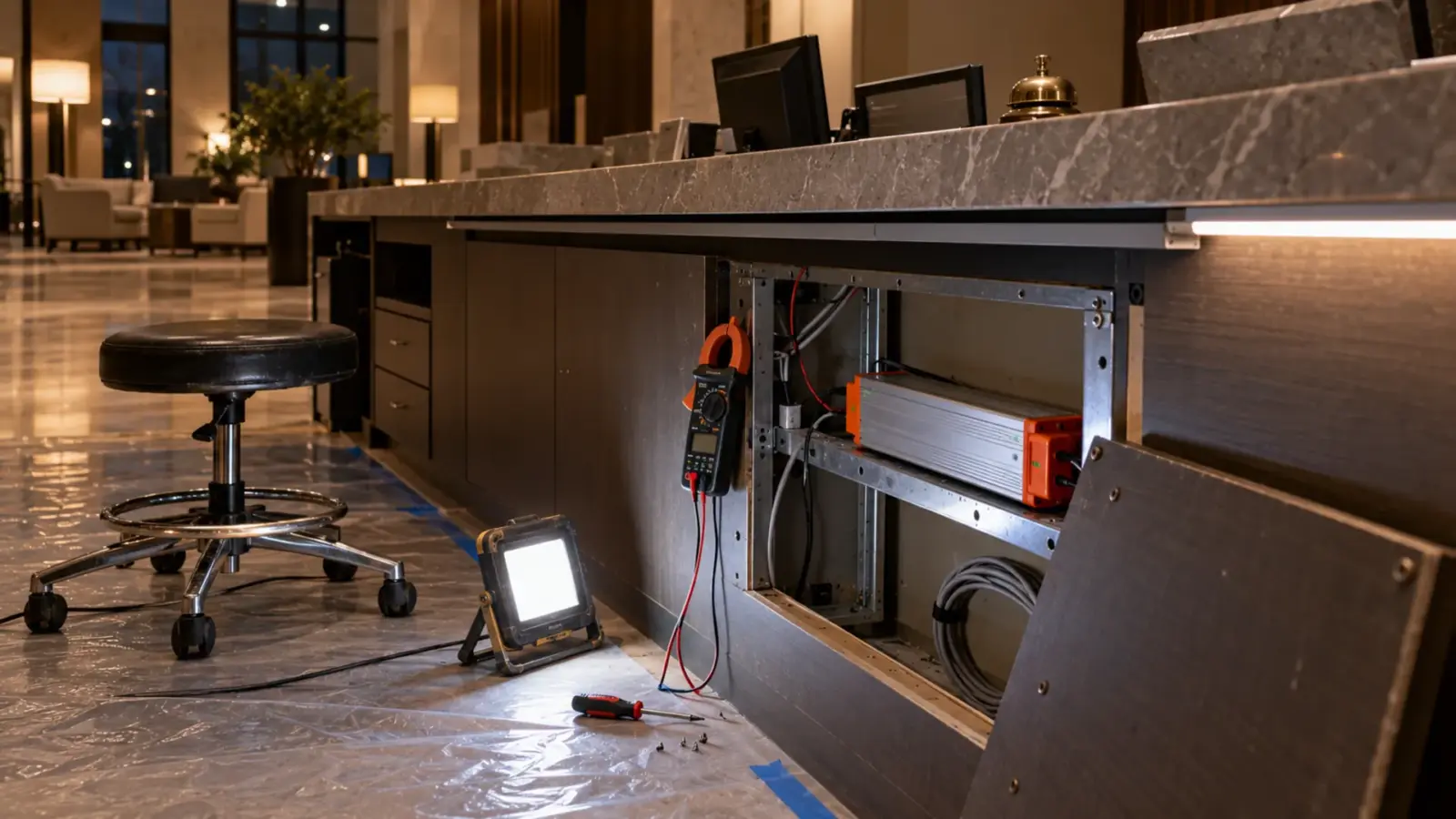
LED Driver Clicks On and Off? Short Circuit, Overload and Hiccup Mode Explained
An LED driver that clicks on and off is in hiccup mode: it sees a short or overload. Tell them apart with arithmetic, then half-split the run to find the fault.
Articles filed under this topic.
An LED driver that clicks on and off is in hiccup mode: it sees a short or overload. Tell them apart with arithmetic, then half-split the run to find the fault.
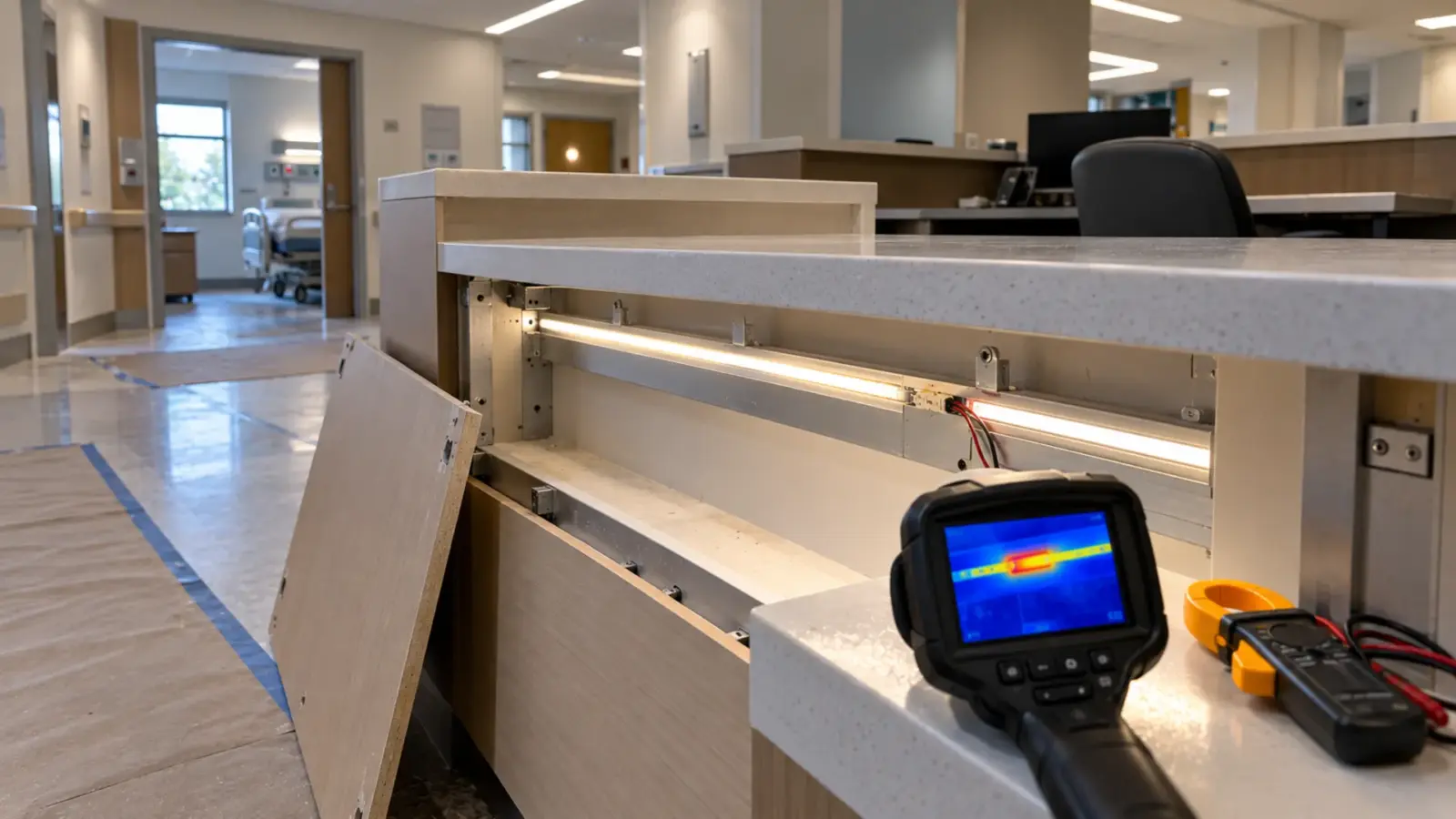
Why an LED strip connector gets hot or melts: current squared, contact resistance, a feed current table and what to measure before you replace the joint.
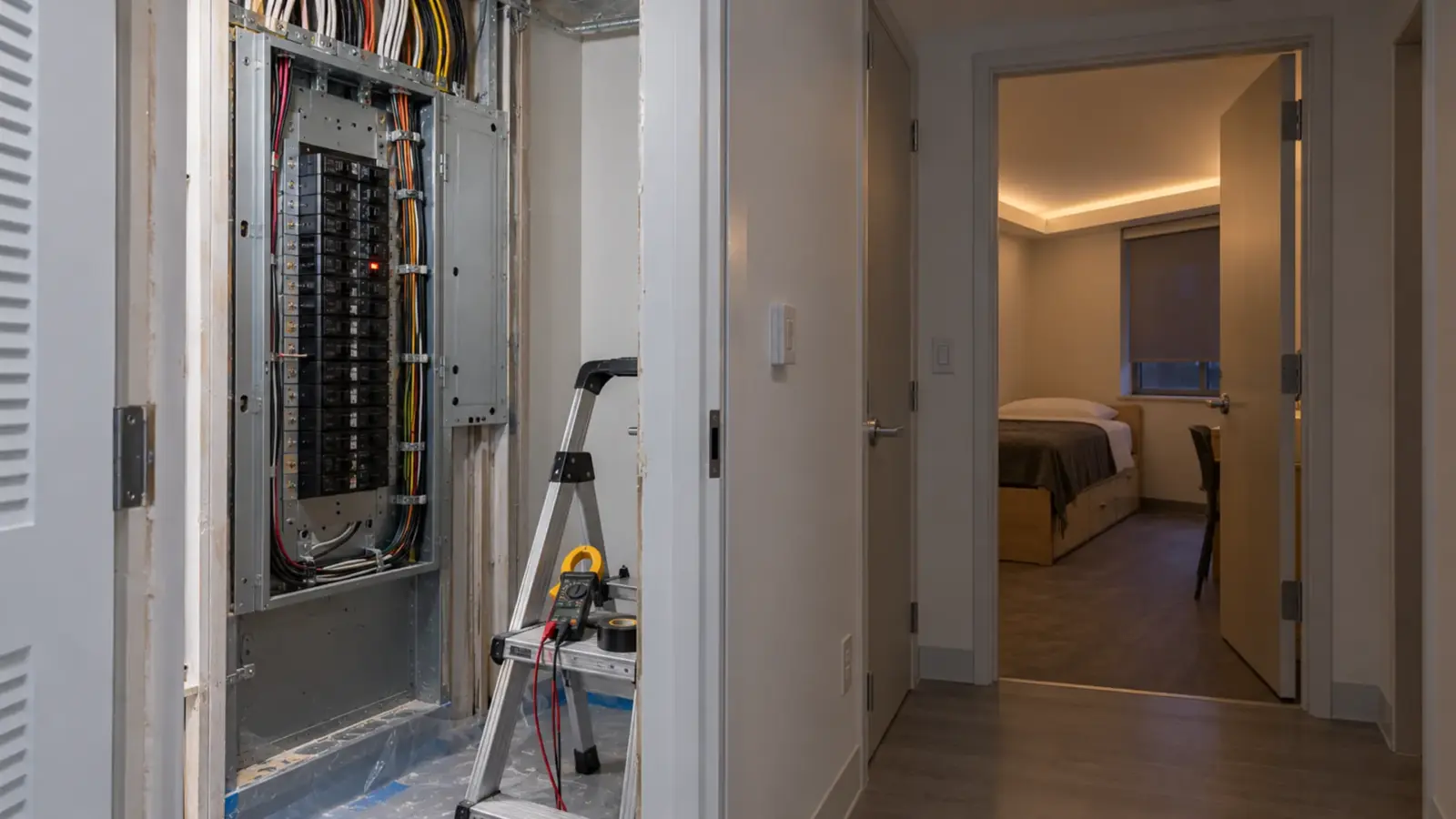
An AFCI trips on LED drivers for three reasons in test order: wiring, the load, the count. Where AFCI applies, what the code means, and what to try first.

A dark stretch on outdoor neon flex points to one of five places: end cap, lead exit, joint, bend or feed. Read the pattern, take the reading, then repair it.

LED strip warranty claim documentation in seven steps: preserve the run, eight photos, voltage and load readings, lot and install dates, the exclusions read.
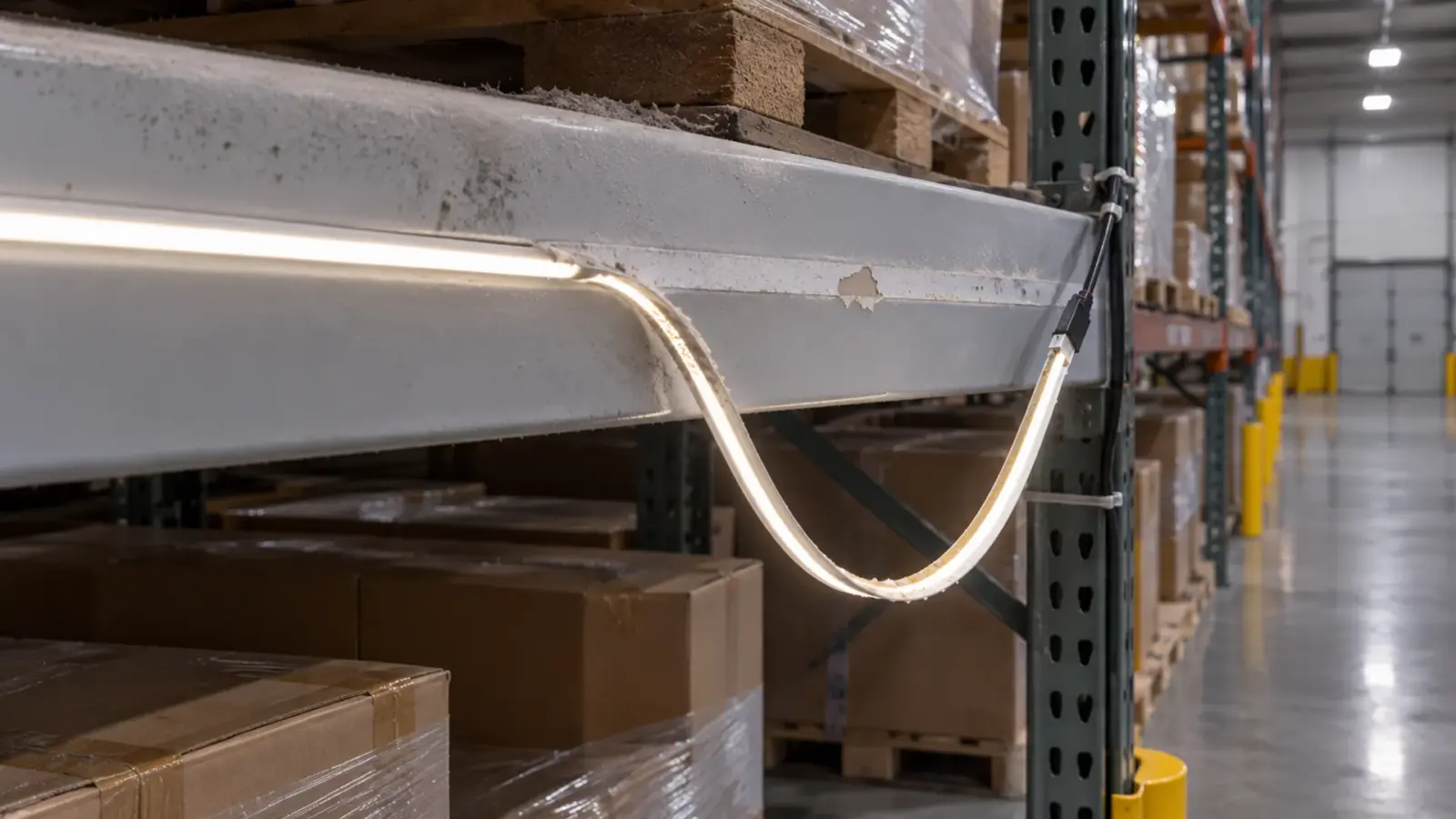
Why LED strip adhesive lets go: dirty surfaces, heat, weight and cold installs. Surface prep, channels and clips, a peel test and what to write in a submittal.
Two LED strip runs that don't match differ by bin, by voltage or by a missing channel. Test in that order, cheapest first, and fix the cause, not the whole run.
LED strip flicker is either visible, from the driver, dimmer or wiring, or only on camera, from PWM dimming. Test which you have, then fix it with this table.
A 3000K LED strip can still look green or pink. Duv measures that offset from natural white. Where tint comes from on a job and how to specify and fix it.

LED drivers trip breakers at switch-on because input capacitors charge at once. How to read inrush, count drivers per breaker and fix trips in cost order.

LED tape that glows when off has a leak path: a dimmer, a lit switch or a coupled cable. Low-end flicker is a different fault. A test sequence to separate them.
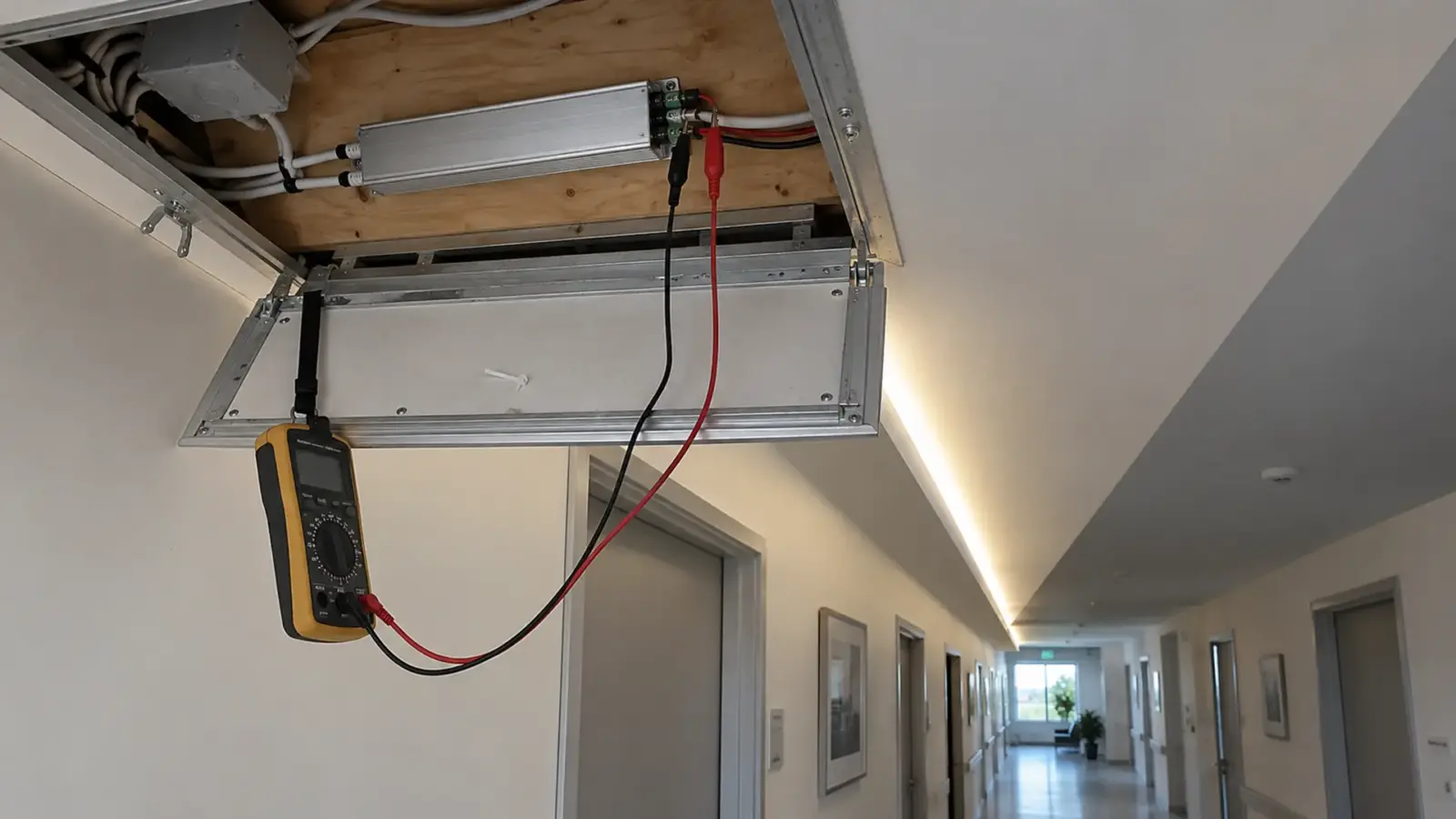
LED driver troubleshooting in three readings: input, output with no load, output under load. Then the fixes for no output, cycling, hum, flicker and failure.
Send your run lengths, color temperature, and CRI target. You will get product options, documentation, and a real lead time, with clear pricing.