The drawing says “LED tape cove, by electrical.” The spec section gives it two paragraphs, and nobody has named a color temperature, a driver location or a dimming protocol. You have until the strip order to find out what the designer meant, and every answer you guess at becomes a reorder.
Send eight RFIs before you order LED strip: basis of design and substitutions, color and output, driver location and access, controls and dimming, mounting and scope split, run lengths and feed points, listing and environment, and mockup, submittal and release dates. Each should name the drawing, ask one question, propose an answer and carry a response date.
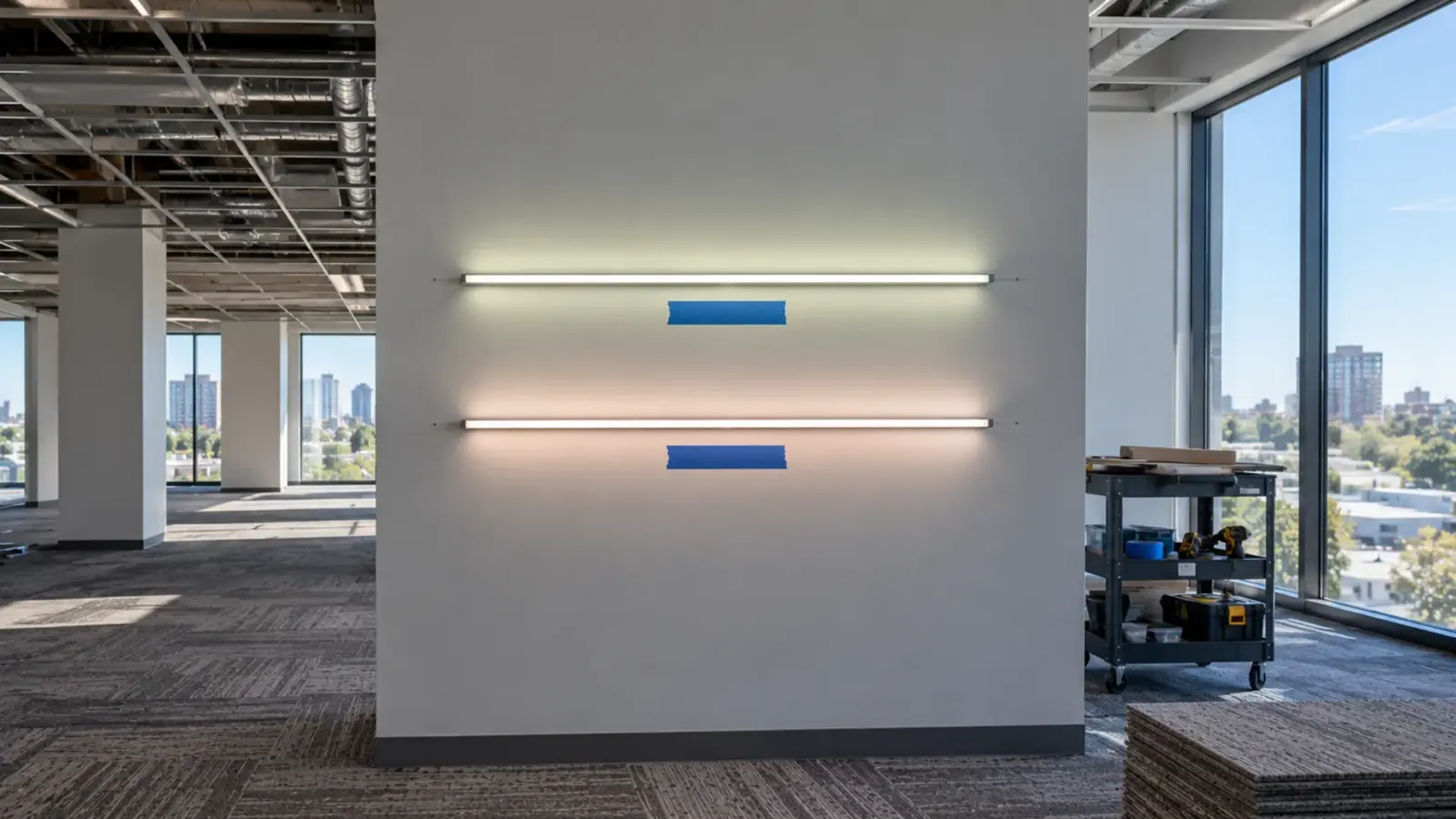
Write Each RFI So It Gets Answered
Datagrid, a Procore company, lists what a reviewable RFI carries. It points to the exact location, with floor, room or zone, drawing number and detail callout, and it says missing references typically get an RFI returned. It asks one issue at a time, because bundled questions can need different reviewers. It states the contractor’s proposed fix, so the reviewer can answer in one round trip. And it sets a response-by date tied to the work that is waiting.
The date matters more than it looks. According to Datagrid, the base AIA A201-2017 sets no express number of days: section 4.2.14 asks the architect to respond within any agreed time limits or otherwise with reasonable promptness. The same guide quotes CMAA saying that, since most contracts set no specified response duration, “each RFI gives rise to a potential delay.” Read your executed contract and the specifications for a number, and set the response date a few days before the order is released.
Here is the form, with the run-length question as the example.
> Sheet E-501, corridor 2B, cove at the north wall. No run lengths or feed points are shown for the LED strip. We propose four runs of 15 ft, each fed at one end, with a driver per run. Please confirm or mark up by [date], a few days before we release the strip order.
Check the Documents First
Some of the eight may already be answered. Read the lighting spec section, the fixture schedule, the detail sheets and the addenda before sending anything. Datagrid notes that some owner-modified versions of the A201, including one school district’s, add a charge-back when the contractor sends an unreasonable number of RFIs whose answers are available from careful study of the contract documents. It is an owner’s amendment, not the base form, but it is a reason to quote the sheet or section you checked in every RFI and to send only what the documents leave open.
The Eight RFIs
Each row is one RFI. The proposal column is the sentence to put in the RFI; the last column is what the skipped question tends to cost.
| # | Ask the designer | Propose | Skipped, it costs |
|---|---|---|---|
| 1 | Is a specific product the basis of design, or is an equal acceptable? | Our model and its spec data as the equal | A late rejection of the order; see value engineering for LED tape |
| 2 | Which CCT, CRI and output in each space? | A CCT and lumens per foot per room type | A reel in the wrong color; see our spec sheet guide and lumens per foot guide |
| 3 | Where do the drivers go, and how are they reached? | A closet or access zone and the driver count | A driver sealed above a finished ceiling; see remote driver layouts |
| 4 | Which dimming protocol, and who supplies the controls? | One protocol, with supply by division | A strip that cannot be dimmed by the wall panel |
| 5 | Who supplies and installs the channel, and in which finish? | A channel model and a scope split | A cove built to the wrong size |
| 6 | What are the run lengths and feed points? | A run schedule on the plan | A far end that dims; see voltage drop |
| 7 | What listing, wet or damp rating, and cable type does the AHJ expect? | The listing and rating you will submit | A failed inspection; see UL 2108, 8750 and 1598 |
| 8 | Who approves the mockup and submittal, and by when? | Dates for each, before the order | A missed release date; see the construction schedule guide |
What a Usable Answer Holds
An RFI is only done when the answer can go into the order. Here is what each one should come back with.
- Basis of design: a model, or a named equal, plus the data the designer wants on the submittal, such as lumens per foot, CCT, CRI and listing.
- Color and output: a CCT and a CRI per room type, and a sample if the answer is “match the existing” or “match the other floor.”
- Driver location: a place per floor, remote or local, the access panel size, and who frames it.
- Controls: one protocol, a supplier for each device, the lowest level and any scene or schedule.
- Channel and scope: a model, a size, a finish and a diffuser, and who supplies and installs it.
- Run schedule: a length per run, the feed end, and the joint and corner locations.
- Listing and environment: the listing the AHJ expects for the strip and the driver, the location class, and the cable type where it enters a wall or a plenum.
- Mockup and dates: who attends, what is approved (color, gap, glare, dimming), and a date before the release date.
Send them to the party who can answer each. Datagrid warns that bundled questions can need different reviewers, which slows routing. Design intent, color and finish usually sit with the architect or the lighting designer, and power, controls and listing with the electrical engineer, so split the eight by discipline and let the contract’s routing carry them.
Worked Example: One Cove, Four Feeds, Four Drivers
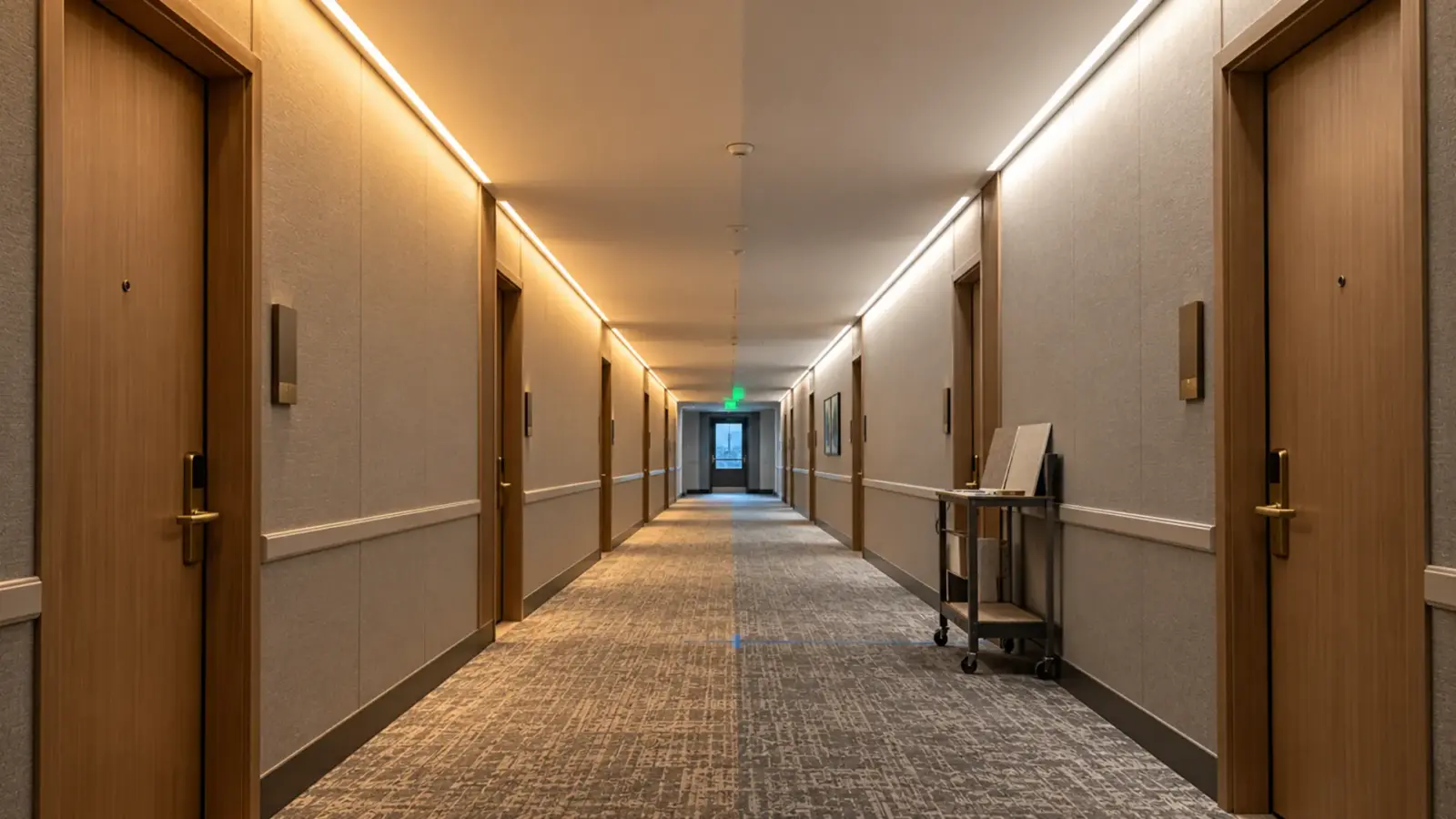
Take a 60 ft hotel corridor cove with UT-C480-8, an 8 mm COB strip rated 3.2 W/ft with a limit of 16 ft per feed on our spec table. The drawing shows the wall and the word “cove.” Here is what it leaves for RFIs 3 and 6.
Here is the RFI for the driver question.
> Sheet E-501, corridor 2B. No driver location is shown for the cove. The load is 192 W, which takes four 60 W Class 2 drivers. We propose them in the electrical closet at the east end, with a 24 in by 24 in access panel in the corridor ceiling and Class 2 cable run above the ceiling to the four feeds. Please confirm or mark up by [date].
The load is 60 ft × 3.2 W/ft = 192 W. Our drivers page keeps the load at or below 80% of the driver’s rating, so the supply needs at least 240 W of rating (192 ÷ 0.8). Our Class 2 drivers are rated 60 W each and each sits on its own secondary circuit, so 240 W is four drivers. The strip’s 16 ft limit means 60 ft needs at least four feeds (60 ÷ 16 is 3.75). Four runs of 15 ft is the clean split: each run draws 48 W, which is exactly 80% of a 60 W driver and inside the feed limit.
None of that is on the drawing. It tells the designer that the corridor needs four drivers with access, four feed points along the cove, and a place for them, which is the answer to RFI 3, and a run schedule, which is the answer to RFI 6. Our power supply sizing guide covers the arithmetic, and our Class 2 driver guide covers what an inspector checks on those 60 W drivers.
Controls and Scope: The Two RFIs Nobody Sends
The control question is the one most often left to the field. A drawing that says “dimmable” does not say 0-10V, TRIAC or DALI, who supplies the wall panel, or what the lowest level should be. Ask for one protocol and a supply split by division, and propose the driver that matches. Our guide to 0-10V, TRIAC and DALI dimming covers the three, and our occupancy sensor guide covers what a sensor expects from the driver.
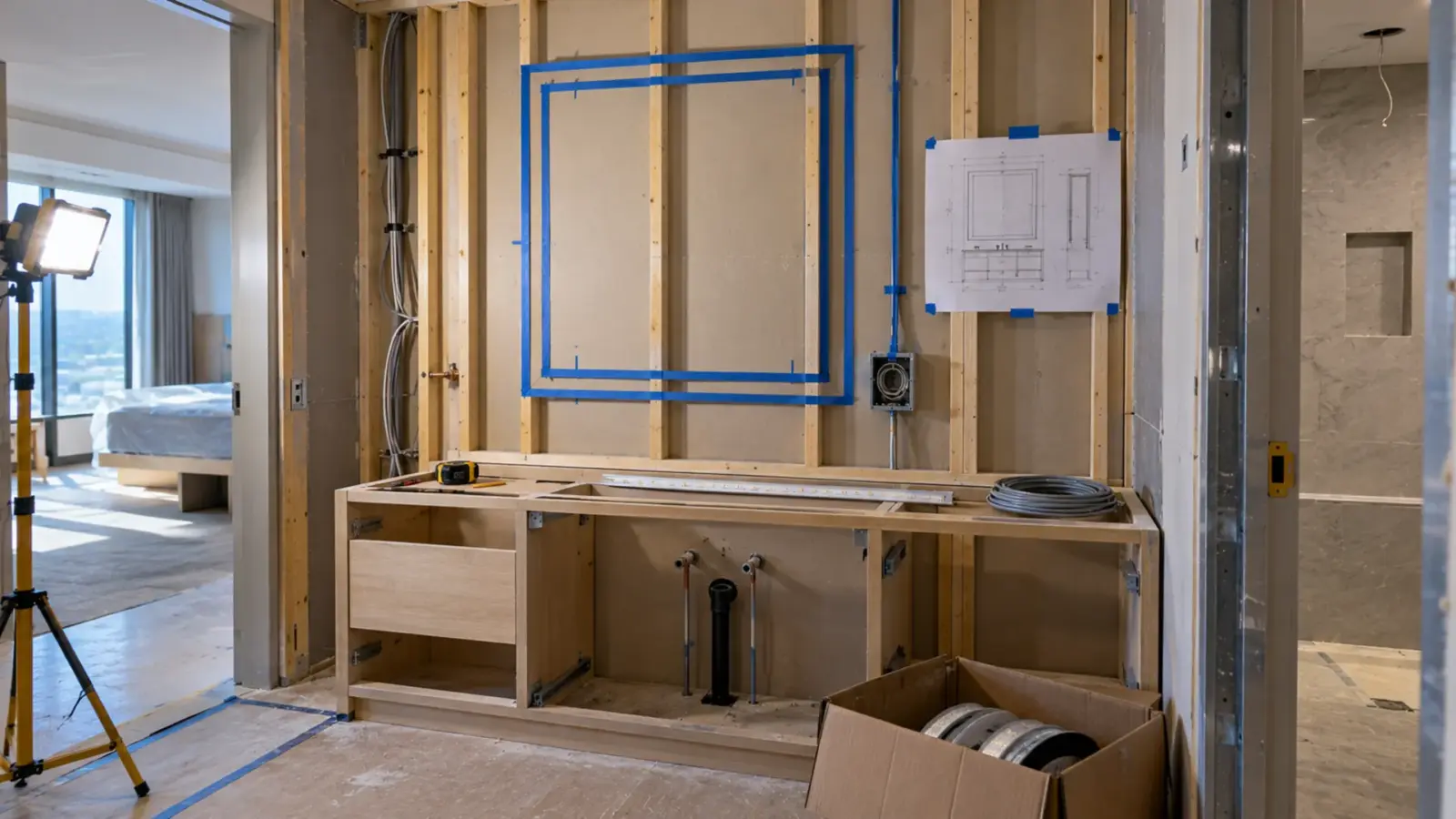
The scope question shows up where strip meets millwork or drywall. Who supplies the channel, who installs it, and who wires the strip are three separate lines on a bid, and “by others” can leave all three open. Propose the split in the RFI. Our millwork scope guide covers the casework case, our channel selection guide covers the profile, and our trimless channel guide covers the drywall hand-off.
After the Answers Come Back
A short log is enough. Log each answer with its RFI number, the date and the drawing it changes, and carry the answers into the submittal. Our submittal guide lists what the package holds, and our takeoff and BOM template turns a run schedule into a count.
An answer can raise a new question. A designer who says “match the sample” sends you to a mockup, and our mockup approval guide lists what to check before you sign. Under most contracts an unanswered RFI is not a yes, so check yours. Where the response date passes, send the same RFI again with the date moved and the schedule impact stated, and keep the strip order on hold for the rows that block it. Rows 1 and 7 can stop an order outright, because they decide the product and the listing, and rows 3 and 6 can stop an install, because they decide where the drivers go and how the runs are fed. Release the rows that are answered, hold the rest, and say which is which in the next submittal cover note, so the design team sees what the order is waiting for.

Before You Order
- Rows 1, 2, 4 and 7 answered in writing, since they set the product, the color, the dimming and the listing.
- Rows 3, 5 and 6 answered or marked up on the plan, since they set the driver count, the channel and the run schedule.
- A mockup date and a submittal date that fall before the release date.
- The worked loads checked: watts per run at or below 80% of each driver, each run within its feed limit.
- Every answer filed with its RFI number.
The strip, channel and driver models used above are in our drivers, controllers and connectors page and the COB spec table.