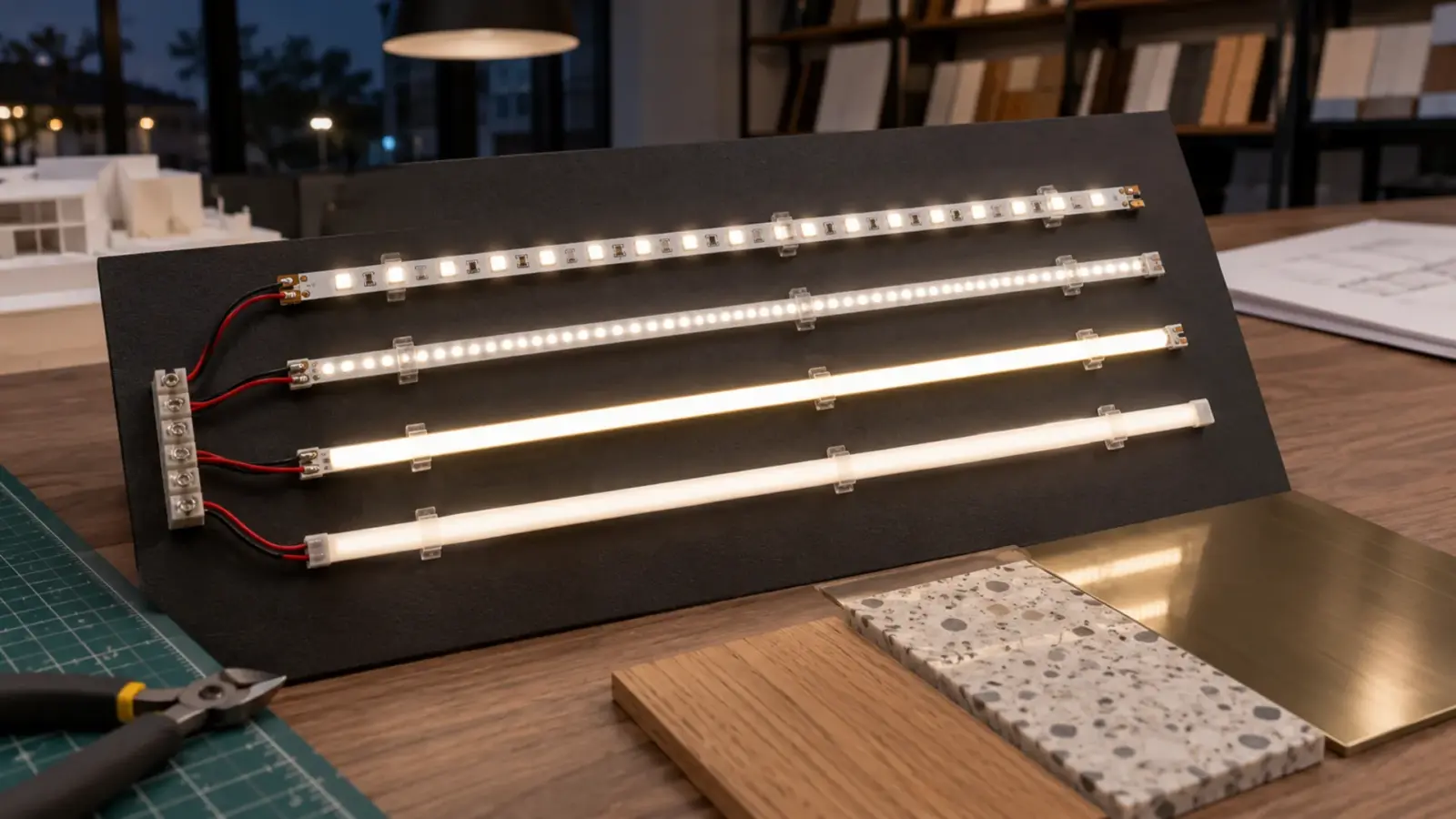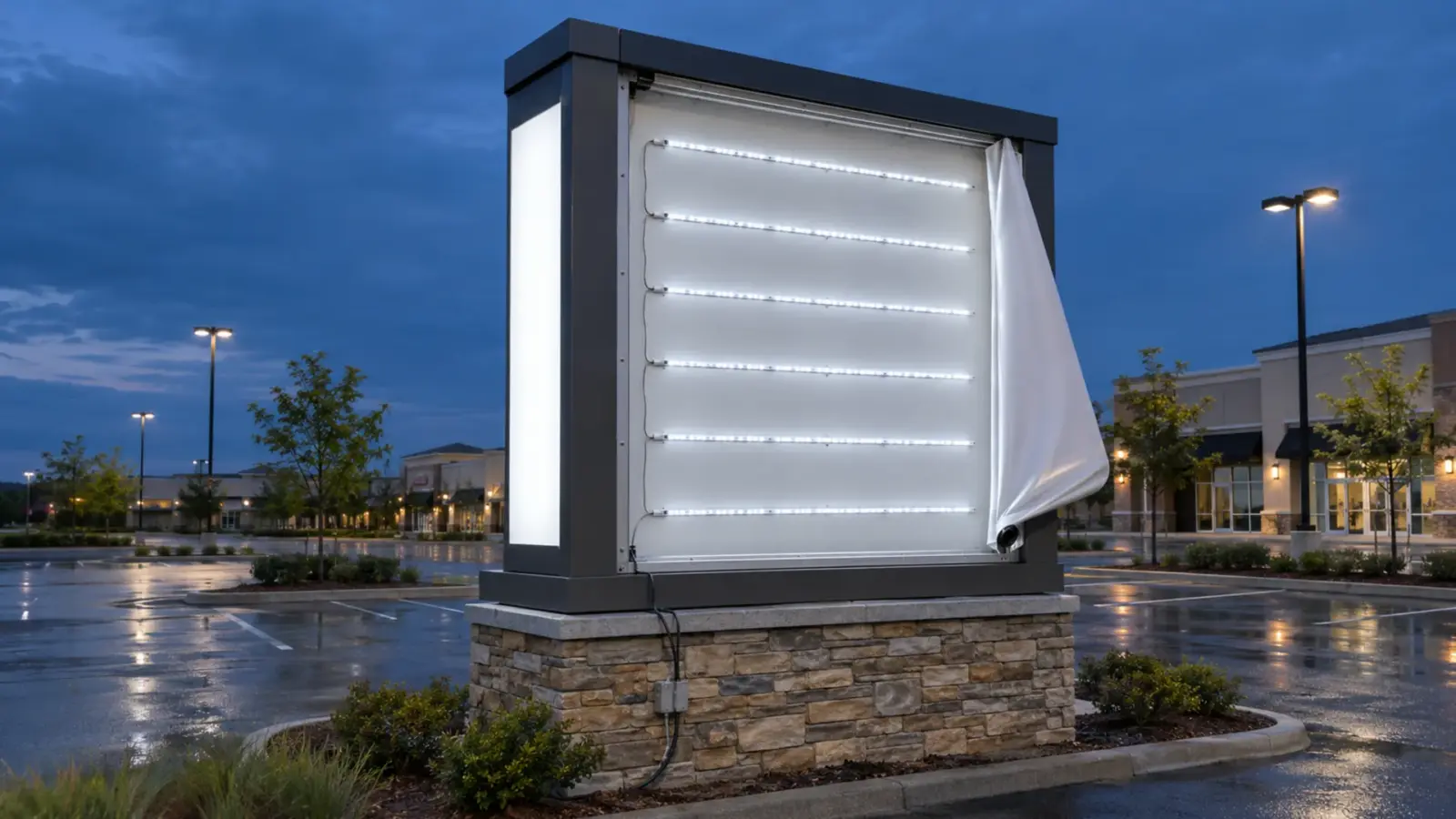

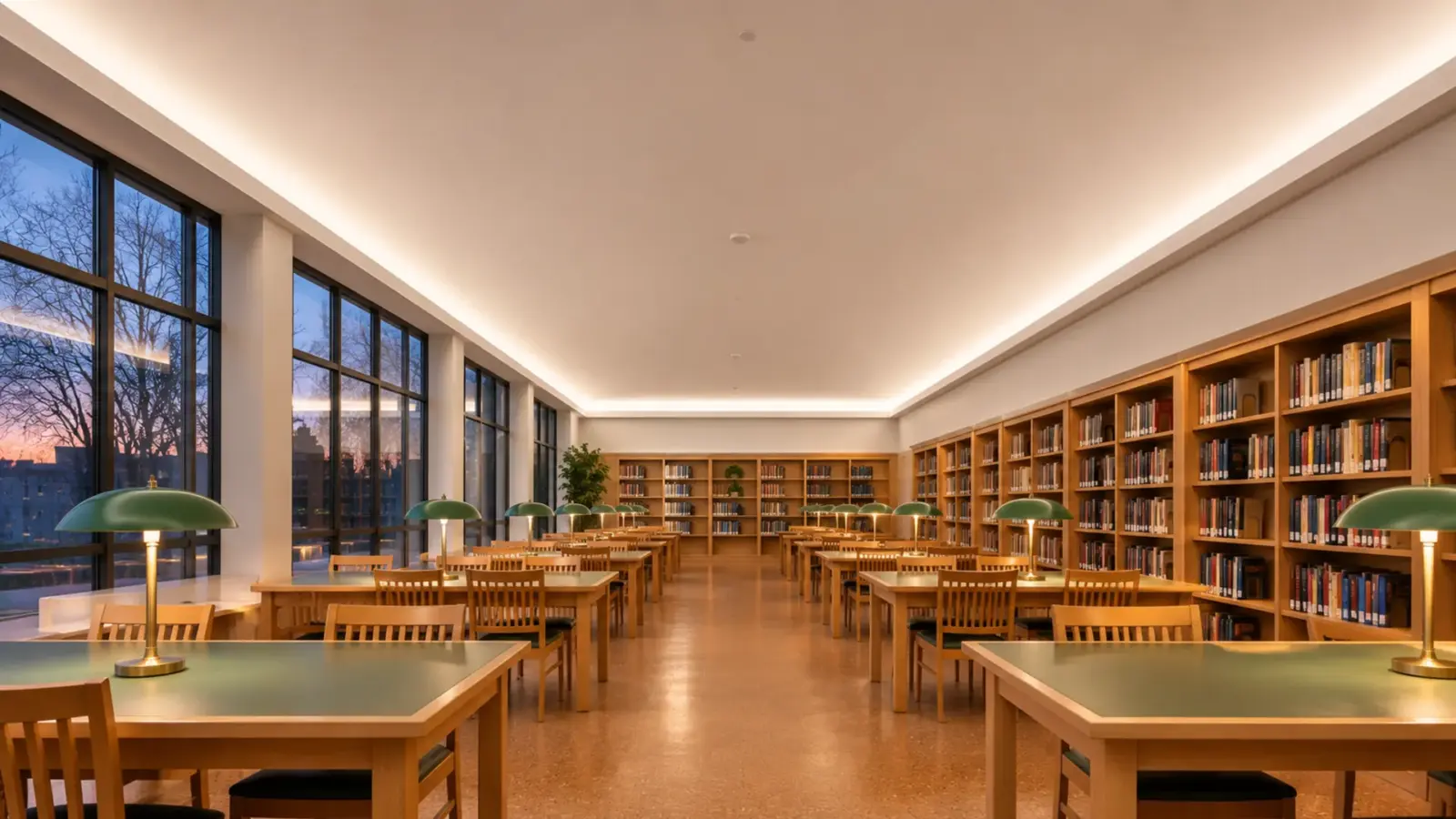
Ask a seller for the best commercial LED strip lights and you are usually handed one reel. On a real job the answer changes at every line on the drawing: hidden high-efficacy SMD in a corridor cove, close-pitch CSP in a display case, sealed COB on a canopy, neon flex on a sign. One measured fact settles each.
“Commercial LED strip light” also names 4 ft and 8 ft linear fixtures for stockrooms and garages. This page ranks flexible strip on a driver, and says where one of those fixtures is the better buy. Four gates pick the family; the ranking table then gives a winner and a runner-up for nine commercial applications. Our LED strip selector gives a starting spec for one space; this page shows what would change it.
Four Gates That Pick the Family
Each row of the ranking is settled at one of four gates, a fact you can measure on the drawings before anyone names a model.
Gate 1: Is the Line Seen
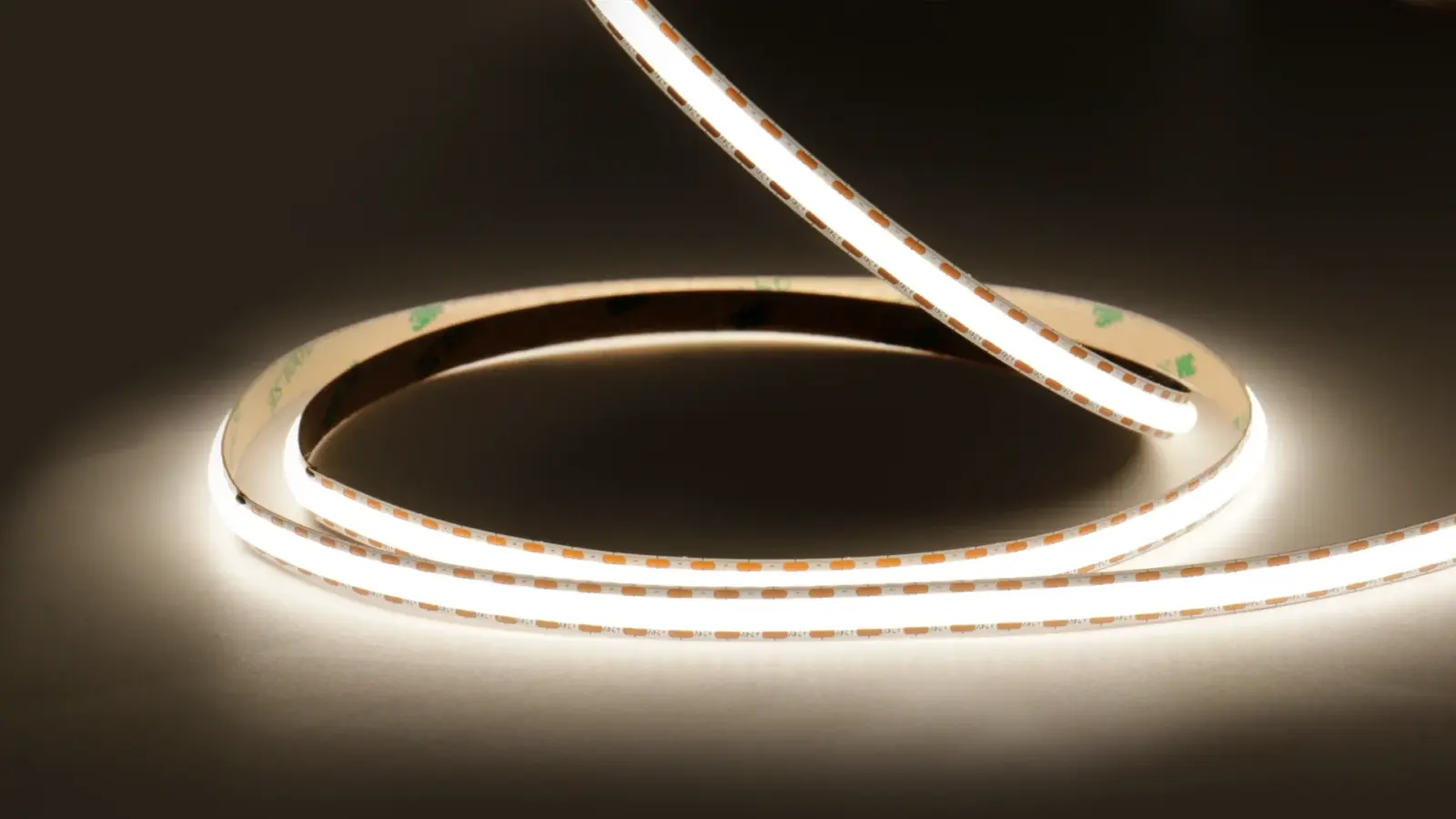
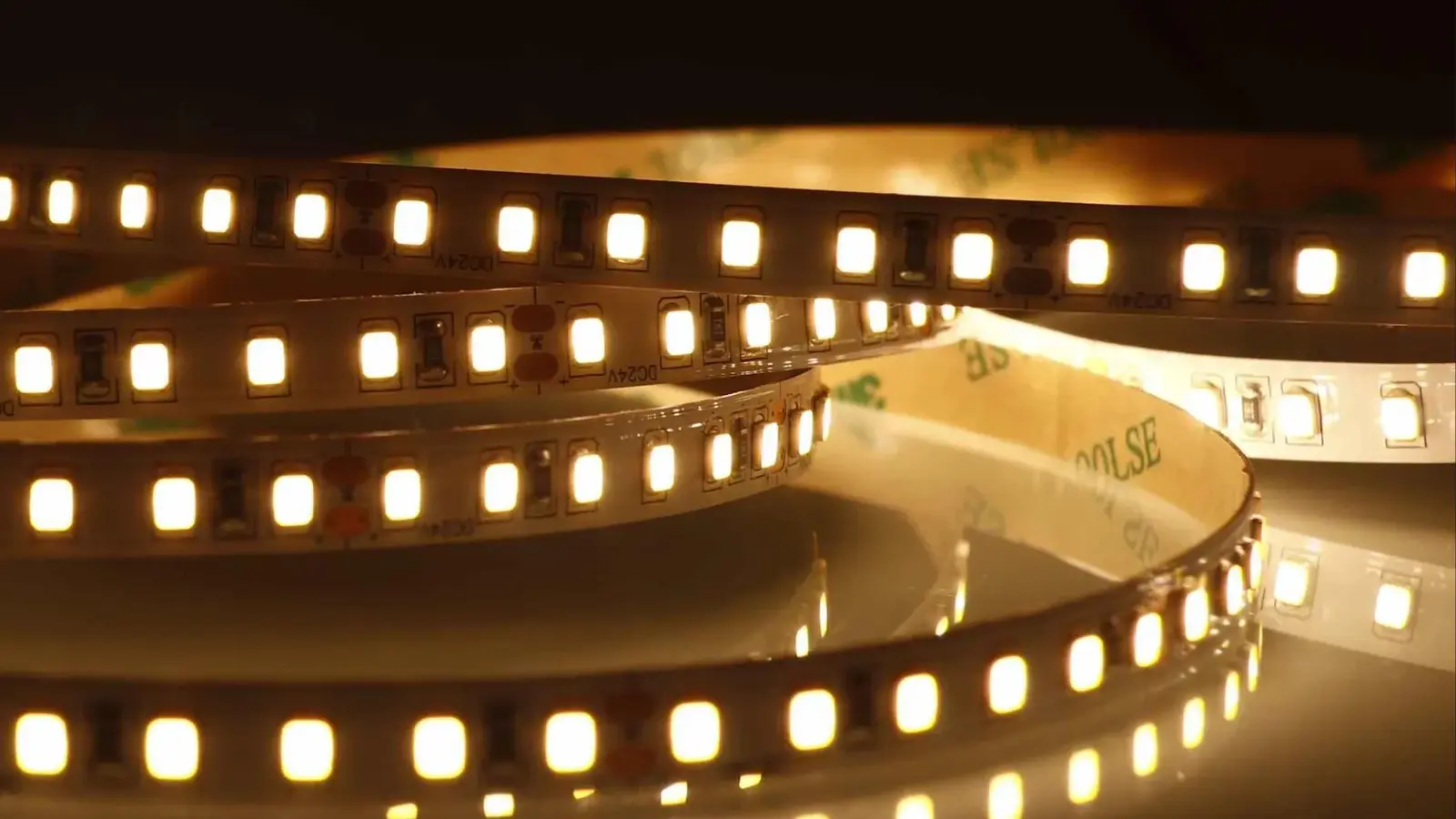
If nobody sees the strip or its reflection, the best strip is the one with the most light per watt, and on our tables that is SMD: UT-S2835-128-HE gives 322–380 lm/ft at 110–130 lm/W and Ra≥90 for 2.9 W/ft. If the line is seen, through a low cove lip, in a glossy ceiling, in glass or as a channel face, a continuous line wins: COB, DOB, SCOB or close-pitch CSP.
The measurable test is in our LEDs per foot guide: dots disappear when the diffuser sits farther from the LEDs than the LEDs sit from each other. At 128 LEDs per meter, UT-S2835-128-HE has a pitch of about 0.31 in (7.8 mm), so a channel shallower than that is a COB job. Our LED package guide explains why.
Gate 2: Run Length per Feed
Run length per feed decides how many drivers a run needs and where they sit. Most 12V and 24V strip on our tables is rated 16 ft (5 m) per feed; the longer families are named exceptions:
| Family (our example) | Rated run per feed |
|---|---|
| Standard 24V SMD or COB (UT-S2835-128-HE, UT-C480-8) | 16 ft (5 m) |
| DOB high-efficiency COB, dot-free (UT-D280-10) | 49 ft (15 m) |
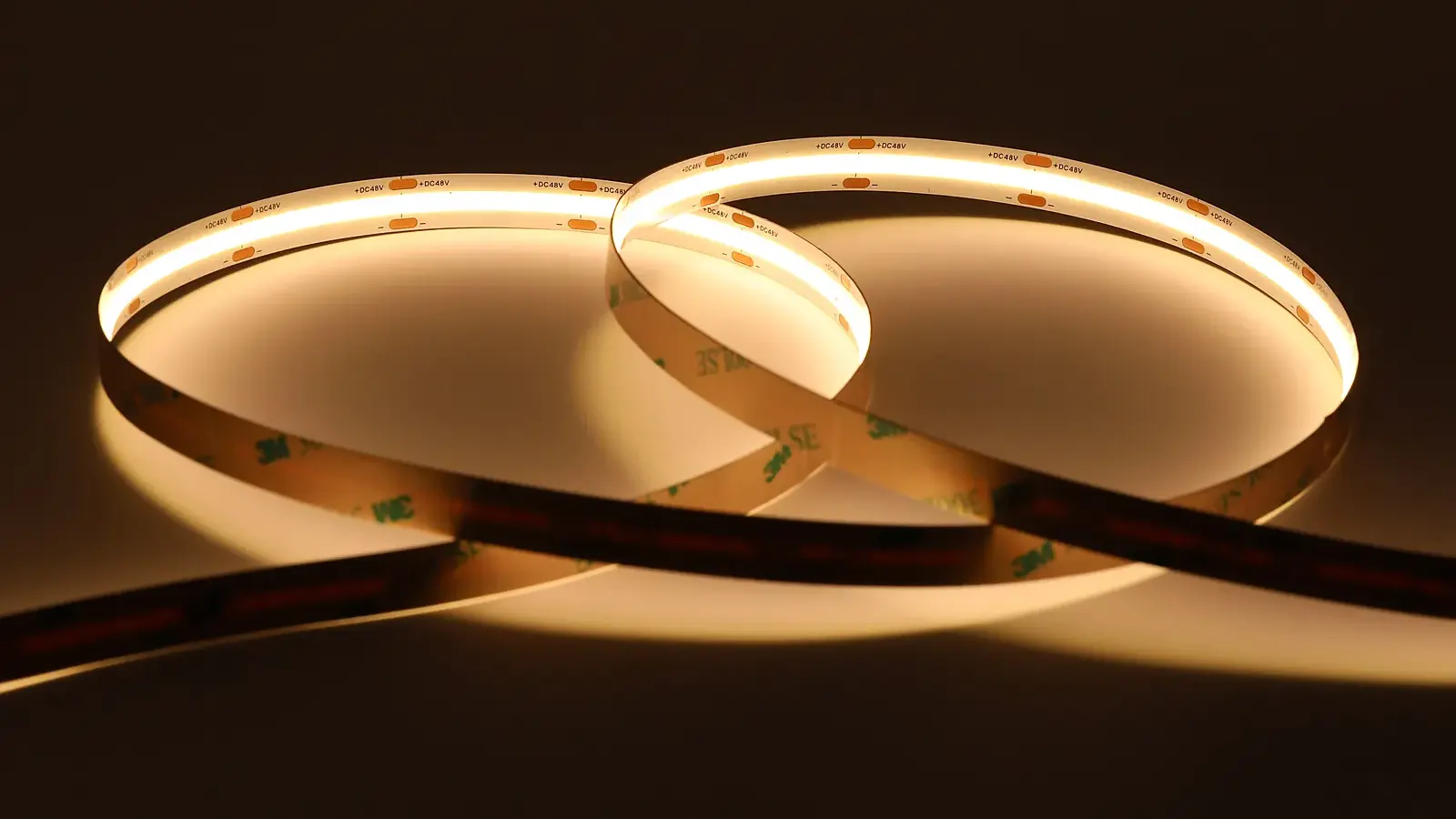
| 48V COB (UT-C480-8-48V), 24V constant-current COB (UT-C480-8-CC) | 65 ft (20 m) from one end |
| SCOB at 24V (UT-SC300-12) | 65 ft (20 m); 131 ft (40 m) fed from both ends |
| 24V constant-current SMD (UT-S2835-120-CC-LR) | 98 ft (30 m) |
| 120V strip, no driver (UT-H120-60) | 98 ft (30 m) |
| Neon flex on 48V constant current (UT-N2020-TB) | 164 ft (50 m) at 5 W/m |
Fewer feeds means more watts per feed. A typical 96 ft hotel corridor cove, fed five ways from our tables, every driver at 80% of its rating or less as our drivers page advises:
| Build | Feeds | Watts per feed | Driver | In our Class 2 range? |
|---|---|---|---|---|
| UT-S2835-128-HE, 2.9 W/ft | 6 × 16 ft | 46.4 W | One UT-D60-24-C2 per feed, 77% | Yes, six drivers |
| UT-D280-10 DOB, 2.9 W/ft | 2 × 48 ft | 139.2 W | Both on one UT-D400-24-L, 70% | No |
| UT-C480-8-48V, 2.4 W/ft | 2 × 48 ft | 115.2 W | 48V driver matched at quote | No |
| UT-S2835-120-CC-LR, 2.7 W/ft | 1 × 96 ft | 259.2 W | Constant-current driver matched at quote | No |
| UT-H120-60, 2.7 W/ft | 1 × 96 ft | 259.2 W | None, 120V line voltage | Not a Class 2 product |
Our An NEC Article 725 output class limited to 100 VA at up to 60 V DC, with the wiring relief that comes with it. Our Class 2 drivers are rated 60 W; a bigger load needs more outputs or a non-Class 2 driver. drivers are rated 60 W or less, so long-run builds trade six small drivers for one or two larger ones that are not Class 2, with the wiring methods that follow (confirm them with the AHJ); constant-current rows run only on a constant-current driver. An access panel every 16 ft keeps a corridor Class 2; one closet at the end calls for a long-run build. Our 12V, 24V or 48V guide compares voltages at the same output, and the power supply sizing guide explains the margin.
Gate 3: Location, Marking and Temperature
An IP code is a lab test; the wet location marking comes from the product’s listing, and the marking is what the inspector reads. Our outdoor range has three constructions: silicone top coat (IP65) for rain and splash, extrusion sleeve (IP67) for temporary immersion, full silicone tube (IP68) for continuous submersion, with the marking confirmed per model at quote. The range is rated from -4 °F to +221 °F (-20 °C to +105 °C), the top end on the high-temp series. Our wet location guide separates the code from the marking.
Gate 4: Who Controls It
Name the control before the strip. Fixed white on 0-10V, a phase dimmer or DALI takes any single-color family on a matched driver. Warm dimming on one channel takes 2-wire dim-to-warm strip; a CCT schedule takes tunable white on two channels; scenes take RGBW on a decoder; chases and video take addressable pixels on a pixel controller. Our dimming protocol guide covers the wall side.
Best Commercial LED Strip Lights by Application
The ranking: the family that wins each application, the runner-up, the fact that hands it the job, and when strip is not the answer.
| Application | Gate | Winner | Runner-up | Runner-up wins when | Not strip when |
|---|---|---|---|---|---|
| Corridor and lobby coves | 1, 2 | Hidden high-efficacy SMD (UT-S2835-128-HE) | Dot-free COB or DOB (UT-C480-8, UT-D280-10) | The strip or its reflection is seen | No cove, and a listed linear fixture is scheduled |
| Retail shelves and cases | 1 | Close-pitch CSP (UT-CSP-320-N) | Full-spectrum SMD (UT-SFS160-8) | Goods are bought on color | Rarely |
| Office slots and soffits | 2 | High-efficacy or PRO SMD, deep opal channel | Tunable white (UT-T120-8) | The room runs a CCT schedule | The schedule names a listed luminaire |
| Restaurants and bars | 4 | Dim-to-warm COB (UT-T672-10-DTW); 2700K COB on shelves | RGBW (UT-RW84-12) | The room changes after service | Rarely |
| Facade lines and canopies | 3 | IP67 sleeved COB (UT-O480-10-67) | Lensed wall washer (UT-WB27-1060) | The wall is lit, not outlined | Walked on or driven over |
| Signs and channel letters | 1 | Side-bend neon flex (UT-N0612-SB) | Strip inside the can; colored COB | The source sits behind a face | A listed sign: keep its parts |
| Wet, cold, washdown | 3 | IP65 or IP67 strip, marking on file | IP68 full tube | The line sits under water | Below -4 °F; pool without underwater listing |
| Always-on spaces | 2 | Low W/ft strip in aluminum, drivers well under rating | 120V strip (UT-H120-60) | Long garage line, no driver space | Garage floor light |
| Feature color, events | 4 | RGBW on DMX | Addressable COB (UT-A720-12-BP) | The content moves | Rarely |
Corridor and Lobby Coves: Hidden or Seen
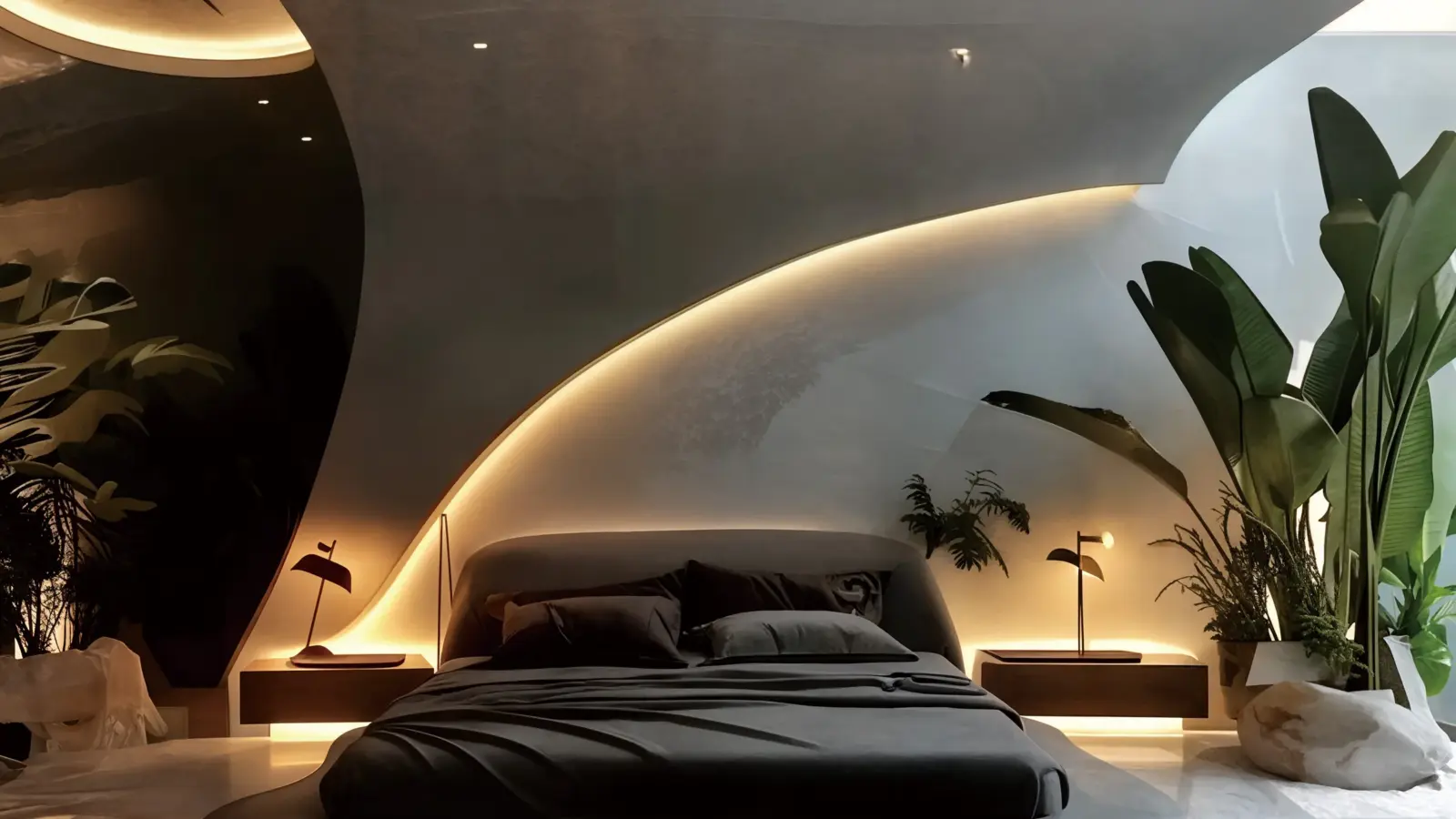
A cove with its lip above eye level and a matte ceiling hides the strip, so the job is light per watt. Hidden high-efficacy SMD wins: UT-S2835-128-HE, cut every 2.46 in, at 2700K or 3000K in hotel corridors and 4000K in an office or clinic lobby. Our SMD LED strip table lists the high-efficacy and PRO rows.
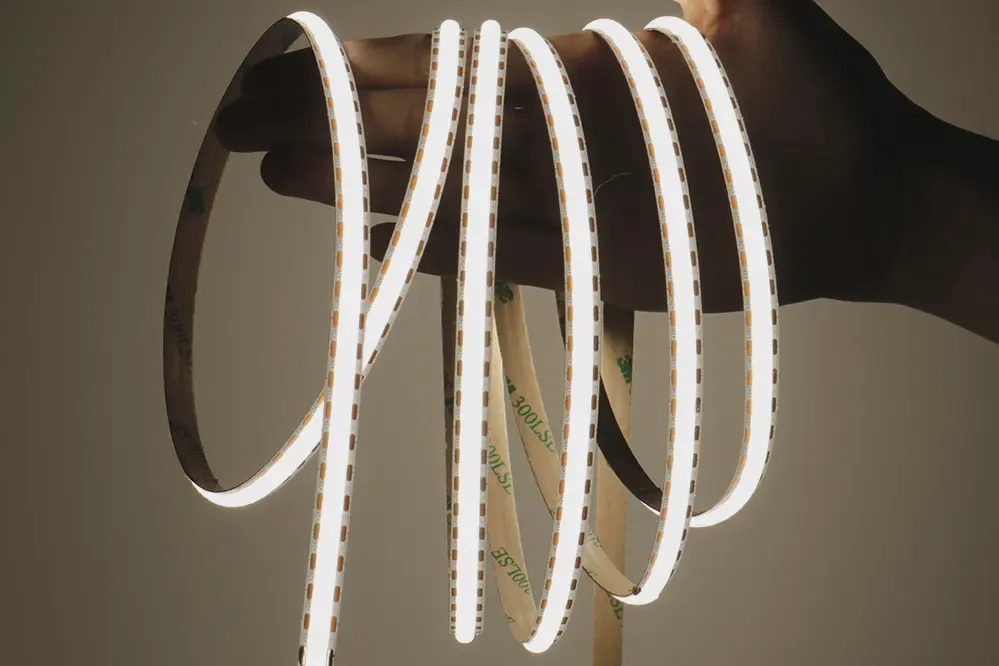
Two facts move the cove to Light with no visible LED points. Reached by COB construction, a dense pitch, or enough distance between the LEDs and the diffuser. COB: a glossy or stretched ceiling that reflects the strip, and a low lip, mezzanine or stair that lets people look in. Then use UT-C480-8 at 3.2 W/ft and Ra≥90, or on a long run the DOB UT-D280-10, dot-free at 117–138 lm/W and 49 ft per feed, both on our COB LED strip page. Our COB vs SMD cove guide and cove lighting dimensions give setback and lip numbers.
On a corridor, count access panels before you pick, as the 96 ft table shows. Then order the whole corridor from one production lot: our COB page lists ±2 Color-consistency steps (MacAdam ellipses). Fewer steps means two strips from different reels look like the same white; 3-step is hard to tell apart by eye. binning across every reel, but a reorder is a different lot, as our color consistency guide explains.
Retail Shelves and Display Cases
A shelf edge or case puts the strip in sight, often in the glass. Our pick is close-pitch CSP LED strip: UT-CSP-320-N is 8 × 1.85 mm, gives 296–316 lm/ft and states CRI >90, R9 >40 and SDCM ≤3, the whites, reds and shelf-to-shelf match a merchandiser notices first.
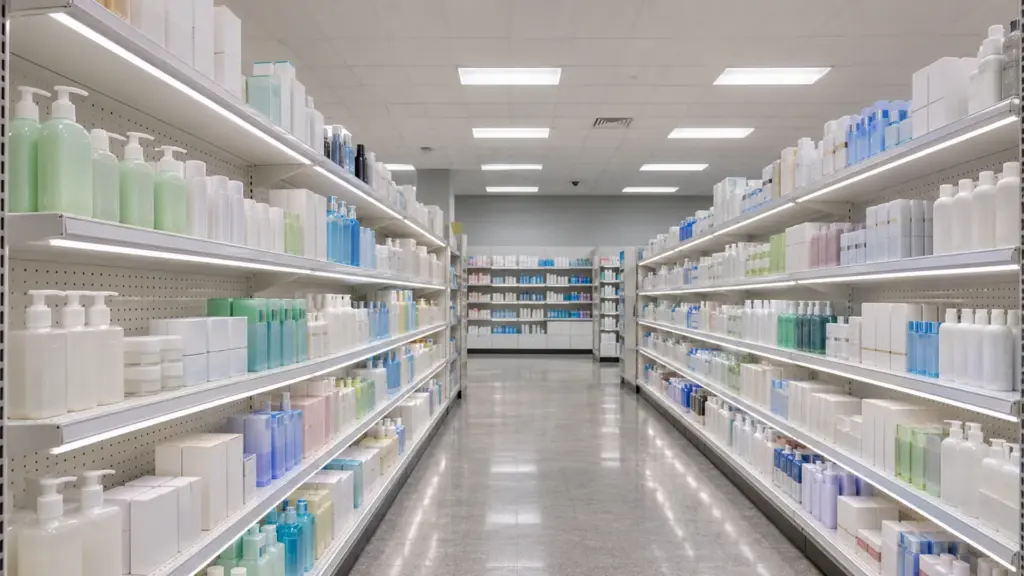
The runner-up takes the case when goods are bought on color: cosmetics, fashion, art, jewelry. Our full-spectrum UT-SFS160-8 states Ra≥95 and Rf 94–95, but only at 2700K, 3000K and 4000K, so a 5000K pharmacy or grocery spec stays on the standard rows. Our retail display guide covers heat and resets, and the high-CRI guide sorts the tiers.
Office Perimeters and Soffits: Strip or a Listed Fixture
Office strip lives at the perimeter: wall-ceiling slots, soffit edges, the edge of a raised ceiling. The line is seen through a cover, so put high-efficacy SMD in a deep opal channel: UT-S2835-128-HE, or UT-S2835-180-PRO at 150–180 lm/W where the power density budget is tight, in a channel such as UT-CH2415 (24 × 15 mm, strip up to 15 mm) from our channel range, opal cover named on the order, at 4000K on working floors, as our 3000K vs 4000K guide argues. Conference rooms on a CCT schedule move to tunable white LED strip: UT-T120-8 runs 2700–6500K on two channels, through a DALI DT8 decoder such as UT-CDALI-DT8 or two-channel 0-10V.
The usual flip in an office is the paperwork. When the schedule names a listed luminaire with its own photometric file, strip in a channel becomes a system the contractor assembles and answers for: listing, IES data, heat and service move to you. Our strip vs linear fixture guide lists what moves, and our power density guide covers LPD.
Restaurants and Bars
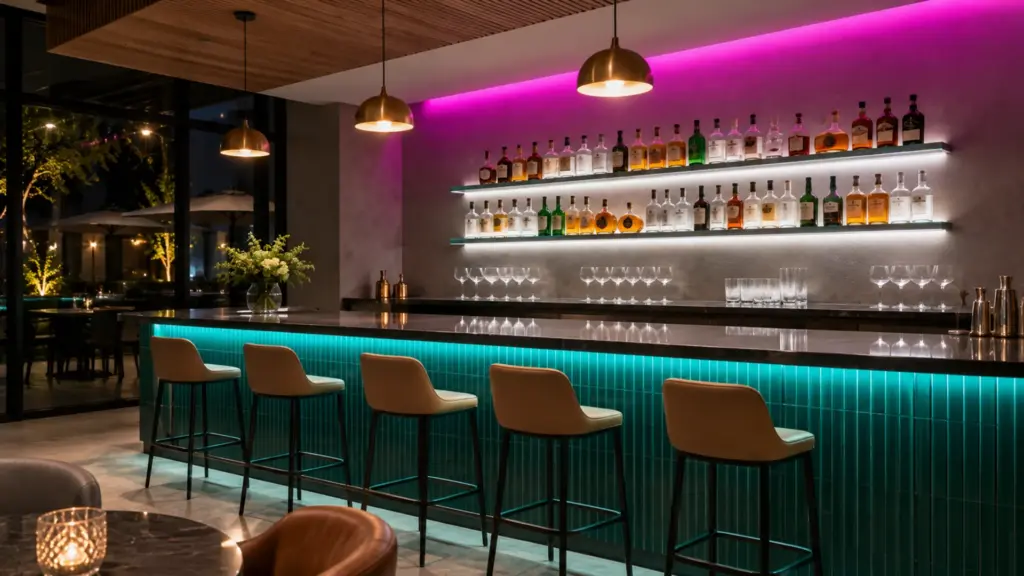
A dining room is dimmed through service. Dim-to-warm COB wins the coves and banquettes: UT-T672-10-DTW goes from 3000K at full output to 1800K as it dims, at Ra≥90 and 3.4 W/ft, on one dimmer channel. Bar shelves are a seen line behind glass that reflects every dot, so they take 2700K COB behind the shelf lip. Our restaurant zone guide works through the room, and hotel and restaurant dimming covers the low end.
RGBW takes the bar when the room changes after service, a dining room that turns into a late lounge, say. UT-RW84-12 keeps a separate white channel at Ra≥90 for dinner and runs color scenes from a 4-channel DMX decoder such as UT-CDMX-480. Name who owns those scenes after handover before pricing the decoder.
Facades and Canopies: Line or Wash
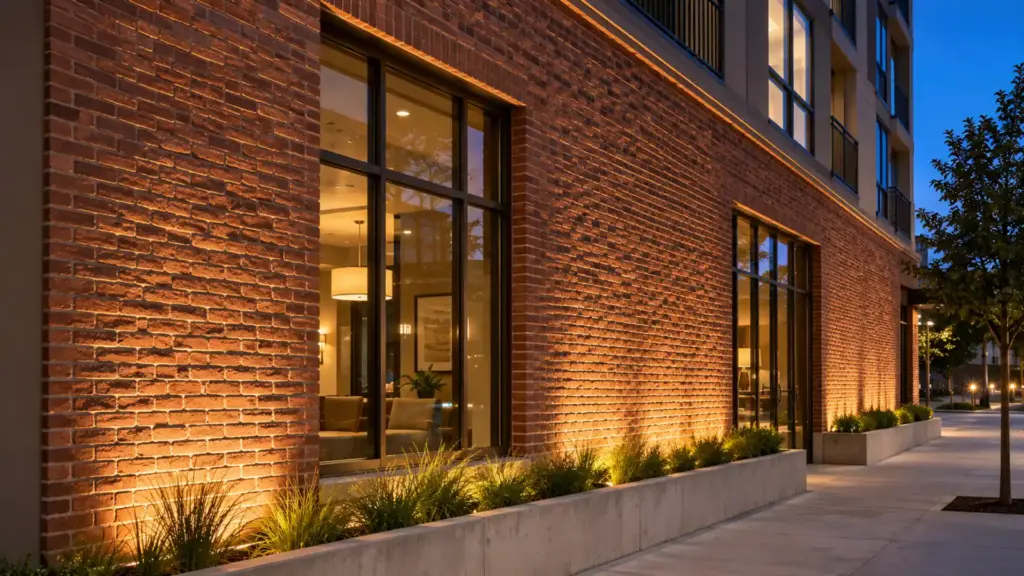
Outside, Gate 3 comes first, then one question: is the architecture outlined, or a wall lit? For a line along a canopy edge, soffit or parapet, UT-O480-10-67 is dot-free COB in an IP67 extrusion sleeve, 3.2 W/ft, Ra≥90, 16 ft (5 m) per feed. Our outdoor LED strip page has the IP65 to IP68 builds.
To light the wall itself, a bare wide-beam strip cannot wash it, as our beam angle guide shows; a lensed LED wall washer throws a beam. UT-WB27-1060 (10° × 60°, 494 lm/ft, IP67) sits within 6 in of the wall to graze masonry; the 45° UT-WB27-45 washes a smooth facade from 6 to 12 in. Long outlines in one plane take top-bend neon flex such as UT-N2020-TB, 164 ft (50 m) on 48V constant current at 5 W/m with a matched constant-current driver. Our wall washer mounting guide and dark-sky guide cover mount and aim.
Strip stops at the pavement. A line walked on, driven over or set in standing water needs an IP68, IK10 line such as our UT-N1616-68 neon, or a fixture rated for the load, as our exterior recessed linear guide explains.
Signs and Channel Letters
Where the light source draws the letter, side-bend neon flex gives a solid, diffused line around tight curves: UT-N0612-SB bends to a 1.97 in (50 mm) diameter at 88 lm/ft. Where the source hides behind a face or throws a halo, strip goes inside the can and the face depth decides how close the LEDs must sit; colored COB such as UT-C480-8-RD (red, 620 nm) gives saturated color without pixel dots. Our neon vs strip guide and halo-lit vs face-lit guide go further, and our LED neon flex page lists each profile’s bend. A listed sign is different: its parts belong to that listing, as our neon sign power supply guide shows.
Wet, Cold and Washdown Areas: The Marking, Not the IP Code
Pool decks, spa walls, kitchens, walk-in coolers and refrigerated cases share one rule: the IP code says what the strip survived in a test, and the location marking says where it may go. An IP65 top coat such as UT-O320-8-65 (COB, 2.4 W/ft, Ra≥90) suits splash and wipe-down, an IP67 sleeve temporary immersion, and an IP68 tube continuous submersion. Below a pool’s waterline the product also needs a listing for underwater use; our pool and fountain guide covers what IP68 does not.
Cold is the other half of Gate 3. A cooler is well inside our -4 °F rating; a freezer held colder is not, and a refrigerated case is itself a listed appliance, as our meat case guide explains. Kitchens add grease and heat (commercial kitchen guide). Keep drivers out of the wet zone; where one must sit close, use a potted IP67 driver such as UT-D100-24-67, because our Class 2 drivers are IP20.
Spaces That Never Switch Off
A hospital corridor, a 24-hour lobby or a garage logs 8,760 hours a year. As our 24/7 guide works out, a strip rated L70 at 50,000 hours reaches that point in 5.7 years of continuous use, and a five-year warranty covers 43,800 hours. So pick the strip that runs coolest for the light needed: a lower W/ft row in an aluminum channel, drivers loaded well under rating and placed where they can be swapped. Patient rooms move to tunable white on a schedule, as our hospital guide covers.
A garage is where 120V strip wins a row. Strip there is a wayfinding line at stair cores, elevator lobbies and walkways, not the general light, as our garage guide explains, and there are rarely driver closets along them. UT-H120-60 runs 98 ft (30 m) from one feed with no driver, IP65, Ra≥80, at the cost of a 19.7 in cut, line-voltage wiring and phase dimming only.
Feature Color and Pixel Walls
Event spaces and entertainment venues split at Gate 4. Scenes (a color per event, white for cleaning) take RGBW on a DMX decoder: UT-RW84-12 on UT-CDMX-480, 4 channels and 480 W maximum load. Moving content (chases, gradients, video) takes addressable LED strip: UT-A720-12-BP is dot-free COB with WS2818 breakpoint resume, so one failed pixel goes dark while the run keeps playing, and UT-AW784-10 (WS2814) adds white. Pixels run from a pixel controller such as UT-CSPI-2048 (2,048 pixels), matched to the IC at quote, with power fed every 16 ft. Our pixel IC guide picks the chip.
What Commercial Grade Means on Paper
“Commercial grade” and “professional” are product-line names, not a standard. What counts is what the seller puts in writing and a sample proves: SDCM and one lot per area, CRI with R9, lm/ft and W/ft at the ordered CCT, run per feed, a lumen maintenance figure with its test temperature and current, the listing scope for the exact model, a written warranty. Our spec-grade vs online strip guide goes item by item; the spec sheet guide reads the datasheet.
On our strip, neon flex and wall washer pages, products are CE Marked and available with UL Listed, ETL Listed, FCC compliant and RoHS compliant options; drivers carry their own wording. Certification coverage varies by model and is held by the original manufacturing partner; documentation and listing information are available upon request.
Where the Best Answer Is Not Strip
Unitop Lighting supplies strip, neon flex, wall washers, channels and drivers, not luminaires, and these areas belong to luminaires:
- Stockrooms, back of house, garage floors. The 4 ft and 8 ft “commercial LED strip lights” are linear fixtures, the right product for general light on a floor.
- Open-office and classroom general light. Troffers and listed linear fixtures carry the foot-candles; strip adds perimeter and accent, as our strip vs linear fixture guide explains for scheduled fixtures.
- A schedule that names a listed luminaire, unless the contractor takes on listing, photometrics and service.
- Lines walked on, driven over or set in grade: a fixture rated for the load, or an IP68, IK10 line.
- Freezers below -4 °F, and anything under a pool waterline without an underwater listing.
FAQ
Is 12V or 24V LED strip better for commercial jobs?
24V, on nearly every commercial run. At the same light output, 24V strip draws half the current of 12V, so less voltage is lost in the copper and the leads, and the 48V and constant-current rows go farther still. 12V stays for short runs and products built only at 12V, such as our pool series.
How long does commercial LED strip last?
Our COB and outdoor strip pages state L70 at 50,000 hours or more: over 17 years at 8 hours a day, 5.7 years around the clock. L70 means 70 percent of the original light, not a failure. Heat and drive current decide whether a run gets there, as our lifespan guide explains.
Rules of Thumb
Hidden: SMD. Seen: COB, DOB, SCOB or CSP. One long run, one driver closet: DOB, 48V or constant current. Outdoors: the marking first, then line or wash. Color by scene: RGBW; color that moves: pixels. A scheduled luminaire or general floor light: buy a fixture.
Unitop Lighting supplies every strip family ranked here. Send the reflected ceiling plan, the sections, the run lengths and where drivers can go, and we will mark a family, a runner-up and a feed plan on each run, and flag where a fixture is the better buy, before anything is quoted: request a quote.